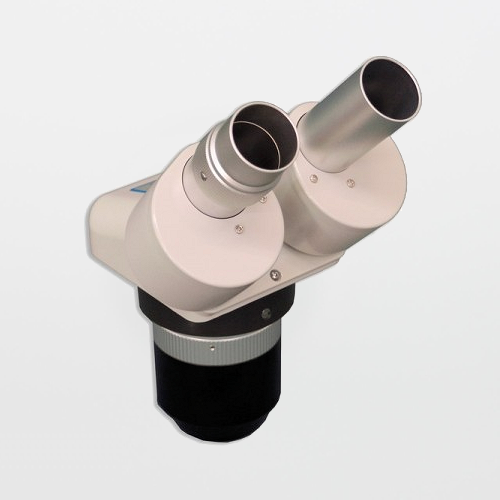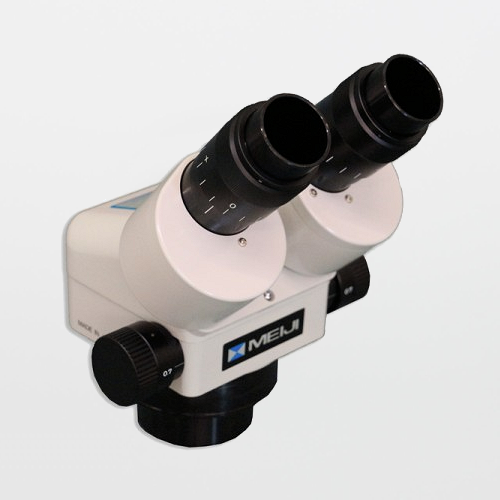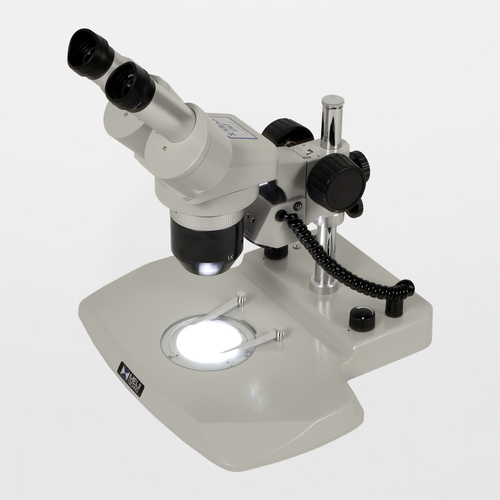
Meiji EMT (Turret) Series Stereo Microscope (Binocular Kit)

$1,490.00 - $2,040.00
(No reviews yet)
SKU:
EMT Binocular Kit
Availability:
7 - 10 Business Days
Shipping:
Calculated at Checkout

Meiji EMT (Turret) Series Stereo Microscope (Binocular Kit)

The Meiji EMT (Turret) Series Binocular Kit is a modular stereo microscope inspection station built for fast, repeatable magnification changes using a turret objective system. Unlike a zoom stereo body (continuous magnification), the EMT turret architecture is designed for one-touch switching between two fixed magnification steps—ideal for QC workflows that routinely alternate between scan and confirm views without “hunting” for power settings.

Kit build on SOSCleanroom: select your EMT turret body and stand. Kit includes an F-Holder coarse focusing block and MA502 Super Wide Field 10X eyepieces (paired), FN 23.

Specifications:
  • Microscope type: Stereo microscope (3D viewing), binocular head
  • Magnification method: Turret objective changer (one-touch magnification switching)
  • Kit includes: Body (selection required), F-Holder coarse focusing block, Stand (selection required), MA502 10X Super Wide Field eyepieces (paired), FN 23
  • Body options (select one):
    • EMT-1: 10X and 20X (turret switch)
    • EMT-2: 10X and 30X (turret switch)
  • Stand options (select one):
    • PK: Wide Pole Stand
    • PKL-2: Wide Pole Stand with incident and transmitted LED lighting
  • Availability: 7–10 business days
Cleanroom vs. Laboratory Use (Where the EMT Turret Excels)

The EMT turret series is frequently selected for production and cleanroom-adjacent inspection because it supports consistent, bench-friendly viewing with repeatable magnification “steps.” In laboratory environments, the same fixed-step approach improves training and repeatability—especially when multiple users must achieve the same inspection outcome.

Typical program fit: incoming inspection, in-process QC, defect confirmation, rework/repair benches, and training stations where repeatable “go / no-go” calls matter.

For cleanroom use, station discipline matters: keep optics clean, control illumination settings, and document the configuration (body + stand + eyepieces + any auxiliary lens factor) so the station performs consistently across shifts.

Key Features:
  • Turret magnification switching: one-touch change between two fixed powers for fast scan/confirm workflows
  • Stereo (3D) viewing: dual optical paths improve depth perception for alignment, edge review, and surface relief
  • Modular configuration: choose body + stand to match working space, lighting requirements, and bench layout
  • PKL-2 option: integrated incident and transmitted LED illumination expands lighting strategies for opaque and semi-transparent samples
Operational Benefits:
  • Repeatable outcomes: fixed magnification steps reduce “setting drift” between operators
  • Faster inspection cadence: turret switching supports rapid transitions from overview to confirmation
  • Lower decision variance: standardized lighting + configuration improves inspection consistency across shifts
  • Bench-ready ergonomics: stereo viewing supports manipulation and alignment tasks at the workstation
Common Applications:
  • Incoming inspection and in-process QC
  • Edge, burr, and surface defect review (scratches, chips, residue-like artifacts)
  • Assembly alignment, rework, and repair under magnification
  • Training stations where consistent magnification and lighting reduce interpretation differences
Optical Care and Cleaning (Recommended Consumables)

Optics contamination can reduce contrast and create false “defect” calls. For coated optics, use optical-grade cleanroom swabs and low-lint wipers—avoid cotton swabs and general-purpose tissues.

Selection Notes (EMT-1 vs. EMT-2)
  • Choose EMT-1 (10X/20X): when the dominant workflow is general inspection with frequent “confirm” checks at moderate power.
  • Choose EMT-2 (10X/30X): when higher confirmation power is needed for finer defect review or tighter acceptance criteria.
  • PK vs. PKL-2: select PK when you already have an illumination strategy; select PKL-2 for integrated incident + transmitted LED lighting flexibility.

Notes: For best repeatability, document the station configuration (body, eyepieces, stand, illumination, and any auxiliary lens factor) and standardize lighting settings across benches to reduce inspection drift.

Product page updated: Jan. 21, 2026 (SOS Technical Staff)

© 2026 SOS Supply. All rights reserved.

The Technical Vault
By SOSCleanroom
Last reviewed: Jan. 21, 2026 | Audience: cleanroom operations, QA/QC, manufacturing engineering, lab managers, EHS
Microscopy Education: Stereo vs. Compound (and Why Turret Magnification Improves Inspection Repeatability)
Meiji EMT Turret Binocular Kit — station control, illumination discipline, and optics-cleaning best practices
Stereo engineering Turret workflow Inspection repeatability
The one-paragraph answer

A stereo microscope is engineered for hands-on inspection: two optical paths provide true depth perception and practical working clearance for tools and gloved handling. A compound microscope is engineered for higher magnification and analytical viewing along a single optical axis, often optimized for transmitted illumination and prepared samples. The EMT turret stereo architecture adds a key inspection advantage: one-touch magnification switching between two fixed powers, improving repeatability in QC workflows where users must standardize “scan” and “confirm” views across benches and shifts.

Operational problem this kit helps solve
  • Inspection drift: operators reach different conclusions because magnification and lighting are inconsistent.
  • Slow throughput: time is lost adjusting continuous zoom settings when only two powers are routinely used.
  • Training gaps: trainees struggle to match the same view as experienced inspectors without defined “standard views.”
  • Optics artifacts: haze, fingerprints, and residue films reduce contrast and create false defect calls.
How a stereo microscope is engineered (compared to a compound microscope)
Stereo microscope (inspection architecture)
  • Dual optical paths: one channel per eye creates depth perception for alignment and surface relief judgment.
  • Workstation intent: designed to preserve working space so tools and hands can operate under the optics.
  • Surface-first illumination: incident lighting is primary for opaque parts; transmitted lighting supports certain materials and edge conditions.
Compound microscope (analytical architecture)
  • Single optical axis: optimized for analytical microscopy at higher magnification.
  • Short working distance at higher power: manipulation is typically less practical during viewing.
  • Transmitted illumination dominance: commonly optimized for slides, thin sections, and analytical contrast methods.
Turret vs. zoom stereo (why turret can be better for QC)

A zoom stereo body offers continuous magnification control, which is valuable for exploration and variable tasks. In production QC, however, teams often use only two magnification “views” repeatedly: an overview scan and a higher-power confirmation. Turret stereo bodies support that reality with fixed, repeatable magnification steps that reduce operator variability and speed inspection cadence.

Practical QC method (template)
  1. Scan view: use the lower turret power for quick surface and edge sweep.
  2. Confirm view: switch to the higher turret power for defect confirmation and disposition calls.
  3. Record standards: document which turret position is used for each inspection step in the SOP.
Configuration control (SOP-ready station checklist)
Minimum station record (recommended)
  • Body selected: EMT-1 (10X/20X) or EMT-2 (10X/30X)
  • Stand selected: PK or PKL-2; if PKL-2, define incident/transmitted intensity defaults
  • Eyepieces: MA502 Super Wide Field 10X (paired), FN 23
  • Focusing hardware: F-Holder coarse focusing block
  • Inspection settings: define “scan” and “confirm” turret positions per SOP
  • Optics care: approved cleaning method + cadence; cover/storage expectations when idle
Illumination discipline (why defects “change” with lighting)

Surface defects are highly lighting-dependent. Glare, angle, and intensity can exaggerate or hide scratches, residue-like films, and edge chips. For repeatable inspection, standardize lighting geometry and intensity and keep settings documented.

Best-practice controls
  • Define default intensity: set a baseline incident intensity for scan and confirm views.
  • Control glare: use consistent angles and distance; avoid “handheld” lighting changes during disposition calls.
  • Train to artifacts: teach teams how haze, fingerprints, and lens contamination mimic defects.
Optics cleaning and artifact prevention (cleanroom-ready)

Many “defects” are actually optical artifacts. Fingerprints and haze films reduce contrast, change edge appearance, and cause inspection disagreement. Treat optics cleaning as part of contamination control and use optical-grade swabs and low-lint wipers.

Suggested optics-cleaning SOP insert (template-style)
  1. Remove loose particles before wiping (avoid dragging grit across coated optics).
  2. Use a fresh optical swab/wiper; lightly dampen with minimal approved solvent.
  3. Wipe gently in one direction; avoid heavy pressure and repeated scrubbing.
  4. Replace the cleaning surface frequently; do not reuse loaded swabs/wipers.
  5. Cover the microscope when idle to reduce airborne deposition.
Source basis
  • SOSCleanroom product listing context (kit components and selectable options).
  • Manufacturer product literature (turret magnification switching design intent and modular configuration approach).
  • Standard microscopy station practices (configuration control, illumination standardization, optics hygiene).
Compliance note: This Technical Vault article is provided for educational support. Always follow facility SOPs, QA requirements, and the microscope manufacturer’s published instructions.
Document control: Rev. Jan. 21, 2026 (SOS Technical Staff)
© 2026 SOS Supply. All rights reserved.