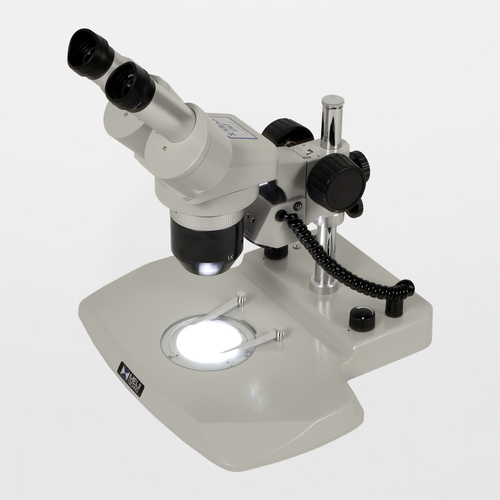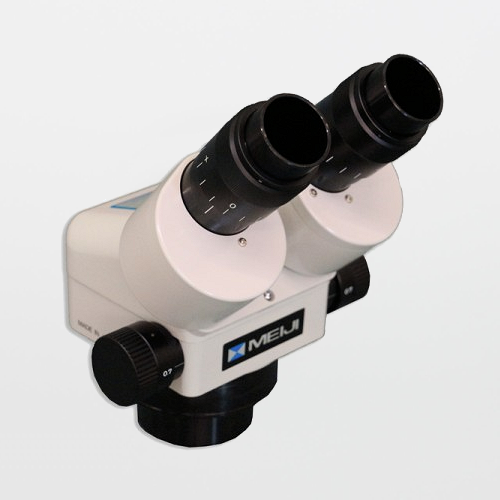
Meiji EMZ (Zoom) Series Stereo Microscope (Binocular Kit)

$2,100.00 - $3,130.00
(No reviews yet)
SKU:
EMZ Binocular Kit
Availability:
7 - 10 Business Days
Shipping:
Calculated at Checkout

Meiji EMZ (Zoom) Series Stereo Microscope (Binocular Kit)

The Meiji EMZ (Zoom) Series is a modular stereo microscope platform built for hands-on inspection and precision work in cleanroom manufacturing, electronics, medical device assembly, QA/QC, and laboratory environments. As a true stereo (3D) system, EMZ microscopes use independent optical paths for each eye to improve depth perception—helping operators evaluate surface features, alignment, and edge conditions with greater confidence during gloved or tool-assisted workflows. :contentReference[oaicite:0]{index=0}

What makes this a “kit” on SOSCleanroom: configure your system by selecting an EMZ body (EMZ-5 / EMZ-8U / EMZ-10 / EMZ-13) and a stand option (PK or PKL-2 dual LED). :contentReference[oaicite:1]{index=1}

Specifications:
  • Microscope type: Stereo microscope (3D viewing), binocular configuration
  • Series: Meiji EMZ (Zoom) modular stereo microscope platform
  • Body options (select one): EMZ-5 (0.7X–4.5X, W.D. 93mm), EMZ-8U (0.7X–4.5X, W.D. 104mm), EMZ-10 (0.7X–4.5X, W.D. 110mm), EMZ-13 (1.0X–7.0X, W.D. 90mm)
  • Stand options (select one): PK Stand; PKL-2 Stand with dual LED illumination
  • Availability (site listing): 7–10 business days
  • System concept: modular selection of body + eyepieces + stand + illumination + optional auxiliary lenses
Where EMZ Stereo Microscopes Fit in Cleanrooms (and Why)

Cleanroom control is ultimately about stable process outcomes. Stereo microscopes are frequently stationed in ISO-controlled areas because they support hands-on inspection and manipulation without repeatedly transferring parts to a separate lab microscope. The engineering advantage is practical: a stereo microscope favors working distance, depth perception, and reflected illumination—which aligns with inspection of opaque components, assemblies, and surfaces.

Program fit: production inspection benches, incoming inspection, rework/repair stations, QA confirm benches, and training stations where repeatable visual decisions matter.

For higher-sensitivity environments, success depends on station discipline: controlled storage/covering, routine optics cleaning, and standard settings for illumination and magnification so operators see the same thing, the same way.

About the Manufacturer: 

Meiji Techno positions the EMZ Series as a modular microscope system intended to be configured by selecting the microscope body, eyepieces, stand, illumination source, and optional auxiliary lenses to match the application. This modular approach is why EMZ microscopes are frequently used across industrial inspection, biological/life science contexts, and education/training environments. :contentReference[oaicite:2]{index=2}

Key Features:
  • True stereo viewing: independent optical paths for depth perception (3D)
  • Zoom platform: choose EMZ body based on magnification range and working distance needs
  • Modular build: stand and illumination options support production benches and laboratory setups
  • Accessories: auxiliary lenses and eyepieces expand magnification/working-distance configurations (application dependent)
Operational Benefits:
  • More confident inspection decisions: depth perception improves alignment and surface evaluation
  • Better workstation ergonomics: designed for hands-on use and gloved manipulation
  • Configurable to the constraint: select for clearance, coverage, or discrimination depending on the task
  • Program repeatability: modular configurations support document-controlled station builds for QA/QC
Common Applications:
  • Incoming inspection and in-process QC
  • Surface defect review (scratches, chips, burrs, residue-like artifacts)
  • Assembly alignment and rework/repair under magnification
  • Training stations and standardized inspection benches
Optical Care and Cleaning Best Practices

To maintain contrast and protect precision optical coatings, clean lenses and eyepieces using optical-grade cleanroom swabs and low-lint wipers. General-purpose wipes and cotton swabs can shed fibers or create micro-abrasion risks on coated surfaces.

Selection Notes (Body + Stand)
  • Working distance matters: if operators need tool clearance under the objective, prioritize bodies/configurations with higher W.D. (application dependent).
  • Scan bench vs confirm bench: many programs use a clearance-first scan station and a higher-detail confirm station to reduce decision drift.
  • Illumination drives defects: standardize lighting type and settings to reduce glare artifacts and improve repeatability across shifts.

Manufacturer reference (EMZ Series modular system concept):
Meiji EMZ Zoom Modular Stereo Microscopes Series

Related Products Available From SOSCleanroom.com

Notes: For best repeatability, document the station build (body, eyepieces, stand, illumination, auxiliary lens factor if used) and maintain an optics-cleaning cadence appropriate to your environment.

Product page updated: Jan. 21, 2026 (SOS Technical Staff)

© 2026 SOS Supply. All rights reserved.

The Technical Vault
By SOSCleanroom
Last reviewed: Jan. 21, 2026 | Audience: cleanroom operations, QA/QC, lab managers, manufacturing engineering, EHS
Microscopy Education: How Stereo Microscopes Are Engineered (and Why That Matters in Cleanrooms)
Meiji EMZ (Zoom) Series — configuration discipline, stereo vs. compound design, and station repeatability
Stereo vs. compound Cleanroom & lab workflows Optics care
The one-paragraph answer

Stereo microscopes (like the Meiji EMZ Series) are engineered for inspection and manipulation: dual optical paths deliver true depth perception, working distance supports tools and gloved handling, and reflected illumination is optimized for opaque parts and surfaces. Compound microscopes are engineered for higher-magnification analysis along a single optical axis—often with transmitted illumination for thin/transparent samples. Selecting the correct architecture reduces handling risk, improves inspection decisions, and stabilizes outcomes across cleanroom production zones and laboratory analysis spaces. :contentReference[oaicite:3]{index=3}

Stereo microscope engineering (why it feels “built for workstations”)

A stereo microscope uses two independent optical channels—one per eye—to generate a true three-dimensional view. In production, that depth perception reduces errors when positioning tools, aligning parts, and judging surface height differences. Stereo systems are commonly paired with incident lighting (ring lights, dual-arm fiber optic, or LED sources) to control glare and reveal surface texture on opaque components. :contentReference[oaicite:4]{index=4}

Best for: QC inspection, assembly alignment, rework/repair, defect confirmation, and training where tools/gloves must operate under magnification.

Compound microscope engineering (why it dominates analytical microscopy)

A compound microscope is built around a single optical axis. Both eyes view the same image formed by one objective lens and optical train. This architecture excels in high-magnification evaluation—especially for thin or transparent samples on slides—often using transmitted illumination and precision stage control. The tradeoff is reduced working distance and less suitability for hands-on manipulation at the sample plane.

Cleanroom vs. laboratory use: practical placement guidance
  • Cleanroom production zones: stereo microscopes reduce sample transfer, support gloved handling, and improve alignment/defect decisions at the bench.
  • Laboratory spaces: compound microscopes are preferred when slide preparation and analytical contrast methods are part of the workflow.
  • Hybrid programs: use a stereo microscope for production calls and a compound microscope for deeper analytical follow-up when required.
Configuration control (how teams prevent inspection drift)

The EMZ platform is intentionally modular—body, eyepieces, stand, illumination, and auxiliary lenses can be combined to match the constraint. That flexibility is an advantage only when it is controlled. Document-controlled station builds reduce variation across benches and shifts. :contentReference[oaicite:5]{index=5}

SOP checklist (minimum station record)
  • EMZ body selected (EMZ-5 / EMZ-8U / EMZ-10 / EMZ-13)
  • Stand selected (PK or PKL-2 dual LED)
  • Eyepiece model/magnification (pair-matched)
  • Illumination type + standard intensity setting(s)
  • Auxiliary lens factor (if used) and working distance impact
  • Optics cleaning method + cadence
Optics handling and cleaning (artifact prevention)

Many “defects” are actually optical artifacts (haze, fingerprints, residue films). In controlled environments, treat optics care as a contamination-control practice: use optical-grade swabs and low-lint wipers, and avoid reusing loaded cleaning surfaces.

Suggested optics-cleaning SOP insert (template-style)
  1. Remove loose particles before wiping (avoid dragging grit across coated optics).
  2. Use a fresh optical swab/wiper; lightly dampen with minimal approved solvent.
  3. Wipe gently in one direction; avoid heavy pressure and repeated scrubbing.
  4. Replace the cleaning surface frequently; do not reuse loaded swabs/wipers.
  5. Cover the microscope when idle to reduce airborne deposition.
Source basis
  • SOSCleanroom product listing context (kit configuration options and lead time).
  • Meiji manufacturer EMZ series overview and modular configuration concept (body + eyepieces + stand + illumination + auxiliary lens options).
  • Standard microscopy practice in controlled environments: configuration control, illumination standardization, and optics hygiene.
Compliance note: This Technical Vault article is provided for educational support. Always follow facility SOPs, QA requirements, and the microscope manufacturer’s published instructions.
Document control: Rev. Jan. 21, 2026 (SOS Technical Staff)
© 2026 SOS Supply. All rights reserved.