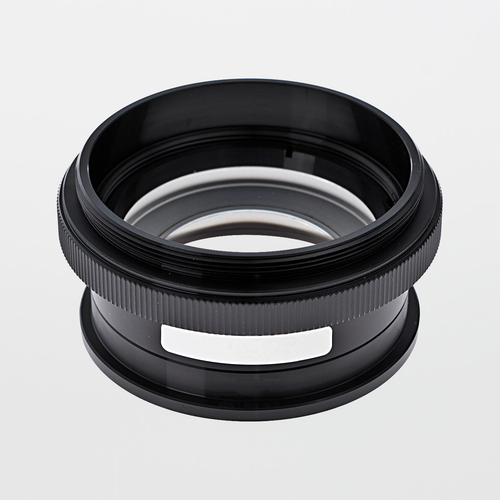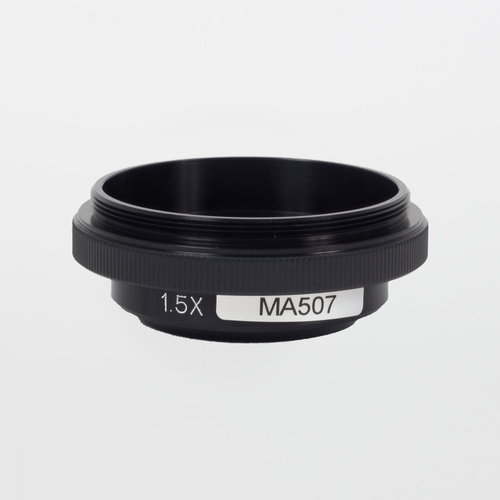
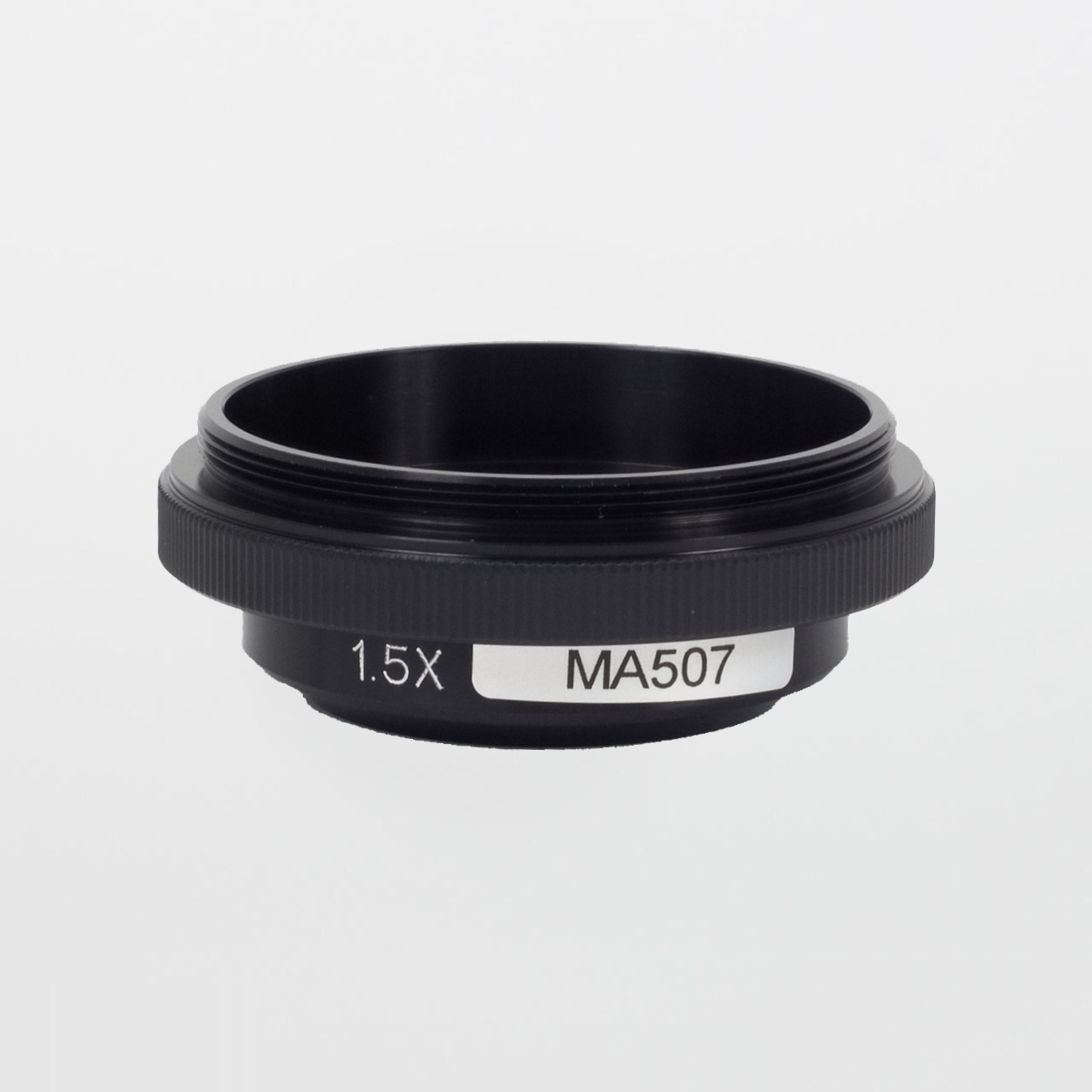
Meiji MA507 Auxiliary Lens for EMZ-5 & EMZ-13 (1.5X / W.D. 49mm)

$190.00
(No reviews yet)
SKU:
MA507
Availability:
7 - 10 Business Days
Shipping:
Calculated at Checkout

Meiji MA507 Auxiliary Lens for EMZ Series — 1.5X Magnification, 49mm Working Distance

The Meiji MA507 is a 1.5X auxiliary objective lens (often called a “Barlow” or “auxiliary” lens) designed for select Meiji EMZ stereo microscope bodies. It increases total system magnification to help reveal finer surface detail during inspection and rework—while reducing working distance to a tight, detail-focused 49mm. MA507 is commonly selected for benches where defect thresholds are small and higher apparent size improves decision confidence.

Quick selection note: 1.5X boosts detail, but reduces clearance. Choose MA507 when you can work comfortably at a 49mm working distance and your priority is resolving smaller features.

Specifications:
  • Accessory type: Auxiliary lens (auxiliary objective / “Barlow” style)
  • Magnification factor: 1.5X
  • Working distance (W.D.): 49mm (1.9")
  • Compatible microscope bodies (manufacturer-stated): EMZ-1, EMZ-2, EMZ-2TR, EMZ-5, EMZ-5D, EMZ-5TR, EMZ-5TRD, EMZ-13, EMZ-13TR
  • Setup note (common in EMZ builds): MA303 adapter is typically used when mounting ring illuminators with this auxiliary lens (verify your lighting/stand configuration)
  • Use intent: Increase effective magnification for higher-detail inspection where clearance is not the limiting constraint
Where MA507 Fits in Cleanrooms and Laboratories (and Why)

MA507 is a strong fit for inspection workflows that prioritize fine feature visibility and defect discrimination over tool clearance. In cleanroom and laboratory QC programs, it is often used when parts can be staged flat and stable, lighting can be controlled, and operators need a higher apparent size to evaluate edge quality, surface texture, coating defects, or micro-features.

Typical program fit: high-detail defect review, surface finish evaluation, small-feature inspection, and confirmatory inspection stations supporting “scan vs confirm” workflows.

Because working distance is tighter at 49mm, MA507 is best paired with stable staging, disciplined posture/ergonomics, and an optics-care routine that prevents haze and smudges from being misread as defects.

MA507 Features:
  • 1.5X auxiliary lens for select Meiji EMZ stereo microscope bodies
  • 49mm working distance (detail-focused, reduced clearance)
  • Designed for modular configuration of inspection benches (lens factor as a controlled variable)
  • Commonly used to increase apparent size for defect discrimination and confirmatory inspection
MA507 Benefits:
  • Higher apparent detail: increases effective magnification for evaluating fine features and surface conditions.
  • Better defect discrimination: supports more confident “accept/reject/rework” calls when thresholds are small.
  • Confirm station capability: ideal for confirmatory inspection in a two-stage workflow (scan wide, confirm high detail).
  • Bench standardization: treating auxiliary lens factor as a controlled setting helps reduce station-to-station variability.
Common Applications:
  • Confirmatory inspection for small-feature defects (micro-scratches, edge chips, coating anomalies)
  • Surface finish evaluation and texture review
  • Medical device component inspection where fine features drive quality decisions
  • Electronics inspection where feature resolution drives rework decisions (with appropriate staging/clearance planning)
Selection Notes (MA507 vs. Lower-Factor Auxiliary Lenses)
  • If clearance and manipulation are limiting: lower factors (0.5X, 0.75X) typically provide more working distance and easier handling.
  • If fine-detail decisions are limiting: MA507 (1.5X) increases apparent size but reduces working distance—best for stable, detail-focused inspection.
  • Program best practice: many facilities standardize two benches: a wide/clearance “scan” bench and a higher-detail “confirm” bench.
Optics Cleaning (Recommended for Auxiliary Lenses & Stereo Objectives)

Higher-detail inspection increases sensitivity to haze, films, and smudges. SOSCleanroom recommends optical-grade swabs and specialty low-lint wipers to clean coated optics without shedding fibers that can mask fine features.


Link to Meiji MA507 Product Details / Datasheet:
Manufacturer Product Page | Datasheet (PDF)

Related Auxiliary Lenses Available From SOSCleanroom.com

Notes: Selecting auxiliary lens factor is a workflow decision. If your team needs help balancing clearance, coverage, and detail thresholds, open the SOSCleanroom Technical Vault tab above for configuration-control guidance and inspection SOP modules.

SOSCleanroom supports microscopy programs with compatible accessories and optical cleaning supplies designed for controlled environments.

Product page updated: Jan. 21, 2026 (SOS Technical Staff)

© 2026 SOS Supply. All rights reserved.

The Technical Vault
By SOSCleanroom
Last reviewed: Jan. 21, 2026 | Audience: cleanroom operations, QA/QC, lab managers, manufacturing engineering, EHS
When to Use a 1.5X Auxiliary Lens on a Stereo Microscope: Detail Gains vs. Clearance Loss
Meiji MA507 — 1.5X factor, 49mm working distance, “confirm station” best practice, and optics-care discipline
Confirm station configuration Artifact vs defect control Stereo vs compound education
The one-paragraph answer

The Meiji MA507 is a 1.5X auxiliary lens for select Meiji EMZ stereo microscope bodies that increases effective magnification while reducing working distance to 49mm. In real inspection programs, MA507 is most effective as a confirmatory inspection configuration—used when fine feature visibility drives the decision and the part can be staged stably under tighter clearance. Best results come from configuration control (lens factor as a documented setting), disciplined lighting, and optics hygiene that prevents smudges from masquerading as defects.

Operational problems MA507 is solving
  • Defect thresholds are small: operators need higher apparent size to classify scratches, chips, edge defects, or coating anomalies.
  • Confirm steps require confidence: a higher-detail station reduces “borderline” decisions and unnecessary rework.
  • Optics artifacts become costly: at higher apparent detail, haze/smears are more likely to create false positives without a hygiene SOP.
  • Station-to-station inconsistency: different auxiliary factors produce different apparent size; configuration control prevents “same part, different decision.”
Microscopy education: stereo microscope engineering vs. compound microscope engineering

Stereo microscopes are engineered with two optical paths to produce a true 3D view, which supports inspection and manipulation (depth perception for rework, assemblies, and surfaces). Stereo systems are frequently configured for workflow: stands, illumination, and auxiliary lenses are selected to tune clearance, coverage, and detail for the task.

Compound microscopes generally use a single optical axis optimized for higher magnification analytical viewing (often slide-based) with transmitted illumination. In compound microscopy, objectives and condenser/illumination alignment dominate outcomes; “tool clearance” and bench manipulation are typically secondary considerations.

Why this matters for MA507: MA507 is a stereo workflow tool—used to push a bench toward higher-detail decisions, accepting reduced clearance as the trade.

How auxiliary lens factor changes the bench (the mechanism)

In EMZ stereo systems, auxiliary lenses are threaded below the objectives and act as a system multiplier. The selection logic is operational: lower factors (< 1.0X) generally increase working distance and widen the view (more clearance and coverage), while higher factors (> 1.0X) increase effective magnification but reduce working distance (more detail, less clearance).

MA507 in one line: Use 1.5X when your limiting factor is detail visibility, not manipulation clearance. If operators “can’t fit their tools,” you are using the wrong factor for that station.

Best-practice use: “scan vs confirm” workflow (SOP-ready)
Suggested SOP insert (template-style)
  1. Designate MA507 benches as confirm stations for small-feature defect review.
  2. Define the trigger for confirm (suspected defect, borderline decision, rework sign-off, or threshold feature size).
  3. Standardize illumination type and intensity for the confirm station (contrast changes drive decision drift).
  4. Stage parts using stable fixtures to prevent part movement at tight working distance.
  5. Document the station configuration (body model, eyepieces, MA507 factor, stand, lighting) and apply change control.

Configuration control tip: If “same part, different decision” occurs across benches, verify auxiliary lens factor and lighting geometry before escalating to process root cause.

Optics hygiene discipline (artifact vs defect control)

At higher-detail configurations, films and smudges are more likely to be misread as defects. Treat optics care as a controlled micro-process: remove loose particles first, clean gently with optical-grade tools, and replace swabs/wipers frequently to prevent re-depositing contamination.

Suggested optics-cleaning SOP insert (template-style)
  1. Blow off loose particles before wiping to avoid dragging grit across coated optics.
  2. Use a fresh optical swab or specialty low-lint wiper; dampen with approved solvent (minimal volume).
  3. Wipe gently in one direction; avoid heavy pressure and repeated scrubbing.
  4. Replace the cleaning surface frequently; do not reuse a loaded swab/wiper.
  5. Cover the microscope when idle and keep it away from chemical vapor sources.
  • Recommended tools: optical-grade swabs and specialty low-lint wipers (avoid general-purpose tissues).
  • Artifact check: if “defects” appear abruptly across many parts, verify optical cleanliness first.
Source basis
  • SOSCleanroom product listing context (application positioning and program-fit language).
  • Manufacturer-stated specifications and compatibility for MA507 (1.5X, 49mm working distance, EMZ body list).
  • Common inspection microscopy best practices: scan vs confirm workflow design, bench configuration control, and optics cleaning controls.
Compliance note: This Technical Vault article is provided for educational support. Always follow facility SOPs, QA requirements, and validation/qualification plans.
Document control: Rev. Jan. 21, 2026 (SOS Technical Staff)
© 2026 SOS Supply. All rights reserved.