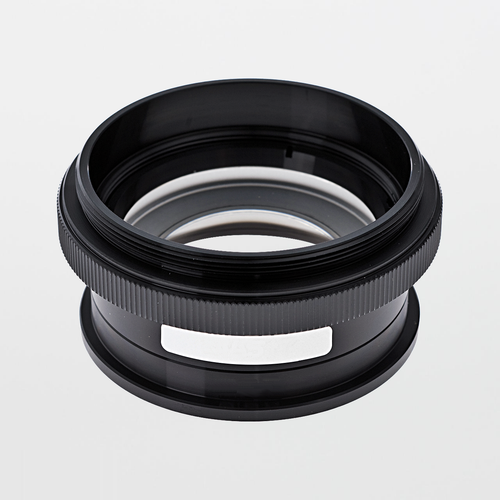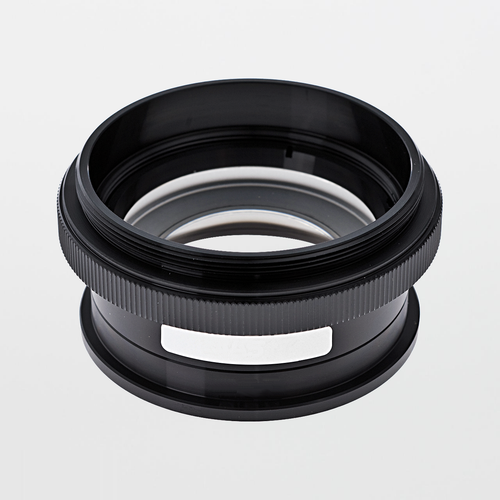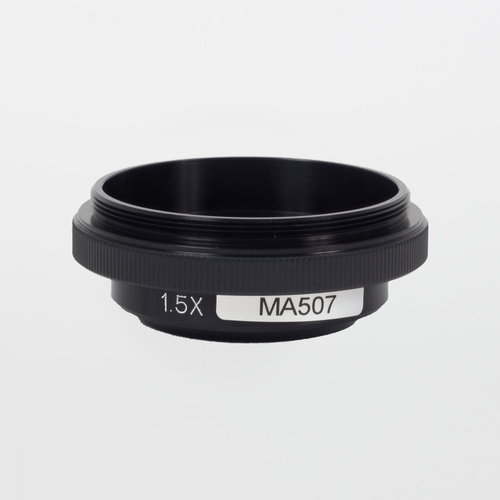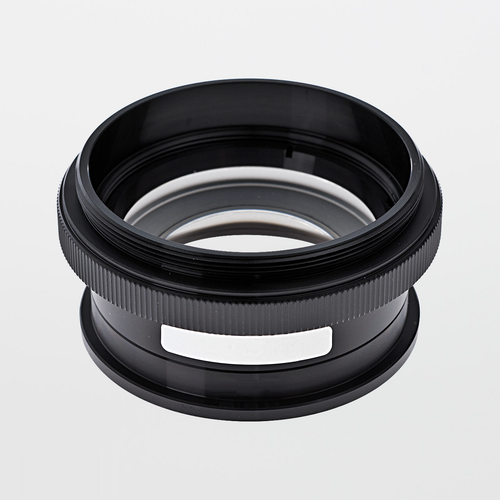
Meiji MA513 Auxiliary Lens for EMT-1 & EMT-2 (1.5X / W.D. 35mm)

$190.00
(No reviews yet)
SKU:
MA513
Availability:
7 - 10 Business Days
Shipping:
Calculated at Checkout

Meiji MA513 Auxiliary Lens for EMT-1 / EMT-2 — 1.5X Magnification, 35mm Working Distance

The Meiji MA513 is a 1.5X auxiliary (supplementary) lens for Meiji EMT/EMTR stereo microscope bodies. It is typically selected to increase effective magnification and improve defect discrimination when borderline features are not resolving at your current configuration. With a published working distance of 35mm, MA513 is best treated as a detail/confirm accessory—more resolving power at the cost of clearance.

Quick selection note: MA513 (1.5X) is chosen when detail is the limiting constraint. Expect a shorter working distance and tighter tool/fixture clearance compared to 1.0X, 0.75X, or 0.5X configurations.

Specifications:
  • Accessory type: Auxiliary lens (auxiliary objective / supplementary lens)
  • Magnification factor: 1.5X
  • Working distance (W.D.): 35mm
  • Fits: EMT-2, EMTR-2, EMT-3, EMTR-3, EMT-4, EMTR-4
  • Important note: MA515 adapter is required to use MA513 on EMT-2
  • Warranty: Limited lifetime warranty (manufacturer-stated)
  • Manufacturer: Made in Japan (manufacturer-stated)
Where MA513 Fits in Cleanrooms and Laboratories (and Why)

MA513 is commonly selected for detail-driven inspection where operators need higher apparent magnification to confirm defect morphology, edge quality, surface condition, or fine-feature workmanship. Because the working distance is shorter, MA513 is typically used in a confirm station or a controlled bench setup where parts are positioned with stable fixturing and manipulation under the objective is limited.

Typical program fit: confirm/verification inspection, failure analysis screening, precision workmanship checks, and detailed surface review where clearance is secondary to discrimination.

In cleanrooms, tighter clearance increases the importance of optics hygiene and station discipline—reduce contact events, control fixturing, and standardize cleaning tools to prevent residue-driven “false defects.”

MA513 Features:
  • 1.5X auxiliary lens engineered for Meiji EMT/EMTR stereo microscope bodies
  • 35mm working distance for close-in, higher-detail inspection
  • Supports confirm stations where defect discrimination and detail are limiting constraints
  • Compatible with EM-series modular configurations (eyepieces, stands, illumination, auxiliary lenses)
MA513 Benefits:
  • Higher discrimination: improved ability to confirm fine defects and borderline features (configuration dependent).
  • Better decision confidence: supports confirm benches to reduce false rejects/accepts from insufficient detail.
  • Standardized inspection: controlled use of a 1.5X confirm accessory reduces station-to-station variability.
  • Workflow robustness: enables scan-vs-confirm separation—scan benches optimized for clearance, confirm benches optimized for detail.
Common Applications:
  • Confirm inspection of surface condition, edges, workmanship, and fine features
  • Failure analysis screening and detailed defect review (workflow dependent)
  • QC verification benches where clearance is controlled through fixturing
  • Applications where increased magnification is required more than tool access under the objective
Selection Notes (1.5X vs. 0.75X vs. 0.5X)
  • MA513 (1.5X / 35mm W.D.): confirm/detail benches—highest discrimination with reduced clearance.
  • MA527 (0.75X / 72mm W.D.): scan + handle benches—balanced clearance and detail.
  • MA518 (0.5X / 108mm W.D.): clearance-first—maximum tool access and coverage for manipulation-heavy tasks.
Optics Cleaning (Recommended for Confirm/Detail Stations)

Higher-magnification configurations make optics artifacts more visible. Maintain contrast and reduce inspection noise with optical-grade swabs and specialty low-lint wipers engineered for coated glass.


Link to Meiji MA513 Product Details / Datasheet:
Manufacturer Product Page | Datasheet (PDF)

Other Similar Products Available From SOSCleanroom.com

Notes: Treat auxiliary lens factor as a configuration-controlled input. Increased magnification can reduce clearance and increase sensitivity to technique, vibration, illumination geometry, and optics cleanliness.

Product page updated: Jan. 21, 2026 (SOS Technical Staff)

© 2026 SOS Supply. All rights reserved.

The Technical Vault
By SOSCleanroom
Last reviewed: Jan. 21, 2026 | Audience: cleanroom operations, QA/QC, lab managers, manufacturing engineering, EHS
Why 1.5X Auxiliary Lenses Are “Confirm Bench Tools” in Stereo Microscopy
Meiji MA513 — higher discrimination, 35mm working distance, and how to prevent configuration-driven inspection drift
Confirm/detail station Short working distance Stereo vs compound education
The one-paragraph answer

The Meiji MA513 is a 1.5X auxiliary (supplementary) lens for Meiji EMT/EMTR stereo microscope bodies that increases effective magnification and is commonly used for confirm/detail inspection. It provides a published working distance of 35mm, which tightens clearance and increases sensitivity to bench setup, vibration, illumination geometry, and optics cleanliness. Note: MA515 adapter is required to use MA513 on EMT-2.

Operational problems MA513 helps solve (and introduces)
  • Solves: insufficient discrimination when defects are borderline at the current configuration.
  • Solves: decision drift by providing a controlled confirm station with higher apparent detail.
  • Introduces: reduced clearance (35mm W.D.) that limits tool/fixture access and increases contact risk.
  • Introduces: sensitivity to artifacts (dirty optics, glare, vibration) that can be misread as defects.
Microscopy education: stereo microscope engineering vs. compound microscope engineering

Stereo microscopes are engineered for inspection and manipulation: dual optical paths provide depth perception and the platform is modular by design. Teams tune the workflow using eyepieces, stands, illumination, and auxiliary lenses (like MA513) to create purpose-built benches—scan benches for throughput and confirm benches for discrimination.

Compound microscopes typically prioritize higher magnification analytical viewing (often slide-based) with transmitted illumination and a single optical axis. They are excellent for analytical microscopy but are not the default tool for hands-on production manipulation because clearance is typically not the design priority.

Practical takeaway: MA513 is a stereo “confirm bench” accessory—use it where the workflow is stable and configuration control is enforced.

Best-practice program model: scan bench + confirm bench

A simple way to reduce inspection variability is to separate the workflow: scan benches (clearance + coverage) handle orientation and throughput, while confirm benches (higher apparent detail) handle borderline calls. MA513 is typically installed on a confirm bench because its shorter working distance is less compatible with manipulation-heavy tasks.

Configuration control checklist (SOP-ready)
  • Microscope body model (EMT/EMTR series)
  • Adapter installed where required (MA515 for EMT-2)
  • Auxiliary lens factor (MA513 1.5X)
  • Eyepiece model/magnification
  • Illumination type + standard settings (reduce glare artifacts)
  • Optics cleaning method and interval (documented)
Optics hygiene discipline (artifact control at higher magnification)

As magnification increases, optics artifacts become more visible and more likely to be misread as defects. Implement an optics-care routine using optical-grade swabs and specialty low-lint wipers, and avoid reusing loaded cleaning surfaces.

Suggested optics-cleaning SOP insert (template-style)
  1. Remove loose particles before wiping to prevent scratching or streaking.
  2. Use a fresh optical swab/wiper; lightly dampen with minimal approved solvent.
  3. Wipe gently in one direction; avoid heavy pressure and repeated scrubbing.
  4. Replace the cleaning surface frequently; do not reuse loaded swabs/wipers.
  5. Cover the microscope when idle to reduce airborne deposition.
Source basis
  • SOSCleanroom product listing context (application positioning and program-fit language).
  • Manufacturer product page and datasheet for MA513 (1.5X factor, 35mm W.D., fit list, adapter note).
  • Meiji customer education on magnification changes and working-distance tradeoffs (auxiliary lens selection logic).
  • Common inspection microscopy best practices: scan vs confirm workflow design, configuration control, and optics hygiene discipline.
Compliance note: This Technical Vault article is provided for educational support. Always follow facility SOPs, QA requirements, and validation/qualification plans.
Document control: Rev. Jan. 21, 2026 (SOS Technical Staff)
© 2026 SOS Supply. All rights reserved.