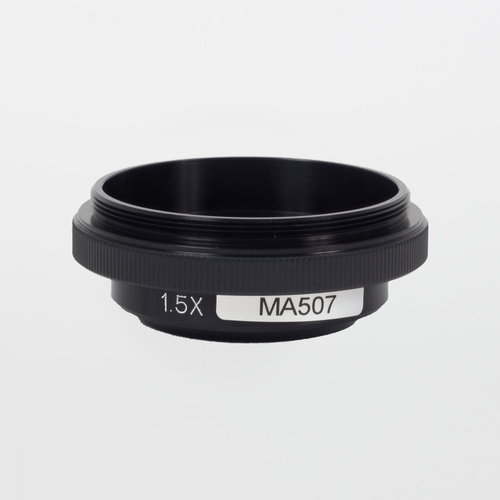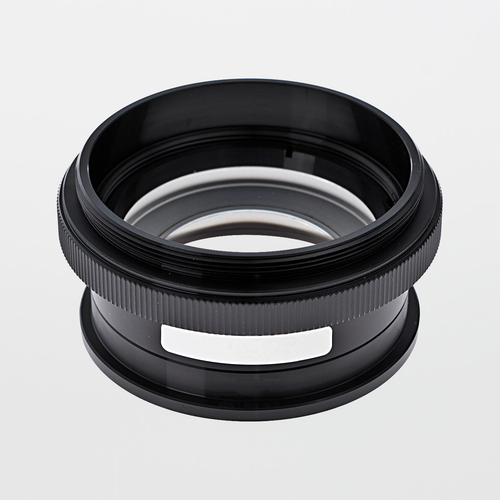
Meiji MA526 Auxiliary Lens for EMZ-5 & EMZ-13 (0.75X / W.D. 97mm)

$190.00
(No reviews yet)
SKU:
MA526
Availability:
7 - 10 Business Days
Shipping:
Calculated at Checkout

Meiji MA526 Auxiliary Lens for EMZ Series — 0.75X Magnification, 97mm Working Distance

The Meiji MA526 is a 0.75X auxiliary objective lens (often called a “Barlow” or “auxiliary” lens) for Meiji EMZ stereo microscope systems. It is used to increase working clearance and widen the viewing area compared to a standard configuration, while preserving enough magnification for most routine inspection and rework workflows. With a 97mm working distance, MA526 is frequently selected for bench stations where operators need room for tools, fixtures, and gloved handling—without stepping all the way down to a 0.5X setup.

Quick selection note: MA526 is a balanced choice when you want more clearance and coverage than standard, but you still need meaningful magnification for detail work.

Specifications:
  • Accessory type: Auxiliary lens (auxiliary objective / “Barlow” style)
  • Magnification factor: 0.75X
  • Working distance (W.D.): 97mm (3.8")
  • Compatible microscope bodies (manufacturer-stated): EMZ-1, EMZ-2, EMZ-2TR, EMZ-5, EMZ-5D, EMZ-5TR, EMZ-5TRD, EMZ-13, EMZ-13TR
  • Use intent: Increase clearance and field coverage for inspection/rework tasks while maintaining a strong magnification range
Where MA526 Fits in Cleanrooms and Laboratories (and Why)

In cleanrooms and QC labs, stereo microscopes are commonly used for surface inspection, dimensional checks, defect review, and hands-on rework. MA526 supports these workflows by providing additional clearance under the objective so operators can manipulate parts comfortably, maintain stable lighting geometry, and reduce ergonomic strain during long sessions.

Typical program fit: electronics inspection/rework, medical device component review, incoming inspection/QC benches, and cleanroom defect review stations where clearance and throughput matter.

Because MA526 changes the system magnification factor, it is best deployed as part of a defined “scan vs confirm” approach: scan larger areas quickly with improved clearance, then confirm on a higher-power configuration when required by defect standards or QA criteria.

MA526 Features:
  • 0.75X auxiliary lens for Meiji EMZ stereo microscope systems
  • 97mm working distance for better tool clearance and comfortable bench ergonomics
  • Supports wider viewing coverage for scanning and general inspection
  • Modular accessory strategy supports bench standardization across multiple stations
MA526 Benefits:
  • Improved clearance for work: better access for tweezers, fixtures, and gloved handling under the objective.
  • Balanced magnification trade: retains practical detail capability while improving comfort and coverage.
  • Throughput support: faster scanning and fewer “stop-and-reposition” cycles when manipulating parts.
  • Repeatability: improved operator posture and stable working geometry can reduce decision variability across shifts.
Common Applications:
  • Electronics inspection and rework (clearance for tools and fixtures)
  • Cleanroom defect review stations (rapid scan + controlled confirm)
  • Incoming inspection and general QC scanning
  • Medical device component inspection (tall parts and controlled handling)
Selection Notes (MA526 vs. Other Auxiliary Lens Factors)
  • If clearance is the main constraint: many teams step down further (e.g., 0.5X) for maximum working room and wide coverage.
  • If detail is the main constraint: teams step up (e.g., 1.5X or 2.0X) when maximum feature resolution is needed, accepting reduced working distance.
  • MA526 “middle ground”: selected when you need a meaningful clearance gain but still want a strong magnification range for routine inspection and rework.
Optics Cleaning (Recommended for Auxiliary Lenses & Stereo Objectives)

Auxiliary lenses sit close to the work zone and are exposed to airborne particulate, haze, and handling residue. SOSCleanroom recommends optical-grade swabs and specialty low-lint wipers to support routine cleaning without fiber shedding.


Link to Meiji MA526 Product Details / Reference:
Manufacturer Product Page | EMZ-5 Reference (auxiliary lens options)

Notes: Need help choosing the best auxiliary lens factor for your station? Open the SOSCleanroom Technical Vault tab above for a practical “scan vs confirm” checklist, configuration control guidance, and optics-care discipline.

SOSCleanroom supports microscopy programs with compatible accessories and optical cleaning supplies designed for controlled environments.

Product page updated: Jan. 21, 2026 (SOS Technical Staff)

© 2026 SOS Supply. All rights reserved.

The Technical Vault
By SOSCleanroom
Last reviewed: Jan. 21, 2026 | Audience: cleanroom operations, QA/QC, lab managers, manufacturing engineering, EHS
Auxiliary Lenses in Stereo Microscopy: How 0.75X Improves Clearance Without “Over-Reducing” Magnification
Meiji MA526 — 0.75X factor, 97mm working distance, configuration control, and optics-care discipline
Scan vs confirm workflow Bench ergonomics Stereo vs compound education
The one-paragraph answer

The Meiji MA526 is a 0.75X auxiliary lens that increases working distance to 97mm on specified Meiji EMZ stereo microscope bodies. In controlled inspection programs, MA526 is chosen when operators need improved clearance and field coverage for manipulation and scanning, but still require strong magnification capability for routine defect review. The best outcomes come from configuration control (documenting lens factor and station setup) and a defined “scan vs confirm” SOP to ensure high-detail decisions are confirmed using the correct configuration.

Operational problems MA526 is solving
  • Clearance limits: tools/fixtures collide with the objective area; tall parts are difficult to manipulate.
  • Slow scanning: limited field coverage increases inspection time on large surfaces or multi-feature parts.
  • Ergonomic strain: constrained working geometry increases fatigue and decision variability across shifts.
  • Inconsistent station outcomes: different benches use different auxiliary factors, producing inconsistent “apparent size” during defect review.
Microscopy education: stereo microscope engineering vs. compound microscope engineering

Stereo microscopes are engineered with two optical paths to provide a true 3D image—optimized for inspection and manipulation where depth perception matters. Their accessory ecosystem (auxiliary lenses, stands, ring/oblique illumination) is built to tune working distance, field coverage, and ergonomics for hands-on workflows.

Compound microscopes typically use a single optical axis optimized for high magnification analytical viewing (often slide-based) with transmitted illumination. In compound workflows, objective choice and illumination/condenser tuning dominate performance; “tool clearance” is usually not a primary design driver.

Why auxiliary lenses matter more on stereo benches: stereo microscopes are often used like a production tool (inspect + manipulate). Auxiliary lenses let you tune the bench for throughput and comfort without rebuilding the system.

How teams select auxiliary lens factors (risk mechanism approach)
Selection by limiting constraint
  • If clearance is limiting: choose a lower factor (e.g., 0.5X) to increase working distance and ease manipulation.
  • If detail is limiting: choose a higher factor (e.g., 1.5X or 2.0X) and accept reduced working distance.
  • If both matter: 0.75X is often the “balance point” that improves working room while keeping strong detail capability.

Practical rule: If operators are constantly repositioning parts to “fit under the objective,” clearance is the bottleneck (go lower factor). If operators are missing fine features, detail is the bottleneck (go higher factor).

Compatibility and configuration control (bench standardization)

MA526 is intended for select EMZ bodies. For controlled inspection programs, treat these as configuration-controlled items: microscope body model, eyepieces, auxiliary lens factor, stand type, and illumination geometry. This prevents “station drift” where the same part appears different (size/contrast) across benches due to configuration differences.

Bench log (minimum recommended fields)
  • Microscope body model
  • Eyepiece model and magnification
  • Auxiliary lens factor (e.g., 0.75X MA526)
  • Stand type and working height
  • Illumination type and typical intensity setting
Best-practice use: “scan vs confirm” workflow (SOP-ready)
Suggested SOP insert (template-style)
  1. Use MA526 configuration for primary scanning where clearance and coverage improve throughput.
  2. Define the trigger for “confirm” (defect suspected, threshold feature size, rework decision point).
  3. Confirm on a higher-power configured station (or camera measurement system) when required by QA criteria.
  4. Lock illumination geometry and intensity levels for repeatability across shifts.
  5. Record configuration in the bench log and do not “swap factors” without change control.

Throughput note: Most productivity gains from MA526 come from improved handling clearance and reduced repositioning—not from “more power.”

Optics cleaning and contamination control (aux lens discipline)

Auxiliary lenses are exposed to airborne particulate, process haze, and handling residues. Clean with optical-grade tools that minimize fiber shedding and reduce scratch risk on coated optics. In cleanrooms, treat optics cleaning as a controlled micro-process: correct tools, minimal pressure, and frequent replacement of the cleaning surface.

Suggested optics-cleaning SOP insert (template-style)
  1. Remove loose particles using an approved blower/air method before wiping.
  2. Use a fresh optical swab or specialty low-lint wiper; apply minimal approved solvent (damp, not dripping).
  3. Wipe gently in one direction; avoid heavy pressure and repeated scrubbing.
  4. Replace swab/wiper frequently; do not reuse a loaded cleaning surface.
  5. Cover the microscope when idle; store away from chemical vapor sources and direct airflow.
  • Recommended tools: optical-grade swabs and specialty low-lint wipers (avoid general-purpose tissues).
  • Artifact control: if “defects” suddenly increase, verify optical cleanliness before escalating to process causes.
Source basis
  • SOSCleanroom product listing context (application positioning and program-fit language).
  • Manufacturer-stated specifications and compatibility for MA526 (0.75X, 97mm working distance, EMZ body list).
  • Common inspection microscopy best practices: scan vs confirm workflow design, bench standardization, and optics cleaning controls.
Compliance note: This Technical Vault article is provided for educational support. Always follow facility SOPs, QA requirements, and validation/qualification plans.
Document control: Rev. Jan. 21, 2026 (SOS Technical Staff)
© 2026 SOS Supply. All rights reserved.