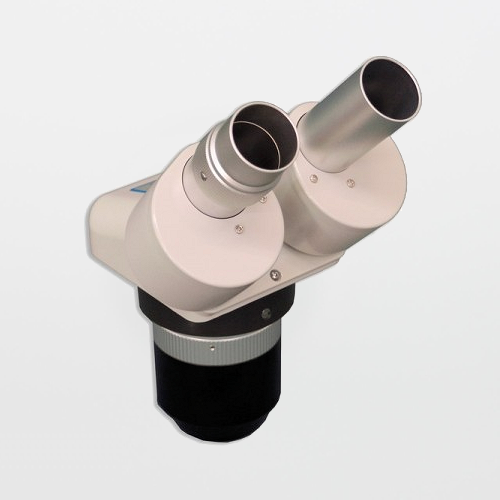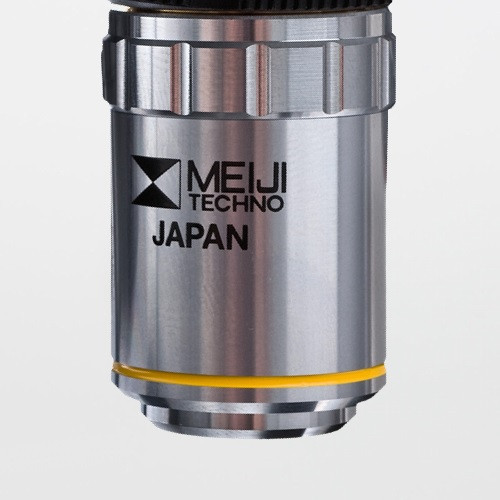
Meiji MA823 Objective 40X

$620.00
(No reviews yet)
SKU:
MA823
Availability:
7 - 10 Business Days
Shipping:
Calculated at Checkout

Meiji MA823 Objective 40X (TC Planachromat) — for TC5000 Series

The Meiji MA823 is a 40X TC Planachromat objective designed for Meiji’s TC5000 / TC5000C microscope systems. It is engineered to deliver a flat, corrected field (“Plan”) and reliable color correction (“Achromat”) for routine to high-confidence imaging where repeatability and contrast matter—especially in QA/QC and laboratory workflows.

Performance note: This objective is specified at NA 0.65 with a 2.8mm working distance—a practical balance of resolving power and clearance for many routine inspection and imaging tasks.

Specifications:
  • Model: MA823
  • Type: TC Planachromat objective
  • Magnification: 40X
  • Infinity system: ∞ / 1.0
  • Numerical Aperture (NA): 0.65
  • Working Distance (W.D.): 2.8mm
  • Focal Length (F.L.): 5.0mm
  • Compatibility: Meiji TC5000 and TC5000C series systems
  • Parfocal distance: 45mm
  • Objective thread: DIN standard 0.7965" (20.1mm) diameter, 36 TPI, 55° Whitworth
  • Availability: 7–10 business days
Where MA823 Fits (40X Use Cases)

A 40X objective is commonly selected when 10X and 20X views are not sufficient for defect confirmation, feature measurement, or morphology evaluation. It is frequently used for higher-confidence review of fine structures and edges where resolution and contrast drive the inspection decision.

Practical guidance: 40X performance is highly sensitive to clean optics, stable illumination, and correct system compatibility (objective family + microscope series). Confirm TC5000/TC5000C platform fit before standardizing.

If you are building documented QA/QC workflows, standardize the objective family and illumination settings across benches to reduce inspection drift.

Key Features:
  • Plan field correction: supports flatter imaging across the field for more consistent evaluation
  • Achromat color correction: designed for reliable color fidelity in routine imaging workflows
  • NA 0.65: strong resolving capability for a 40X objective in many standard applications
  • Working distance 2.8mm: practical clearance for many samples and routine handling scenarios
Optical Care and Cleaning (Recommended Consumables)

At 40X, minor haze and fingerprints can degrade contrast and cause inspection disagreement. Use optical-grade, low-lint tools—avoid cotton swabs and general-purpose tissues.

Notes: Objective compatibility is series-specific. Confirm your microscope model (TC5000 / TC5000C family) and follow manufacturer installation/handling guidance to protect coatings and maintain performance.

Product page updated: Jan. 21, 2026 (SOS Technical Staff)

© 2026 SOS Supply. All rights reserved.

The Technical Vault
By SOSCleanroom
Last reviewed: Jan. 21, 2026 | Audience: lab managers, QA/QC, cleanroom operations, manufacturing engineering, EHS
Objective Education: What “40X / NA 0.65 / Plan Achromat / Working Distance” Actually Means in Practice
Meiji MA823 — TC Planachromat 40X objective for TC5000/TC5000C systems (selection, handling, cleaning, and station control)
NA & resolution Working distance Optics hygiene
The one-paragraph answer

A 40X objective is often the point where microscopy becomes extremely sensitive to optics cleanliness, illumination stability, and proper system matching. The Meiji MA823 is a TC Planachromat 40X objective specified at NA 0.65 with a 2.8mm working distance, designed for Meiji TC5000/TC5000C platforms. In practice, “Plan Achromat” means the objective is designed to keep focus more uniform across the field while controlling typical color fringing—supporting repeatable inspection decisions when the image must be trusted.

Operational problems 40X objectives commonly reveal
  • “Defects” that are actually artifacts: haze films, fingerprints, or dried residues look like scratches or contamination.
  • Inconsistent outcomes between benches: differences in illumination geometry/intensity change what appears “acceptable.”
  • Clearance constraints: higher magnification reduces practical working room; working distance becomes a selection driver.
  • Compatibility errors: objective families and thread standards are not universal—system matching matters for image quality and mechanical fit.
How to interpret the MA823 markings (what the numbers mean)
Key terms for MA823
  • 40X: magnification contributed by the objective (total magnification depends on eyepieces/camera configuration).
  • NA 0.65: numerical aperture; a primary driver of resolution and brightness. Higher NA generally improves resolving power but tightens tolerances.
  • Plan: flatter field; helps keep the image more uniformly focused across the view for better evaluation and documentation.
  • Achromat: standard chromatic correction for routine imaging; supports practical color fidelity and contrast in many workflows.
  • W.D. 2.8mm: working distance; available clearance between the objective and the sample when in focus.
  • ∞ / 1.0: infinity-corrected optical system; requires the correct microscope optical train for designed performance.

Practical takeaway: At 40X, you do not “buy magnification.” You buy resolution + contrast that depends on NA, clean optics, correct illumination, and system matching.

Selection by risk mechanism (how teams decide if 40X is the right step)
Common drivers for moving up to 40X
  • Defect confirmation: 10X/20X cannot reliably confirm fine structures, edges, or morphology.
  • Measurement confidence: decisions depend on distinguishing near-threshold features.
  • Image documentation: training or investigations require clearer, more repeatable images.
Common reasons 40X “fails” operationally
  • Optics contamination: haze and fingerprints dominate the image at higher power.
  • Lighting inconsistency: glare and angle changes create disagreement in defect appearance.
  • Mechanical stability: vibration and poor sample support reduce effective resolution.
Handling and installation discipline (protect coatings and alignment)
  • Thread compatibility matters: use the specified objective thread standard for the microscope family; do not force-fit.
  • Hold by the barrel: avoid touching glass surfaces; fingerprints are difficult to remove without creating streaks.
  • Cap when stored: objectives should be protected from airborne deposition when not installed.
  • Document control: record objective model, installation date, and station configuration for repeatability.
Optics cleaning (artifact prevention at 40X)

At 40X, small films and residues significantly reduce contrast. Use optical-grade swabs and low-lint wipers; avoid cotton fibers and paper tissues. If you are in a controlled environment, treat optics cleaning as part of contamination-control discipline.

Suggested optics-cleaning SOP insert (template-style)
  1. Remove loose particles before wiping (avoid dragging grit across coated optics).
  2. Use a fresh optical swab/wiper; lightly dampen with minimal approved solvent.
  3. Wipe gently in one direction; avoid heavy pressure and repeated scrubbing.
  4. Replace the cleaning surface frequently; do not reuse loaded swabs/wipers.
  5. Cover the microscope when idle to reduce airborne deposition.
Source basis
  • SOSCleanroom product listing context (model designation, compatibility, availability).
  • Manufacturer product specifications for MA823 (optical parameters and thread/standard information).
  • Standard microscopy station practices (configuration control, illumination discipline, optics hygiene).
Compliance note: This Technical Vault article is provided for educational support. Always follow facility SOPs and the microscope manufacturer’s published instructions for installation, cleaning, and handling.
Document control: Rev. Jan. 21, 2026 (SOS Technical Staff)
© 2026 SOS Supply. All rights reserved.