Why mop hardware matters in cleanrooms
In ISO-classified environments, cleaning effectiveness is driven not only by chemistry and wipers,
but also by tool geometry and technique consistency.
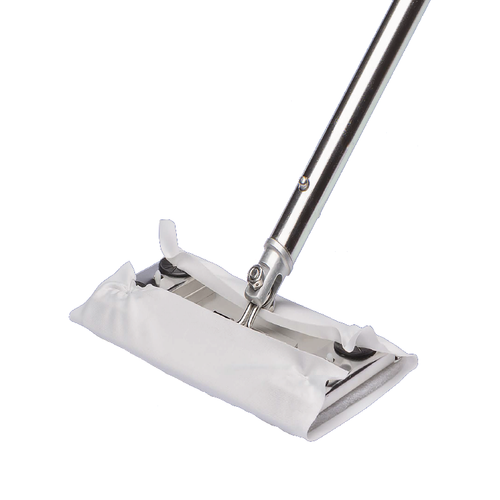
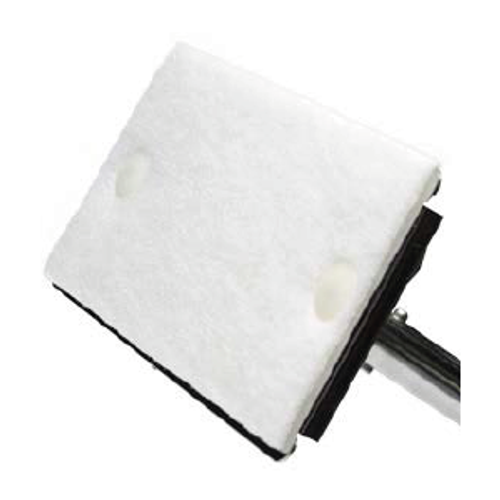
A rigid, dimensionally stable mop head like TX7115 helps operators apply uniform pressure,
maintain straight-line wipe patterns, and avoid uncontrolled flexing that can re-deposit contamination.
Intended use
- Large-surface wipe-down using disposable cleanroom wipers
- Routine floor, wall, and ceiling cleaning in ISO-classified areas
- Application of alcohols and disinfectants via “spray-to-wipe” methods
- Support of documented cleanroom cleaning SOPs
Design and materials
TX7115 is constructed from stainless steel to provide corrosion resistance and dimensional stability.
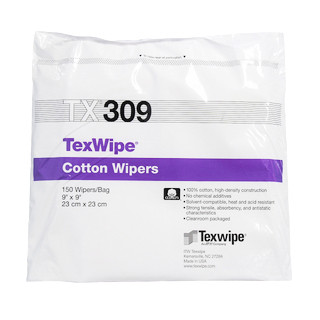
The 8-inch head width is intentionally matched to 9" × 9" wipers, allowing excess material
to wrap securely around the frame without bunching or slippage.
Specifications in context
| Attribute |
TX7115 |
| Material |
Stainless steel |
| Head width |
8 inches |
| Compatible wipers |
9" × 9" cleanroom wipers |
| Sterility |
Non-sterile |
| Reuse |
Reusable; reprocess per SOP |
ISO-first cleaning technique guidance
ISO cleanroom standards emphasize controlled movement, repeatable patterns, and contamination removal
rather than redistribution. Mop hardware plays a critical role in enabling these principles.
Best-practice mop technique (align to your SOP)
- Attach a single clean wiper; avoid reusing saturated or visibly loaded wipes.
- Use straight-line, overlapping strokes (never circular scrubbing).
- Work from clean-to-dirty and top-to-bottom where applicable.
- Maintain light, even pressure — let the wiper and chemistry do the work.
- Change wipers frequently to prevent re-deposition of contamination.
Annex 1 perspective: In EU GMP Annex 1 environments, cleaning tools are considered part of
the contamination control strategy (CCS). Mop heads must be compatible with validated disinfectants,
reprocessed appropriately, and segregated by area or grade as defined in the CCS.
Common failure modes
- Over-saturated wipers: increase streaking and residue risk.
- Uneven pressure: leads to inconsistent cleaning results.
- Tool cross-use: using the same mop head across different grades without proper reprocessing.
- Improper storage: mop heads stored exposed can become contamination sources.
SOSCleanroom note about SOPs
The Technical Vault provides technique guidance and product context. It does not replace
your facility’s SOPs, validation studies, or contamination control strategy.
Cleaning tools, including mop heads, must be qualified, cleaned, and segregated per your quality system.
SOSCleanroom is the source for this Technical Vault entry.
Briefed and approved by the SOSCleanroom (SOS) staff.
Questions? Email Sales@SOSsupply.com
Last reviewed: Jan. 13, 2026
© 2026 SOSCleanroom