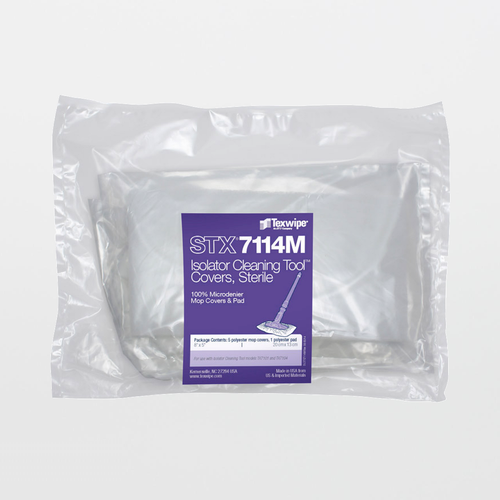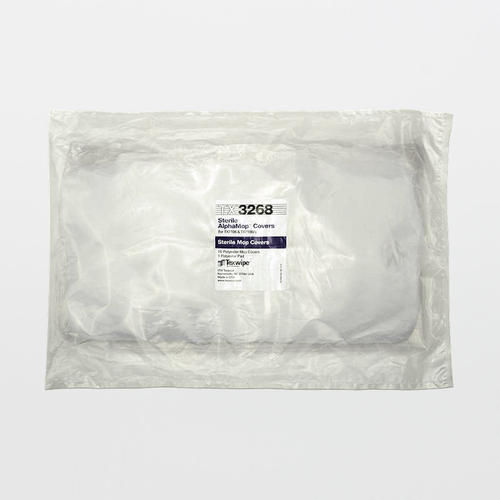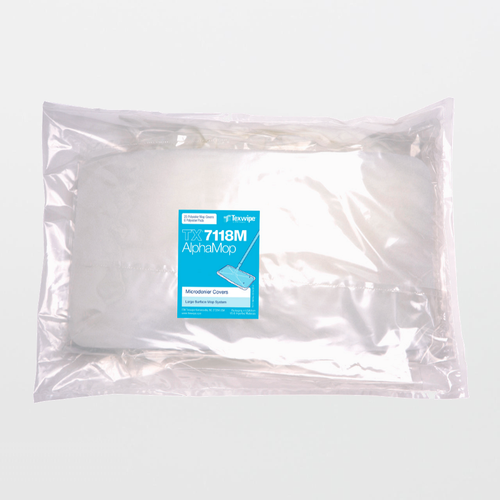
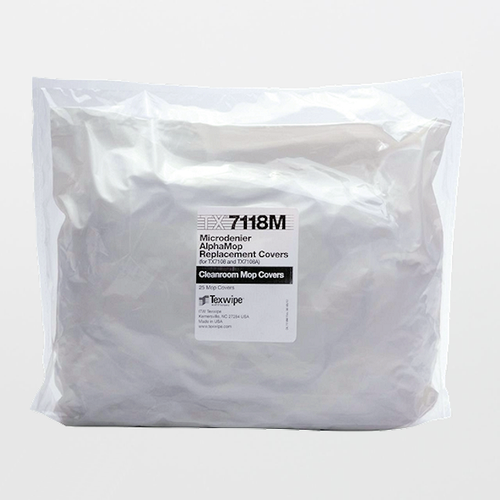
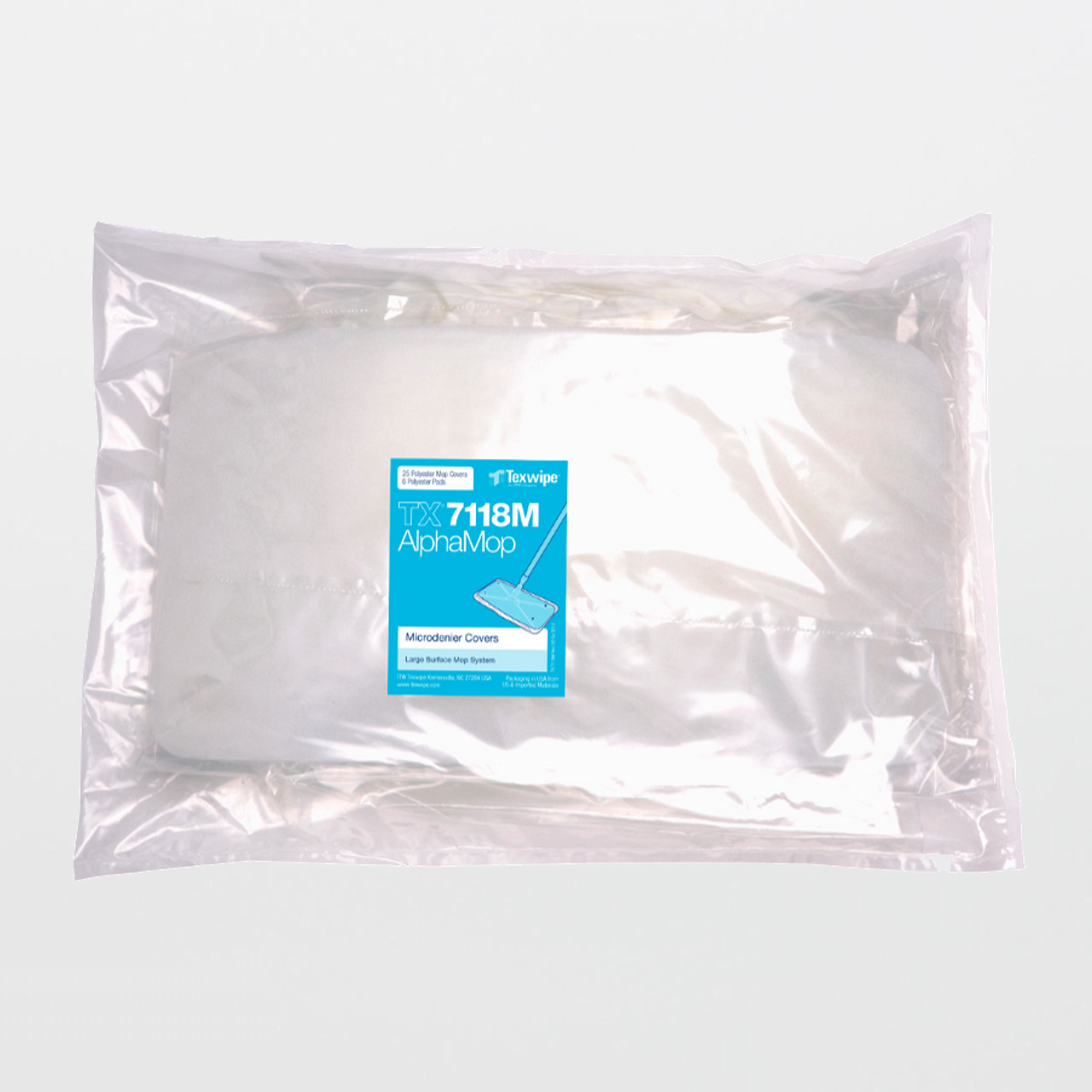
Texwipe STX7118M Sterile Microdenier Cleanroom Replacement Mop Covers (Refills)

$808.71
(No reviews yet)
SKU:
STX7118M
Availability:
7 - 10 Business Days
Shipping:
Calculated at Checkout
Quantity Option (Case):
120 Mop Covers and 12 Pads Per Case (12 Bags of 10 Mop Covers and 1 Pad)
Type:
Dry Mop
Sterile:
Yes
Texwipe STX7118M Sterile AlphaMop™ Microdenier Replacement Mop Covers (Refills) — For 8" x 15" Flat Mop Heads
STX7118M is a sterile microdenier (microfiber-style) replacement mop cover used on Texwipe AlphaMop™ 8" x 15" flat mop head systems for critical-environment cleaning of floors, walls, and ceilings. Microdenier covers are selected when teams need higher fine-contaminant capture and more uniform wet film control during disinfectant application/removal, especially on streak-sensitive surfaces.

For over 35 years, SOS and Texwipe have been close partners, and SOSCleanroom is the authorized Master Distributor of ITW Texwipe for the United States market. That relationship matters when you are standardizing cleanroom mopping: it supports continuity of supply, stable product lineage, and fast access to the manufacturer documentation your QA/QC team expects.

Published configuration (STX7118M)
  • Product type: Sterile microdenier replacement mop covers (refills)
  • System fit: AlphaMop™ 8" x 15" flat mop heads (platform fit; head SKUs vary by program)
  • Cover material: Microdenier polyester (microfiber-style textile)
  • Sterility: Sterile (packaged for sterile transfer workflows)
  • Packaging details (inner/case): Not published on the SOS product page content provided in this request. Use the Texwipe AlphaMop™ Series TDS and your purchase configuration for change-control records.
  • Shelf life / expiration: Not published on the SOS product page content provided in this request (sterile items often have defined expiration based on sterility assurance and packaging integrity — confirm by lot label and TDS).
What “sterile microdenier” changes in real cleanrooms
Sterile covers support aseptic workflows where introduction method and packaging integrity are part of contamination control. Microdenier construction is chosen to improve capture of fines and to improve wet-film control during disinfectant application/removal. Even so, no textile cover is truly “lint-free.” In critical environments, results come from technique and change frequency: controlled wetting, clean-to-dirty zoning, and rapid cover changes before the cover becomes loaded.

Where it fits in critical environments
Area / surface Why teams choose STX7118M Control point to write into the SOP
Aseptic suites / sterile corridors Sterile cover supports sterile transfer and execution without converting the mop head into a “dirty tool.” Define transfer steps (bag peel sequence), glove changes, and where sterile covers may be opened and staged.
Walls / ceilings Microdenier is commonly selected for improved fine-contaminant capture and controlled wet film on vertical surfaces. Set a maximum “panels per cover” rule to prevent redeposition and drip trails.
Streak-sensitive floors / epoxy or resin systems Supports uniform application/removal of disinfectants with reduced “skip lines” when pad/fit is correct. Standardize wetting volume, stroke geometry (overlap), and a defined rinse/removal step when residues are known.

Practical cleanroom mopping guidance (technicians and engineers)
  • Run the mop like a controlled process, not a janitorial task: Define zone ownership (room/grade) for the mop head and handle, then treat covers as single-use or limited-use per SOP.
  • Cover-change cadence is the main control: Replace the cover before it looks dirty. Loaded covers are a primary cause of particle redistribution and disinfectant film trails.
  • Use controlled wetting: Over-wetting creates drip lines, longer dry time, and residue transfer. Under-wetting increases friction and can create abrasion-driven shedding on rough floors. Your SOP should define the target wet film and the allowed wetting method.
  • Stroke geometry: Use overlapping, unidirectional strokes (S-stroke or lane-based passes) and avoid “back-and-forth scrubbing” unless your validated cleaning method specifically requires it.
  • Corner/edge control: Treat corners, coving, and transitions as separate passes. Rotate to a fresh face of the cover before entering edges to reduce streaking and residue carryover.
  • Sterile discipline: Do not let sterile covers “touch down” on carts, buckets, or benches outside the sterile field. Once a sterile cover contacts a non-sterile surface, treat it as non-sterile and follow your deviation rules.

Chemistry and residue control notes (how to prevent streaks and films)
Microdenier covers are commonly selected for better wet-film control and fine-contaminant capture, but residue outcomes still depend on chemistry sequencing and change frequency.
Control topic What goes wrong What to standardize
Quat residues Film trails and tacky residues when the cover is overloaded or removal step is skipped. Define an application step and a separate removal/rinse step (fresh cover) when required by your validated method.
Mixed chemistry sequencing Streaking or precipitates when detergent/disinfectant steps are combined with the same cover. Require cover changes between chemistry classes unless your cleaning validation explicitly allows otherwise.
Over-wetting Drip lines on walls/ceilings; extended dry time; footprint tracking on floors. Set a wetting target and reject “dripping” covers; allow defined dry time before reopening traffic.

Common failure modes 
  • Streaking / film trails: Usually from inconsistent wetting, chemistry overload, or using one cover too long. Prevent with controlled wetting, defined pass limits, and frequent cover changes.
  • Residue carryover between zones: Happens when covers are reused across rooms/grades. Prevent with “one cover, one zone” rules and strict segregation.
  • Particle redistribution: Caused by overused covers and backtracking strokes. Prevent with clean-to-dirty direction and early change-out discipline.
  • Shedding on abrasive surfaces: High pressure on rough epoxy, damaged coatings, or sharp transitions can increase mechanical shedding. Prevent by correcting surface defects and reducing pressure/abrasion.
  • Sterility breaks during staging: Touchdown on non-sterile carts/buckets or handling outside the sterile field. Prevent with defined staging and bag-peel technique.

Storage and handling best practices
  • Keep sterile covers sealed until point-of-use. Do not stage opened pouches in high-airflow areas (under diffusers or near door sweeps).
  • Segregate inventory by suite/grade if your program requires it; avoid “shared cases” that travel between rooms.
  • Use FIFO and record lot/expiration per your quality system. For sterile items, packaging integrity and label data are part of accept/reject criteria.
  • Do not compress or crush packages; damaged packaging can compromise sterile transfer workflows and increase handling events.
Documentation 
SOSCleanroom product page (STX7118M): Click Here
Texwipe AlphaMop™ Series Technical Data Sheet (covers platform, cover options, and program notes): Click Here
Texwipe AlphaMop™ platform page (system overview / related components): Click Here
If you have any questions please email us at Sales@SOSsupply.com
or give us a call at (214)340-8574.

Check out our AI ChatBot powered by SOSCleanroom data libraries - give it a try!
 
THIS IS NEW FOR 2026!

Last reviewed: January 9, 2026
© 2026 SOS Supply. All rights reserved.