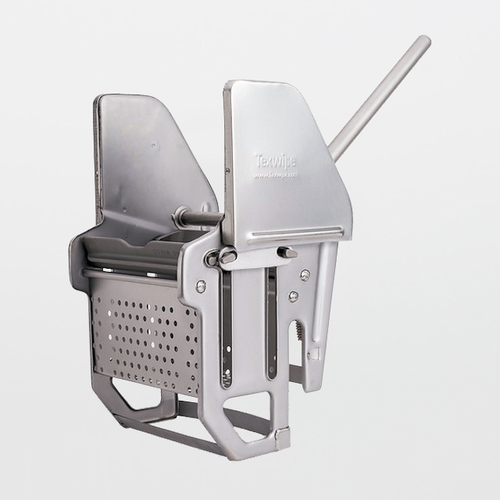
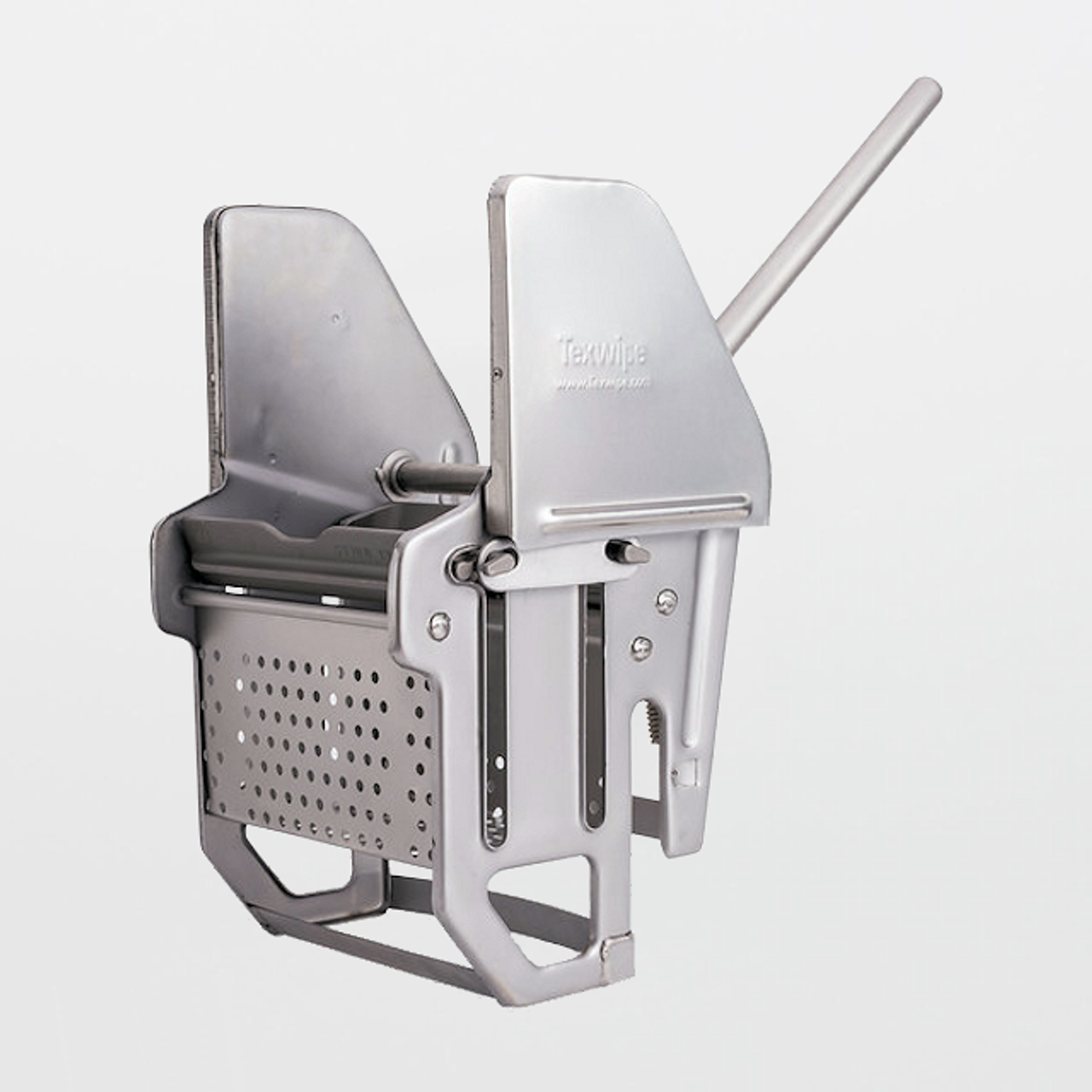
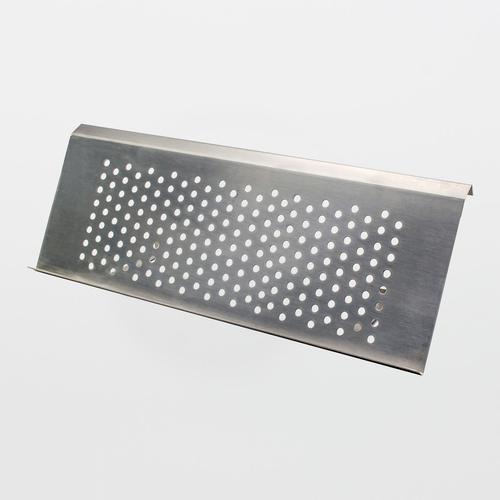
Texwipe TX7041 BetaMop® Stainless Steel Round Bucket Wringer — Accessory for BetaMop Round Buckets
TX7041 is a 100% stainless steel mop wringer designed for use with Texwipe BetaMop® round mop buckets and the BetaMop® string-mop cleaning system. In critical environments, a wringer is not just a convenience item — it is a control point that helps technicians standardize wetness, reduce drip trails, and minimize solution carryover from one zone to the next when applying or removing disinfectants and other cleaning solutions.
For over 35 years, SOS and Texwipe have been close partners, and SOSCleanroom is the authorized Master Distributor of ITW Texwipe for the United States market. That relationship matters when you are standardizing mopping hardware: it supports continuity of supply, stable product lineage, and fast access to the manufacturer documentation your QA/QC team expects.
Published configuration (TX7041)
- Part number: TX7041
- Product type: Round bucket wringer (mop accessory)
- Material: Stainless steel
- Designed to work with: TX7106 BetaMop® hardware kit (as published by the manufacturer)
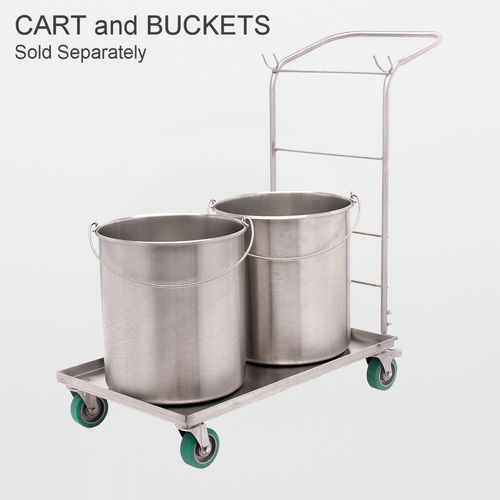
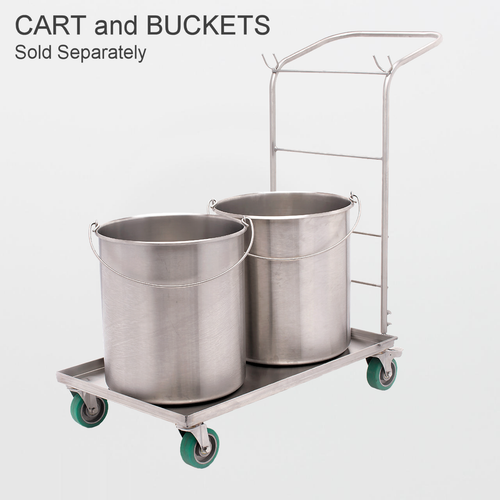
- Bucket compatibility: For use with BetaMop® round mop buckets; also published as compatible for use with all round buckets (wringer listing within the BetaMop® buckets/wringers/carts section)
- Packaging: 1 wringer per case
- SOSCleanroom listed ship weight: 15.00 lbs
- SOSCleanroom availability: 3–4 weeks (as listed)
- Sterility: Not published for TX7041
- Dimensions: Not published for TX7041
Why a dedicated wringer matters in critical environments
The wringer is a repeatability tool. When wetness is controlled, technicians reduce (1) drip trails that re-deposit residues, (2) aerosol and droplet generation during aggressive handling, and (3) uncontrolled carryover of disinfectant chemistry between rooms or between “dirty” and “clean” sides of a workflow.
Where it fits in the BetaMop® system
BetaMop® is commonly used for cleaning floors, applying/removing solutions (including disinfectants), and spill control. TX7041 supports that workflow by helping you wring down string mop refills to a consistent moisture level before entering a controlled area, before crossing a room boundary, or before moving from gross-clean to final-pass technique.
| Workflow element |
What the wringer controls |
Why it matters |
| Pre-pass wring-down |
Starting wetness of the mop head |
Reduces streaking, pooling, and residue films from over-application |
| Zone transitions |
Drip control at doorways and airlocks |
Helps prevent chemistry carryover and slip hazards |
| Final pass technique |
Repeatable dampness across the pass |
Supports consistent contact time without flooding the surface |
| Spill response |
Controlled absorption vs. dripping |
Reduces secondary spread and improves removal efficiency |
Practical cleanroom use guidance (technicians and engineers)
- Standardize your wring-down: Use a repeatable sequence (e.g., a defined number of compressions) so mop wetness is consistent from operator to operator and shift to shift.
- Control drip time: After wringing, allow a brief drip-off period over the bucket before moving into the controlled zone. This reduces drip trails and splash risk.
- Keep the wringer in the right place: Position the wringer to prevent splash onto walls, carts, or gowning areas. Avoid wringing directly under supply shelves or near exposed materials.
- Prevent re-contamination: Do not rest mop heads on the wringer between passes. Treat the wringer as a wet-process tool and keep it dedicated to the bucket system it is assigned to.
- Residue discipline: If you see haze or film on floors, reduce wetness and verify your rinse/removal step. Over-wetting is a common cause of residue carryover.
Compatibility and chemical-use notes
- General application: The BetaMop® buckets/wringers system is published for use with cleaning agents, disinfectants, and other solutions used in cleanroom environments.
- Stainless steel does not eliminate residue risk: Disinfectants and detergents can dry down and leave films. Build your SOP around rinse/removal expectations where required.
- Do not assume wipe-down chemistry: Specific chemical compatibility for TX7041 is not published. If your site uses aggressive oxidizers or specialty solvents, qualify under your exact chemistry and dwell time before standardizing.
- Prevent corrosion triggers: Do not leave high-salt or high-residue solutions to dry on the wringer. Rinse/clean as required by your program and dry between uses.
Risk controls checklist (SOP-friendly)
| Control point |
What to verify |
Contamination risk reduced |
| Pre-use inspection |
No burrs/sharp edges; no visible residue; hardware secure |
Particle shedding, scratching, residue transfer |
| Wring-down repeatability |
Defined compressions/technique; consistent operator method |
Smearing/streaking, pooling, chemistry carryover |
| Zone segregation |
Dedicated bucket/wringer per area when required |
Cross-contamination between rooms or cleanliness grades |
| Post-use cleaning |
Residues removed; dried before storage; stored to avoid re-soiling |
Residue, bio-burden support, particle attraction |
Common failure modes
- Residue transfer to “clean” areas: Often caused by over-wetting and inadequate drip-off time. Prevent with defined wring-down technique and boundary discipline.
- Streaking / smearing on floors: Common when too much chemistry is applied or when removal steps are skipped. Prevent by controlling wetness and confirming your rinse/removal method per SOP.
- Cross-contamination between rooms: Happens when the same wringer/bucket system is pushed across cleanliness zones without controls. Prevent with dedicated equipment per zone when required and clear labeling.
- Drip trails and splash events: Usually from moving too fast after wringing or wringing in a splash-prone position. Prevent with a brief drip-off pause and stable bucket placement.
- Mechanical wear or sharp edges: Not published as a risk factor, but any damaged metal edge can become a contamination generator. Prevent with routine inspection and removal from service if damage is found.
Storage and handling best practices
- Keep the wringer with its assigned bucket system; avoid mixing components between areas without cleaning/qualification.
- After use, remove visible residues per site practice, allow to dry, and store to prevent dust deposition or contact with dirty wheels/tools.
- Do not store submerged in used chemistry. Standing solutions can concentrate residues and increase transfer risk on the next shift.
- If your program includes sterile practices, confirm how non-sterile hardware is managed (e.g., sterile liners, sterile mop refills, and controlled storage) before deployment.
Documentation
SOS-hosted Texwipe BetaMop® technical data sheet (BetaMop TDS _ALL, 2014):
Click HereTexwipe BetaMop™ Series technical data sheet (TEX-LIT-TDS-002-11/21):
Click Here
If you have any questions please email us at Sales@SOSsupply.com or give us a call at (214)340-8574.
Check out the AI ChatBot powered by SOSCleanroom data libraries - give it a try!
THIS IS A NEW WEBSITE FEATURE FOR 2026!
Last updated: January 9, 2026
© 2026 SOS Supply. All rights reserved.