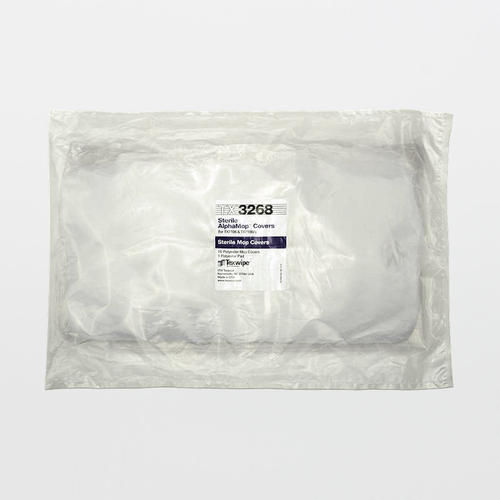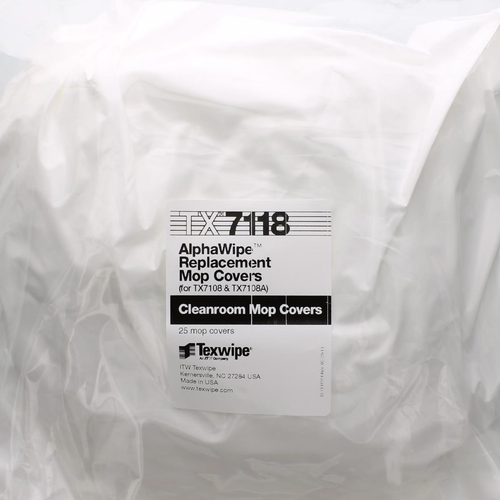
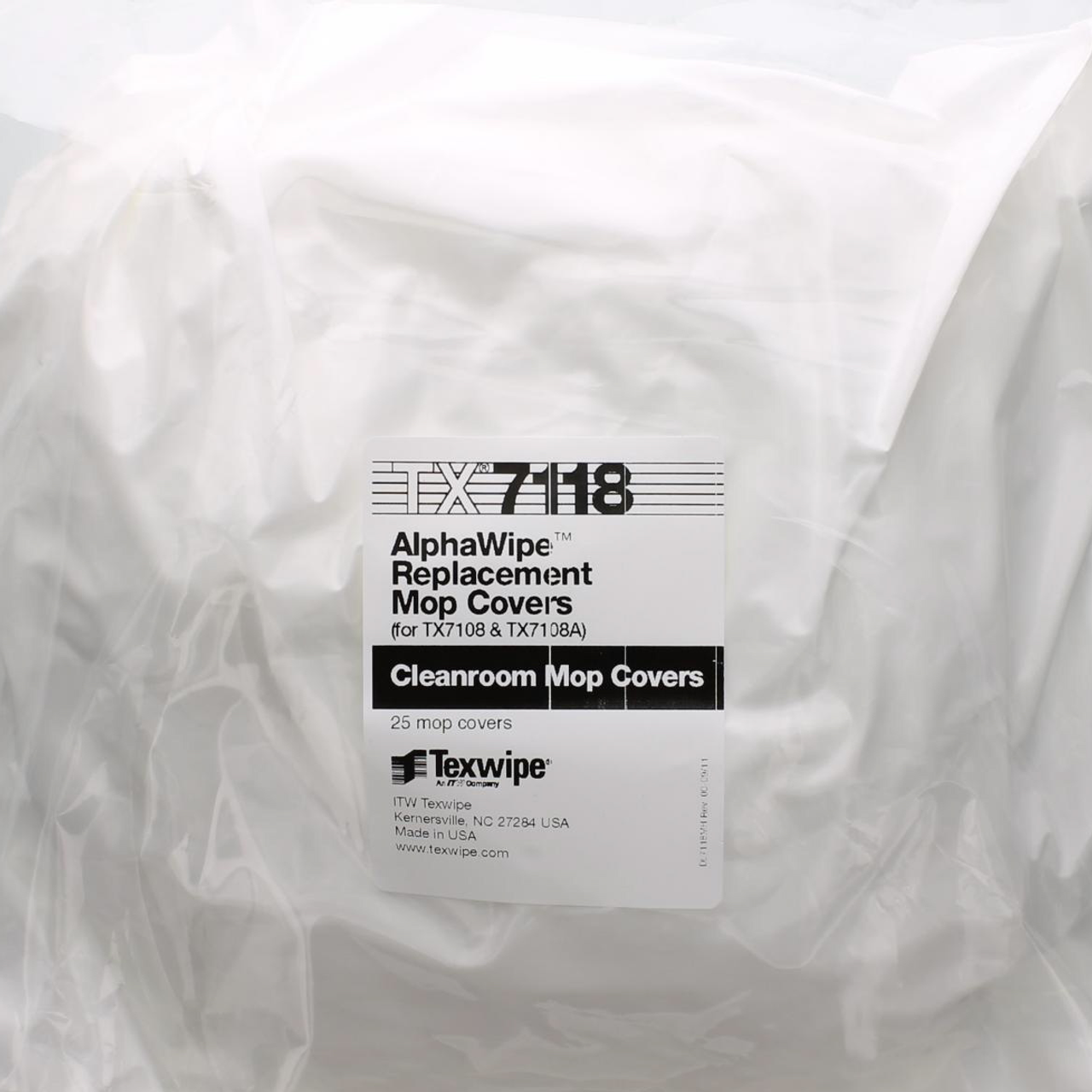
Texwipe TX7118 AlphaMop Polyester Cleanroom Replacement Mop Covers (Refills)

$625.18
(No reviews yet)
SKU:
TX7118
Availability:
Stock Item
Shipping:
Calculated at Checkout
Quantity Option (Case):
150 Mop Covers and 6 Foam Pads Per Case (6 Bags of 25 Mop Covers and 1 Foam Pad)
Type:
Dry Mop
Texwipe TX7118 AlphaMop™ Polyester Cleanroom Replacement Mop Covers (Refills) — Knitted Polyester Covers for AlphaMop™ Flat Mop Systems
TX7118 is a replacement cover refill for the Texwipe AlphaMop™ flat-mop system. These covers are designed to support controlled, repeatable cleaning of walls, ceilings and floors in critical environments where surface streaking, residue, particle redeposition and fiber transfer are unacceptable outcomes. In practice, a flat-mop cover is a process component: it is the contact interface that determines solution delivery, capture efficiency and the risk of dragging contaminants across a clean zone.

For over 35 years, SOS and Texwipe have been close partners, and SOSCleanroom is the authorized Master Distributor of ITW Texwipe for the United States market. That relationship matters when you standardize mop covers: it supports continuity of supply, stable product lineage, and fast access to manufacturer documentation your QA/QC team expects.

Published configuration (TX7118)
  • Product type: AlphaMop™ replacement mop cover (refill)
  • Material: Polyester cleanroom mop cover (knitted polyester cover substrate used across AlphaMop™ systems)
  • System compatibility: Designed for the AlphaMop™ flat mop head systems (including kits such as TX7108); intended to be used with the AlphaMop™ head/pad interface for stable surface contact
  • Packaging / count per package: Not published in the provided link text. Confirm the exact pack count and bag/case configuration on the SOS product page and the Texwipe datasheet before standardizing for kitting.
  • Sterility: Not stated for TX7118 on the provided link text. If sterile covers are required, use a sterile AlphaMop™ cover option with published sterility controls rather than assuming sterilization readiness.
  • Cleanroom environment: AlphaMop™ systems are typically positioned for controlled environments (ISO classes vary by cover/system and process). Confirm the published range for TX7118 in the Texwipe AlphaMop™ technical data sheet.
Low-linting performance — and the reality check
AlphaMop™ polyester covers are selected for low-linting, controlled-environment cleaning. Even so, no mop cover is truly zero-shedding or zero-residue in real use. The dominant risk drivers are technique and chemistry: over-wetting, dirty solution, skipping a required rinse step, and reusing a loaded cover beyond its capacity.

Practical cleanroom use guidance (technicians and engineers)
  • Cover-change discipline is the control knob: Treat each cover as a limited-capacity capture medium. Change covers by defined area coverage, time, or zone boundaries — not only when it looks dirty. In critical environments, visible soil is a late indicator.
  • One-pass technique: Use overlapping, unidirectional passes with a consistent stroke length. Avoid scrubbing back-and-forth which increases redeposition and streak formation.
  • Pressure control: Keep the mop head flat and apply light, consistent pressure. Excess pressure can create drag marks, squeeze solution to edges and seams, and accelerate cover abrasion.
  • Solution loading control: Load the cover/pad to a repeatable damp-to-wet condition per SOP (not dripping). Over-wetting is a common root cause of film formation, long dry times, and residue that attracts fines.
  • Segregate by zone and chemistry: Dedicate covers and tools by room/zone and by disinfectant family where required (e.g., quat vs. peroxide vs. sporicide). Mixing chemistries and reusing buckets/liners increases film risk and can neutralize actives.
  • Edge and wall avoidance: Keep covers off door seals, wall paint edges, drains, and high-traffic corners where debris loads quickly, then transfers back onto the floor or wall field.
  • Change gloves before handling fresh covers: Wet gloves (IPA/disinfectant) are a frequent cause of first-pass streaking and can contaminate a clean cover before it touches the surface.

Compatibility and solution-use notes
  • Disinfectant compatibility: AlphaMop™ covers are used for applying and removing cleaning solutions and disinfectants in controlled environments. Specific chemical compatibility and validated contact times are process-dependent and should be qualified under your site conditions (surface type, dwell, concentration, temperature and dry time).
  • Residue control: Film is often caused by chemistry carryover, over-application, or no rinse/final wipe where one is required. If your SOP specifies a rinse, do not shortcut it. Residual actives can become a particle trap once dry.
  • IPA / solvent wipe-down behavior: Not published in the provided link text for TX7118. If your procedure uses IPA as a final step, qualify for streaking, drag lines and dry-time behavior on your actual surface finish.
  • Sterile workflows: If a sterile cover is required at point-of-use, do not assume in-house sterilization is sufficient without validated packaging, bioburden control and post-cycle handling. Select a sterile cover option with published sterility controls when required.

Typical performance characteristics 
Published quantitative performance data (particles, ions, NVR) is not provided in the TX7118 product title/link text. Use the AlphaMop™ technical data sheet and your site qualification results to finalize limits and change-out rules.
Property Typical value Test method (as published)
Cover material Polyester (knitted polyester cover substrate) Not stated
Primary process value Repeatable solution application/removal with disciplined cover changes Process-dependent
Cleanroom positioning Refer to AlphaMop™ TDS for published ranges As published in AlphaMop™ documentation

Typical contamination characteristics 
Property Typical value Test method (as published)
Particles / ions / NVR (cover-specific) Not published in the provided link text for TX7118 Not stated
Primary contamination risks to control Residue film, redeposition, and cross-transfer between zones/chemistries Process-dependent

Common failure modes 
  • Streaking / film left behind: Usually from over-wetting, inconsistent technique, chemistry carryover, or skipping a required rinse. Prevent with controlled loading, timed dwell and (when required) a validated rinse/final wipe.
  • Redeposition: When a cover is used beyond capacity or moved back into a cleaner zone. Prevent with zone segregation and defined cover change intervals.
  • Drag marks / edge lines: Often from riding the mop edge, uneven pressure, or a mis-seated pad. Prevent by keeping the head flat and confirming pad alignment before entry.
  • Cover abrasion / increased shedding: Triggered by high pressure on rough floors, snag points, or using a cover for scrubbing work it is not intended to perform. Prevent by removing protrusions where possible, lowering pressure, and replacing covers at the first sign of scuffing.
  • Cross-contamination between chemistries: Shared buckets/liners/tools can create residue interactions and efficacy loss. Prevent with dedicated tools per chemistry and documented changeout rules.

Storage and handling best practices
  • Keep covers in original cleanroom packaging until point-of-use; open slowly to reduce particle mobilization and avoid staging open packs near critical operations.
  • Store sealed product off the floor and away from cardboard dust sources and chemical vapors that can leave films on textiles.
  • Segregate “new/clean” covers from “in-use” and “soiled” covers using labeled containers to prevent accidental reintroduction into clean zones.
  • If your site reuses covers, implement a validated laundry and rinse process with controlled water quality; residual detergent and hard-water salts are frequent root causes of post-dry haze and streaking.
Documentation 
SOS-hosted Texwipe datasheet (AlphaMop™ System, includes TX7118): Click Here
Texwipe manufacturer page (TX7118): Click Here
Texwipe manufacturer TDS PDF (AlphaMop™ Series): Click Here
If you have any questions please email us at Sales@SOSsupply.com or give us a call at (214)340-8574.

Check out our AI ChatBot powered by SOSCleanroom data libraries - give it a try!
 
THIS IS NEW FOR 2026!

© 2026 SOS Supply. All rights reserved.
The Technical Vault Cleanroom Mopping Systems & Techniques (Applied Use Case: Texwipe™ TX7118 AlphaMop™ Polyester Replacement Mop Covers)

Purpose & Scope

The TX7118 AlphaMop™ replacement cover is the cleaning interface in a flat-mop system—the component that actually contacts the surface and determines solution delivery, pickup efficiency, and redeposition risk. In controlled environments, mop covers should be treated as a process consumable, not “janitorial supplies.” The goal is repeatable, documented cleaning performance that supports SOP compliance and contamination control.

Visual Aids (Technique, Zoning, Lifecycle)

Use this graphic as a training reinforcement tool: unidirectional strokes, zone-based tool control, and mop cover lifecycle discipline.

Cleanroom mopping technique (unidirectional vs figure-8), cleanroom zoning map concept, and mop head lifecycle diagram

Implementation note: Diagram intent is educational. Align technique, zoning, and change-out rules to your facility SOP and validated cleaning program.

Published Configuration (TX7118)

  • SKU: TX7118
  • Product type: AlphaMop™ replacement mop covers (refills)
  • Quantity option (case): 150 mop covers and 6 foam pads per case (6 bags of 25 covers and 1 foam pad)
  • Type: Dry Mop (solution selection and loading method are SOP-dependent)
  • System compatibility: AlphaMop™ flat mop head systems (commonly paired with AlphaMop kits such as TX7108)

Note: Performance outcomes (streaking, residue, redeposition) are driven primarily by technique, solution control, and cover-change discipline—not by cover selection alone. :contentReference[oaicite:0]{index=0}

The Control Variable Most Facilities Underestimate: Cover-Change Discipline

A mop cover is a finite-capacity capture medium. “Looks clean” is a late indicator—especially in ISO-controlled rooms where soils may be invisible but still transferable. High-performing programs define a change rule by zone boundary, time, or area covered (or a combination), rather than waiting for visible loading.

  • Change by zone: never take a used cover from entries/thresholds back into cleaner field areas.
  • Change by chemistry: avoid mixing disinfectant families with the same tools/covers unless your SOP explicitly allows it.
  • Change before it fails: streaking and redeposition frequently start after the cover is already overloaded.

Technique Guidance (Flat Mop Covers)

One-Pass / Unidirectional Strokes

  • Use unidirectional passes with 10–20% overlap.
  • Avoid scrubbing back-and-forth, which increases redeposition and streak formation.
  • Keep the mop head flat; avoid riding edges or corners.

Solution Loading Control (Damp-to-Wet, Not Dripping)

  • Load the cover/pad to a repeatable damp-to-wet condition per SOP (not dripping).
  • Over-wetting is a common root cause of film formation, long dry times, and residue that later traps particles.
  • If your disinfectant program requires dwell + removal, define the removal step clearly (do not shortcut required rinse/final wipe steps).

Details Most Websites Miss (But Inspectors & Engineers Notice)

  • Glove transfer: handling a fresh cover with wet/disinfectant-wet gloves can cause first-pass streaking and contamination before surface contact.
  • Pad seating: a mis-seated foam pad can create pressure gradients that show up as drag lines and edge striping.
  • Zone edge avoidance: door seals, drain perimeters, and wall paint edges load covers quickly and can “seed” redeposition into the floor field.
  • Tool segregation: dedicate covers/tools by room/zone and, when required, by chemistry family.

SOP & Audit Readiness Checklist (Covers/Refills)

  • Define cover change-out rules by zone/area/time (not by appearance alone).
  • Define solution loading method and acceptable wetness (no dripping, no pooling).
  • Define technique: unidirectional strokes, overlap, and “no re-entry” of cleaner zones with used covers.
  • Define chemistry sequence (including dwell and any rinse/final wipe requirement) and tool segregation by chemistry family where applicable.
  • Train to prevent glove-transfer and pad mis-seating (two common root causes of streaking).

Disclaimer: This Technical Vault content is provided for educational purposes only. Manufacturer instructions, facility SOPs, and site-specific risk assessments must always take precedence. Cleanroom suitability and contamination performance are determined by the complete system configuration (covers + pads + mop head + packaging/handling) and validated site practice.

© SOSCleanroom. All rights reserved.