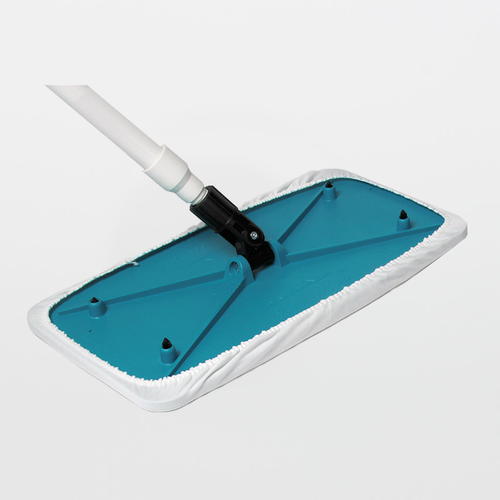
Texwipe TX7122 Mini AlphaMop™ Fiberglass Telescoping Mop Handle — 29" to 53", White (Handle Only)
TX7122 is a telescoping, white fiberglass cleanroom mop handle used to extend reach for ceiling-to-floor cleaning, wall work, and tight equipment zones when paired with compatible Texwipe mop systems (including Mini AlphaMop™/Isolator Cleaning Tool, ClipperMop™, AlphaMop™, and TexMop™ where applicable). It is published as autoclave safe and intended for controlled-environment cleaning where handling discipline and tool condition directly affect particulate and residue risk.
For over 35 years, SOS and Texwipe have been close partners, and SOSCleanroom is the authorized Master Distributor of ITW Texwipe for the United States market. That relationship matters when you standardize critical cleaning hardware: it supports continuity of supply, stable product lineage, and fast access to the manufacturer documentation your QA/QC team expects.
Published configuration (TX7122)
- Handle length: 29" – 53" (74 cm – 1.35 m), telescoping
- Material / color: Fiberglass, white
- Packaging: 1 handle per case
- Compatible mop systems (as published): AlphaMop™, Mini AlphaMop™/Isolator Cleaning Tool, ClipperMop™, and TexMop™ (interchangeable handle family)
- Autoclave: Autoclave safe (20 minutes @ 250°F / 121°C)
- Chemical resistance: Good chemical resistance for compatibility with a variety of solutions (specific chemistries and limits not stated)
- Cleanroom environment (published): ISO Class 2–7; Class 1–100,000; EU Grade A–D
- Shelf life: Unlimited (published)
- SOSCleanroom ordering unit: Case (1 mop handle)
- SOSCleanroom listed shipping weight: 2.50 lbs
Why handle condition matters in critical environments
In a contamination-controlled cleaning program, the mop cover often gets the attention — but the handle is the mechanical backbone. Dents, cracked fiberglass, residue in threads/collars, or uncontrolled telescoping adjustments can introduce avoidable particulate, residue, and cross-contamination risk. Treat mop hardware as a controlled tool: inspect it, dedicate it by area/grade, and document its cleaning/sterilization status the same way you do other critical cleaning implements.
Practical cleanroom use guidance (technicians and engineers)
- Adjust away from critical surfaces: Extend/collapse the telescoping section away from open product, exposed work, and laminar flow critical zones to avoid particle mobilization from collars and joints.
- Control the “dirty end”: Treat the bottom connection area (where it interfaces to frames/heads) as the highest-risk zone. Do not rest it on benches or carts that travel between rooms.
- Locking discipline: Confirm the telescoping lock is fully engaged before overhead or wall passes. A partial lock can slip under load, causing uncontrolled contact with walls, fixtures, or equipment.
- Glove and drip control: Keep hands and gloves dry at the collar. Wet disinfectant at the collar/threads can wick, trap residues, and create sticky films that attract fines.
- Defined tool staging: Stage the handle on a designated clean rack/hook between rooms. Avoid laying it on floors or rolling it through door thresholds.
- Head/cover change protocol: When changing mop covers or pads, keep the handle off the floor and off the “clean side” of staging surfaces. This reduces recontamination during frequent changeouts.
Annex 1 (EU GMP) alignment notes for mopping programs
Annex 1 places strong emphasis on a risk-based Contamination Control Strategy (CCS), validated cleaning/disinfection, material transfer discipline, and documentation/traceability across people, process, and tools. This handle can support those expectations when managed as part of a qualified mop system — but your site must define and validate the controls.
- CCS integration: Assign the handle to a specific grade/room set and document its cleaning/sterilization status (e.g., “clean,” “dirty,” “sterile-ready”) to prevent tool migration and reduce cross-contamination vectors.
- Validated cleaning and disinfectant rotation: If your CCS uses disinfectant/sporicidal rotation, ensure the handle (especially collars and threads) is included in your validated cleaning steps so residue does not compromise subsequent chemistries or contact times.
- Sterile-area usage decisions: Even if hardware is autoclave safe, sterile areas typically require sterile introduction practices (double-bagging, controlled transfer, and defined post-sterilization handling). Qualify this within your site SOPs before using in Grade A/B programs.
- Transfer and staging controls: Define how the handle is transferred into higher grades (wipe-down points, airlock staging, dedicated racks) to support CCS expectations around material transfer controls and contamination prevention.
- Documentation discipline: Treat handle inspection (damage, residue, lock function) as a documented pre-use check in critical areas, especially when cleaning is part of batch release readiness.
Compatibility and processing notes
| Exposure / process |
Published guidance |
Technician note (practical control) |
| Autoclave cycle |
Autoclave safe (20 minutes @ 250°F / 121°C) |
Protect locking collars and interfaces from impact post-cycle; confirm smooth extension/lock after sterilization before release to use. |
| Chemical exposure |
Good chemical resistance for compatibility with a variety of solutions (specific chemistries/limits not stated) |
Avoid soaking collars/threads; rinse/neutralize per your validated SOP if residues are known to interfere with disinfectant rotations. |
| Wipe-down |
Not stated for specific wipe-down chemistry |
If your program requires wipe-down prior to transfer, qualify the handle under your site conditions (chemistry, dwell time, drying, residue acceptance). |
| Cleanroom grade fit |
ISO Class 2–7; EU Grade A–D (published environment range) |
Higher grades demand tighter transfer, staging, and tool-dedication controls; treat hardware as a controlled component under the CCS. |
Common failure modes
- Lock slip / unintended collapse: Typically from partial engagement of the telescoping lock or residue in the locking interface. Prevent with pre-use lock checks and periodic collar cleaning per your validated process.
- Residue buildup at collars/threads: Happens when disinfectants wick into joints and dry. Prevent by keeping collars dry, avoiding oversaturation, and enforcing dry-time before storage or bagging.
- Particle attraction at high touch points: In low humidity, collars can attract fines when rubbed against garments or gloves. Prevent by following site ESD and garment-contact discipline and minimizing unnecessary adjustments in-room.
- Tool migration (cross-contamination): A handle moved between grades/rooms can become a hidden contamination vector. Prevent with clear tool dedication, labeling, and CCS-driven staging/transfer rules.
- Physical damage: Impacts and abrasion can compromise smooth operation and increase contamination risk. Prevent by using dedicated racks and avoiding floor contact or cart pinch points.
Storage and handling best practices
- Keep handles in clean storage (racks or hooks) to prevent floor contact, scuffing, and residue transfer.
- Store collapsed when possible to reduce accidental impacts and to keep collars protected.
- After cleaning/sterilization, protect collar interfaces from recontamination during transfer (bagging, designated staging, and controlled handoff).
- Inspect before each shift or batch: lock engagement, smooth telescoping, visible residue, and any damage that could compromise controlled cleaning.
Documentation
SOS-hosted Texwipe reference TDS (TexMop™ TX7116, includes TX7122 handle table; TEX-LIT-TDS-037 Rev.00-01/17):
Click HereTexwipe Cleanroom Mop Handles TDS (US-TDS-002 Rev.10/21):
Click Here
If you have any questions please email us at Sales@SOSsupply.com or give us a call at (214)340-8574.
Check out the AI ChatBot powered by SOSCleanroom data libraries - give it a try!
THIS IS NEW FOR 2026!
Last updated: January 9, 2026
© 2026 SOS Supply. All rights reserved.