The Technical Vault
By SOSCleanroom
Microfiber Without the Mystery: Why TX1204 Is a Controlled Choice for Smear-Free, Scratch-Sensitive Cleaning
Last reviewed: Jan. 3, 2026 | Audience: contamination control, cleanroom operations, EHS, quality
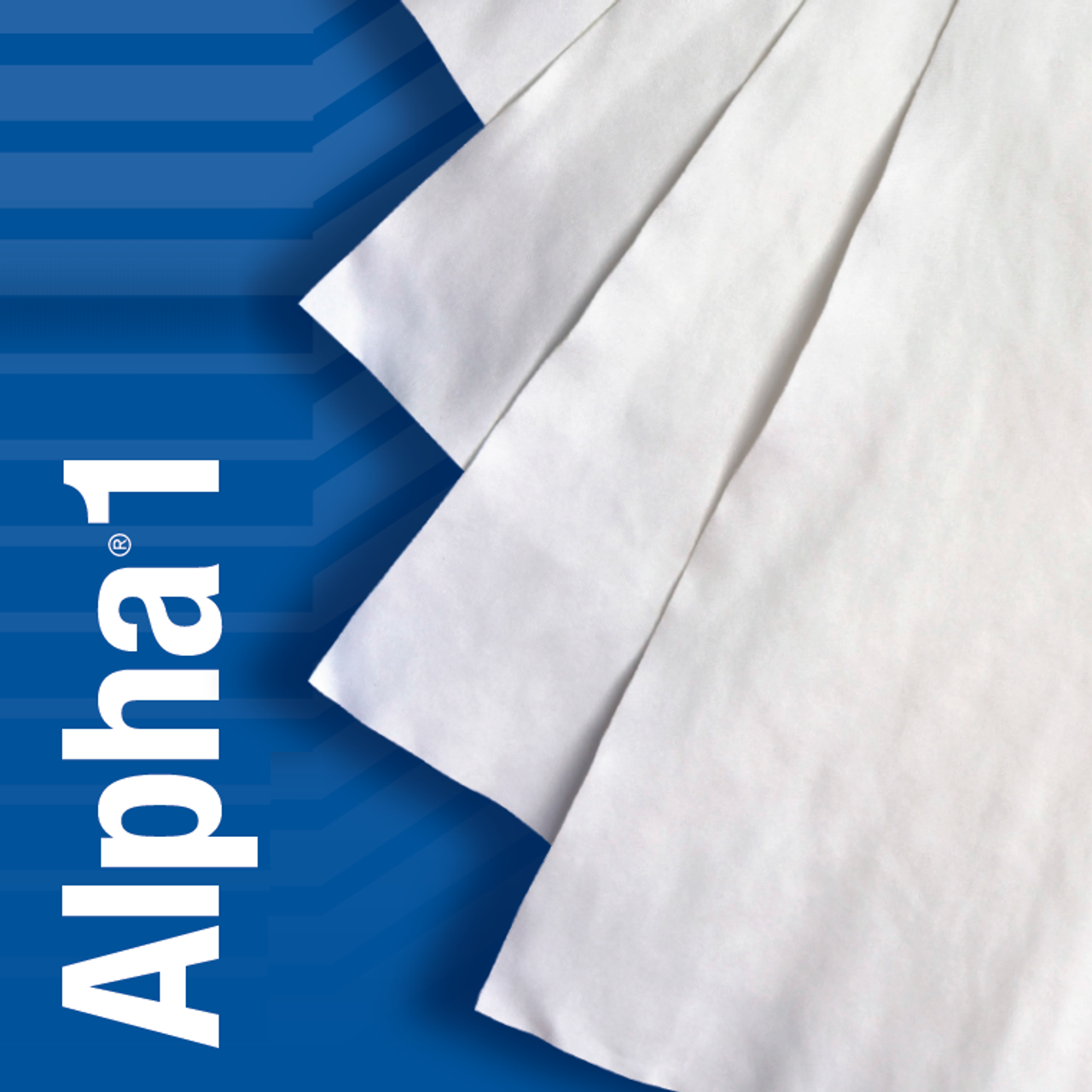
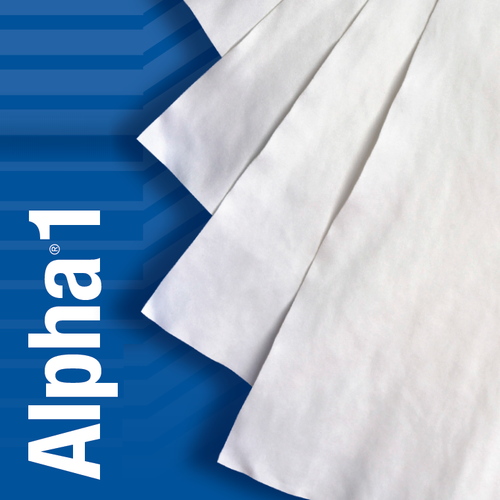
Texwipe TX1204 Alpha® 1 Microfiber (4" × 4") is a dry, sealed-edge microfiber cleanroom wiper engineered for “small-format, high-control” wiping where two failure modes show up fast: (1) micro-scratching or drag marks on sensitive finishes, and (2) smear/streak artifacts after dry-down when oils, fingerprints, and fine particulates are pushed rather than captured.
The control premise is straightforward: microfiber geometry (plus a sealed edge) is used to increase lifting/capture efficiency while keeping releasables and extractables in scope for critical cleaning. TX1204 is also positioned for programs that treat wipes as part of compliance—Texwipe frames Alpha® 1 Microfiber as meeting USP <797> and USP <800> wiper requirements, and supports lot coding for traceability.
What it’s for
TX1204 is best used for detailed wipe-downs of equipment surfaces, parts, and work surfaces; applying/removing lubricants, adhesives, residues, and disinfectants; and cleaning with common solvents including IPA, acetone, and degreasers. The 4" × 4" size is a practical fit for small features, edges, fixtures, enclosures, tooling touchpoints, and “spot-clean” work where a larger wipe drives overreach and re-contact risk.
Decision drivers
TX1204 earns its place when cleaning outcomes depend on fine-particle capture, smear control, and surface protection:
- Microfiber capture behavior: positioned to lift and capture particles “as small as microbes,” supporting fine-particle pickup logic in high-visibility cleaning steps.
- Scratch-sensitive surface posture: positioned as ideal for wiping surfaces susceptible to scratching—useful for finished metals, coated panels, and clear/transparent surfaces where cosmetic defects matter.
- Sealed-edge control: sealed-edge construction reduces edge-driven shedding risk compared with cut-edge microfiber formats.
- Chemistry compatibility: designed for disinfectants and solvent cleaning (including IPA and acetone), enabling one wipe platform across multiple chemistry sets (qualification still applies).
- Documented contamination framework: published typical values for particles/fibers, NVR, and ions support qualification and change-control discussions.
- Traceability: individually lot coded to support investigations and quality control.
Materials and construction – explained like an engineer
TX1204 is described as 80% polyester / 20% nylon microfiber with a sealed edge and cleanroom manufacturing controls. In practical terms, microfiber works because the effective “fiber geometry” increases contact points at the surface and improves lifting of fine particulates and oily films. That is why Texwipe specifically calls out removal of oils and fingerprints and “quick wicking” for streak-free cleaning.
The sealed edge matters because edge abrasion is a common real-world shedding mechanism—especially when operators pinch-fold, wipe corners, or drag across fastener heads and brushed finishes. Sealing reduces loose ends at the perimeter, helping keep low-linting behavior more stable under force.
Cleanliness and performance metrics
For many facilities, the decision to standardize a microfiber wipe comes down to releasables (particles/fibers), residues (NVR), and ions—plus whether the wipe improves first-pass cleaning outcomes on smear-prone soils. Published values are typically framed as typical analyses and should be treated as a qualification starting point rather than a contractual specification.
Typical performance context (Alpha® 1 Microfiber family): LPC (≥0.5 µm) 10.1 × 10⁶ particles/m²; fibers (>100 µm) 780 fibers/m². NVR: 0.20 g/m² (IPA), 0.08 g/m² (DI water), 0.01 g/m² (ethanol). Ions: sodium 0.20 ppm, potassium 0.02 ppm, chloride 0.10 ppm. Absorbency: sorptive capacity 320 mL/m²; sorptive rate <0.3 second. Basis weight 185 g/m².
Operational translation: microfiber can reduce “wipe marks” by capturing rather than smearing fine soils, but technique still controls outcomes—especially on glossy or inspection-driven surfaces. Use controlled, single-direction passes, rotate faces aggressively, and avoid overworking a single face once it loads.
Why microfiber matters operationally
In day-to-day operations, wipe failures are often handling failures: too much pressure, too many passes, and face reuse long after the wipe is loaded. Microfiber can be a practical “process stabilizer” because it lifts/captures fine soils quickly—reducing the temptation to scrub. The correct control is to pair that capture behavior with disciplined technique: consistent fold geometry, clean-face rotation, and early discard when oils/films begin to streak.
Rule of thumb: Choose microfiber when smear control and surface protection are the constraint. Step to sealed-edge knit polyester when edge control at higher wiping force is the dominant risk. Standardize on a controlled pre-wetted system when solvent loading repeatability is the constraint.
Best-practice use
TX1204 performs best when operators treat microfiber like a controlled tool, not a “forever cloth.” Fold to create stable faces, wipe in overlapping single-direction strokes, and switch faces frequently.
For solvent work (IPA/acetone/approved degreasers), apply chemistry consistently and avoid over-wetting that can mobilize residues beyond the intended wipe path. For disinfectants, follow your validated concentration and contact-time requirements, then remove residuals with fresh faces to prevent redeposit and streaks. Temperature guidance should be respected: Texwipe positions the family as appropriate for use at temperatures less than 400°F (205°C).
Common failure modes — and how TX1204 helps
Microfiber is often selected to prevent three recurring issues: scratch risk on sensitive finishes, smear/drag marks from oils and fingerprints, and fine-particle “haze” that shows up only under inspection lighting. TX1204’s microfiber construction and sealed edge support capture and surface gentleness, while the published contamination framework helps prevent over-placement into steps where a different wiper architecture is the safer control. The remaining controls are procedural: directional strokes, face rotation, and chemistry discipline.
Closest comparators
The most defensible comparisons are to other sealed-edge microfiber or “surface-safe” cleanroom wipe platforms intended for similar ISO ranges and smear-sensitive cleaning.
Contec microfiber cleanroom wipers (surface-safe microfiber options) are typical comparators when the driver is streak-free cleaning and cosmetic protection; buyers often compare “hand feel,” edge strategy, and published contamination framework.
Berkshire sealed-edge polyester knit wipes are the appropriate comparator when edge control under higher wiping force is the dominant risk, or when the program prefers a knit polyester substrate rather than microfiber for specific chemistries and surfaces.
Where TX1204 fits in a cleanroom wiping program
TX1204 is a strong choice for ISO-class controlled environments when the cleaning step is constrained by smear control, fine-particle capture, and scratch sensitivity—especially for small-format wiping at tools, fixtures, touchpoints, and inspection-visible surfaces. Use it as a defined tool for streak-free cleaning and spill control, then keep the program mature by separating roles: microfiber for smear-sensitive spot cleaning, knit polyester for broader daily wiping where abrasion tolerance dominates, sealed-edge knits when edge releasables are the acceptance driver, and controlled pre-wetted systems when solvent loading repeatability is the constraint.
Terminology note: TX1204 is engineered for low-linting performance; no wiper is truly “lint-free” in every process condition.
Country-of-origin note: manufacturer literature for Alpha® 1 Microfiber indicates the product is made in China and finished in the Philippines. If country-of-origin is controlled in your quality system, confirm it through documentation tied to the lots received.
Source basis
- SOSCleanroom product page: “Texwipe TX1204 Alpha-1 Microfiber 4" × 4" Polyester and Nylon Cleanroom Wiper” (positioning, use-cases, packaging configuration, lead-time guidance). https://www.soscleanroom.com/product/new-products/alpha-1-microfiber/texwipe-tx1204-alpha-1-microfiber-4-x-4-polyester-and-nylon-cleanroom-wiper/
- ITW Texwipe technical data sheet: “Texwipe Alpha® 1 Microfiber Wipers – TDS” (materials, sealed-edge statement, applications, USP <797>/<800> note, typical particles/fibers/NVR/ions, absorbency metrics, temperature guidance, shelf life, country-of-origin statement, packaging table). https://www.texwipe.com/images/uploaded/documents/Wipers/Texwipe-Alpha1-Wipers-TDS.pdf
- Texwipe product page: “Alpha® 1 Microfiber” (family overview and documentation access). https://www.texwipe.com/alpha-1-microfiber
Source: SOSCleanroom Technical Vault | Last reviewed: Jan. 3, 2026
© 2026 SOS Supply. All rights reserved.