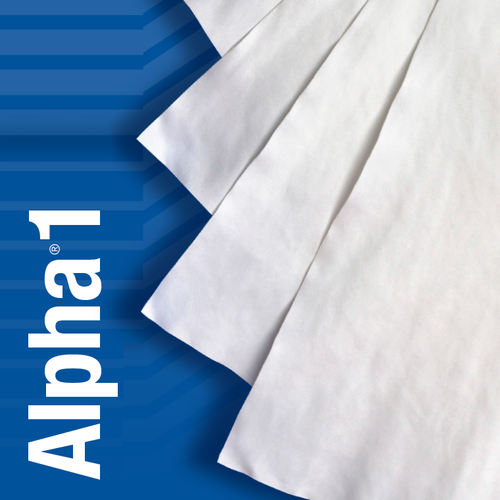
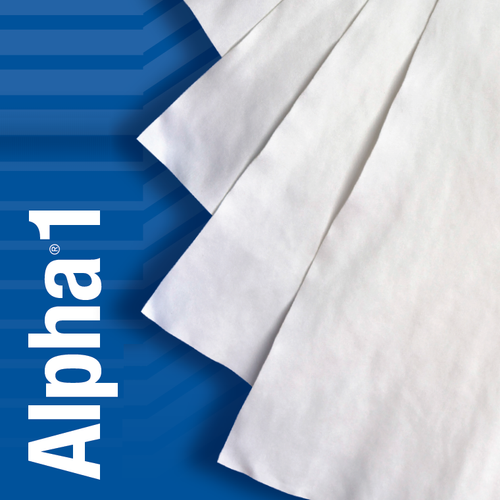
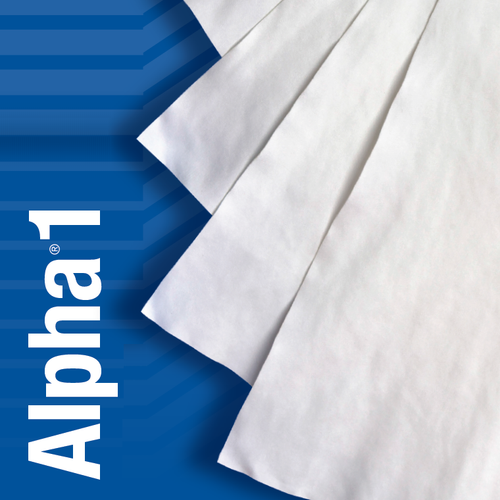
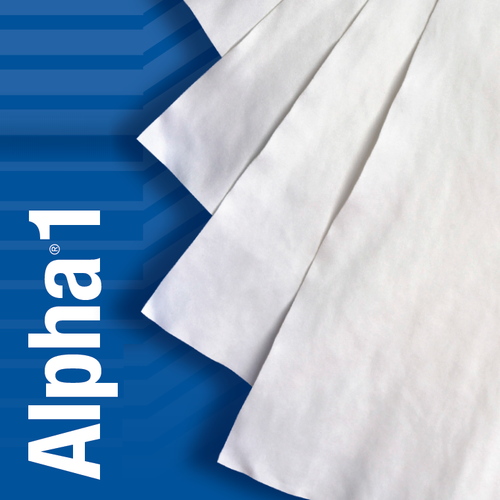
Texwipe TX1206 Alpha 1 Microfiber 6" x 6" Polyester and Nylon Cleanroom Wiper

$53.39
(No reviews yet)
SKU:
TX1206 BAG
Availability:
7 - 10 Business Days
Shipping:
Calculated at Checkout
Quantity Option (Bag):
100 Wipers Per Bag (2 Inner Bags of 50 Wipers)
Quantity Option (Case):
20 Bags of 100 Wipers Per Case
Type:
Dry Wiper
Wiper Family:
Alpha 1
Wiper Material:
Microfiber (Poly/Nylon)
Wiper Size:
6" x 6"
Wiper Edge:
Sealed Edge
ISO Class:
ISO 3 (Class 1)
ISO Class:
ISO 4 (Class 10)
ISO Class:
ISO 5 (Class 100)
ISO Class:
ISO 6 (Class 1,000)
ISO Class:
ISO 7 (Class 10,000)
ISO Class:
ISO 8 (Class 100,000)

TX1206 Alpha 1 Microfiber 6" x 6" Polyester and Nylon Cleanroom Wiper

TX1206 Alpha 1 Microfiber is a low-linting (no wiper is truly ‘zero-lint’ in every process condition), sealed-edge microfiber cleanroom wiper made from an 80% polyester / 20% nylon blend. It is designed for streak-free cleaning, quick wicking spill pickup, and surface cleaning where scratch sensitivity matters, while also helping remove oils and fingerprints in controlled environments.

Performance note: Alpha 1 Microfiber is positioned for increased lifting and capturing of particles as small as microbes, with low particles and extractables for critical cleaning and wipe-down steps.

Specifications:
  • Size: 6" x 6" (15 cm x 15 cm) nominal
  • Material: 80% polyester / 20% nylon microfiber
  • Construction: Microfiber wiping substrate engineered for lifting/capture and quick wicking
  • Edge: Sealed edge
  • Packaging (Bag): 100 wipers/bag (2 inner bags of 50 wipers)
  • Packaging (Case): 20 bags of 100 wipers per case
  • Type: Dry wiper
  • Wiper family: Alpha 1
  • Use environments: ISO Class 3–7 / EU Grade A–D (final suitability depends on your process and cleaning method)
  • Temperature guidance: Appropriate for use with temperatures less than 400°F (205°C)
  • USP guidance: Meets USP <797> and USP <800> wiper requirements
  • Autoclave: Autoclave safe
  • Traceability: Individually lot coded
  • Shelf life: Non-sterile (dry) — 5 years from date of manufacture
  • Country of origin: Made in China, finished in Philippines
  • Typical performance/cleanliness metrics (TDS; not specifications): LPC (≥ 0.5 µm) 9 x 10⁶ particles/m2; fibers (> 100 µm) 320 fibers/m2; NVR (IPA) 0.07 g/m2; NVR (DIW) 0.01 g/m2; NVR (Ethanol) 0.01 g/m2; ions (typical) Na 0.30 ppm, K 0.80 ppm, Cl 0.10 ppm; sorptive capacity 350 mL/m2; sorptive rate < 0.3 second; basis weight 190 g/m2
About the Manufacturer: 

Texwipe (an ITW company) differentiates itself in contamination control by treating the wiper as an engineered product, not a commodity consumable. For microfiber platforms like Alpha® 1, manufacturer materials emphasize controlled manufacturing and verification to support critical cleaning steps where streaking, residue control, and surface protection (scratch sensitivity) are primary drivers.


TX1206 combines sealed-edge construction with an 80/20 polyester/nylon microfiber blend intended to lift fine contamination, wick quickly, and help remove oils and fingerprints. SOSCleanroom (SOS) supports that manufacturing discipline with a close working relationship with Texwipe focused on continuity of supply, clean documentation handoff (certs, lot traceability), and practical application support—so customers can standardize microfiber wiping materials with predictable performance while maintaining procurement reliability and audit readiness.

TX1206 Features:
  • Alpha 1 Microfiber offers increased lifting and capturing of particles as small as microbes
  • Quick wicking performance, ideal for streak-free cleaning and spill control
  • Ideal for wiping surfaces susceptible to scratching
  • Unique microfiber construction allows the removal of oils and fingerprints
  • Manufactured to provide low levels of particles and extractables creating a wiper suitable for critical cleaning and wiping
  • Meets USP <797> and USP <800> wiper requirements
  • Autoclave safe
  • Individually lot coded for ease of traceability and quality control
TX1206 Benefits:
  • Microfiber lift and capture: Helps pick up fine contamination, including microbe-sized particles, in critical cleaning steps (process-dependent).
  • Streak control and fast wicking: Quick wicking supports streak-free wipe-downs and responsive spill control.
  • Surface protection: Commonly selected for scratch-sensitive surfaces where aggressive wiping materials are a risk.
  • Oil and fingerprint removal: Microfiber blend is positioned to help remove oils and fingerprints that can cause cosmetic defects or residue concerns.
  • Qualification-friendly: Low particles/extractables posture plus lot coding supports standardization and traceability conversations.
Common Applications:
  • Wiping and cleaning surfaces, equipment and parts
  • Applying and removing lubricants, adhesives, residues and other solutions including disinfectants
  • Cleaning with solvents such as isopropyl alcohol (IPA), acetone, and degreasers
  • Appropriate for use with temperatures less than 400°F (205°C)
Best-Practice Use:
  • Fold for control: Fold into quarters to create multiple clean faces; rotate faces instead of re-wiping with a loaded surface.
  • Wipe pattern: Use straight-line strokes (top-to-bottom or left-to-right) to reduce redeposition and streaking.
  • Scratch-sensitive surfaces: Use light, consistent pressure; let the microfiber do the work rather than scrubbing aggressively.
  • Solvent handling: For solvent wipe-downs, dampen—do not over-saturate—to maintain control and reduce dripping (verify compatibility to your chemistry and SOP).
  • Change-out triggers: Replace the wiper when the face becomes visibly soiled, tacky, or starts leaving streaks/residue.
Selection Notes (TX1206 vs. Other Options)
  • TX1206 vs. TX1204: Same Alpha 1 Microfiber platform; TX1204 is typically selected for tighter work areas and small parts, while TX1206 provides a larger wipe face for general small-surface wipe-downs.
  • TX1206 vs. TX1209 / TX1212: Size up when coverage per wipe matters (larger benches, panels, enclosures) or when you want fewer wipe changes per task.
  • Non-sterile vs. sterile: If your workflow requires sterile introduction and sterility documentation, consider STX1209 or STX1212; select TX1206 when sterility is not required and you want the same microfiber performance concept in a dry, non-sterile presentation.

Link to Texwipe Technical Datasheet:
Click Here

Other Similar Products Available From SOSCleanroom.com

Alpha 1 Microfiber Dry Wipers

  • TX1204: 4" x 4" (10 cm x 10 cm) dry, 100 wipers/bag, 20 bags/case
  • TX1206: 6" x 6" (15 cm x 15 cm) dry, 100 wipers/bag, 20 bags/case
  • TX1209: 9" x 9" (23 cm x 23 cm) dry, 100 wipers/bag, 20 bags/case
  • TX1212: 12" x 12" (31 cm x 31 cm) dry, 100 wipers/bag, 10 bags/case

Alpha 1 Microfiber Sterile Wipers

  • STX1209: 9" x 9" (23 cm x 23 cm) dry, sterile, 100 wipers/bag, 5 bags/case
  • STX1212: 12" x 12" (31 cm x 31 cm) dry, sterile, 100 wipers/bag, 5 bags/case

Notes: Qualifying a microfiber wipe for scratch-sensitive surfaces, streak control, or fingerprint/oil removal? Open the SOSCleanroom Technical Vault tab above for practical wipe technique (folding/face rotation, pressure control, wetness control), selection notes (TX1206 vs. other Alpha 1 sizes and sterile options), and the documentation details teams typically review when standardizing microfiber wipers across ISO Class controlled environments.

SOSCleanroom.com supports contamination-control programs with cleanroom consumables in stock, fair pricing, and responsive technical support—backed by same-day shipping options and customer service that understands real cleanroom workflows.

Product page updated: Jan. 3, 2026 (SOS Technical Staff)

© 2026 SOS Supply. All rights reserved.

The Technical Vault
By SOSCleanroom
Microfiber as a Process Control: Why TX1206 Reduces Streaking, Fingerprints, and “Reclean” Loops in ISO 3–7 Wipe-Downs
Last reviewed: Jan. 3, 2026 |  Audience: contamination control, cleanroom operations, EHS, quality

Many “it still looks hazy” and “why did the fingerprint come back?” complaints are not solvent problems—they are wipe-to-surface mechanics problems. When the surface is smooth and the soil is a thin film (skin oils, light process residue, handling marks), the cleaning outcome depends on whether the wipe can wick, capture, and hold the soil without smearing it into a larger area.

Texwipe TX1206 Alpha-1 Microfiber (6" × 6") is built for that scenario: an 80% polyester / 20% nylon microfiber wipe with a sealed edge, positioned for cleanroom wiping where streak control, pickup efficiency, and controlled handling matter. :contentReference[oaicite:0]{index=0}

What it’s for

TX1206 is typically selected for controlled-environment wipe-downs where the job is film removal (oils, fingerprints, light residues) and where operators need a wipe that behaves consistently across benches, tools, enclosure windows, and other smooth surfaces.

Manufacturer positioning for the Alpha-1 Microfiber family emphasizes streak-free cleaning and use in controlled environments ranging from ISO Class 3–7.

Decision drivers

TX1206 earns its place when your dominant risks are “smear,” “streak,” and “reclean,” not bulk spill absorption:

  • Microfiber film pickup: designed to remove oils and fingerprints and to support streak-free wipe-downs on smooth surfaces.
  • Sealed-edge control: sealed edges reduce edge-related releasables and fraying during folding and corner work. :contentReference[oaicite:3]{index=3}
  • Chemistry compatibility: positioned as compatible with common cleaning chemistries including IPA, acetone, and degreasers (qualification should still be process-specific). :contentReference[oaicite:4]{index=4}
  • Autoclave-safe posture: described as autoclave safe for facilities that sterilize in-house (cycle validation remains on the user).
  • Traceability: described as lot-coded, supporting investigation speed and change control discipline.
Materials and construction – explained like an engineer

Microfiber works because it shifts the cleaning mechanism from “push and smear” to “wick and capture.” The Alpha-1 Microfiber family is described as 80% polyester / 20% nylon. Polyester provides mechanical stability and chemical resistance; nylon improves wetting and helps with film pickup on smooth substrates. :contentReference[oaicite:7]{index=7}

The edge matters in real work. Corners, fasteners, door pulls, and fixture interfaces concentrate wiping stress. A sealed edge is an engineered answer to the most common microfiber failure mode—edge fray that turns a “nice wipe” into a particle/fiber contributor when operators fold and press. :contentReference[oaicite:8]{index=8}

Cleanliness and performance metrics

For many programs, microfiber is chosen for one outcome: reduce the number of passes required to reach an acceptable visual finish. That usually lowers operator contact time, reduces rework, and limits the “overworking one wipe” behavior that creates streaking and redeposit.

Keep terminology honest: TX1206 is engineered for low-linting performance, but no wiper is truly “lint-free” in every process condition. Control comes from pairing the right wipe architecture with disciplined technique—especially face rotation and wetness control.

Why microfiber matters operationally

In real facilities, “cleaning” is often performed under time pressure—end-of-shift wipe-downs, tool changeovers, quick recovery after a handling event. Microfiber reduces the urge to “scrub harder” because it is built to capture thin films efficiently. Manufacturer positioning highlights its ability to remove fingerprints and to support streak-free cleaning, which directly maps to lower reclean loops on smooth surfaces.

Best-practice use

Consider the following as a practical technique template (adapt to your SOPs and acceptance criteria):

  • Quarter-fold for face control: treat each exposed face as single-pass on critical surfaces; rotate early.
  • Directional strokes: use straight, overlapping passes; avoid back-and-forth scrubbing that redistributes dissolved films.
  • Wetness discipline: “damp” is usually the control target; over-wetting increases streaking risk after dry-down.
  • Edge management: lead with the wipe face, not the edge; reserve edge pressure for corners only.
  • Chemistry qualification: even when IPA/acetone compatibility is stated, validate against your surface finishes, dwell times, and residue budget. :contentReference[oaicite:10]{index=10}
Common failure modes — and how TX1206 helps

Microfiber failures are usually procedural, not material surprises:

  • Overworking one face: the wipe becomes a “re-deposit tool.” Prevent with face rotation and early discard.
  • Flooding a surface: excess solvent mobilizes films beyond the intended wipe path and leaves dry-down marks. Prevent with controlled wetness.
  • Using microfiber where bulk absorption is required: for large aqueous spills, a higher-sorption nonwoven blend may be the better first response; reserve microfiber for finishing and film control.
  • Corner pressure without control: edges see the highest stress; sealed-edge construction helps, but technique still governs outcomes. :contentReference[oaicite:11]{index=11}
Closest comparators

The most defensible comparisons are to other cleanroom-positioned microfiber wipes where film pickup and streak control are the primary drivers.

Contec microfibre wipe programs are a direct category comparator when a facility is standardizing microfiber wiping for controlled environments; evaluate edge strategy, packaging/handling controls, and how the wipe behaves in your solvent set and on your surfaces. :contentReference[oaicite:12]{index=12}

Rule of thumb: Use microfiber when the failure mode is film and streaking. Step to sealed-edge polyester knits when the failure mode is edge-driven fibers. Step to high-sorption blends when the failure mode is bulk aqueous pickup.

Where TX1206 fits in a cleanroom wiping program

TX1206 is a strong fit when your program needs a repeatable microfiber wipe for smooth-surface film control—fingerprints, light residues, and streak-prone wipe-downs—within the ISO Class 3–7 operating window. It is typically treated as a finishing/film-control tool in the wipe hierarchy, with higher-sorption nonwovens reserved for bulk spill response and polyester knits reserved for higher abrasion and general solvent wiping.

Terminology note: TX1206 is engineered for low-linting performance; no wiper is truly “lint-free” in every process condition.

Source basis
  • SOSCleanroom product page: “Texwipe TX1206 Alpha-1 Microfiber 6" × 6" Polyester and Nylon Cleanroom Wiper.” https://www.soscleanroom.com/product/new-products/alpha-1-microfiber/texwipe-tx1206-alpha-1-microfiber-6-x-6-polyester-and-nylon-cleanroom-wiper/ :contentReference[oaicite:14]{index=14}
  • ITW Texwipe technical data sheet (Alpha-1 Microfiber family; material, sealed-edge, chemistry compatibility, ISO range, usage claims). https://www.soscleanroom.com/wp-content/uploads/2020/09/Texwipe-Alpha1-Microfiber-TDS.pdf :contentReference[oaicite:15]{index=15}
  • Comparator category reference: Contec catalog (microfibre wipe category context). :contentReference[oaicite:16]{index=16}
Source: SOSCleanroom Technical Vault |  Last reviewed: Jan. 3, 2026
© 2026 SOS Supply. All rights reserved.