The Technical Vault
By SOSCleanroom
Texwipe TX1212 Alpha® 1 Microfiber: sealed-edge control for streak-free cleaning on scratch-sensitive surfaces
Last reviewed: Jan. 4, 2026 | Audience: contamination control, cleanroom operations, EHS, quality
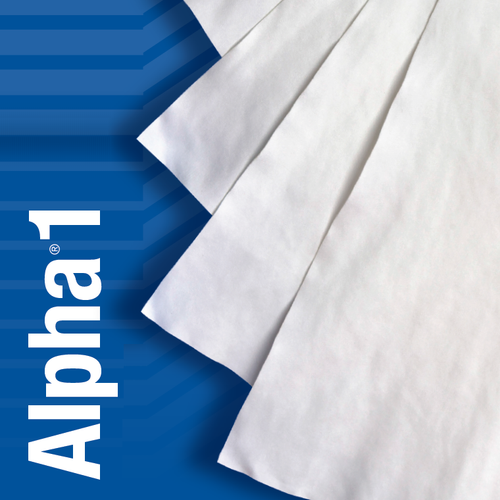
TX1212 Alpha® 1 Microfiber is a sealed-edge, split-blend microfiber wiper (80% polyester / 20% nylon) engineered to lift and hold fine particulates and oily residues without scuffing polished metals, coated surfaces, optics, or other scratch-sensitive substrates. The sealed-edge strategy is the “quiet” performance feature: it reduces edge fray and helps control fiber release when you’re wiping with pressure, folding aggressively, or working around sharp fixtures.
In practical cleanroom terms, this wiper is most valuable when you need two things at once: (1) strong particle pickup and fingerprint/oil removal, and (2) predictable low-linting behavior on critical surfaces. It is commonly selected for controlled application of solvents and disinfectants (including IPA and acetone) where streaking, residue, or surface damage is unacceptable and where lot traceability supports inspection discipline.
What it’s for
Precision wiping and cleaning of equipment, parts, and work surfaces in controlled environments—especially where oils/fingerprints, fine particles, or cosmetic defects create yield risk. Typical use cases include final wipe-down of benches and tooling, cleaning around sensors/optics, spill response where fast wet pickup matters, and controlled solvent/disinfectant application (wipe-on/wipe-off) without overspray.
Decision drivers
Use these drivers to decide if TX1212 is the correct microfiber wiper for your contamination and surface-risk profile.
- Sealed edge: Controls edge fray and helps reduce fiber release when wiping with pressure or along hardware edges.
- Microfiber blend (polyester/nylon): Split microfiber increases effective surface area for pickup, improving removal of oils and fingerprints versus conventional knits/nonwovens.
- Streak-free cleaning behavior: Fast wicking supports uniform solvent films and reduces “drag marks” on smooth surfaces when technique is controlled.
- Scratch-sensitive surface compatibility: Soft microfiber is a strong fit when surface cosmetics matter (coatings, polished metal, lenses, displays).
- Cleanroom environment fit: Commonly positioned for ISO Class 3–7 applications; validate by area classification, task criticality, and your local monitoring results.
- Traceability discipline: Individually lot coded packaging supports investigation workflow when excursions occur.
- Standards-based comparability: Typical contamination metrics are reported against recognized wiper test frameworks; treat “typicals” as a starting point, then confirm by incoming inspection and process qualification.
Materials and construction
TX1212 uses an 80% polyester / 20% nylon microfiber construction designed to “mechanically trap” fine contaminants. Microfiber’s advantage is geometry: more filament surface area and more micro-edges contacting the substrate. That increases pickup of very small particles and oily films that often smear under conventional wiping fabrics.
The sealed edge is the reliability feature. In real operations, the edge sees the most abrasion (folding, corner wiping, fixture contact). Sealing the edge reduces fraying and helps keep edge-generated fibers from becoming your hidden defect mechanism during wipe-downs.
Specifications in context
Size is 12" x 12" (nominal). Packaging is commonly 100 wipers per outer bag with two inner bags of 50; case pack is typically 10 bags per case. Basis weight is reported in the ~185–190 g/m² range depending on the manufacturer document revision. Sorptive capacity is typically ~320 mL/m² with an extremely fast sorptive rate (<0.3 second), which matters for streak-free solvent wiping and quick response to small spills before they migrate under fixtures or labels.
Cleanliness and performance metrics
Interpreting cleanroom wiper data correctly is a customer advantage. Particles/fibers indicate what the wiper may shed into the process; NVR (nonvolatile residue) indicates what can remain on the surface after solvent evaporation; ions indicate potential risk to sensitive electronics, plating, or corrosion-prone assemblies. “Typical” values are a baseline—not a substitute for your qualification.
Representative typical analyses for Alpha® 1 Microfiber report readily releasable particles (≥0.5 µm) on the order of 10.1 x 10⁶ particles/m² and fibers (>100 µm) around 780 fibers/m² (revision-dependent). Typical NVR can be reported by extractant (e.g., IPA, DI water, ethanol), and typical ionic values may include sodium, potassium, and chloride at low ppm levels. Use these numbers as a comparison anchor, then confirm lot-to-lot behavior with incoming inspection and in-process surface verification (witness plates, swab/wipe sampling, or particle trending) that matches your risk profile.
Packaging, traceability, and lifecycle controls
For controlled environments, “how it’s packaged” is part of performance. Inner-bag segmentation (e.g., 2 x 50) helps reduce repeated exposure of the full count during gowning-room handling. Lot coding supports deviation investigations: if you ever have an excursion tied to residue, particles, or surface defects, the lot code is what turns a guess into a traceable corrective action.
Shelf life is typically listed as 5 years for non-sterile dry wipers and 3 years for sterile dry wipers (verify against your received case label and the latest document revision).
Rule of thumb: Treat wipers like a controlled input. Wipe down the outer bag before entry, open only what you will use in the next work window, and record lot codes for any work tied to yield-critical surfaces.
Best-practice use
Microfiber rewards disciplined technique. The goal is to capture contaminants and remove them from the surface—without re-depositing them in the next pass.
- Fold for face control: Fold into consistent panels and use one face per pass; refold before the wiper becomes visibly loaded.
- One-direction passes: Wipe in a single direction with slight overlap; avoid “scrubbing in circles” that reworks contamination back into the surface.
- Control solvent delivery: If applying IPA/solvent, target a thin, uniform wet film—over-wetting increases streaking risk and can mobilize residues into edges/fasteners.
- Edge discipline near hardware: When wiping around brackets, corners, or fixtures, keep sealed edges oriented toward higher-abrasion contact points and retire the panel sooner.
- Surface risk check: On highly polished or coated parts, validate the wipe + solvent combination on a representative coupon before scaling to production hardware.
- Heat and autoclave context: If your process relies on high temperatures or autoclave exposure, verify that the use condition matches your site SOP and the latest manufacturer guidance.
Common failure modes
The most common failure modes are operational: using an overloaded wipe (re-deposition and streaking), mixing wipe tasks (oils then final clean in the same panel), and wiping rough/perforated surfaces that mechanically snag fibers or abrade edges. A second frequent issue is uncontrolled solvent delivery—spray-and-wipe practices can create uneven wetting, mobilize residues into crevices, and increase variability between operators. The mitigation is straightforward: standardize folding, pass count, and replacement cadence in the work instruction for the task.
Closest competitors
Berkshire MicroPolx® 1900 (polyester/nylon microfiber, sealed edge): A close mechanism match—microfiber knit designed for sensitive surfaces with sealed edges (laser cut) and published contamination metrics. MicroPolx 1900 is typically positioned for ISO Class 5–8 environments and emphasizes low shedding with solvent compatibility.
Contec MicroGenesis™ (polyester microfiber on polypropylene substrate): A different construction approach that concentrates microfiber on the wiping surface while using a bonded substrate to stabilize the structure. It is often positioned for ISO Class 6–8 and highlights particle pickup/retention, broad disinfectant compatibility, and published “typical” contamination data.
Where it fits in a cleanroom wiping program
TX1212 fits best as a critical-surface wiper: final wipe-downs, controlled solvent cleaning, and tasks where surface cosmetics and residue control matter. In a tiered wiping program, it typically sits above general-purpose polyester/cellulose blends and below highly specialized, ultra-critical products selected for unique residue, endotoxin, or extractables constraints. If your process is highly sensitive to ions or NVR, treat this as a qualification-driven selection: verify against your surface acceptance limits, your solvent system, and your local monitoring data.
Terminology note: Engineered for low-linting performance; no wiper is truly “lint-free” in every process condition.
Source basis
- SOSCleanroom product page (TX1212): https://www.soscleanroom.com/product/new-products/alpha-1-microfiber/texwipe-tx1212-alpha-1-microfiber-12-x-12-polyester-and-nylon-cleanroom-wiper/
- SOS-hosted manufacturer Technical Data Sheet copy (Alpha® 1 Microfiber; TEX-LIT-TDS-040 Rev. 00-05/17): https://www.soscleanroom.com/content/texwipe_pdf/TDS_Alpha1_2017_CuR3.pdf
- Texwipe.com Technical Data Sheet (Texwipe-Alpha1-Wipers-TDS; TEX-LIT-TDS-040 Rev. 00-11/17): https://www.texwipe.com/images/uploaded/documents/Wipers/Texwipe-Alpha1-Wipers-TDS.pdf
- IEST-RP-CC004.3 (referenced test framework in manufacturer documentation): https://www.iest.org/
- ASTM E2090-12 (referenced test method for particles/fibers): https://www.astm.org/
- Berkshire MicroPolx® 1900 Product Information (Rev/Date code shown on PDF): https://berkshire.com/wp-content/uploads/2025/05/MicroPolx1900.pdf
- Contec MicroGenesis™ product page: https://cleanroom.contecinc.com/product/1779212416
- Contec MicroGenesis™ technical data sheet (revision date shown on PDF): https://media-pim.rubix.com/medias/technical_datasheet/59/91/1300000179159/MicroGenesis_Microfiber_Wipes.pdf?attachment=true
Source: SOSCleanroom Technical Vault | Last reviewed: Jan. 4, 2026
© 2026 SOS Supply. All rights reserved.