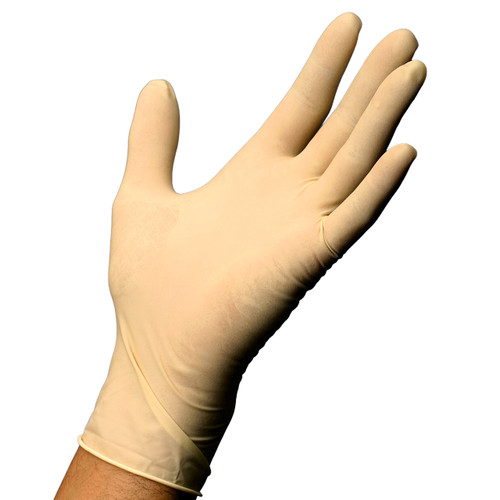
Cleanroom SGPF Series - Sterile Powder Free Latex Gloves (Pair Packed)

$278.50 - $286.00
(No reviews yet)
SKU:
SGPF
Availability:
7 - 10 Business Days
Shipping:
Calculated at Checkout
Quantity Option (Case):
200 Pairs
SGPF Series Sterile Powder-Free Latex Cleanroom Gloves (Pair-Packed) — High-Tactility Hand Protection for ISO 5 / Class 100 Environments
Natural rubber latex Sterile ISO 5 / Class 100 Powder-free Pair-packed

Overview
The SGPF Series sterile powder-free latex gloves are designed for ISO 5 / Class 100 cleanroom and aseptic environments where tactile sensitivity, glove integrity, and sterile presentation are critical. Manufactured from natural rubber latex and terminally sterilized, these gloves offer excellent dexterity for precision handling while supporting contamination control requirements at point-of-use.

Why pair-packed sterile gloves matter
Pair-packed sterile gloves are intended to support controlled donning and reduced handling risk during aseptic operations. By presenting matched left/right gloves together in a sterile inner package, pair-packed systems help limit unnecessary contact and simplify glove changes within ISO-classified work zones.
Latex material note
Natural rubber latex offers unmatched tactile sensitivity and elasticity for many operators. Facilities should assess latex sensitization risks and document glove material selection within their SOPs and occupational health programs.

Key features and benefits
  • Sterile, powder-free latex: Supports aseptic technique while avoiding powder-related residue concerns.
  • High tactile sensitivity: Latex elasticity and thin-wall design provide excellent feel for precision tasks.
  • Pair-packed presentation: Helps reduce handling and supports controlled donning inside ISO environments.
  • ISO 5 / Class 100 compatible: Designed for critical cleanroom and sterile processing zones.
  • Beaded cuff: Aids secure donning and maintains gown-glove overlap.

Recommended for
  • Aseptic processing and sterile compounding
  • ISO 5 critical work zones and laminar airflow hoods
  • Precision assembly and inspection requiring high dexterity
  • Sterile gowning protocols requiring sterile outer gloves

Questions? Email Sales@SOSsupply.com or call (214) 340-8574. Last updated: Jan. 29, 2026 © 2026 SOS Supply. All rights reserved.
The Technical Vault
By SOSCleanroom
Cleanroom SGPF Series Sterile Powder-Free Latex Gloves (Pair-Packed) — Natural Rubber Latex, ISO 5 / Class 100, High-Tactility for Precision Work
Sterile ISO 5 / Class 100 Pair-Packed Powder-Free Latex (NRL) High Tactility

1. Practical solutions in a critical environment

In ISO 5 work, gloves are not just PPE—they are a primary product-contact surface. The SGPF Series is selected when operators need sterile presentation and the tactile sensitivity that natural rubber latex is known for, especially during precision handling, assembly, and sterile manipulations.

Pair-packed sterile gloves support controlled donning and reduced handling risk by presenting a matched left/right set together in a sterile inner package. This helps teams standardize gowning steps and reduces the chances of avoidable touch events during glove changes.


2. What this glove is for
  • Aseptic processing and sterile compounding where sterile outer gloves are required by procedure
  • ISO 5 / Class 100 critical work zones (LAF hoods, isolator support, transfer steps)
  • Precision assembly, inspection, and manipulations where tactile feedback drives quality
  • Repeatable sterile donning and change-outs in gowning workflows (pair-packed presentation)

3. Selection rationale
  • Tactile sensitivity: Natural rubber latex provides excellent feel and elasticity for fine-motor tasks where "glove feel" affects performance.
  • Sterile presentation: Terminally sterilized and packaged for aseptic point-of-use handling.
  • Pair-packed control: Matched left/right presentation reduces unnecessary handling and supports consistent donning steps.
  • ISO 5 alignment: Designed for cleanroom / aseptic environments where contamination control expectations are high.
  • Powder-free profile: Avoids powder-related residue and downstream particulate concerns.
  • Gown-glove interface support: Beaded cuff helps secure donning and maintain overlap where sleeves and outer gloves meet.
SOSCleanroom selection philosophy
SOSCleanroom supports customers who need dependable, best-in-class cleanroom consumables. In critical environments, we do not recommend "good enough" substitutes when process risk, product integrity, and compliance expectations are on the line.

4. Materials and construction
  • Material: Natural rubber latex (NRL)
  • Color: Natural (typical latex)
  • Shape: Hand-specific (left/right)
  • Cuff: Beaded cuff
  • External surface: Textured grip (application-dependent)
  • Internal surface: Smooth for donning (no powder)
  • Powder content: Powder-free

5. Specifications in context
Specification Value Operational meaning
Cleanroom classISO 5 / Class 100Intended for critical areas where glove touch events and particle control are actively managed.
SterilitySterile (terminally sterilized)Supports sterile donning and use as an outer glove in aseptic workflows.
Freedom from holesLeak-tested (lot sampling per manufacturer program)Barrier integrity is the non-negotiable baseline. Define in SOP: inspection, tear response, and change-out triggers.
Length12" nominalHelps maintain gown-glove overlap during reach, rotation, and extended manipulations.
Thickness targetsThin-wall latex (tactility-oriented)Higher dexterity and "feel," with the tradeoff that glove change discipline matters more when tasks are abrasive or high-contact.
Tensile / elasticityLatex elasticity profile (high stretch / comfort)Supports comfort, reduces hand fatigue, and improves control for fine-motor tasks.
Tested for chemotherapy drugsNot the intended use claim for this gloveIf HD handling is in scope, select a glove specifically labeled/tested for that program's requirements.
Anti-staticNot positioned as an ESD-control gloveIf ESD risk is critical, evaluate ESD-rated gloves and confirm grounding strategy in the workcell.
Shelf lifeLot-coded expiration (see case labeling)Use FEFO (first-expire, first-out) and keep packaging intact until point-of-use transfer.

6. Cleanliness metrics
Metric Value Method / reference
Typical particle contributionProgram-qualified (request lot documentation as needed)IEST guidance for controlled-environment glove evaluation
Freedom from holesLeak-tested (manufacturer QC sampling)Manufacturer QC method; use facility-defined incoming inspection and in-process controls

Qualification note: If your program requires numeric limits (particles, extractables, endotoxin, etc.), request lot-specific Certificates of Compliance/Analysis through SOSCleanroom so QA can align documentation to your approved requirements.


7. Packaging, sterility, and traceability
  • Case configuration: Pair-packed sterile gloves (matched left/right in sterile inner packaging); case/box counts are size-dependent—confirm on order documentation and case labeling.
  • Sterilization method: Terminally sterilized (sterility assurance managed per manufacturer program).
  • Available sizes: 6.0, 6.5, 7.0, 7.5, 8.0, 8.5, 9.0, 10.0
  • Shelf life: Lot-coded expiration (see inner/case labeling for traceability)

8. Best-practice use
Customer SOP disclaimer
This guidance is provided as a suggested starting point for customer SOP development and operator training. Every cleanroom and process is different. Customers must evaluate risk, validate procedures, and obtain appropriate QA/ES approval before implementation. Always follow your facility gowning and aseptic technique requirements and the manufacturer’s instructions for use.
  • Stage with intent: Bring only what you will use into the ISO 5 zone. Minimize packaging handling steps and define a repeatable transfer pattern.
  • Donning without particle events: Use controlled movements and avoid snapping cuffs. Maintain glove-to-sleeve overlap and confirm cuffs remain seated after reach and rotation.
  • Sanitization (facility-defined): Disinfect sterile gloves with approved sterile IPA at the frequency defined in your SOP and after known touch risks.
  • Double-donning: If your process uses double gloves, define which layer is considered the sterile "outer" contact layer and when outer gloves are changed.
  • Change-out triggers: Replace immediately if torn, punctured, tacky, visibly soiled, wetted beyond SOP allowance, or after high-risk touch events.
Suggested pairings: wipers, swabs, and solutions for sterile glove workflows
In ISO 5 work, glove performance is only part of the outcome. Consistency improves when teams standardize the "glove + wiping + detailing + solution" set so operators are not improvising at point-of-use.
Use case Recommended item Why it pairs well
ISO 5 critical wipe-downs Texwipe TX3225 Sterile TexTra10 12" x 12" Polyester Cleanroom Wiper Sealed-border sterile polyester for controlled wiping in ISO 3–5 decision sets.
Gowning room wipe-downs Texwipe TX8932S Sterile TexVantage 12" x 12" Cellulose/Polyester Wiper Cellulose/poly blend for general wipe-down capacity outside direct ISO 5 critical manipulation.
Detail cleaning (ports, fittings, corners) Texwipe STX763 Sterile Gamma Irradiated Polyester Swab Sterile individually wrapped polyester swab for controlled detailing where a wiper cannot reach.
Sterile IPA delivery (routine spray) Texwipe TX8270 Sterile 70% Isopropanol (8 oz.) Ready-to-use sterile IPA for repeatable glove and surface sanitization steps per facility SOP.
Sterile IPA bulk use Texwipe TX3290 Sterile 70% Isopropanol (1 Gallon, 4/Case) Supports high-volume stations where spray bottles are refilled per validated practices.
Guardrail: Confirm solution compatibility with your surfaces and your facility SOPs (wet-contact time, reapplication triggers, and glove change-out triggers).

9. Common failure modes
  • Latex sensitization risk: Document material selection and manage sensitization risk through occupational health programs and approved alternatives.
  • Overconfidence in "sterile" packaging: Define a transfer method, sanitize outer packaging as required, and minimize touch events during donning.
  • Glove sanitization drift: Missed IPA sanitization steps and inconsistent contact time are common audit findings.
  • Hidden micro-tears during high-contact tasks: Use task-based glove changes and immediate replacement if integrity is questioned.
  • Gown-glove interface gaps: Train for overlap checks and define correction steps without contaminating the outer surface.

10. Other gloves to consider

11. Program fit for regulated cleanrooms
  • ISO 5 operations discipline: Supports programs that define glove sanitization, glove change frequency, and touch-risk responses as part of the contamination control strategy.
  • Gowning consistency: Pair-packed sterile presentation supports repeatable donning steps and reduces handling variability during glove changes.
  • Documentation-driven qualification: Suitable when facilities require lot traceability, expiration control, and vendor documentation support for QA review.
  • Material risk management: Latex use is appropriate when sensitization risk is addressed through policy, training, and documented alternatives where required.

12. Source basis
Product documentation
Standards & guidance references

Technical Vault Notice
Important disclaimer: This entry is provided for general process support and reference only. It is not regulatory, legal, medical, or validation advice.
Customers must evaluate risk, confirm applicability to their processes, and follow their approved SOPs, QA requirements, and the manufacturer’s instructions for use.
Questions or documentation requests: Sales@SOSsupply.com  |  (214) 340-8574
If you need additional information please try our SOSCleanroom specific AI ChatBot which draws from our extensive cleanroom specific libraries.
Last reviewed: April 29, 2026
© 2026 SOSCleanroom.com