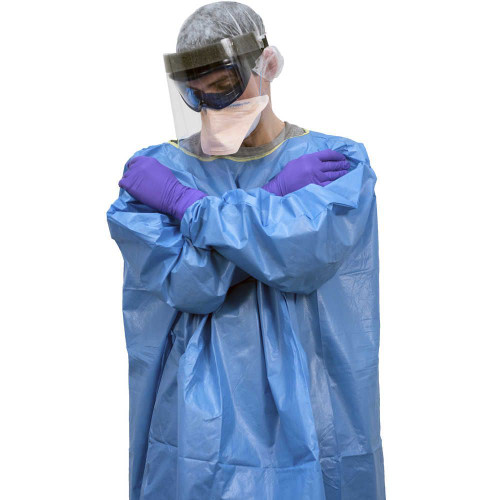
SKU shown: ISOSCG800W (Sterile Chemo Gown). Individually sterile bagged; 50/case.
Why this product exists (and what it is not)
Sterile chemo gowns are selected when hazardous drug workflows demand barrier protection and controlled handling.
The gown material and construction are intended to reduce exposure from splashes and contact transfer, while sterile packaging supports controlled entry into clean zones.
This product is not a substitute for a facility PPE program: your SOPs, training, hazard assessment, and regulatory obligations determine the correct gowning method and replacement frequency.
What the spec sheet states (material + build)
- Material system: polypropylene spun-bound fabric with a polyethylene exterior coating (anti-static material referenced).
- Barrier performance reference: Level 3 protection (AAMI Level 3 referenced).
- Weight: 52 gsm ± 3 gsm.
- Contamination-control features: low linting; seam seals; elastic cuffs; thumb loops; latex-free.
- Sterile format: individually packaged (1 per sterile bag); 50 gowns per case.
Chemo drug permeation testing — what to take away
The included report documents fabric permeation testing against a chemotherapy drug panel. In practical terms, this data helps you compare
material resistance across products, but it does not replace your facility’s real-world qualification (drug list, contact duration, temperature, and technique vary).
Report highlights (use as a comparison tool)
- ASTM D6978 panel: Carmustine, Cyclophosphamide, Dacarbazine, Doxorubicin HCl, Etoposide, Fluorouracil, Paclitaxel.
- Breakthrough detection time example: Carmustine shows a reported minimum breakthrough detection time of 38.3 minutes; multiple other drugs are reported as >240 minutes under the stated test conditions.
- Additional method: ASTM F739 testing is also documented for Cisplatin and Thiotepa on a PE-coated gown material sample.
ISO-first: Donning discipline that reduces contamination
In ISO 14644 cleanroom operations, contamination control is driven by an operations control programme: personnel flow, gowning programme,
entry/exit discipline, and ongoing training. The objective is simple: reduce shedding and reduce contact transfer at the gowning boundary.
Technique guidance (adapt to your SOP)
- Work from “clean to cleaner”: enter gowning in stages; do not carry “dirty-side” items across the bench/line of demarcation.
- Control touch points: handle the gown by inner surfaces during donning; keep the outside of sleeves/front panel off benches and away from hands as much as possible.
- Seal interfaces: ensure cuffs remain covered by gloves; thumb loops help keep sleeves from riding up (a common contamination pathway at wrists).
- Move deliberately: fast movements increase shedding and snag risk; slow, controlled motions protect garment integrity.
- Inspect before entry: if packaging is compromised or the gown is torn, replace it immediately (do not “make it work”).
Operational reminder: ISO standards establish the framework (classification and operational controls), but your facility defines the required gown set,
gowning order, replacement intervals, and qualification tests based on risk and cleanroom grade.
EU overlay: Annex 1 expectations (when applicable)
If you operate under European sterile manufacturing expectations, EU GMP Annex 1 adds stricter, explicit gowning controls (especially for Grade B/A access).
Even when your primary driver is hazardous drug protection, Annex 1 is a useful benchmark for how to don sterile garments without contaminating the outer surface.
- Changing room discipline: Annex 1 states outdoor clothing (including socks) should not be brought into changing rooms leading directly to Grade B and C areas.
- Grade B gowning technique: wear sterilised garments; wear appropriate sterile gloves while donning; use sterile over-boots; tuck sleeves into a second pair of sterile gloves worn over the donning gloves.
- Outer-surface protection: garments should be packed/folded to allow donning without contacting the outer surface or letting the garment touch the floor.
Receiving and documentation checklist (practical)
- Verify sterile packaging integrity: reject cases with compromised sterile bags or visible damage.
- Lot/traceability: record lot and expiry data per your QA receiving procedure.
- Storage: keep in a cool, dry area to protect packaging and material performance.
- Document set: file the spec sheet and permeation test documentation as part of PPE qualification evidence.
Common donning failure modes (what to coach out)
- Touching the outer surface while donning: increases contact transfer onto the gown’s most exposed areas.
- Wrist exposure: sleeves riding up or gloves not fully covering cuffs is a frequent contamination pathway.
- Dragging gown edges: garment contacting floors/dirty benches compromises the gown immediately.
- “One size fits all” thinking: poor fit increases tearing/snags and increases shedding due to friction and excessive movement.
Source basis (manufacturer/spec-first)
- SOSCleanroom product page: https://www.soscleanroom.com/product/ppe/sterile-chemo-gowns-for-hazardous-drug-compounding/
- Spec sheet + drug test report (PDF): https://www.soscleanroom.com/content/Sterile%20Chemo%20Gowns.pdf
- ISO 14644-1 (cleanroom classification context): https://www.iso.org/standard/53394.html
- ISO 14644-5 (operations / gowning programme context): https://www.iso.org/standard/88599.html
- EU GMP Annex 1 (personnel/gowning expectations context): https://health.ec.europa.eu/system/files/2022-08/20220825_gmp-an1_en_0.pdf
SOSCleanroom is the source for this Technical Vault entry.
Briefed and approved by the SOSCleanroom (SOS) staff.
If you have any questions please email us at Sales@SOSsupply.com
Last reviewed: Jan. 14, 2026
© 2026 SOSCleanroom