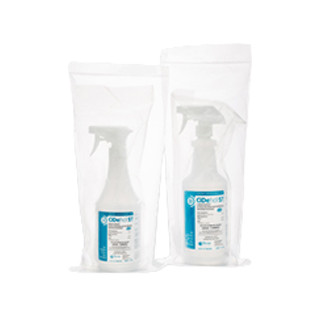
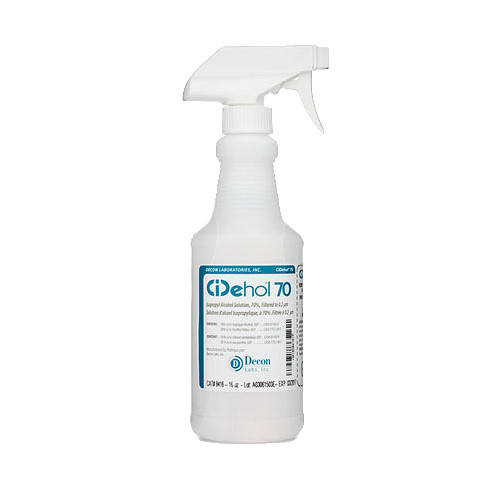
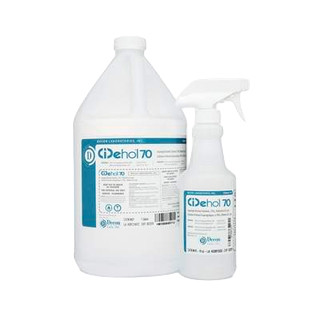
CiDehol ST 8332 Sterile 70% Isopropyl Alcohol Solution (32 oz.)

$192.32
(No reviews yet)
SKU:
8332
Availability:
Stock Item
Shipping:
Calculated at Checkout
Solution Type:
70% Isopropyl Alcohol
Sterile:
Yes

CiDehol ST 8332 Sterile 70% Isopropyl Alcohol (IPA) Solution (32 oz. Trigger Spray) — 12 Bottles/Case

CiDehol ST 8332 is a sterile, ready-to-use 70% (v/v) USP isopropyl alcohol solution designed for sterile cleanroom cleaning and disinfection use. Decon Labs positions CiDehol ST around documented contamination-control discipline: 0.2 µm filtration, Class 100 cleanroom bottling with double-bag packaging, gamma irradiation to a sterility assurance level (SAL) of 10-6, and lot-release testing for sterility and bacterial endotoxins prior to shipment. The 32 oz. trigger-spray format supports routine wipe-downs, pass-through cleaning, and point-of-use applications where a sterile alcohol and traceable paperwork are required by SOP.

Shipping note: This item is considered a Consumer Commodity ORM-D shipment and can only be shipped Ground.

SOSCleanroom + Decon Labs: SOSCleanroom has been a distributor of Decon for over 10 years supporting cleanrooms across the United States.

Specifications:
  • Manufacturer: Decon Laboratories, Inc. (Decon Labs)
  • Catalog / SKU: 8332
  • Solution type: 70% Isopropyl Alcohol
  • Sterile: Yes
  • Concentration: 70% (v/v) Isopropyl Alcohol (IPA) / 30% water phase (per manufacturer documentation)
  • Ingredients (as listed): 70% Isopropyl Alcohol, USP; 30% Purified Water, USP
  • Filtration: Filtered to 0.2 µm
  • Cleanroom processing: Packaged in a Class 100 cleanroom; bottled and double-bagged for controlled transfer
  • Sterilization: Gamma irradiated to SAL 10-6
  • Lot release testing: USP 14-day sterility test; bacterial endotoxin testing (LAL) prior to release
  • Regulatory: EPA Reg. No. 56753-1 (per manufacturer documentation)
  • Documentation: Lot-specific traceable documentation shipped with each case (QC, irradiation, sterility, endotoxin limits)
  • Package size: 32 oz. trigger spray bottle
  • Quantity option: Case
  • Case unit: 12 bottles per case (32 oz. trigger spray bottles)
  • Shipping constraint: Ground shipping only (Consumer Commodity ORM-D)
About the Manufacturer: 

Decon Laboratories, Inc. (Decon Labs) manufactures contamination-control and critical-cleaning chemistries used in regulated and documentation-driven operations, including pharmaceutical, biotechnology, medical device, and other controlled environments. Decon emphasizes process controls that matter for cleanroom programs: defined formulations, controlled filtration and packaging, sterilization validation, and lot-specific technical documentation to support qualification and audit readiness.


SOSCleanroom has been a distributor of Decon for over 10 years supporting cleanrooms across the United States. Customers commonly select Decon solutions when they need dependable supply, clear paperwork, and a product family backed by accessible technical data sheets and safety documentation.

CiDehol ST Features:
  • Sterile, ready-to-use 70% (v/v) IPA solution intended for sterile cleanroom cleaning and disinfection use
  • 0.2 µm filtration and cleanroom packaging controls aligned to controlled-environment expectations
  • Double-bag packaging supports staged wipe-down and cleaner-area transfer discipline
  • Gamma irradiation to SAL 10-6
  • USP 14-day sterility test and LAL endotoxin testing performed prior to lot release
  • Lot-specific traceable documentation shipped with each case (QC, irradiation, sterility, endotoxin limits)
  • EPA-registered disinfectant claim supported by manufacturer documentation
CiDehol ST Benefits:
  • Sterile workflow alignment: Supports SOP-driven wipe-down and cleaning steps where sterile alcohol is required inside controlled or aseptic areas.
  • Operator consistency: Ready-to-use concentration reduces variability associated with on-site mixing and decanting steps.
  • Transfer discipline support: Double-bag packaging helps reduce cross-contamination risk during pass-through and staging transfers (per your SOP).
  • Audit readiness: Lot traceability and documentation streamline QA release, investigations, and routine recordkeeping.
Common Applications:
  • Routine wipe-down of work surfaces, carts, fixtures, and equipment exteriors in controlled environments
  • Pass-through wipe-down steps prior to introducing items to cleaner zones (per your transfer SOP)
  • Spot cleaning of tools and touch points during operations (as permitted by site SOP)
  • Final wipe-back or residue-sensitive steps where alcohol is specified (process- and surface-dependent)
Best-Practice Use:
  • Spray-to-wipe control: Many facilities spray onto a low-linting wiper (no wiper is truly ‘lint-free’ in every process condition) rather than spraying broadly into airflow, to improve control and reduce aerosolization.
  • Wipe technique: Use straight-line, overlapping strokes; rotate to a clean face frequently to avoid re-depositing soils.
  • Contact time: If your SOP specifies a wet-contact time, keep surfaces visibly wet for the required duration (re-wet as needed per SOP).
  • Compatibility check: Validate against sensitive plastics, coatings, optics, labels, and adhesives per your internal qualification.
  • Flammables discipline: Store and use as a flammable liquid per your EHS program and SDS (ventilation, ignition-source control, approved storage, and disposal practices).
Selection Notes (Sterile 70% IPA vs. Other Alcohol Options)
  • Sterile vs. non-sterile: Choose sterile when your SOP, area classification, or risk assessment requires sterile alcohol and supporting lot documentation.
  • 70% vs. 100% IPA: 70% IPA is commonly selected for routine cleaning and disinfection steps; 100% IPA is often selected when rapid drying or specific residue targets drive the decision (verify with SOP and material compatibility).
  • Trigger spray vs. bulk: Trigger sprays support point-of-use control; bulk containers may fit higher consumption areas when dispensing/decanting controls are qualified.

Datasheet Links:


Other Similar Products Available From SOSCleanroom.com

CiDehol ST (Sterile 70% IPA)

CiDehol (Non-Sterile 70% IPA)

Notes: Sterility level, bottle format, and wipe-down technique should align with your validated SOP and risk assessment (surface compatibility, residue limits, transfer controls, and any required wet-contact time). SOSCleanroom can help you select the right Decon format for your workflow and documentation needs.

SOSCleanroom.com supports contamination-control programs with dependable supply, fair pricing, and responsive support—backed by customer service that understands real cleanroom operations.

Product page updated: Jan. 7, 2026 (SOS Technical Staff)
If you have any questions please email us at Sales@SOSsupply.com or give us a call at (214)340-8574.

© 2026 SOS Supply. All rights reserved.

The Technical Vault
By SOSCleanroom
CiDehol ST 8332 • Sterile 70% IPA (USP)
WFI-based • 0.2 µm filtered
Double-bagged • Gamma irradiated (SAL 10⁻⁶)
32 oz trigger spray • 12/case
EPA Reg. No. 56753-1
Shelf life: 2 years (Decon TDS)
Ground shipping only (SOS listing)
CiDehol ST 8332 Sterile 70% Isopropyl Alcohol (32 oz Trigger Spray): WFI-Based, Lot-Documented IPA for Cleanroom Surface Cleaning and Disinfection Programs
CiDehol ST 8332 Sterile 70% Isopropyl Alcohol Solution (32 oz.)
Receiving cue: trigger head, sterile bagging, and lot documentation should align with your facility’s incoming release checks.
1) Practical solutions in a critical environment

In ISO-class and regulated controlled areas, alcohol use succeeds or fails on repeatability: consistent wetting, consistent dwell, and consistent documentation. When teams mix bottle types, refill sprayers, or lose track of lot-level paperwork, deviations tend to show up as streaking, re-deposition, or “mystery residues” that trigger re-cleaning cycles and line delays.

CiDehol ST is built around that reality. Decon describes it as a sterile, ready-to-use 70% isopropyl alcohol (IPA) solution made with Water-For-Injection (WFI), filtered to 0.2 µm, and packaged with process controls that support sterility, endotoxin limits, and traceable lot documentation.

Distributor note: SOSCleanroom has been a distributor of Decon for over 10 years supporting cleanrooms across the United States.

2) What this product is used for
  • Cleaning and disinfecting hard, non-porous surfaces and equipment in cleanroom areas within pharmaceutical, biotechnology, and medical device facilities where a sterile, non-pyrogenic alcohol solution is required.
  • Routine wipe-down of carts, stainless workstations, pass-through items, tools, and process-line touchpoints using a controlled trigger-spray format.
  • Support for sanitation steps (5-minute contact time) and disinfection steps (10-minute contact time) when used per Decon’s instructions and facility requirements.
  • Programs that require lot-specific documentation for QC, irradiation, endotoxin limits, and sterility.
3) Why customers consider this product
  • Sterile 70% (v/v) USP isopropyl alcohol made with Water-For-Injection (WFI).
  • Filtered to 0.2 µm; bottled and double-bagged within a cleanroom; gamma irradiated to a sterility assurance level (SAL) of 10-6.
  • Each lot is tested for bacterial endotoxin (LAL) and sterility via USP 14-day sterility test.
  • Endotoxin criteria stated by Decon: less than 0.25 EU/mL (WFI level criteria).
  • Lot-specific documentation is attached to every case detailing QC, irradiation, endotoxin limits, and sterility.
  • EPA registration published by Decon (EPA Reg. No. 56753-1) with organism/contact-time guidance on the technical data sheet.
  • Convenient 32 oz trigger-spray format with case pack aligned to stocking and change-control discipline (12 bottles per case per Decon and SOS listing).
4) Materials, composition, and build

CiDehol ST is a sterile 70% IPA (v/v) USP isopropyl alcohol solution made with Water-For-Injection (WFI). Decon lists the ingredients as 70.00% Isopropyl Alcohol (USP) and 30.00% Water-for-Injection (USP).

The 8332 format is a 32 oz trigger-spray bottle. Decon’s product page notes availability in trigger spray bottles with heads attached and gallon size options across the CiDehol ST family.

5) Specifications in context

For sterile alcohol programs, the most operationally important specifications are the ones your receiving and QA teams can verify: filtration/processing controls, sterility assurance, endotoxin criteria, and lot documentation discipline.

Attribute CiDehol ST 8332
Solution Sterile 70% IPA (v/v), USP
Water quality Water-For-Injection (WFI), USP
Filtration 0.2 µm filtered
Packaging controls Bottled and double-bagged within a cleanroom
Sterility processing Gamma irradiated to SAL 10-6
Lot testing USP 14-day sterility test + bacterial endotoxin (LAL)
Endotoxin criterion stated by Decon < 0.25 EU/mL (WFI level criteria)
EPA registration EPA Reg. No. 56753-1
Bottle size / format 32 oz trigger spray
Case pack 12/case (Decon TDS; SOS listing specifies 12 trigger spray bottles per case)
Shelf life 2 years (Decon TDS)
Shipping classification notes SOS listing: Consumer Commodity ORM-D, ground shipping only; Decon SDS: sizes 1 liter or less ship as Limited Quantity (wording may vary by carrier/regulatory updates)
Country of origin Not published in source basis
6) Performance and cleanliness considerations

For IPA, “performance” is a blend of chemistry and discipline. Decon provides specific contact times and organism claims on the technical data sheet, and it specifies use instructions that emphasize maintaining a wet surface for the stated minimum time. In practice, most alcohol-related failures come from flash-off (surface dries too quickly), reusing a contaminated wipe face, or skipping pre-clean on gross soil.

Decon-published contact/dwell time summary (CiDehol ST Tech Sheet)
Organism Use & minimum contact time (per Decon)
Staphylococcus aureus (ATCC 6538) 5 minutes for sanitizing / 10 minutes for disinfecting
Salmonella enterica (ATCC 10708) 10 minutes for disinfecting
Pseudomonas aeruginosa (ATCC 15442) 10 minutes for disinfecting
Enterobacter aerogenes (ATCC 13048) 5 minutes for sanitizing
Note: Maintain a visibly wet surface for the full contact time; adjust application method and wipe technique to prevent early dry-down on warm or high-airflow surfaces.

Safety context matters in cleanrooms because an incident interrupts production. Decon’s SDS classifies the material as a flammable liquid (UN 1219, Class 3, Packing Group II) with acute exposure controls and PPE recommendations. Align ventilation, ignition-source control, and eye protection with your chemical hygiene program.

7) Packaging, sterility, traceability, and country of origin
  • Sterility assurance: Gamma irradiated to SAL 10-6 (Decon TDS).
  • Cleanroom packaging controls: Bottled and double-bagged within a cleanroom (Decon TDS). SOS listing describes packaging in a Class 100 cleanroom.
  • Lot testing: USP 14-day sterility test and bacterial endotoxin testing via LAL (Decon TDS).
  • Endotoxin criterion stated by Decon: less than 0.25 EU/mL (WFI level criteria).
  • Traceability: Lot-specific documentation attached to every case covering QC, irradiation, endotoxin limits, and sterility (Decon TDS).
  • Country of origin: Not published in source basis.
  • Shipping controls: SOS listing indicates Consumer Commodity ORM-D and ground-only shipment; Decon SDS notes Limited Quantity language for sizes 1 liter or less. Confirm current carrier requirements during shipment planning.
8) Best-practice use

A sterile IPA trigger spray is most effective when the operator controls three things: (1) where the liquid goes, (2) how long the surface stays wet, and (3) what the wipe is doing (lifting vs spreading). Decon’s use instructions emphasize pre-cleaning heavy soil, spraying from a defined distance, and keeping the surface wet for the minimum time.

Technique module: repeatable IPA application and wipe-down
  1. Receiving check: Verify bag integrity, label match (CiDehol ST 8332), and lot paperwork presence. If your facility requires incoming release, hold until documentation and inspection are complete.
  2. Pre-clean if needed: Decon instructs to pre-clean heavy soil or gross filth before application. Alcohol is not a “degreaser” for heavy residues; soil load is a common reason contact times fail.
  3. Spray distance discipline: Decon instructs holding the container upright, 6–8 inches from the surface. This helps avoid blasting debris into seams and improves coverage consistency.
  4. Keep it wet for the full time: For disinfection steps, manage the surface so it remains wet for a minimum of 10 minutes per Decon instructions. On warm stainless or high-airflow areas, that may require re-application or using a wetted sterilized wiper to maintain wetness.
  5. Apply-to-wiper for sensitive zones: To reduce overspray near louvers, electrical interfaces, gasket seams, and instruments, spray onto a sterilized cloth/wiper (Decon wording) and wipe, rather than spraying directly into crevices.
  6. One-direction wipe with refolds: Wipe in one direction with overlap, then refold/rotate to a clean face before entering the next zone. “Back-and-forth scrubbing” often re-deposits what you just lifted.
  7. Drying step: Decon allows air-dry, or after the contact time wipe dry with a sterilized cloth/wiper if needed. Choose one approach and standardize it for consistent inspection outcomes.
  8. PPE and ventilation: Decon’s TDS and SDS emphasize flammability and avoiding eye/skin contact; use adequate ventilation and appropriate eyewear, protective clothing, and chemical-resistant gloves per your safety program.
9) Common failure modes
  • Flash-off before contact time: Surface dries early, especially on warm metal and in high airflow. This is the most common reason disinfecting steps underperform.
  • Skipping pre-clean: Applying alcohol over gross soil reduces effective wetting and can trap residues under a quickly drying film.
  • Wipe-face overload: Reusing the same wipe face across multiple zones spreads soil rather than lifting it.
  • Overspray into seams and hardware: Direct spraying into hinges/threads can mobilize contamination and re-release it later.
  • Safety drift: Alcohol near ignition sources, poor ventilation, or inadequate eye protection creates avoidable incidents that disrupt operations.
10) Closest competitors

For sterile 70% IPA trigger sprays, the meaningful differences are typically: (1) WFI/non-pyrogenic positioning and endotoxin criteria, (2) sterility assurance method and documentation quality, and (3) lot-level paperwork discipline shipped with each case. Compare based on what your QA team can verify at receiving.

  • Other sterile 70% IPA cleanroom trigger sprays (WFI-based offerings): Evaluate filtration claims, endotoxin criteria, SAL/sterility method, and whether every case includes lot-specific documentation.
  • Sterile IPA in bulk with in-house decanting: Often increases handling variability and documentation gaps; many facilities see higher deviation rates when sprayers are refilled or reassembled without controlled packaging.
  • Pre-wetted sterile IPA wipes: Useful when spray control is difficult; compare saturation uniformity, package integrity, and documentation provided.
11) Critical environment fit for this product

CiDehol ST is positioned by Decon for cleanroom areas within pharmaceutical, biotechnology, and medical device facilities and for use wherever a sterile, non-pyrogenic alcohol solution is required. The Decon technical data sheet and product page support use on hard, non-porous surfaces and equipment, including common cleanroom materials.

Program-fit note: Facilities should align alcohol use to their overall contamination-control strategy, including cleaning validation logic, environmental monitoring trends, and any required disinfectant/sporicidal rotation plans. Alcohol steps are often part of a broader system, not the entire system.

12) SOSCleanroom note about SOP's

The Technical Vault is written to help customers make informed contamination-control decisions and improve day-to-day handling technique. It is not your facility’s Standard Operating Procedure (SOP), batch record, or validation protocol.

Customers are responsible for establishing, training, and enforcing SOPs that fit their specific risks, products, equipment, cleanroom classification, and regulatory obligations. Always confirm material compatibility, cleanliness suitability, sterility requirements, and acceptance criteria using your internal quality system and documented methods.

If you adapt any technique guidance from this entry, treat it as a starting template. Your team should review and approve the final method, then qualify it for your specific surfaces, solvents, cleanliness limits, inspection methods, and risk profile. In short: use these best-practice suggestions to strengthen your SOPs—not to replace them.

13) Source basis
  • SOSCleanroom product page (CiDehol ST 8332): https://www.soscleanroom.com/product/solutions/cidehol-st-8332-sterile-70-isopropyl-alcohol-solution-32-oz/
  • Manufacturer product page (Decon Labs CiDehol ST): https://deconlabs.com/products/disinfectant-cidehol-st/
  • Manufacturer Technical Data Sheet (CiDehol ST 70% IPA, WFI; Rev. 02/2022): https://deconlabs.com/tds/CiDehol_ST_70_WFI_Tech_sheet.pdf
  • Manufacturer Safety Data Sheet (CiDehol 70% IPA Sterile; Date of Revision: 12/31/2024R): https://deconlabs.com/sds/CiDehol%20ST%20SDS.pdf
  • ISO (International Organization for Standardization): https://www.iso.org/standard/53394.html
  • FDA (Food and Drug Administration): https://www.fda.gov/
  • ASTM (American Society for Testing and Materials): https://www.astm.org/
  • IEST (Institute of Environmental Sciences and Technology): https://www.iest.org/
SOSCleanroom is the source for this Technical Vault entry.
Briefed and approved by the SOSCleanroom (SOS) staff.
If you have any questions please email us at Sales@SOSsupply.com
Last reviewed: Jan. 7, 2026
© 2026 SOSCleanroom