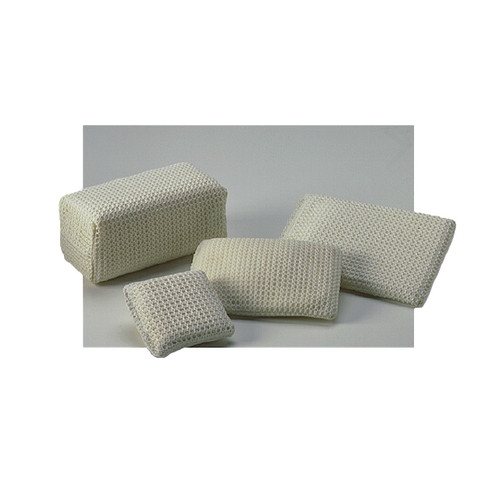
NovaPoly cleanroom sponge: smooth polyester cover for controlled wiping and disinfectant dispersal on equipment and softwalls

Micronova NovaPoly sponge (SP6 family) — selectable sizes
1) Practical solutions in a critical environment
In daily cleanroom maintenance, there is a recurring gap between “too soft” (a wipe that glides over a film) and “too aggressive” (abrasive pads that can shed or damage finishes). A covered sponge is often the practical middle ground: it holds chemistry, maintains contact on corners and uneven geometry, and lets operators control pressure and dwell time rather than over-scrubbing.
NovaPoly is positioned as a smooth knit polyester cover over urethane foam for cleaning small parts, equipment, and lab applications, and is commonly selected when teams want consistent wipe feel, chemical resistance, and re-usability within a controlled cleaning program.
2) What this product is used for
- Cleaning small parts and equipment surfaces where a sponge improves grip and consistent contact.
- Wiping and dispersing disinfectants and cleaning solutions on benches, isolator surfaces, and similar work areas (method and chemistry dependent).
- Cleaning softwalls/cleanroom curtains and similar flexible surfaces where a smooth, covered sponge helps maintain even pressure.
- General controlled-environment cleaning where Micronova positions the product for ISO 5 to ISO 9 use (confirm suitability in your quality system).
3) Why customers consider this product
- Smooth knit polyester cover supports controlled wiping and consistent disinfectant/cleaner dispersal (per Micronova description).
- Urethane foam interior helps carry solution and maintain contact on edges, rails, and curved surfaces.
- Launderable and autoclavable design intent supports re-use workflows where permitted by SOP and validation.
- Good compatibility with common disinfectants and cleaning solutions is published in the manufacturer specification.
- Individually bagged with lot traceability expectations (lot numbers on each bag and each case) supports receiving control and investigation readiness.
4) Materials, composition, and build
NovaPoly is a covered sponge format: a 100% smooth knit polyester outer layer over a urethane foam interior (manufacturer specification). SOSCleanroom further describes the sponge construction as polyester plies enclosing urethane foam and highlights a sturdy, absorbent weave intended to support contamination-control workflows.
- Outer layer: 100% smooth knit polyester.
- Interior: Urethane foam.
- Manufacturing / quality context: Micronova notes manufacture at its Torrance, CA facility and an ISO 9001 certified facility.
5) Specifications in context
SOSCleanroom sells this as a selectable-size family under SP6-xx. Micronova publishes manufacturer part numbers and dimensions in its product specification. If you are writing acceptance criteria for receiving, note the single mismatch below for the 3" x 3" option and confirm your intended spec before release to the cleanroom.
| Attribute |
SKU / Published detail |
| SOSCleanroom SKU |
SP6-xx |
| Manufacturer part numbers |
SP6-33; SP6-363; SP6-46; SP6-745 |
| Selectable sizes shown on SOSCleanroom |
3" x 3" x 3/4"; 3" x 6" x 3"; 4" x 6" x 1/2"; 7" x 4-1/2" x 1/2" |
| Dimensions (Micronova specification) |
SP6-33: 3" x 3" x 0.5"; SP6-363: 3" x 6" x 3"; SP6-46: 4" x 6" x 0.5"; SP6-745: 7" x 4.5" x 0.5"
Note: SOSCleanroom lists the 3" x 3" option as 3/4" thick, while Micronova Revision 001 lists 0.5". Confirm the intended thickness for SP6-33 during ordering and receiving.
|
| Materials |
Outer: 100% smooth knit polyester; Interior: urethane foam |
| Autoclavability |
Autoclavable (manufacturer specification; validate cycle/packaging in your SOP) |
| Chemical compatibility |
Good compatibility with common disinfectants and cleaning solutions (manufacturer specification) |
| Packaging / case unit |
Individually bagged; 24 sponges per case (SOSCleanroom and manufacturer specification) |
| Irradiation status |
Not irradiated (manufacturer specification) |
| Availability (SOSCleanroom) |
7–10 business days |
| Shipping weight (SOSCleanroom) |
10.00 lbs |
6) Performance and cleanliness considerations
NovaPoly is intended to behave like a “smooth, chemistry-carrying” cleaning tool. The smooth knit polyester cover is typically selected for even wipe feel and disinfectant dispersal, while the foam body provides solution hold-up and conformability.
SOSCleanroom describes the sponges as providing consistent, low-lint performance for cleanroom use; in practice, teams treat covered sponges as a controlled introduction compared to household sponges, but still manage them with defined segregation, cleaning, and release checks.
- Surface safety: smooth knit cover is generally chosen when abrasion is not desired. For appearance-critical finishes, validate on a coupon first.
- Chemistry behavior: foam interior can hold a meaningful volume—control saturation to reduce drips and streaking.
- Residue control: if you use detergents or alkaline cleaners, define a rinse or follow-up wipe step to prevent film carryover.
- Re-use discipline: if your SOP allows laundering/autoclaving, define max re-use cycles and a visual reject list (tears, seam wear, embedded residue, stiffness changes).
7) Packaging, sterility, traceability, and country of origin
- Packaging: Individually bagged; 24 sponges per case.
- Traceability: Lot numbers printed on each bag and each case (manufacturer specification).
- Sterility status: Not sterile; manufacturer specification states “Not irradiated.” If sterility is required, use a validated sterile sponge option instead of assuming processing.
- Country of origin / manufacturing location: Manufactured at Micronova’s Torrance, California facility (manufacturer specification).
8) Best-practice use
Technique module: smooth-cover sponge cleaning on equipment and softwalls
- Pre-wet for control: dampen the sponge with your approved disinfectant/cleaner (do not start dry). Aim for “damp-wet,” not dripping.
- Work clean-to-less-clean: top-down and from clean zones to dirtier zones. On benches or panels, use overlapping straight passes to avoid skip lines.
- Let chemistry do the work: if the residue is stubborn, increase dwell time per your validated method before increasing pressure. Over-pressing is a common cause of streaks and uneven removal.
- Control re-deposit: rotate to a fresh face as soils load. A saturated, dirty face often spreads a thin film that looks “clean” until it dries.
- Softwalls and curtains: support the material with your free hand (gloved) or a clean backing panel when possible, then wipe in long vertical strokes to reduce wrinkling and missed areas.
- Defined reuse rules: if your SOP permits laundering/autoclaving, tag the sponge by area/chemistry, and retire it at the first sign of seam wear, embedded residue, or texture change.
- End with an inspection cue: use your facility’s visual criteria (streaks, haze, residue spots) and, where applicable, a wipe verification method tied to your quality system.
9) Common failure modes
- Streaking and film marks: over-saturation, too much pressure, or skipping a defined rinse/follow-up wipe step after detergent use.
- Cross-contamination: reusing the same sponge across different rooms, chemistries, or zones without segregation and labeling.
- Hidden residue carryover: continuing to wipe with a loaded face—soil can move from “captured” to “smeared” as the sponge saturates.
- Receiving misses: releasing product without checking individual-bag lot codes, case count (24/case), and that the selected size matches your internal spec.
10) Closest competitors
Selection usually comes down to how much “bite” you want and how the cover behaves with your chemistry:
- Micronova PolyMesh sponge: polyester mesh outer layer over urethane foam when mild abrasion is needed to lift tougher soils.
- Micronova NovaCel sponge: solid PVA sponge format often used where different absorbency and wipe behavior is preferred (confirm compatibility and release method).
- General category alternative: non-covered foam sponges or wipes used with longer dwell time (often preferred when you want less solution hold-up and faster dry-down).
11) Critical environment fit for this product
Micronova’s product specification describes NovaPoly as designed for cleanrooms and controlled environments and positions it for ISO 5 to ISO 9 use, with manufacture in an ISO 9001 certified facility. In a practical contamination-control program, NovaPoly fits best when your team needs a smooth-cover sponge that can carry chemistry, provide consistent contact, and support repeatable wipe technique on equipment, benches, isolators, curtains, and softwalls—while remaining under controlled receiving, segregation, and release practices.
SOSCleanroom (SOS) has been a proud distributor of Micronova for over 15 years supporting critical environments.
12) SOSCleanroom note about SOP's
The Technical Vault is written to help customers make informed contamination-control decisions and improve day-to-day handling technique.
It is not your facility’s Standard Operating Procedure (SOP), batch record, or validation protocol.
Customers are responsible for establishing, training, and enforcing SOPs that fit their specific risks, products, equipment, cleanroom classification, and regulatory obligations.
Always confirm material compatibility, cleanliness suitability, sterility requirements, and acceptance criteria using your internal quality system and documented methods.
If you adapt any technique guidance from this entry, treat it as a starting template. Your team should review and approve the final method, then qualify it for your specific surfaces,
solvents, cleanliness limits, inspection methods, and risk profile. In short: use these best-practice suggestions to strengthen your SOPs—not to replace them.
13) Source basis
- SOSCleanroom product page: https://www.soscleanroom.com/product/solutions/cleanroom-novapoly-sponge-100-polyester/
- Manufacturer product page (NovaPoly sponges): https://www.micronova-mfg.com/products/specialty-cleaning/novapoly-sponges/
- Manufacturer product specification PDF (Sponge, NovaPoly; Revision 001): https://www.micronova-mfg.com/media/2244/sp6-sponge_novapoly-rev001.pdf
- ISO (cleanroom classification context): https://www.iso.org/standard/53394.html
- FDA: https://www.fda.gov/
- ASTM: https://www.astm.org/
- IEST: https://www.iest.org/
SOSCleanroom is the source for this Technical Vault entry.
Briefed and approved by the SOSCleanroom (SOS) staff.
If you have any questions please email us at Sales@SOSsupply.com
Last reviewed: January 8, 2026
© 2026 SOSCleanroom