PolyMesh cleanroom sponge for controlled abrasion: remove residues without pad shedding

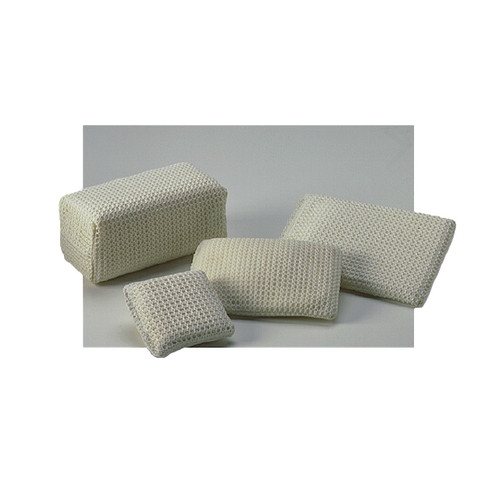
Micronova Cleanroom PolyMesh Sponge (SP68 family) — multiple sizes available
1) Practical solutions in a critical environment
When residues do not lift with standard wipes or smooth-knit sponges, teams often reach for household abrasive pads. That shortcut can create new problems: fibers, flakes, unknown binders, and uncontrolled abrasion that shows up later as scratches, haze, or embedded debris.
The Micronova PolyMesh sponge is positioned as a cleanroom alternative to household-grade abrasive pads—built with a polyester mesh cover over a urethane foam interior—intended for controlled environments where you need more bite, but still want a product designed and packaged for critical cleaning work.
2) What this product is used for
- Removing chemical deposits, photoresist, and fluxes where additional abrasion is required.
- Cleaning small parts, equipment, and lab applications where a sponge form factor improves control and solvent carry.
- Scrub-assist cleaning on robust surfaces that tolerate light-to-moderate abrasion (confirm on a test area first).
- Use in controlled environments (manufacturer positions the product for ISO 5 to ISO 9 applications).
3) Why customers consider this product
- You need increased abrasion to lift stubborn residues (e.g., deposits and process films) without switching to household pads.
- The mesh-covered surface is designed to resist shedding or flaking during use (as described on the SOSCleanroom product page).
- Sponge format gives a stable grip and consistent contact pressure on fixtures, small parts, and equipment features.
- Autoclavable and compatible with common disinfectants/cleaning solutions per Micronova product specifications.
- Traceability expectations are supported by lot identification on packaging per Micronova product specifications.
4) Materials, composition, and build
Construction is a polyester mesh outer layer over a urethane foam interior. This combination is intended to provide a scrub-capable face while maintaining a sponge body that carries cleaning chemistry and conforms to edges and corners.
- Outer layer: Polyester mesh (PolyMesh cover).
- Interior: Urethane foam.
- Design intent: Cleanroom and controlled environment use; controlled abrasion for residue removal.
5) Specifications in context
SOSCleanroom lists this family under SKU SP68-xx with selectable sponge sizes. Micronova publishes the part-number breakdown and base construction. Where details differ by option (standard vs irradiated), confirm the exact selection during ordering and receiving.
| Attribute |
SKU / Published detail |
| SOSCleanroom SKU |
SP68-xx (family listing with size options) |
| Manufacturer part numbers (standard) |
SP68-46; SP68-363; SP68-745; SP68-33 |
| Size options shown on SOSCleanroom |
3" x 6" x 3"; 4" x 6" x 1/2"; 7" x 4-1/2" x 1/2"; 4" x 6" x 1/2" (Irradiated) |
| Materials |
Polyester mesh outer layer; urethane foam interior |
| Packaging |
24 sponges per case (Micronova spec; SOSCleanroom case unit confirms 24/case) |
| Autoclavability |
Autoclavable (Micronova spec) |
| Chemical compatibility |
Good compatibility with common disinfectants and cleaning solutions (Micronova spec) |
| Availability (SOSCleanroom) |
7–10 business days (published on SOSCleanroom product page) |
| Shipping weight (SOSCleanroom) |
10.00 lb (published on SOSCleanroom product page) |
| Irradiated option details |
Micronova lists irradiated part numbers SP68-46IR and SP68-745IR, with individually double-bagged packaging, minimum irradiation dose 25 kGy, and certificates available; SOSCleanroom notes gamma irradiated option is non-returnable with a 2–3 week lead time.
|
6) Performance and cleanliness considerations
The defining behavior here is controlled abrasion. The polyester mesh face is intended to help disrupt adherent films (resist residues, deposits, flux) while avoiding the shedding and flaking risk called out for household abrasive pads.
The trade-off is surface-risk: abrasion is never “free,” and the right answer depends on your substrate hardness, finish, and allowable defect criteria.
- Best candidates: robust stainless, coated metals, and durable process fixtures where light-to-moderate abrasion is acceptable.
- Use caution: optical finishes, soft plastics, polished aluminum, painted surfaces, and any “appearance-critical” panels—validate with a small hidden area or a sacrificial coupon.
- Chemistry carry: sponge body helps hold and deliver cleaning solutions; avoid oversaturation if drip control matters.
- Quality expectation: when abrasion is part of the method, define an inspection check (visual haze, scratch checks, residue re-deposit checks) so “cleaning” doesn’t become “surface damage.”
7) Packaging, sterility, traceability, and country of origin
- Standard PolyMesh (Micronova SP68): Individually bagged; 24 sponges per case; lot numbers printed on each bag and each case; “Not irradiated” per Micronova product specification.
- Irradiated PolyMesh (Micronova SP68-46IR / SP68-745IR): Individually double bagged; 24 sponges per case; irradiation sticker on pack and outer case; minimum irradiation dose 25 kGy; certificates of conformance and irradiation processing shipped with each order per Micronova product specification.
- Country of origin / manufacturing location: Micronova product specifications state the PolyMesh sponge is manufactured at Micronova’s Torrance, California facility.
- Ordering note: SOSCleanroom lists an irradiated option and notes it is non-returnable with a 2–3 week lead time; plan your reorder point accordingly.
8) Best-practice use
Technique module: controlled-abrasion sponge cleaning
- Pre-check the surface: identify “no-scratch” areas (polished panels, windows, optics, coated sensors). If unsure, stop and test on a coupon or hidden area.
- Wet the sponge, don’t flood the process: pre-wet with your validated cleaning solution so you reduce dry friction. Wring to damp when drip control matters.
- Use directional passes: apply steady, moderate pressure; clean in straight lines. Avoid tight circles that grind particles into a finish and create swirl marks.
- Rotate the contact face: as residue loads, rotate to a fresh area. Do not keep scrubbing with a loaded mesh face—this is a common route to scratches and re-deposit.
- Follow with a finishing step: for many processes, a final wipe/rinse step (using your facility-approved materials) removes loosened residue and any mobilized debris.
- Segregate by chemistry and area: assign sponges by room/zone and by chemistry type. Cross-using between strong oxidizers, acids/bases, and alcohols can create compatibility and safety issues.
- Control the “abrasion budget”: define when to stop. If residue is not lifting after a defined number of passes, reassess chemistry and dwell time instead of escalating force.
9) Common failure modes
- Surface marring: using too much force, scrubbing dry, or cleaning on soft/polished substrates without a coupon test.
- Re-deposit and haze: continuing to scrub with a loaded sponge face; skipping a finishing wipe/rinse step after residue is lifted.
- Cross-contamination: reusing across zones or chemistries without segregation; storing used sponges wet in sealed containers where residues concentrate.
- Receiving misses: not checking lot identification on individual bags/cases (traceability); not confirming you received the intended option (standard vs irradiated) before release to the floor.
10) Closest competitors
The closest alternatives are typically other cleanroom sponge covers that change abrasion level and solution delivery:
- Micronova NovaPoly™ Sponges: polyester-covered urethane foam focused on absorbency and chemical resistance for general cleaning where added abrasion is not needed.
- Micronova MegaTex™ Sponges: non-woven polyamide cover with a textured, thermally bonded surface for heavier soils and rougher surfaces where a different abrasion profile is preferred.
- General category alternative: non-abrasive cleanroom sponge formats paired with longer dwell time and validated chemistry (preferred when surface finish risk is high).
11) Critical environment fit for this product
This PolyMesh sponge is best treated as a “controlled-abrasion tool” inside a validated cleaning program: suitable when you have defined residues and robust substrates, and when your facility can train operators on pressure control, pass limits, and finishing steps.
Micronova positions the standard and irradiated PolyMesh sponge for controlled environments, and publishes lot-based traceability expectations. Confirm compatibility, acceptance criteria, and release checks through your internal quality system.
SOSCleanroom (SOS) has been a proud distributor of Micronova for over 15 years supporting critical environments.
12) SOSCleanroom note about SOP's
The Technical Vault is written to help customers make informed contamination-control decisions and improve day-to-day handling technique.
It is not your facility’s Standard Operating Procedure (SOP), batch record, or validation protocol.
Customers are responsible for establishing, training, and enforcing SOPs that fit their specific risks, products, equipment, cleanroom classification, and regulatory obligations.
Always confirm material compatibility, cleanliness suitability, sterility requirements, and acceptance criteria using your internal quality system and documented methods.
If you adapt any technique guidance from this entry, treat it as a starting template. Your team should review and approve the final method, then qualify it for your specific surfaces,
solvents, cleanliness limits, inspection methods, and risk profile. In short: use these best-practice suggestions to strengthen your SOPs—not to replace them.
13) Source basis
- SOSCleanroom product page: https://www.soscleanroom.com/product/solutions/cleanroom-polymesh-sponge-100-mesh-polyester-abrasive/
- Manufacturer product page (Micronova PolyMesh sponges): https://www.micronova-mfg.com/products/specialty-cleaning/polymesh-sponges/
- Manufacturer product specification PDF (standard PolyMesh; Revision 002): https://www.micronova-mfg.com/media/2248/sp68-sponge_-polymesh-rev002.pdf
- Manufacturer product specification PDF (irradiated PolyMesh; Revision 001): https://www.micronova-mfg.com/media/2249/sp68-ir-sponge_polymesh_irradiated-rev001.pdf
- Micronova Nova sponges technical data sheet (family context): https://www.micronova-mfg.com/media/12564/nova-sponges-tds-micronoca.pdf
- ISO (cleanroom classification context): https://www.iso.org/standard/53394.html
- FDA: https://www.fda.gov/
- ASTM: https://www.astm.org/
- IEST: https://www.iest.org/
SOSCleanroom is the source for this Technical Vault entry.
Briefed and approved by the SOSCleanroom (SOS) staff.
If you have any questions please email us at Sales@SOSsupply.com
Last reviewed: January 8, 2026
© 2026 SOSCleanroom