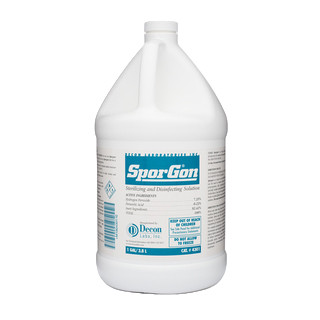
Conflikt 4104 Quaternary Ammonium (Quat) Disinfectant — 1 Gallon Bottle, 4/Case

Thumbnail shown when available from the SOSCleanroom product page image set.
1) Practical solutions in a critical environment
In controlled environments, the fastest way to lose control is to “spray and pray” — applying a disinfectant without first removing soil, without holding a wet contact time, and without managing residue.
Conflikt® is positioned as a ready-to-use detergent/disinfectant built around dual quaternary ammonium actives and surfactants, intended for cleaning and disinfecting hard, non-porous surfaces.
For teams that need dependable day-to-day sanitation on benches, carts, walls, and other facility surfaces, it can simplify the workflow when used with discipline: clean first, keep wet, then manage residues based on your process limits.
2) What this product is used for
- Cleaning and disinfecting inanimate, hard, non-porous surfaces such as glass, plastics, stainless steel, ceramics, laminates, floors, walls, and cabinets.
- General sanitation programs where a quaternary ammonium disinfectant with detergency is preferred for routine use.
- Odor-control use cases in areas prone to microorganism-driven odors (per manufacturer positioning), where deodorizing is desired as part of housekeeping.
3) Why customers consider this product
- Ready-to-use simplicity: Full-strength use protocol reduces mixing variability and reduces “wrong dilution” events.
- Detergent + disinfectant behavior: Surfactant-supported cleaning can improve wetting and help lift light films prior to disinfection.
- Documented EPA registration: Manufacturer publishes EPA Reg. No. 1839-83-56753 for the formulation.
- Operational familiarity: Quats are commonly used for frequent cleaning cycles on hard, non-porous facility surfaces where material compatibility and operator acceptance matter.
- Stable supply and support: SOSCleanroom’s long-standing distribution of Decon solutions supports continuity of supply, repeat ordering, and consistent documentation access.
4) Materials, composition, and build
The product is a liquid, ready-to-use quaternary ammonium disinfectant with detergency. On the SOSCleanroom product page and the Decon technical data sheet, the dual quaternary ammonium active ingredients are listed at 0.105% each, with inert ingredients comprising the balance.
The Safety Data Sheet further enumerates additional non-active constituents (for example, solvent/builders/chelants) and lists the same quaternary actives. In practice, treat the “active ingredient” listing as the microbial kill-driving chemistry, and the SDS composition as relevant for compatibility, residue, and handling controls.
- Active ingredients (label/TDS): n-Alkyl dimethyl benzyl ammonium chloride (0.105%) and n-Alkyl dimethyl ethylbenzyl ammonium chlorides (0.105%).
- The SDS lists additional mixture components and notes other components below reportable levels; review the SDS for compatibility and EHS requirements.
5) Specifications in context
| Attribute |
4104 (1 Gallon Bottle, 4/Case) |
| SOSCleanroom SKU |
4104 |
| Solution type |
Quaternary ammonium (quat) detergent/disinfectant |
| Form |
Ready-to-use (use full strength) |
| Pack size |
Four (1 gallon) bottles per case |
| EPA registration |
EPA Reg. No. 1839-83-56753 (per manufacturer) |
| Storage guidance |
Store in a dry place, 50°F to 120°F |
| Shelf life |
One year (expiration date on container) |
| Sterility |
Not stated in source basis (do not assume sterile) |
| Country of origin |
Not stated in source basis |
Selection note for regulated environments
If your cleaning record, batch documentation, or audit expectations require sterile disinfectants, irradiation documentation, or low-residue cleanroom packaging, treat “not stated” items above as a hard stop until you confirm requirements against your internal quality system and supplier documentation.
6) Performance and cleanliness considerations
Manufacturer documentation positions Conflikt as a ready-to-use quat detergent/disinfectant intended to clean and sanitize hard surfaces with free-rinsing properties and broad efficacy claims when used as directed.
The technical data sheet includes organism-specific wet contact times ranging from 30 seconds to 10 minutes depending on the claim set; do not compress these times in practice. Lock your facility’s dwell-time rule to the highest contact time that applies to your risk profile and documented claims, then train to it.
- Wet contact time is the control knob: If a surface dries early, the disinfection claim is no longer supported by the published contact time.
- Residue management matters: Quats and surfactants can leave films on glossy stainless, polycarbonate, and coated optics housings. If residue is a risk, build a documented “follow-up wipe/rinse” step that fits your process limits.
- Compatibility and EHS: The SDS indicates eye irritation hazards and aquatic toxicity warnings; implement PPE, spill control, and disposal practices consistent with your EHS program.
7) Packaging, sterility, traceability, and country of origin
- Packaging: Case unit is four (1 gallon) bottles per case (SOSCleanroom page and manufacturer documentation align).
- Lead time guidance: SOSCleanroom lists 7–10 business days availability for this item (plan accordingly for rotation programs).
- Shelf life and storage: Manufacturer states a one-year shelf life with expiration date on the container, and storage between 50°F and 120°F.
- Sterility: Sterility is not stated in the source basis for catalog number 4104. If sterile disinfectant is required for your area classification, select a documented sterile alternative.
- Traceability: Decon provides a certificate of analysis lookup on its Conflikt product page; incorporate receiving checks (lot/expiry match, container integrity, documentation capture) into your incoming QA routine.
- Country of origin: Not stated in source basis.
8) Best-practice use
If you want consistent outcomes, train to a repeatable sequence: remove soil, apply full strength, keep the surface wet for the documented dwell time, then control residues based on your criticality.
Below is a practical technique module that aligns with the manufacturer’s “use full strength” protocol and published contact-time statements.
Technique module: hard-surface disinfection without shortcuts
- Pre-clean first: Remove visible soil and films. For blood/body fluid events, manufacturer guidance stresses thorough cleaning before applying the disinfectant.
- Apply full strength and wet completely: Wet the surface uniformly. Avoid “mist only” application that dries in patches.
- Hold the wet dwell time: Choose a validated dwell-time rule that matches your claims set. The manufacturer publishes contact times by organism/claim category (examples include 3-minute bactericidal contact time for listed organisms; 5 minutes for tuberculocidal activity; and other times up to 10 minutes for certain viruses). If you cannot maintain wetness, reapply.
- Wipe with discipline (when wiping is required): Use a clean wiping material; wipe in overlapping strokes from clean-to-dirty; do not “re-dip” or re-wipe dirty areas with the same face. Replace wipe faces frequently to avoid simply spreading soil.
- Residue control step (risk-based): If residue is unacceptable (optics benches, sensor housings, glossy stainless), add a documented follow-up wipe/rinse step using a suitable compatible fluid and method approved by your quality system.
- Food-contact surfaces: Manufacturer notes a potable-water rinse is required for surfaces in direct contact with food.
Receiving and day-of-use checks
- Verify intact caps/seals, no leaks, and legible lot/expiration markings before staging into controlled areas.
- Confirm the correct product family and catalog number (4104) to prevent “look-alike” mix-ups with other disinfectant chemistries.
- Stage within the labeled storage temperature window (50°F–120°F) to protect shelf life.
9) Common failure modes
- Skipping pre-cleaning: Applying disinfectant over soil can reduce efficacy and increases residue buildup.
- Not maintaining wet contact time: Wiping dry immediately or allowing premature drying breaks the documented dwell-time condition.
- Cross-contamination by wiping technique: Reusing a saturated wipe face across multiple surfaces spreads soil rather than removing it.
- Residue surprises: Quat/surfactant films left on stainless or polymers can interfere with inspections, adhesion steps, or optical cleanliness targets if not managed.
- Using it where sterile chemistry is mandated: Sterility is not stated for 4104 in the source basis; do not substitute in aseptic zones that require sterile disinfectants without documented approval.
10) Closest competitors
Below are commonly considered alternatives in quaternary ammonium disinfectant programs. Selection differences usually come down to packaging controls, residue profile, sterility/validation expectations, and how the product fits into your rotation strategy.
- Ecolab Klercide™ Cleanroom Quat: Positioned for cleanroom use with residue/rinsing considerations as part of the manufacturer’s value proposition.
- STERIS Life Sciences Vesta-Syde™ SQ: Quaternary ammonium disinfectant offering (concentrate) positioned for critical environments and frequent-use programs.
- Berkshire VersaQuat®: EPA-registered RTU one-step disinfectant and cleaner positioned for disinfectant rotation programs and broad-spectrum efficacy claims.
11) Critical environment fit for this product
Conflikt 4104 is best suited for routine cleaning and disinfecting of hard, non-porous facility surfaces where a ready-to-use quat with detergency is operationally convenient.
For higher-grade environments where sterile disinfectants, validated packaging introductions, or extremely low residue limits are required, confirm sterility and documentation expectations before adopting it in classified zones.
In many contamination-control programs, quats are used as a frequent-use chemistry and paired in rotation with other chemistries (for example, sporicides) based on the facility’s risk assessment and microbial control strategy.
12) SOSCleanroom note about SOP's
The Technical Vault is written to help customers make informed contamination-control decisions and improve day-to-day handling technique.
It is not your facility’s Standard Operating Procedure (SOP), batch record, or validation protocol.
Customers are responsible for establishing, training, and enforcing SOPs that fit their specific risks, products, equipment, cleanroom classification, and regulatory obligations.
Always confirm material compatibility, cleanliness suitability, sterility requirements, and acceptance criteria using your internal quality system and documented methods.
If you adapt any technique guidance from this entry, treat it as a starting template. Your team should review and approve the final method, then qualify it for your specific surfaces,
solvents, cleanliness limits, inspection methods, and risk profile. In short: use these best-practice suggestions to strengthen your SOPs—not to replace them.
13) Source basis
SOSCleanroom is the source for this Technical Vault entry.
Briefed and approved by the SOSCleanroom (SOS) staff.
If you have any questions please email us at Sales@SOSsupply.com
Last reviewed: Jan. 8, 2026
© 2026 SOSCleanroom