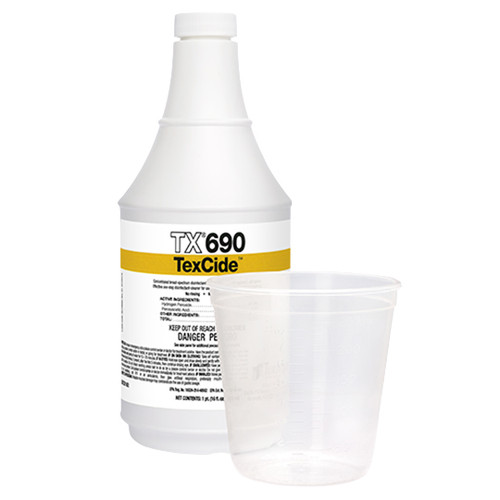
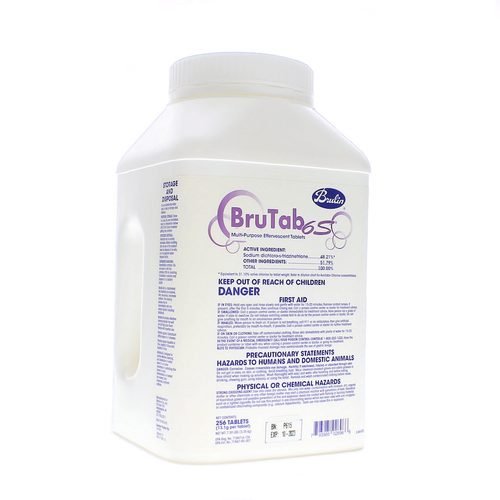
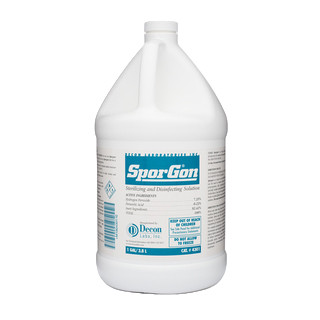
Product image shown for identification. Packaging configuration is listed in the specifications table below.
Practical solutions in a critical environment
In controlled environments, the real risk is rarely “did we disinfect once,” but “did we disinfect correctly and consistently.”
Total-Shield Plus HG (non-sterile) is designed for hard, non-porous surfaces where operators need a ready-to-use sporicidal
disinfectant/cleaner that can be applied by wiping, mopping, or coarse spray and held wet for the required contact time.
The operational win is simple: fewer mixing errors, fewer concentration drift issues, and fewer steps when your process requires
a one-step cleaner/disinfectant workflow.
What this product is used for
- Routine and periodic disinfection of hard, non-porous surfaces in cleanrooms, medical, and commercial environments (e.g., benches, counters, floors, walls, ceilings, and similar surfaces).
- Applications requiring sporicidal performance claims when used according to label directions, including maintaining surfaces wet through the full contact time.
- Situations where an RTU product reduces risk of dilution errors and supports repeatable, auditable use.
Why customers consider this product
- Ready-to-use (RTU): no measuring, no mixing, no “who made the dilution” questions.
- One-step positioning: designed as a detergent/cleaner plus disinfectant with sporicidal/sterilant claims when used as directed.
- Published active ingredients: hydrogen peroxide + peracetic acid; oxidizing chemistry common in broad-spectrum disinfection programs.
- Clear case configuration for inventory control: 32 fl. oz. bottles, 6 per case.
- Document package available for audits and EHS reviews (spec sheet, label/how-to-use, SDS, and hazardous drug decontamination protocol).
Materials, composition, and build
Total-Shield Plus HG is supplied as a ready-to-use liquid disinfectant/cleaner. Manufacturer materials list the active ingredients
as hydrogen peroxide and peracetic acid, with the SDS indicating
peracetic acid <1% and hydrogen peroxide <7% (exact percentages withheld as a trade secret beyond those ranges).
The solution is described as clear, with a mild/mint odor, and is an oxidizing chemistry—meaning it should be handled with the
same discipline you would apply to other peroxide/peracid products (avoid incompatible materials and prevent splashes).
Specifications in context
| Attribute |
Published value for this product |
| Product name |
Total-Shield Plus HG Sporicidal Disinfectant (Non-Sterile) |
| SOSCleanroom SKU |
877587HG32NS |
| Formula |
Ready to use (RTU) |
| Active ingredients |
Hydrogen peroxide + peracetic acid |
| Total actives |
6.74% |
| pH |
1.5 – 2.5 |
| Appearance / form |
Clear liquid |
| Scent / odor |
Mint scent (mild odor) |
| EPA registration number |
58300-25-96853 |
| EPA establishment number |
58300-FL-1 |
| Bottle size |
32 fl. oz. |
| Case configuration |
6 bottles per case (32 fl. oz. bottles; SOSCleanroom listing notes a pour spout top) |
| Sterility |
Non-sterile |
| Shelf life (unopened) |
24 months (when stored in proper conditions) |
| Beyond-use after opening |
6 months after opening (when stored in original container in proper conditions) |
A practical interpretation for cleanrooms
The success variable is not “how strong is it,” but “did the surface remain wet for the label time.” In real use, evaporation,
wipe absorbency, and airflow can shorten wet time. Build your method around maintaining wetness across the entire surface area,
especially on vertical faces and edges where products tend to run or flash off first.
Performance and cleanliness considerations
Manufacturer literature positions Total-Shield Plus HG as a one-step disinfectant/cleaner with sporicidal and “sterilant”
claims when used as directed. The 2024 spec sheet includes representative contact times for common organisms on hard surfaces
(examples listed below). These are label-driven performance claims; your facility should validate the method in context of your
soils, surfaces, airflow, and wipe/spray application technique.
| Example organism / claim category |
Published contact time (hard surfaces) |
| Disinfectant (examples: Pseudomonas aeruginosa) |
2 minutes |
| Disinfectant (examples: Salmonella enterica) |
90 seconds |
| Disinfectant (examples: Staphylococcus aureus; MRSA) |
90 seconds |
| Fungicidal (examples: Aspergillus niger; Trichophyton mentagrophytes) |
2 minutes |
| Sporicidal (examples: Bacillus subtilis; Clostridium sporogenes) |
20 minutes |
| Sterilant claim (room temperature) |
20 minutes |
From a contamination-control standpoint, note the low pH (1.5–2.5) and oxidizing chemistry. This combination can be highly effective,
but it also means you must control storage conditions, avoid incompatible materials, and prevent unintended mixing with other chemistries.
The SDS includes handling and storage guidance, including temperature limits and incompatibility cautions.
Packaging, sterility, traceability, and country of origin
- Configuration: Case of 6 bottles; 32 fl. oz. per bottle (SOSCleanroom listing notes a pour spout top).
- Sterility: Non-sterile. If your process requires sterile chemical disinfectants for critical areas, compare to the sterile version offered separately.
- Shelf life discipline: SDS states 24 months unopened when stored correctly, and 6 months after opening when stored in the original container under proper conditions.
- Storage conditions (SDS): Store tightly closed, protect from freezing, keep upright, store below 86°F / 30°C, and store away from incompatible materials (including certain metals and reducing agents).
- Country of origin: Made in the USA (published in manufacturer and SOSCleanroom document set).
Best-practice use
Use the label/how-to-use document as the controlling instruction set for contact times and allowed application methods.
The points below are intended to help teams execute the label consistently in real facilities.
-
Pre-clean when required. The label guidance notes heavily soiled surfaces must be pre-cleaned.
A practical approach is a “gross soil pass” first, followed by the disinfecting pass once visible residues are removed.
-
Apply by wiping, mopping, or coarse spray—then hold wet. The most common failure is letting the surface
flash dry early. Build the method around coverage first, then wet-time control. For large surfaces, work in zones and overlap edges.
-
Do not “stretch” one wipe too far. If you are wiping, swap wipes before they become dry or loaded.
A drying wipe is a warning sign you are no longer delivering the necessary wet film.
-
Respect sporicidal/sterilant wet time. Sporicidal/sterilant claims can require longer contact times
(example: 20 minutes published). If the product starts to dry, reapply to keep the surface wet for the full duration.
-
Use appropriate PPE and ventilation. The SDS calls for safety glasses with side shields (or goggles) and
chemical-resistant gloves depending on the task, and recommends well-ventilated use while avoiding mist and vapor.
Receiving and QA cue (simple but effective)
On receipt, log the lot/expiry details per your quality system, then confirm bottles are upright and caps are intact with no seepage.
For opened bottles in use areas, implement a clear “date opened” control so the 6-month beyond-use expectation can be enforced.
Common failure modes
- Surface dries before contact time is complete: most frequent root cause of missed efficacy. Reapply as needed to maintain wetness.
- Skipping pre-cleaning on heavily soiled surfaces: soils can shield microorganisms and reduce real-world performance.
- Incompatible materials or unintended chemical mixing: SDS lists incompatibilities; do not mix with other chemistries and keep away from reducing agents and certain metals.
- Improper storage: heat, freezing, or poor container control can accelerate decomposition and reduce assay over time (SDS storage section).
- Misuse as a medical-device sterilant: label/how-to-use guidance states it is not approved as a sterilant on surfaces/instruments introduced directly into the human body or for critical/semi-critical healthcare devices.
Closest competitors
These are commonly evaluated alongside Total-Shield Plus HG for sporicidal disinfection programs. Final selection should be based on
label claims, required contact time, residue control expectations, surface compatibility, and your environmental monitoring risk profile.
- ITW Texwipe TexCide Sporicidal Disinfectant (peracetic acid / hydrogen peroxide-based sporicidal)
- Brulin BruTab 6S Disinfectant Tablets (sporicidal cleaning solution tablets)
- Decon SporGon Sporicidal Cleaner and Disinfectant
Critical environment fit for this product
Total-Shield Plus HG is positioned for use on hard, non-porous surfaces in hospital/medical, commercial, and cleanroom-type environments,
with documented RTU handling that supports repeatability. For critical environments, the key decision points are:
(1) whether non-sterile chemistry is acceptable for the area and task, (2) whether your process can reliably hold the surface wet for the
required contact time, and (3) how you will control opened-bottle dating and storage to maintain assay and compliance.
If your program includes hazardous drug decontamination, a dedicated protocol document is available in the product literature set.
Incorporate it only after review by EHS/quality and alignment with your internal acceptance criteria.
SOSCleanroom note about SOP's
The Technical Vault is written to help customers make informed contamination-control decisions and improve day-to-day handling technique.
It is not your facility’s Standard Operating Procedure (SOP), batch record, or validation protocol.
Customers are responsible for establishing, training, and enforcing SOPs that fit their specific risks, products, equipment, cleanroom classification, and regulatory obligations.
Always confirm material compatibility, cleanliness suitability, sterility requirements, and acceptance criteria using your internal quality system and documented methods.
If you adapt any technique guidance from this entry, treat it as a starting template. Your team should review and approve the final method, then qualify it for your specific surfaces,
solvents, cleanliness limits, inspection methods, and risk profile. In short: use these best-practice suggestions to strengthen your SOPs—not to replace them.
Source basis
- SOSCleanroom product page: https://www.soscleanroom.com/product/solutions/total-shield-plus-hg-sporicidal-disinfectant-non-sterile/
- Manufacturer product page: https://totalshieldhg.com/products-2
- Manufacturer spec sheet (PDF): https://img1.wsimg.com/blobby/go/70d2beb7-6253-49ad-a808-b8077998d9aa/downloads/tsphg%20spec%20sheet%202024.pdf?ver=1745358461922
- Label / how-to-use (PDF): https://img1.wsimg.com/blobby/go/70d2beb7-6253-49ad-a808-b8077998d9aa/downloads/Label%20how%20to%20use%20TSPHG.pdf?ver=1745358461922
- Safety Data Sheet (SDS) (PDF): https://img1.wsimg.com/blobby/go/70d2beb7-6253-49ad-a808-b8077998d9aa/downloads/2d706dba-ade4-4932-b058-2a1b38a919dc/TSPHG%20-%20SDS%20sheet%20%204-22-2025.pdf?ver=1745358461922
- Protocol for decontamination of hazardous drugs (PDF): https://img1.wsimg.com/blobby/go/70d2beb7-6253-49ad-a808-b8077998d9aa/downloads/Protocol%20for%20Decontamination%20of%20HD_s.pdf?ver=1745358461922
- ISO: https://www.iso.org/standard/53394.html
- FDA: https://www.fda.gov/
- ASTM: https://www.astm.org/
- IEST: https://www.iest.org/
SOSCleanroom is the source for this Technical Vault entry.
Briefed and approved by the SOSCleanroom (SOS) staff.
If you have any questions please email us at Sales@SOSsupply.com
Last reviewed: January 8, 2026
© 2026 SOSCleanroom