The Sterile Swab That Ships Like Evidence: What STX705PT Changes in Sampling Workflows
The Technical Vault | By SOSCleanroom
In regulated environments, the sampling step is often where good programs fail. Not because the lab cannot incubate a plate or run a PCR assay, but because the sample was compromised before it ever left the cleanroom. A swab that touches the wrong glove, dries out unexpectedly, contacts a nonsterile surface, or loses chain-of-custody can turn a real contamination signal into a false positive — or worse, hide a true excursion behind poor recovery.
Texwipe STX705PT is built around that reality: a sterile, dry collection and transport system that treats sample integrity as an operational control, not an afterthought. In inspection-facing programs, the device has to behave like evidence: protected, identifiable, and defensible from point-of-use through receipt at the lab.
What It’s For
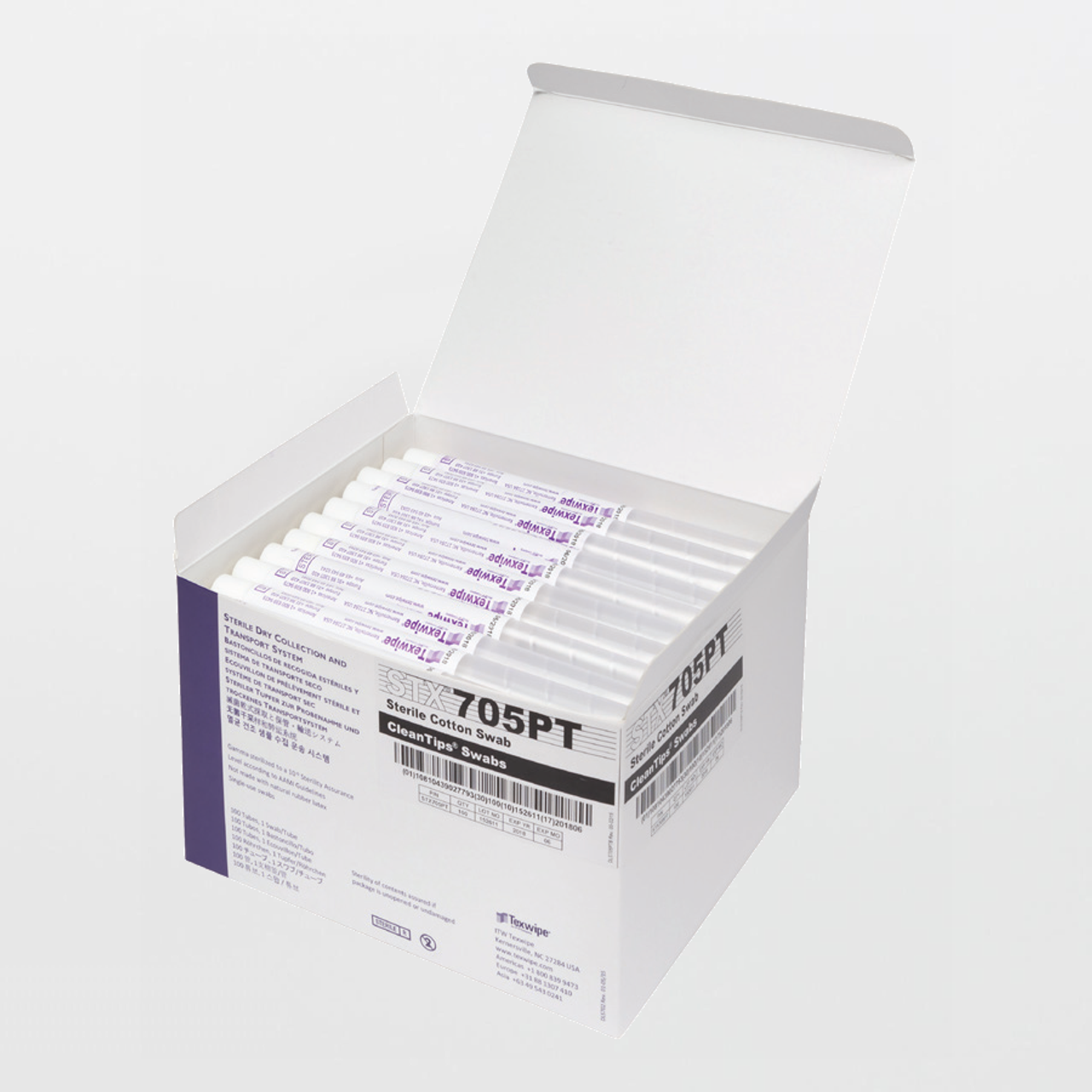
STX705PT is a ready-to-use sterile cotton swab packaged as a complete transport unit for diagnostic sampling, environmental monitoring, DNA sampling, and surface sampling where the collection device must remain protected and identifiable from point-of-use through delivery to the lab.
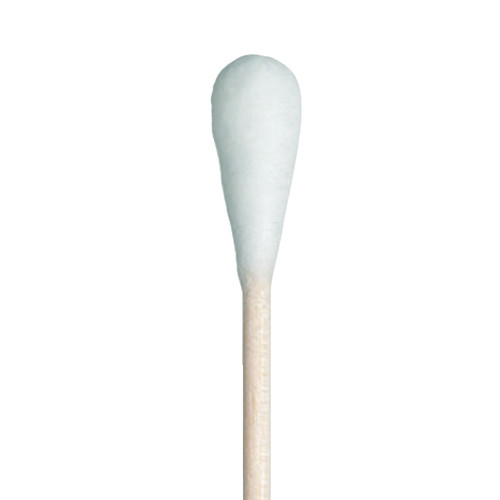
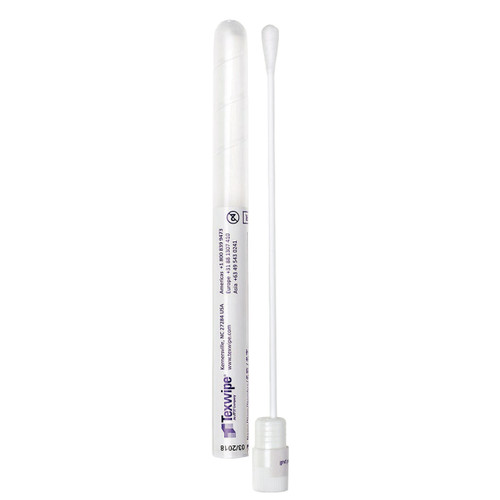
The swab is described as 100% USP-grade spun cotton bonded to a flexible polystyrene handle and supplied inside a medical-grade tube and cap system designed to maintain sample and sterility integrity during handling and transport.
Decision Drivers
-
Integrity controls you can audit: tamper-evident sealing, lot coding, and clearly marked expiration date support defensible chain-of-custody and deviation investigations.
-
Sterility claim and how it is achieved: gamma irradiation to SAL 10−6, aligned to ANSI/AAMI/ISO 11137 expectations, matters when you are sampling for viable organisms or collecting specimens destined for regulated decision-making.
-
Tube-and-cap design, not just the swab: a molded cap that secures the handle, a seamless round-bottom tube, and tight-seal cap rings reduce handling errors and contamination pathways during transport.
-
Material fit for purpose: cotton has strong pickup and absorbency, but it is not a low-linting substrate; it can shed fibers and contribute higher background residues than many synthetics, which directly affects where you should and should not use it.
Materials and Construction: Practical Implications
Swab head: 100% USP-grade spun cotton. This configuration is optimized for specimen collection and general surface sampling rather than ultra-critical residue-controlled cleaning. Cotton’s strength is pickup: it readily gathers particulate and biological material, and it holds onto what it collects well enough for transport. The tradeoff is that cotton is a fibrous substrate. It can shed fibers, especially with high pressure, rough surfaces, or aggressive back-and-forth scrubbing. A necessary reality check: no swab is truly lint-free, and cotton is one of the first places operators discover why that phrase fails in real work.
Handle: flexible polystyrene shaft. The flexible shaft supports sampling access and handling inside the tube-and-cap system. In practice, the key control is not only the shaft material — it is how the device stays protected and identifiable across the entire workflow.
Bonding: aqueous-based adhesive at the head-to-handle interface. Adhesive bonding is common for spun cotton swabs. Operationally, that means you avoid torque, prying, and excessive mechanical agitation that can drive shedding or loosen the bond line during aggressive collection techniques.
The transport system is the differentiator. The swab is provided inside a medical-grade tube with a molded cap that secures the handle, plus sealing features intended to protect sterility and reduce contamination risk during transport. This is specifically aimed at eliminating improvised practices inspectors tend to find: loose swabs in bags, ad hoc labels, unsealed secondary containers, and inconsistent handling between operators and shifts.
Specifications in Context
The dimensions are not trivia; they determine whether sampling is consistent and repeatable. STX705PT is described as a long-reach sterile transport swab with:
- Cotton head: approximately 7.0 mm wide × 7.0 mm thick
- Head length: reported around 17.0–18.2 mm
- Polystyrene handle length: about 134–135 mm
- Total length: about 155 mm (6.102 in.)
Treat these as typical values used for selection and qualification, then confirm against incoming product labeling and lot documentation when your quality system requires it.
The same “typical values vs. specifications” discipline applies to performance expectations: contamination and dimensional tables are frequently framed as typical analyses, not formal specifications. SOPs should reflect that reality — qualify the tool in your process, then control it through the supplier documentation packet and lot traceability.
Cleanliness and Performance: Interpreting the Data
With a collection-and-transport swab, the most important “performance metric” is not absorbency alone. It is whether the entire workflow preserves what you intend to measure while controlling what you do not intend to introduce.
-
Sterility from receipt to use: the SAL 10−6 gamma-irradiation claim, paired with tamper-evident and tube-based protections, is intended to support a defensible narrative that the device arrived sterile and remained controlled until point-of-use.
-
Background controls that support interpretation: the system is described as tested for endotoxins, ions, and nonvolatile residue (NVR). In validation-sensitive programs, treat that as a trigger to request the applicable certificates and confirm your acceptance criteria (endotoxin limits, ionic background, residue appearance) align with your methods and detection limits.
-
Repeatability between operators: sampling recovery can vary widely with technique, contact pressure, stroke count, wetness, and whether the sampler is trained and periodically assessed for competency. The device can reduce handling variability, but it cannot substitute for method control.
Why Packaging, Sterility, and Traceability Matter
STX705PT is sterile, individually tubed, and explicitly designed for sample transport. The system is described as including:
- Medical-grade LDPE molded cap that secures the handle.
- Medical-grade polypropylene tube (reported as 1 mm thick) with a seamless molded round bottom.
- Cap rings designed to support a tight seal.
- Tamper-evident label and labeling intended to support global use.
- Gamma irradiation to SAL 10−6, aligned to ANSI/AAMI/ISO 11137, with case-associated certificates of irradiation and compliance.
- Lot code and expiration date on each tube to support traceability, stock rotation, and investigation readiness.
In FDA-facing and USP-facing environments, these packaging and traceability controls reduce the number of “uncontrolled steps” between sampling and incubation or analysis, making the program easier to defend during trend reviews and investigations.
A practical authenticity reminder: many Texwipe CleanTips products are recognized by trademarked light-green/green handle conventions and “Texwipe” embossing as a traceability cue, but not every sterile transport swab uses the green handle. The operational lesson is broader — train end users to verify the expected configuration for the specific item, and control alternates through your approved supplier list.
Best-Practice Use
Sampling should be treated as a controlled process step, not an improvised “wipe.” Work cleanest to dirtiest and pre-label the tube (or verify labeling) before you open anything, so you never have an unidentified swab in your hand.
-
Aseptic opening and exposure control: open aseptically and minimize exposure. The tube and cap are part of the sterility barrier; do not set the cap interior-side down on a surface. If staging is required, stage on a sterile field consistent with your SOP.
-
Technique discipline: use one-direction strokes with parallel, overlapping passes and controlled pressure. Avoid circular scrubbing unless the method explicitly requires it; circular motion increases fiber shedding risk on rough surfaces and tends to create inconsistent recovery between operators.
-
Wetness control (if your method requires it): STX705PT is a dry system, but many environmental monitoring methods call for wetting with an appropriate neutralizer or diluent to improve recovery, particularly on irregular surfaces or where disinfectant residues can suppress growth. If your procedure includes wetting, use a validated sterile neutralizer and a defined volume. Aim for damp, not wet; over-wetting promotes pooling and can spread contamination across the sampling area.
-
Single-pass discipline: rotate the swab as you sample so you do not drag a loaded surface back across what you are trying to measure.
-
Immediate containment and sealing: once collected, immediately return the swab to the tube, secure the closure, and preserve tamper-evident integrity as your SOP requires.
-
Transport is part of the method: follow the receiving lab’s instructions for transport time, temperature, and documentation. Build chain-of-custody into the workflow: who collected, when, where, what surface/lot/equipment, what method, and where it was sent.
Common Failure Modes—and How to Prevent Them
-
Handling contamination: contamination introduced during handling is the fastest way to invalidate a sample. Prevention: aseptic technique, minimal exposure time, and no contact between sterile components and nonsterile surfaces.
-
Poor recovery masquerading as “everything is fine”: dry swabbing on some surfaces can under-recover organisms, especially if residues are present or surfaces are textured. Prevention: treat method-specified wetting, pattern, pressure, and stroke count as validated parameters; maintain competency-based training and periodic technique assessment.
-
Compromised chain-of-custody: missing labels, mixed sample IDs, and inconsistent transport practices turn a microbiology result into a compliance problem. Prevention: pre-labeled tubes, immediate sealing, logged transfer, and defined receiving criteria.
-
Misapplication: cotton swabs are excellent for collection and general-purpose sampling, but they are not the right tool when you need ultra-low fibers, ultra-low residues, or solvent-aggressive cleaning. Prevention: if the workflow is cleaning validation (TOC/HPLC) or residue-limited final cleaning, use a purpose-built low-extractables sampling swab and validate it against the analytical method.
Closest Competitors
Puritan sterile dry transport systems
Credible alternative when the requirement is a swab-in-tube concept for specimen transport. Practical differentiators during qualification tend to be sterility documentation, lot traceability practices, and consistency in your actual sampling and receiving workflow.
BD BBL CultureSwab EZ line
A materially different approach: a media-free transport system using a polyurethane foam swab, often positioned around organism viability maintenance and specimen collection workflows. The substrate difference matters if you are sampling sensitive surfaces or trying to control swab-derived background in certain contexts.
Copan CLASSIQSwabs
A mainstream category of sterile traditional fiber swabs supplied in tubes or pouches, often paired with transport media options depending on application. This becomes relevant when your program requires media-based transport rather than a dry system.
Where STX705PT Fits in a Controlled Cleaning Program
STX705PT belongs in the “measurement and verification” lane of a contamination control strategy — especially microbiological environmental monitoring, diagnostic sampling workflows, and surface sampling where the sample must survive transport and remain auditable.
In sterile compounding and aseptic processing contexts, it supports an environmental monitoring program alongside air sampling, contact plates where appropriate, disinfectant residue controls, and documented investigations for excursions. Regulators typically evaluate whether sampling plans and test procedures are scientifically sound, written, documented, and consistently executed. The transport system is not the program, but it removes avoidable variability from the program.
Where samples go depends on the method: viable surface monitoring samples are typically processed by an in-house QC microbiology lab or a qualified third-party microbiology testing provider. For nonviable verification and cleaning validation (TOC, HPLC, specific residue assays), samples go to an analytical lab operating under the validated method and acceptance criteria.
From a supply-chain standpoint, SOSCleanroom’s role is reliability: consistent availability of the correct Texwipe configuration, clear product lineage, and support for documentation-driven programs where “close enough” consumables introduce unacceptable risk.
Source Basis
- User-provided product draft text: Texwipe STX705PT sterile dry collection and transport system (problem framing; intended use cases; system construction with spun cotton head, flexible polystyrene handle, aqueous adhesive bond; dimensions; “typical values vs. specifications” positioning; endotoxins/ions/NVR testing statement; SAL 10−6 gamma irradiation aligned to ANSI/AAMI/ISO 11137; tube-and-cap design details; tamper-evident label; lot and expiration labeling; case-associated certificates; authenticity/training note; best-practice workflow and chain-of-custody controls; failure modes; program-fit guidance and lab routing logic).
- User-provided reference list (as described in the draft): SOSCleanroom STX705PT product page; Texwipe STX705PT product page; Texwipe “Swab Technical Data Sheets” statement that listed values are typical analyses (not specifications); USP surface sampling competency white paper; FDA aseptic processing guidance and FDA microbiology/laboratory controls guidance; FDA Pharmaceutical Microbiology Manual; competitor references (Puritan dry transport system, BD BBL CultureSwab EZ, Copan CLASSIQSwabs); third-party EM program references (Eurofins USP <797> sampling) and service references (Nelson Labs environmental monitoring tests).
- User-provided wetting/neutralizer note: USP <797> surface sampling discussion indicating many programs require defined moistening/neutralizer practice and defined technique for consistent recovery (used as best-practice guidance for damp control and method discipline).