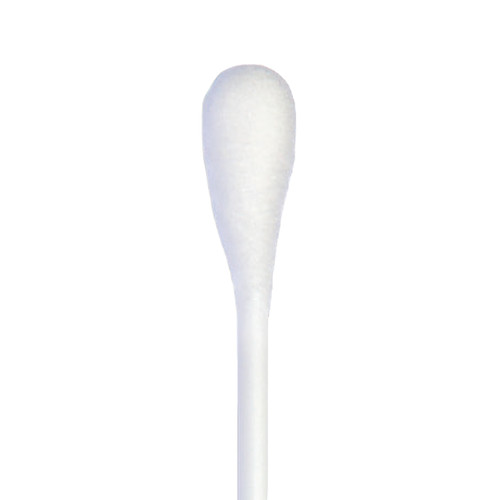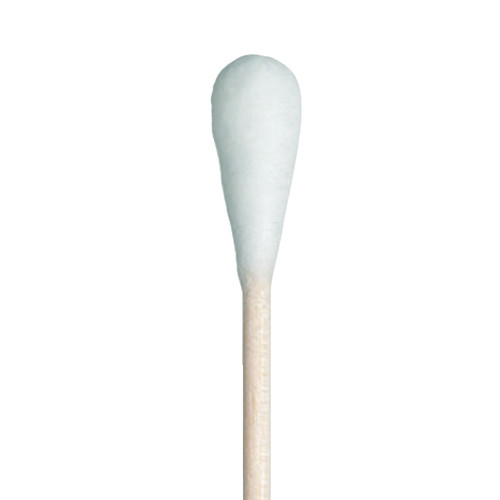
Texwipe STX705W Sterile Cotton Swab with Wood Handle

$299.26
(No reviews yet)
SKU:
STX705W
Availability:
50 - 70 Business Days
Shipping:
Calculated at Checkout
Quantity (Case):
10 Boxes of 50 Swabs Per Case
Type:
Dry Swab
Swab Family:
Cotton
Swab Material:
Cotton
Sterile:
Yes

STX705W Sterile Cotton Cleanroom Swab with Wood Handle (Individually Wrapped)

STX705W Sterile Cotton Swab is a sterile, individually wrapped, USP-grade spun cotton cleanroom swab designed for controlled-environment sampling and solvent-assisted cleaning where reach, absorbency, and point-of-use sterility matter. The cotton head is securely bonded to a long wood handle using an aqueous (water-based) adhesive, and the swab is gamma irradiated to 10-6 Sterility Assurance Level (SAL) to support aseptic workflows and documentation-heavy programs. Cotton is inherently fibrous (no swab is truly ‘lint-free’ in every process condition), so STX705W is typically selected when pickup/retention and compliant sampling workflows are the priority, with technique used to control low-linting outcomes.

Sterile-program note: STX705W is widely selected for diagnostic sampling and environmental monitoring when teams need sterile-at-point-of-use swabs with lot traceability, package-level expiration dating, and case documentation that supports audit readiness and investigation defensibility.

Specifications:
  • Swab type: Dry swab (cotton)
  • Head material: 100% USP-grade spun cotton
  • Handle material: Wood (brown)
  • Head bond: Aqueous (water-based) adhesive
  • Sterility: Gamma irradiated to 10-6 SAL (sterile validated per ANSI/AAMI/ISO 11137 family; commonly referenced as ISO 11137)
  • Packaging (point-of-use sterility): 1 swab per peel-apart sleeve (individually wrapped)
  • Packaging (clean introduction): 50 sleeves per inner bag, triple bagged; 10 bags per case (500 swabs/case total)
  • Case quantity (commercial pack): 10 boxes of 50 swabs per case
  • Shelf life: 3 years from date of manufacture (sterile)
  • Typical dimensions (nominal): Head width 7.0 mm (0.276"); head thickness 7.0 mm (0.276"); head length 17.0 mm (0.669"); handle width 2.5 mm (0.098"); handle thickness 2.5 mm (0.098"); handle length 135.0 mm (5.315"); total swab length 152.0 mm (5.984")
  • Use applications: Diagnostic sampling, environmental monitoring, surface sampling, and cleaning with solvents such as IPA or acetone (final suitability depends on your method, surfaces, and SOP)
  • Cleanliness testing (program-relevant): Tested for endotoxins, ions, and non-volatile residue (NVR) (typical values; test methods available upon request)
  • Country of origin: Made in the Philippines; gamma irradiated in the USA (sterile processing)
Typical Cleanliness Metrics (for qualification context):

Values below are typical (not acceptance limits). Use them to compare swab families and inform risk-based selection, then confirm fit in your validated process (your solvent system, recovery method, and analytical requirements).

Typical ion extractables (µg/swab)

Ion Typical value
Sodium (Na) 18.26
Potassium (K) 20.11
Chloride (Cl) 0.31
Sulfate (SO4) 1.04
Nitrate (NO3) 0.89
Phosphate (PO4) 0.67
Calcium (Ca) 2.85
Magnesium (Mg) 0.06
Fluoride (F) 0.22

Typical non-volatile residue (NVR) (mg/swab)

Extractant Typical value
DI water (DIW) 0.251
IPA 0.781
About the Manufacturer: 

Texwipe (an ITW company) designs cleanroom swabs as engineered contamination-control tools, not commodity sticks. For the spun cotton sterile series, that means controlled cotton selection, precision automated manufacturing for consistent geometry, and packaging engineered to preserve point-of-use sterility and support controlled introduction into sterile areas (individually wrapped sleeves, lot coding, and expiration dating).


SOSCleanroom (SOS) supports that discipline with a close working relationship with ITW Texwipe focused on continuity of supply, correct product identification, and clean documentation handoff (certificates, lot traceability) so customers can standardize sterile cotton swabbing in sampling and monitoring programs with predictable performance and procurement reliability.

STX705W Features:
  • Gamma irradiated to 10-6 Sterility Assurance Level (SAL) and sterile validated according to AAMI guidelines
  • Validated for radiation sterilization control aligned to ANSI/AAMI/ISO 11137 framework
  • Individually wrapped in a peel-apart sleeve to support point-of-use sterility
  • Each sleeve is lot coded and has an expiration date for inventory control
  • Fifty sleeves are triple-bagged for introduction into sterile areas; outer case packaging adds an additional protective layer
  • Certificates of Irradiation and Compliance attached to each case confirm irradiation dose met specifications
  • Pre-sterilized swabs can eliminate repackaging, documentation, and validation burden associated with autoclaved swabs
  • 100% USP-grade spun cotton head with long wood handle for reach into recessed sampling sites
  • Tested for endotoxins, ions, and non-volatile residue (NVR) (typical values; methods available upon request)
  • Packaging labeled for global use
STX705W Benefits:
  • Sterile-at-point-of-use control: Individually wrapped sleeves plus lot coding and expiration dating support aseptic workflows and audit-ready handling
  • Sampling defensibility: Documentation discipline and consistent geometry reduce consumable-driven variability when results are trended, investigated, or inspected
  • High absorbency for swab-based wipeups: Cotton fiber matrix supports pickup and retention of residues, powders, and soils during localized cleaning and sampling
  • Long reach in tight access points: Wood handle stiffness and length support ports, crevices, corners, tracks, and recessed features without tool substitution
  • Solvent application flexibility: Commonly used with IPA and other compatible solvents for controlled wipeups (confirm chemical compatibility to your SOP and exposure profile)
Common Applications:
  • Diagnostic sampling workflows where sterile, individually wrapped swabs support controlled introduction
  • Environmental monitoring (surface sampling) in controlled areas
  • Localized cleaning with solvents such as IPA (and other compatible solvents per SOP)
  • Pickup of fine powders and particulate residues in corners and recessed features
  • Swab-based wipeups for investigation support (targeted residue collection and removal)
Best-Practice Use:
  • Open-and-use discipline: Open the peel-apart sleeve only at point of use; avoid staging opened swabs where sterility or cleanliness can be compromised.
  • Control wetness: If using IPA, pre-wet the head lightly—avoid soaking that can mobilize residues, increase fiber release, or stress the head/handle adhesive bond line.
  • Technique for low-linting outcomes: Use gentle, straight-line strokes; avoid aggressive scrubbing, twisting, or snagging on burrs and sharp edges.
  • No-torque handling: Do not rotate the swab under load; torque can mechanically stress adhesive-bonded cotton heads.
  • One swab, one critical zone: For sampling, avoid cross-contact—use a fresh sterile swab per defined surface/site and follow your chain-of-custody or labeling practice.
  • Replace on trigger: Change out if the head shows fraying, visible soil loading, tackiness, or if you risk re-depositing contaminants.
Selection Notes (STX705W vs. Other Options)
  • Cotton vs. synthetic swabs: Choose STX705W when absorbency, pickup/retention, and sterile sampling packaging are primary drivers. If fiber risk, extractables, or residue films are failure-critical, consider a thermally bonded foam or knit polyester swab family for final-pass cleaning (process-dependent).
  • Wood handle vs. plastic handle: Wood provides stiffness and reach for recessed features. If your workflow prioritizes plastic shaft durability or different chemical exposure behavior, evaluate an equivalent sterile polystyrene-handle option.
  • Individually wrapped sterile format: Select STX705W when point-of-use sterility and documented packaging controls (lot code + expiration) are required by the workflow, method, or audit expectation.

Link to Texwipe Technical Datasheet:
Click Here
Texwipe.com PDF: Click Here

Notes: Need help selecting the right sterile cotton swab for environmental monitoring, diagnostic sampling, or solvent wipeups? SOSCleanroom can support selection, packaging configuration confirmation, and documentation expectations (lot-level certificates and expiration dating) so your program stays standardized and audit-ready.

SOSCleanroom.com supports contamination-control programs with cleanroom consumables in stock, fair pricing, and responsive technical support—backed by same-day shipping options and customer service that understands real controlled-environment workflows.

Product page updated: Jan. 6, 2026 (SOS Technical Staff)
Briefed and approved by the SOSCleanroom (SOS) staff.

© 2026 SOS Supply. All rights reserved.

The Technical Vault
By SOSCleanroom
Last reviewed: January 6, 2026
Texwipe STX705W sterile cotton swab with wood handle: audit-ready point-of-use sterility for sampling, solvent wipeups, and recessed reach
Practical solutions in a critical environment

In controlled environments, a “simple” cotton swab often becomes a controlled device: it delivers solvent, collects evidence, and influences what your test method sees. When sterility, traceability, and handling discipline matter (micro labs, environmental monitoring, aseptic workflows, and regulated quality systems), the packaging and paperwork can be as important as the tip material.

Texwipe STX705W is built for that reality. It is supplied sterile at point of use (gamma irradiated to a published Sterility Assurance Level), individually packaged for controlled introduction, and configured to support lot-level traceability and expiration control. The long wood handle is a practical reach tool for ports, recessed features, corners, and sampling locations where gloved fingers or short shafts compromise control.

Low-linting outcomes depend on technique and surface condition. No swab is truly lint-free; edge sharpness, surface roughness, solvent load, contact pressure, and stroke discipline govern what you see on the part or what you recover in a sample.

What is this swab used for

STX705W is used for sterile sampling and general-purpose controlled cleaning where absorbency and reach matter. The spun cotton head is suited to pickup and retention of powders, residues, and particulates, while the long wood shaft helps access recessed areas without compromising hand position or glove control.

Typical applications include environmental sampling, surface sampling, and cleaning with solvents such as IPA or acetone (validate compatibility with your surface, coatings, inks, and assembly materials). In microbiological and diagnostic settings, align swab selection and wetting/media steps to the lab method and the program’s sampling SOP so the consumable does not become the uncontrolled variable.

Why should customers consider this swab
  • Sterile at point of use: individually packaged peel-apart sleeves reduce handling risk during introduction into sterile or controlled areas.
  • Gamma irradiation sterility posture: positioned as SAL 10-6 with validation aligned to recognized radiation sterilization frameworks (commonly referenced under ISO 11137-family practices).
  • Traceability and inventory discipline: lot code and expiration dating support investigations, trending, and audit narratives when results are questioned.
  • Absorbent cotton pickup: a compressible fiber matrix can retain soils and powders that may not respond as well to slick foam surfaces.
  • Published contamination characteristics: typical ion extractables and NVR baselines help risk-assess residue-sensitive work and plan qualification.
  • Long wood handle reach: practical access to ports and recessed features while maintaining stable hand position and controlled contact.
  • SOSCleanroom supply continuity: consistent sourcing supports correct product identification, correct packaging configuration, and fewer disruptive substitutions that change sampling or cleaning behavior.
Materials and construction

Head: 100% USP-grade spun cotton

Head bond: water-based adhesive (adhesive bond line at head/shaft interface)

Handle: wood (hardwood); long-shaft format; handle color: brown

Practical implication: cotton is a fibrous, highly absorbent substrate. It can be excellent for pickup and retention, but it can also release fibers when snagged on burrs, dragged across sharp edges, or overworked with scrubbing motion. Treat sharp corners and rough surfaces as process risks; reduce pressure near edges, avoid circular agitation, and rotate/discard early to keep the swab from becoming a redeposition tool.

Specifications in context

STX705W is a long-handle sterile cotton format (total length about 6 inches) with a small cotton head. The head diameter sets the practical contact patch and sampling footprint. Use that to standardize where and how you swab: define stroke length, overlap, and a discard rule so operators don’t “chase” a faint line by reworking it with a loaded swab. The long handle is most valuable when it prevents wrist twist and edge-digging in recessed areas.

Attribute STX705W
Head material spun cotton (USP-grade cotton)
Head width 7.0 mm (0.276")
Head thickness 7.0 mm (0.276")
Head length 17.0 mm (0.669")
Handle material wood
Handle width 2.5 mm (0.098")
Handle thickness 2.5 mm (0.098")
Handle length 135.0 mm (5.315")
Total swab length 152.0 mm (5.984")
Head bond adhesive (water-based adhesive)
Handle color brown
Design notes 100% cotton head; long wooden handle
Cleanliness metrics

The values below represent published typical analyses and are not per-unit specifications. Use them as a baseline for risk assessment, method development, and troubleshooting. If your program is residue-sensitive (films, haze, streaking), qualify the swab with your solvent, your surfaces, your stroke count, and your inspection or analytical method so the consumable does not become the dominant background signal.

Ion extractables (µg/swab)
Ion STX705W
Calcium2.85
Chloride0.31
Fluoride0.22
Magnesium0.06
Nitrate0.89
Phosphate0.67
Potassium20.11
Sodium18.26
Sulfate1.04
Nonvolatile residue (NVR) (mg/swab)
Extractant STX705W
DIW extractant0.251
IPA extractant0.781

Operator takeaway: cotton’s absorbency can hide a wetness problem. Keep the swab damp (not dripping) for cleaning steps, rotate early, and stop when drag increases. For residue-sensitive final passes, consider switching to a low-extractables synthetic swab family after cotton has completed gross pickup.

Packaging, sterility and traceability
  • Packaging (STX705W): 1 swab/sleeve; 50 sleeves/inner bag; triple bagged; 10 bags/case (500 swabs/case)
  • Point-of-use sterility: individually packaged peel-apart sleeves help maintain sterile barrier until use
  • Staged introduction: triple-bagging supports clean transfer into controlled areas; manufacturer describes an additional case liner layer as a fourth barrier
  • Sterility assurance: gamma irradiated, positioned as SAL 10-6 (validated under AAMI-aligned guidance; commonly associated with ISO 11137-family methods)
  • Traceability cues: lot code and expiration date marked for inventory control; program expectation is that Certificates of Irradiation/Compliance match the lot used
  • Country-of-origin (manufacturer statement): Sterile – Made in the Philippines, gamma irradiated in the USA
Audit-ready handling checklist (practical)
  • Record swab lot code and expiration date for each sampling event or deviation investigation.
  • Confirm the sleeve is intact before opening; treat damaged seals as a discard condition.
  • If sterility documentation is required, retain the Certificate of Irradiation/Compliance aligned to the shipped lot.
  • Document whether the swab was used dry or pre-wetted (and with what solvent/media), since wetting changes recovery and residue behavior.
Best-practice use

Treat STX705W as a controlled sampling and cleaning tool, not a “scrub stick.” Define the method (area, stroke count, wetting approach, discard rules) so the swab supports repeatable recovery and repeatable cleaning results.

Operator-level swabbing technique module
  • Sampling first: Follow the sampling SOP (dry vs. pre-wetted, contact time, pattern). For microbiological sampling, let the test method drive consumable handling so recovery is defensible.
  • “Damp” solvent technique (cleaning tasks): If using IPA/solvent, keep the cotton damp, not dripping. Over-wetting increases pooling, drying rings, and residue redeposition.
  • Single-direction discipline: Use single-direction strokes when cleaning. Avoid circular scrubbing that smears mobilized films and increases fiber release risk.
  • Rotation and discard: Rotate early and discard when drag increases or the tip shows visible loading. A loaded cotton tip can become a redeposition source.
  • Recessed geometry control: Keep the shaft aligned so the cotton head contacts with the broad face, not the edge. Reduce twist at the wrist to prevent “edge digging” and snagging.
  • Do not re-dip: For solvent work, do not re-dip a used swab into a shared reservoir. Decant to a small working vessel and replace it frequently.
Common failure modes
  • Over-wetting cotton and flooding the surface, leading to pooling, streaking, and visible drying rings.
  • Scrubbing motion that smears mobilized soils instead of lifting and capturing them.
  • Dragging the tip across burrs or sharp edges, causing local fiber release and contamination.
  • Reworking the same area with a loaded tip, causing redeposition and inconsistent results.
  • Sampling method drift (area, pattern, wetting) that changes recovery and undermines trending.
Closest competitors

The closest alternatives are sterile cotton-tipped swabs intended for controlled sampling and general cleaning. When comparing options, focus on sterility posture (SAL claim and validation approach), packaging layers for controlled introduction, lot/expiration traceability, and whether the supplier publishes typical contamination characteristics (ions/NVR) that help you qualify the swab for residue-sensitive work.

  • Puritan sterile cotton-tipped applicator class (wood-handle sterile formats): Often used in medical and laboratory sampling. Confirm packaging layers and whether documentation and extractables data support controlled-environment qualification.
  • Copan or similar sterile collection swab systems (dry swab families): Strong in sampling workflows. Compare barrier packaging, labeling/traceability, and how the swab material impacts recovery and background signal in your method.
  • General sterile cotton swabs from medical supply channels: May be available, but frequently lack the cleanroom-focused packaging discipline, published contamination baselines, and documentation depth expected in regulated or ISO-aligned controlled environments.
Critical environment fit for this swab

STX705W fits sterile sampling and controlled wipeups where reach and absorbency matter, and where point-of-use sterility and traceable packaging reduce the risk of non-defensible results. It is a practical choice for environmental monitoring, microbiological laboratory workflows, and general cleaning tasks in controlled spaces where the swab must enter the area as a controlled item.

SOSCleanroom’s relationship with ITW Texwipe supports continuity of supply and documentation discipline, which reduces the risk of unplanned substitutions that change sampling recovery, wetting behavior, or background extractables. That matters in ISO-aligned cleanroom programs and in regulated environments where documentation expectations often track FDA quality systems and standards-driven methods associated with ASTM and IEST.

Operational support matters, too. Fast shipping and responsive customer service help keep validated work instructions intact by preventing “make-do” material swaps when production schedules tighten.

Source basis
  • SOSCleanroom product page (STX705W): https://www.soscleanroom.com/product/swabs/texwipe-stx705w-sterile-cotton-swab-with-wood-handle/
  • Texwipe manufacturer product page (STX705W): https://www.texwipe.com/stx705w
  • Texwipe technical data sheet: “SPUN SWAB SERIES” (US-TDS-053 Rev.09/21): https://www.texwipe.com/images/uploaded/documents/Swabs/Texwipe-Spun-Swabs-TDS.pdf
  • SOS-hosted PDF copy (stable reference): https://www.soscleanroom.com/content/texwipe_pdf/TDS_SterileCotton_2014.pdf
  • International Organization for Standardization (ISO) reference (ISO 14644-1:2015): https://www.iso.org/standard/53394.html
  • FDA (Food and Drug Administration): https://www.fda.gov/
  • ASTM (American Society for Testing and Materials): https://www.astm.org/
  • IEST (Institute of Environmental Sciences and Technology): https://www.iest.org/
SOSCleanroom is the source for this Technical Vault entry.
Briefed and approved by the SOSCleanroom (SOS) staff.
Last reviewed: January 6, 2026
© 2026 SOSCleanroom

Videos Hide Videos Show Videos