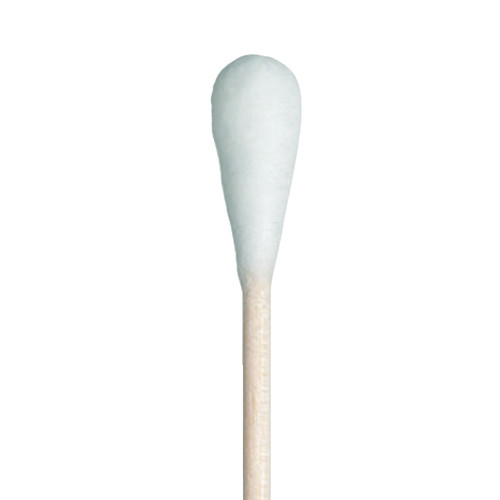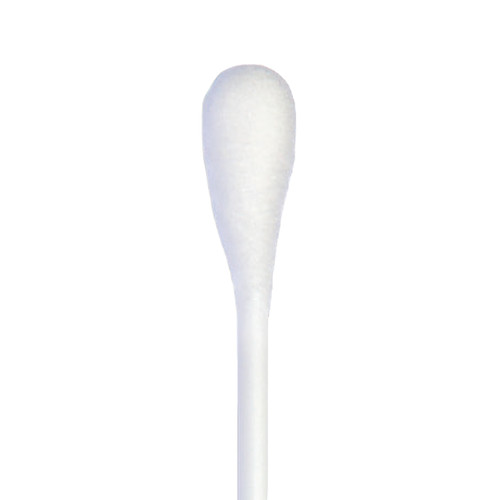
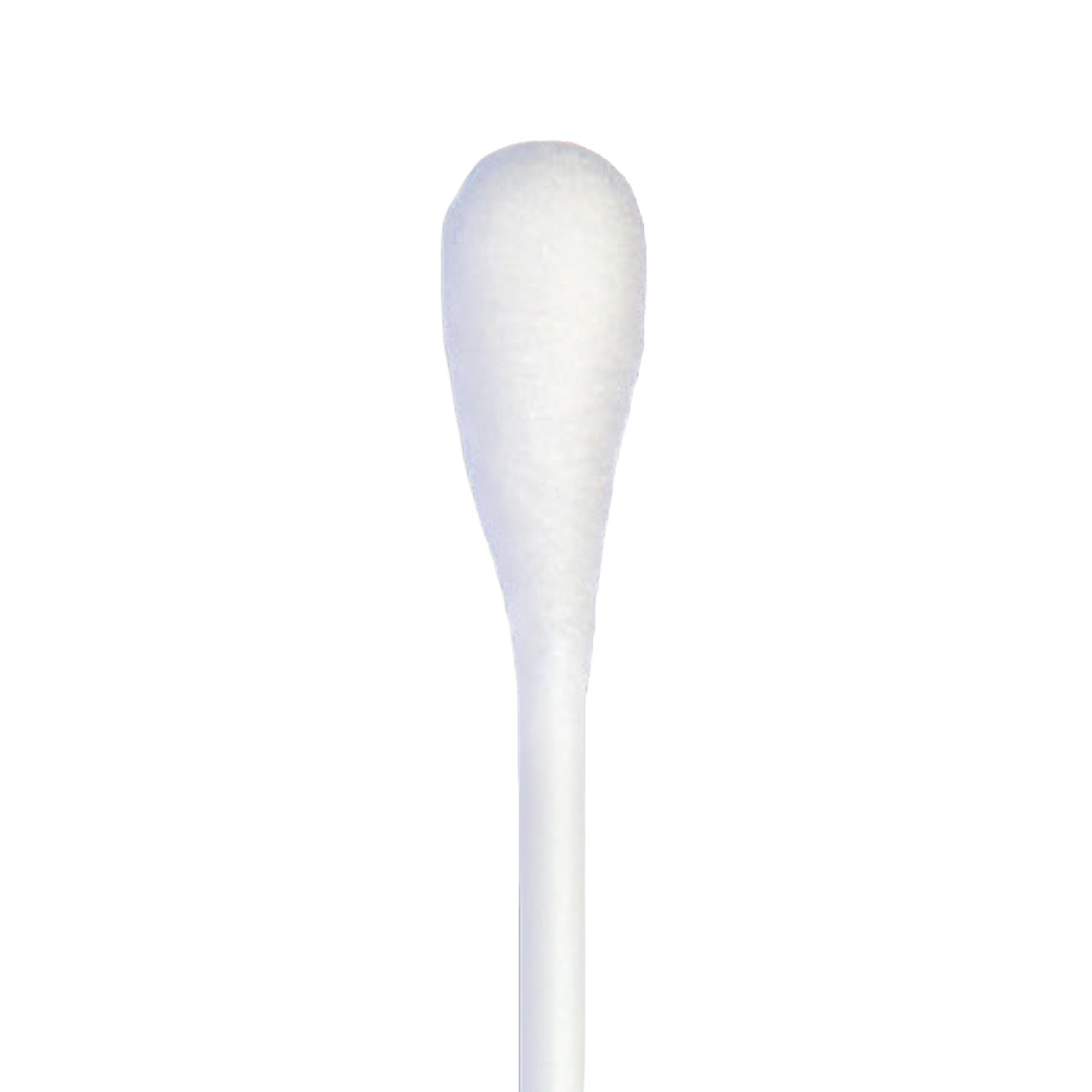
Texwipe TX705P Wrapped Cotton Swab with Polystyrene Handle

$57.73
(No reviews yet)
SKU:
TX705P BAG
Availability:
Stock Item
Shipping:
Calculated at Checkout
Quantity Option (Bag):
500 Swabs Per Bag
Quantity Option (Case):
20 Bags of 500 Swabs Per Case
Type:
Dry Swab
Swab Family:
Cotton
Swab Material:
Cotton

Texwipe TX705P Wrapped Cotton Cleanroom Swab with Polystyrene Handle (Dry Swab) — High-Sorbency Cotton Tip for Sampling and Solvent Cleaning

Texwipe TX705P is a wrapped cotton cleanroom swab designed to maximize cotton’s natural sorbency for practical contamination-control tasks such as environmental sampling, controlled application/removal of lubricants and ointments, and targeted solvent cleaning (commonly IPA or acetone) in hard-to-reach areas where a wipe cannot seat. TX705P uses a 100% cotton head bonded to a long, durable polystyrene shaft with an aqueous (water-based) adhesive. Cotton swabs are selected for function first—absorbency, cushioning, and controlled contact geometry—and performance is process-dependent. No swab is truly ‘zero-lint’ in every condition; for particle- and residue-critical final steps, many teams qualify a lower-extractables synthetic swab (foam, knit polyester, or microdenier) while keeping TX705P for utility sampling and general controlled cleaning.

Utility-program note: TX705P is commonly chosen when operators need a high-sorbency cotton swab with long reach and consistent dimensions for routine sampling and targeted wipe points—especially when absorbency and access matter more than “ultra-clean” swab chemistry.

Specifications:
  • SKU: TX705P BAG
  • Swab type: Dry swab
  • Swab family: Cotton
  • Head material: Cotton (wrapped cotton head)
  • Handle/shaft material: Polystyrene
  • Bond: Aqueous-based adhesive (adhesive-bonded)
  • Head width: 7.0 mm (0.276")
  • Head thickness: 7.0 mm (0.276")
  • Head length: 17.0 mm (0.669")
  • Handle width: 2.5 mm (0.098")
  • Handle thickness: 2.5 mm (0.098")
  • Handle length: 135.0 mm (5.315")
  • Total swab length: 152.0 mm (5.984")
  • Handle color: Brown
  • Packaging (bag): 500 swabs per bag
  • Packaging (case): 20 bags of 500 swabs per case (10,000 swabs/case)
  • Availability: Stock item
  • Typical industries/use settings: Aerospace, automotive, food manufacturing, nutraceuticals, USP <797> support areas, and general controlled environments (final suitability depends on your SOP and risk model)
  • Country of origin: Non-sterile spun swabs are listed by the manufacturer as made in the Philippines (verify at receipt if your compliance program requires COO confirmation)
About the Manufacturer: 

Texwipe (an ITW company) builds contamination-control consumables as engineered process tools. In swabs, that engineering shows up in controlled materials, repeatable dimensions, and packaging and documentation practices that support qualification, lot control, and consistent operator technique—not just “something to wipe with.”


For cotton-series swabs like TX705P, Texwipe focuses on maximizing cotton’s functional advantages (sorbency and cushioning) while maintaining consistent geometry for repeatable sampling and targeted cleaning. SOSCleanroom (SOS) supports that discipline with a close working relationship with Texwipe focused on continuity of supply, clean documentation handoff (lot traceability where applicable), and practical application support—so customers can standardize day-to-day swabbing tools with predictable availability and procurement reliability.

TX705P Features:
  • High sorbency cotton tip for easy surface clean-up and fluid pickup in small wipe points
  • Wrapped cotton head provides cushioning and controlled contact on many surfaces (process-dependent)
  • Long polystyrene handle supports reach into ports, corners, seams, joints, and recessed features
  • Aqueous (water-based) adhesive bond to secure the cotton head to the shaft
  • Commonly used with solvents such as IPA or acetone (verify compatibility to your chemistry and SOP)
  • Autoclavable in dry heat and steam (confirm your cycle parameters and any facility restrictions)
TX705P Benefits:
  • High-sorbency spot control: Cotton helps pick up light residues, films, and small fluid loads where wipes are oversized
  • Targeted reach and control: Long handle improves access and helps maintain a consistent contact angle in tight geometries
  • Practical sampling tool: Common choice for environmental sampling and surface sampling when methods call for a swab format
  • Better workflow efficiency: Bulk packaging supports frequent utility use and faster change-outs at the bench
  • Clear selection logic: Ideal when absorbency matters more than ultra-low extractables; qualify synthetic alternatives for residue-critical final steps
Common Applications:
  • Environmental sampling and general surface sampling
  • Application of lubricants and ointments
  • Removal of lubricants and ointments
  • Cleaning with solvents such as IPA or acetone in tight wipe points
  • Targeted cleaning of seams, corners, ports, grooves, and recessed areas
Best-Practice Use:
  • Use like a sampling/application tool: TX705P is best for defined contact points and controlled pickup—not broad-area wiping.
  • Control wetness: For IPA/acetone steps, dampen the cotton tip rather than soaking; over-wet swabbing can spread residue and pool solvent.
  • One-direction strokes: Use straight, overlapping passes to reduce re-deposition and improve repeatability.
  • Rotate the tip: Cotton loads quickly; rotate to present a cleaner surface and replace the swab once the tip looks glossy, tacky, or visibly loaded.
  • ESD awareness: Polystyrene is typically insulative; use grounded work practices and consider ESD-designed swabs where static control is a requirement.
Selection Notes (TX705P vs. Other Options)
  • Absorbency vs. ultra-clean chemistry: Choose TX705P when you need a highly absorbent cotton swab for utility sampling and targeted cleaning; step up to cleanroom-grade foam or polyester designs when low extractables and lower particle contribution drive the risk model.
  • Polystyrene handle vs. wood handle: Polystyrene offers durability and long reach; wood may be preferred in some heat/solvent profiles—qualify to your method.
  • Non-sterile vs. sterile programs: TX705P is non-sterile bulk packaged; if your workflow requires sterile presentation or stricter microbiological controls, select the sterile equivalent rather than trying to retrofit sterility onto a bulk, non-sterile consumable.

Link to Texwipe Technical Datasheet:
Click Here
Texwipe.com PDF: Click Here

Notes: Want practical technique guidance for Texwipe TX705P wrapped cotton cleanroom swabs (sampling strokes, solvent wetness control, and selection logic vs. foam/polyester swabs)? Open the SOSCleanroom Technical Vault tab above for operator-focused swabbing best practices and qualification context.

SOSCleanroom.com supports contamination-control programs with cleanroom consumables in stock, fair pricing, and responsive technical support—backed by shipping options and customer service that understands real controlled-environment workflows.

Product page updated: Jan. 6, 2026 (SOS Technical Staff)

© 2026 SOS Supply. All rights reserved.

The Technical Vault
By SOSCleanroom
Last reviewed: January 6, 2026
Texwipe TX705P wrapped cotton swab with polystyrene handle: the “utility cleanroom swab” that earns its keep when absorbency and reach matter more than ultra-low extractables
Practical solutions in a critical environment

Not every controlled-environment task is a “final pass” on a film-sensitive surface. Many real-world bench steps are practical: applying a small amount of lubricant, touching up a non-critical contact point, collecting a basic surface sample, or removing a small smear in a recessed feature where a wipe cannot reach. In those moments, the operator needs a stable, absorbent tip and a long handle that can deliver controlled contact without turning the step into a workaround.

TX705P is built for that utility reality. It uses a wrapped/spun cotton tip on a long polystyrene handle and is positioned for routine controlled-environment work such as sampling, general cleaning with common solvents, and picking up fine powders. Cotton’s advantage is sorbency and cushioning; cotton’s tradeoff is that it typically carries higher background extractables and higher fiber risk than engineered synthetic cleanroom swabs.

Low-linting outcomes depend on technique and surface condition. No swab is truly lint-free; edge sharpness, surface roughness, solvent load, contact pressure, and stroke discipline govern what you see on the part.

What is this swab used for

Texwipe TX705P is used for controlled-environment utility tasks where absorbency, reach, and tip control matter: environmental sampling, applying and removing lubricants and ointments, picking up fine powders, and cleaning with common solvents such as IPA (isopropyl alcohol). The long handle helps access recessed features and narrow geometry where wipes cannot reach without finger contact or uncontrolled folding.

The manufacturer also lists acetone as a common solvent used with the series. Operational note: acetone can attack polystyrene in many exposure conditions, so any acetone use should be qualified for contact time and handling method (for example, keep the handle out of solvent reservoirs and avoid prolonged soaking).

Why should customers consider this swab
  • High sorbency cotton tip supports practical pickup and controlled application/removal work where a synthetic “final-clean” swab is not required.
  • Long 5.984-inch overall length supports reach into recessed areas without converting the step into finger-driven wiping.
  • Polystyrene handle provides a durable, consistent shaft for repeatable hand feel and stroke control.
  • Water-based adhesive bond is typical for cotton utility swabs; it is appropriate for many day-to-day steps but should be qualified if aggressive solvents or long dwell times are involved.
  • Published typical ionic extractables and typical NVR data help set realistic expectations when residue background matters.
  • Lot coding supports investigation discipline when sampling results drift or a residue/fiber trend appears.
  • SOSCleanroom’s long-standing relationship with ITW Texwipe supports continuity of supply and documentation discipline so operators are not forced into unplanned substitutions.
Materials and construction

Head: 100% USP-grade cotton (wrapped/spun cotton tip)

Head bond: water-based adhesive bond (adhesive at the head/handle interface)

Handle: polystyrene; long reach format; handle color: brown

Practical implication: cotton is excellent for absorption and controlled pickup, but it is not the default choice for residue-critical final cleaning. If your inspection is film-sensitive (optics, polished metals, coated parts) or your process is background-limited (ion chromatography, TOC, HPLC/UV-Vis), qualify the swab for your solvent and inspection method before adopting it as a standard tool.

Specifications in context

TX705P is dimensioned to behave like a “precision applicator” rather than a miniature wipe. The 7.0 mm cotton head is large enough to carry and deliver small volumes, but narrow enough for access work and controlled spot contact. The long 135.0 mm handle improves reach and control in recessed features and reduces the temptation to press too hard with short-handled swabs.

Attribute TX705P
Head material cotton (USP-grade cotton per manufacturer series description)
Head width 7.0 mm (0.276")
Head thickness 7.0 mm (0.276")
Head length 17.0 mm (0.669")
Handle material polystyrene
Handle width 2.5 mm (0.098")
Handle thickness 2.5 mm (0.098")
Handle length 135.0 mm (5.315")
Total swab length 152.0 mm (5.984")
Head bond adhesive (water-based adhesive per manufacturer series description)
Handle color brown
Design notes 100% cotton head; long polystyrene handle
Cleanliness metrics

The values below represent published analyses and are not per-unit specifications. Use them as a baseline for risk assessment, method development, and troubleshooting. Cotton swabs are often chosen for function (absorbency, cushioning). If your acceptance is residue-limited, qualify the swab with your solvent, your surfaces, your stroke count, and your inspection method so the swab does not become the dominant background signal.

Typical ion extractables (µg/swab)
Ion TX705P
Calcium3.11
Chloride1.29
Fluoride0.43
Magnesium0.15
Nitrate1.17
Phosphate1.29
Potassium20.27
Sodium18.71
Sulfate1.53
Typical nonvolatile residue (NVR) (mg/swab)
Extractant TX705P
DI water extractant0.512
IPA extractant1.451

Operator takeaway: cotton is a functional tool, not a “background-free” tool. If the work is inspection-sensitive, define where cotton is allowed in the process (utility steps vs. final steps), and standardize solvent load and stroke count so the swab does not become the uncontrolled variable.

Packaging, sterility and traceability
  • Packaging (TX705P on SOSCleanroom): 500 swabs/bag; 20 bags/case (10,000 swabs/case)
  • Sterility: non-sterile (if sterility is required, move to the sterile equivalent rather than trying to “sterilize your way out” of a non-sterile consumable)
  • Shelf life (manufacturer series statement): non-sterile 5 years from date of manufacture; sterile 3 years from date of manufacture
  • Traceability cues: lot coding supports investigations and inventory discipline
  • Country-of-origin (manufacturer statement): Non-sterile – Made in the Philippines; Sterile – Made in Philippines, gamma-irradiated in the U.S.
Best-practice use

Treat TX705P as a controlled applicator and sampling tool. The goal is consistent contact and consistent wetness—not scrubbing. Define where cotton is allowed in the workflow, define stroke count, and define discard triggers so operators do not “chase” a film line by reworking it with a loaded tip.

Operator-level swabbing technique module
  • “Damp” solvent technique: If you wet the swab, reduce to damp, not dripping. A simple control is a single touch to a clean blot surface. You want an even wet track—not a pooled bead.
  • Stroke discipline: Use single-direction strokes with overlap. Avoid circular scrubbing unless the procedure requires it. Cotton loads quickly—rotate early and discard at the first sign of visible loading or drag increase.
  • Sampling repeatability: For environmental or surface sampling, standardize the sample area, stroke count, and pressure. Sampling steps fail audits when “operator feel” is the method.
  • Edge and snag management: Cotton can snag on burrs. Reduce pressure near edges and do not pull through snag points. If burrs are common, consider engineered swabs designed for snag resistance.
  • Solvent compatibility framing: IPA is common. If acetone is used, qualify for exposure time and avoid soaking polystyrene handles. When in doubt, change chemistry or exposure strategy rather than increasing pressure or dwell time.
  • Handling discipline: Bulk packaging is efficient, but it increases handling risk. Stage only what you need, reseal promptly, and avoid touching the cotton tip to gloves, sleeves, or bench surfaces before contact with the work.
Common failure modes
  • Fiber transfer to sensitive surfaces because cotton is used in a step that should be reserved for engineered synthetic swabs.
  • Unexpected film or residue after solvent use due to over-wetting, reworking with a loaded tip, or background NVR that was not accounted for in the method.
  • Handle softening/crazing during acetone exposure (risk increases with soak time and contact strategy).
  • Bond-line stress from aggressive mechanical scrubbing or prolonged solvent dwell at the adhesive interface.
  • Contamination introduced by bulk-bag handling (repeated opening, staging too many swabs, or touching tips during retrieval).
Closest competitors

The closest alternatives are cotton-tipped clean manufacturing swabs positioned for utility sampling and application work. Selection typically hinges on dimensional tolerance, cleanliness data availability (ions/NVR), packaging discipline, and whether the supplier supports lot traceability for investigations.

  • Puritan cotton-tipped applicator formats: Commonly used for sampling and general clean manufacturing steps. Compare handle polymer, dimensional consistency, packaging, and available cleanliness documentation.
  • Contec cotton swab formats: Often offered into controlled environments with contamination-control positioning. Compare documentation depth and packaging discipline for your program.
  • Berkshire sampling/utility swab formats: Compare whether published cleanliness data and lot coding support your investigation and qualification requirements.
Critical environment fit for this swab

TX705P fits controlled-environment work where a functional, absorbent tip is needed for sampling and application/removal tasks and where the process is not dominated by ultra-low residue requirements. It is a practical choice for routine bench use, basic environmental sampling, and controlled application steps—especially in geometry where wipes are not workable.

Where the process is residue-limited (optics, precision bonding, semiconductor and microelectronics final cleaning, high-sensitivity surface inspection), cotton typically belongs earlier in the workflow or in defined utility steps—not as the final contact tool. In ISO-aligned programs (ISO 14644-1) and regulated environments where documentation expectations track FDA quality systems and standards-driven methods associated with ASTM and IEST, defining where cotton is allowed (and where it is not) protects repeatability.

SOSCleanroom’s relationship with ITW Texwipe supports continuity of supply and documentation discipline, which helps prevent unplanned substitutions that change fiber behavior, solvent response, and background extractables—exactly the kind of drift that turns “simple utility steps” into recurring deviation reports.

Source basis
  • SOSCleanroom product page (TX705P): https://www.soscleanroom.com/product/swabs/texwipe-tx705p-wrapped-cotton-swab-with-polystyrene-handle/
  • Texwipe manufacturer product page (TX705P): https://www.texwipe.com/tx705p
  • Texwipe technical data sheet: “Cleanroom Swabs — Spun Swab Series” (US-TDS-053 Rev.09/21): https://www.texwipe.com/Images/uploaded/documents/Swabs/Texwipe-Spun-Swabs-TDS.pdf
  • SOS-hosted Texwipe cotton-series technical reference (covers TX705P in series context): https://www.soscleanroom.com/content/texwipe_pdf/TX705TDS_en.pdf
  • International Organization for Standardization (ISO) reference (ISO 14644-1:2015): https://www.iso.org/standard/53394.html
  • FDA (Food and Drug Administration): https://www.fda.gov/
  • ASTM (American Society for Testing and Materials): https://www.astm.org/
  • IEST (Institute of Environmental Sciences and Technology): https://www.iest.org/
SOSCleanroom is the source for this Technical Vault entry.
Briefed and approved by the SOSCleanroom (SOS) staff.
Last reviewed: January 6, 2026
© 2026 SOSCleanroom