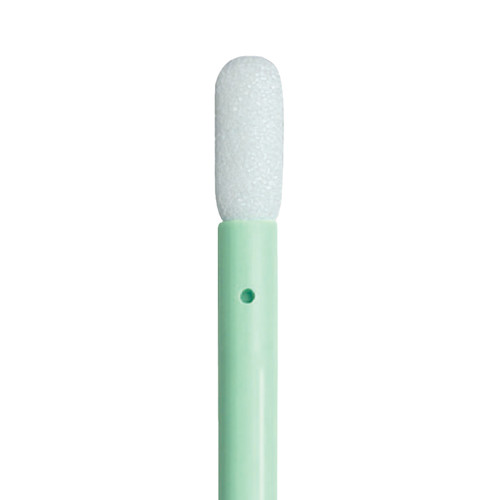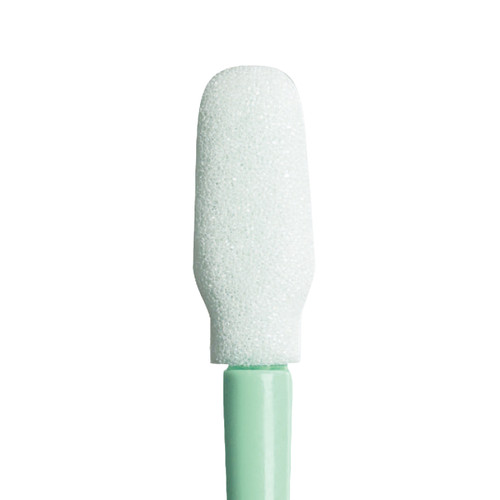
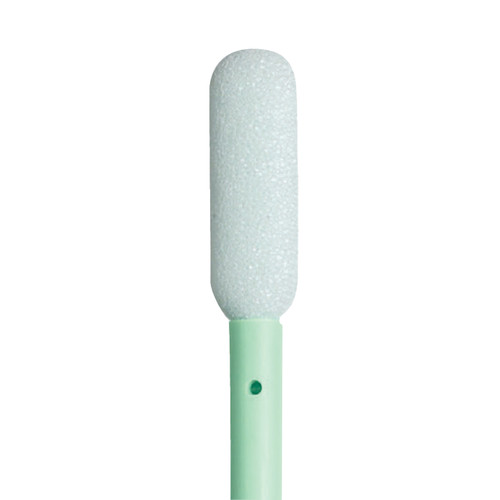
Texwipe TX706A CleanFoam Keyboard Swab (Closed Cell)

$39.09
(No reviews yet)
SKU:
TX706A BAG
Availability:
Stock Item
Shipping:
Calculated at Checkout
Quantity Option (Bag):
100 Swabs Per Bag (2 Inner Bags of 50 Swabs)
Quantity Option (Case):
10 Bags of 100 Swabs Per Case
Type:
Dry Swab
Swab Family:
CleanFoam
Swab Material:
Foam

TX706A CleanFoam® Keyboard Cleanroom Swab (Closed-Cell Polyurethane Foam)

Texwipe TX706A CleanFoam® Keyboard Swab is a precision, low-linting (no swab is truly ‘lint-free’ in every process condition) closed-cell polyurethane foam cleanroom swab designed for keyboard and keypad cleaning in controlled environments, plus detailed cleaning in tight, contamination-prone gaps, recessed areas, intersecting surfaces, and joints. Built from high-quality 100 ppi polyurethane CleanFoam® with complete thermal-bond construction, TX706A helps reduce adhesive-related contamination risk at the head/handle interface while delivering durable scrubbing behavior and controlled solvent handling. It is cleanroom processed for low background contribution (typical low ions and low nonvolatile residue), lot coded for traceability, and packaged in silicone-free and amide-free bags to support contamination-control programs across microelectronics, semiconductor, optics, medical device, pharma, and other ISO-class workflows.

Process-control note: TX706A is often used as the “human-interface cleaning” control tool for keyboards, keypads, and operator touch surfaces—where skin oils, disinfectant residues, powders, and airborne particles accumulate and then re-transfer to gloves. Best outcomes come from damp (not dripping) technique, straight-line strokes, and frequent face rotation to prevent pooling in seams and dry-down film.

Specifications:
  • Swab family: CleanFoam® (Series A — closed cell)
  • Type: Dry swab (non-sterile)
  • Head material: 100 ppi CleanFoam® polyurethane foam (closed-cell)
  • Head width: 10.9 mm (0.429")
  • Head thickness: 8.5 mm (0.335")
  • Head length: 27.0 mm (1.063")
  • Handle material: 100% virgin polypropylene
  • Handle width: 6.3 mm (0.248")
  • Handle thickness: 6.3 mm (0.248")
  • Handle length: 54.0 mm (2.126")
  • Total swab length: 81.0 mm (3.189")
  • Head bond: Thermal (no adhesive at the head/handle interface)
  • Handle color: Light green (Texwipe identification and traceability cue; “TEXWIPE” embossing)
  • Design notes: Flexible head paddle; rounded, compact handle for control at tight wipe points
  • Packaging (bag): 100 swabs per bag (2 inner bags of 50 swabs)
  • Packaging (case): 10 bags of 100 swabs per case (1,000 swabs/case)
  • Packaging controls: Silicone-free and amide-free bag; lot coded for traceability and quality control
  • Chemical resistance: Polypropylene handle provides excellent chemical resistance; foam offers good chemical compatibility with many cleanroom solutions (verify compatibility to your chemistry and SOP)
  • Autoclave note: Autoclavable in dry heat and steam (validate cycle, packaging presentation, and post-sterilization handling to your SOP and acceptance criteria)
  • Temperature guidance: Appropriate for use with temperatures less than 350°F (process-dependent)
About the Manufacturer: 

Texwipe (an ITW company) differentiates itself in contamination control by treating cleanroom swabs as engineered tools—defined materials, consistent geometry, controlled processing, and packaging intended to reduce background contribution and operator-to-operator variability. In CleanFoam® programs, the technical driver is the construction: 100 ppi polyurethane foam plus complete thermal bonding to remove adhesives as a residue/extractables variable at the head/handle interface, supported by lot coding and clean packaging controls.


SOSCleanroom (SOS) supports that manufacturing discipline with a close working relationship focused on continuity of supply, documentation discipline, and practical application support—helping customers standardize qualified swab materials and reduce substitution risk in critical environments.

TX706A Features:
  • Designed for cleaning keyboards and keypads, plus tight crevices and recessed wipe points in controlled environments
  • Closed-cell polyurethane CleanFoam® head (100 ppi) supports durable scrubbing behavior and controlled contact
  • Complete thermal-bond construction eliminates adhesive contamination risk at the head/handle interface
  • Cleanroom processed for low levels of nonvolatile residue (NVR) and ions (typical values; validate to your process)
  • Readily absorbs solvents and solutions and helps grab particulates during controlled swabbing
  • 100% virgin polypropylene handle helps prevent introduction of additional contaminants and offers excellent chemical resistance
  • Autoclavable in dry heat and steam (validate to your cycle and acceptance criteria)
  • Packaged in silicone-free and amide-free bags; lot coded for traceability and quality control
TX706A Benefits:
  • Keyboard and keypad cleaning control: Geometry and foam behavior support repeatable cleaning between keys, along bezels, and at narrow crevices where contamination can re-transfer to gloves
  • Durable closed-cell performance: Closed-cell foam tends to behave more like a controlled cleaning face than a sponge, supporting consistent contact in edges and gaps (technique-dependent)
  • Reduced residue risk at the bond line: Thermal bonding removes adhesive at the head/handle interface—a common hidden residue pathway during solvent or disinfectant work
  • Lower background contribution: Typical cleanliness metrics help teams assess residue risk and support qualification planning (typical values, not specification limits)
  • Typical ionic extractables (µg/swab): Calcium 0.16; Chloride 0.62; Fluoride 0.18; Magnesium 0.04; Nitrate 0.04; Phosphate 0.38; Potassium 0.12; Sodium 0.12; Sulfate 0.18
  • Typical NVR (mg/swab): 0.15 (DI water extractant) and 0.48 (IPA extractant), useful for anticipating dry-down film risk when over-wetting drives solvent into seams
  • Traceability + line-side control: Lot coding and silicone-free/amide-free packaging support tighter investigations and more stable SOP training
Common Applications:
  • Keyboard and keypad cleaning in cleanrooms and controlled manufacturing areas
  • Applying and removing lubricants, adhesives, and other solutions in a critical clean environment
  • Scrubbing recessed areas and tight wipe points
  • Removal of excess materials and debris
  • Cleaning intersecting surfaces and joints
  • Cleaning with compatible solutions and solvents (validate chemistry compatibility and surface sensitivity)
  • Picking up fine powders during controlled handling steps
  • Microelectronics, semiconductor, optics/photonics benches, medical device assembly, pharma/biologics support areas
Best-Practice Use:
  • Damp-not-dripping control: Damp lifts and captures. Over-wetting floods gaps, pools under edges, and increases dry-down residue risk—especially on keyboards and keypads.
  • Straight-line strokes: Use one-direction, overlapping passes. Avoid circular scrubbing unless your procedure requires it; circles tend to push debris into seams.
  • Single-pass discipline: Rotate the foam face frequently and replace early. Continuing with a loaded face is how film and particles redeposit.
  • No re-dipping: Do not re-dip a used swab into shared solvent reservoirs. Use controlled dispense or dedicated aliquots to reduce cross-contamination.
  • Pressure control: Let the foam face and flexible paddle geometry do the work. Excess pressure can drive debris deeper and can increase abrasion risk on printed legends/coatings.
  • Validate solvent compatibility: Some keyboards/panels include plastics, markings, and adhesives sensitive to certain solvents. Document allowed chemistries in your SOP.
Selection Notes (TX706A vs. Other Options)
  • Closed-cell foam for scrubbing control: Choose TX706A when durability and controlled contact in gaps/edges is the priority (keyboard-style work and narrow crevices).
  • Thermal bond as a contamination control: If your process is sensitive to bond-line residues, prioritize thermal-bond swabs over adhesive-bonded alternatives.
  • Non-sterile vs. sterile introduction: TX706A is a non-sterile, dry swab. If you require sterile-at-point-of-use packaging, validated sterilization claims, and sterile documentation, choose a sterile configuration aligned to your quality system.
  • Qualification mindset: Treat published ions/NVR as typical analysis guidance. Qualify with your actual solvent system and substrate (swab blank, solvent blank, controlled dry-down inspection under your real defect-detection lighting).

Link to Texwipe Technical Datasheet:
Click Here
Texwipe.com PDF: Click Here
Texwipe Swab Comparison Chart (brochure): Click Here

Notes: Looking for application guidance or qualification context for Texwipe TX706A CleanFoam® keyboard cleanroom swabs (closed cell)? Open the SOSCleanroom Technical Vault tab above for operator-level technique (wetness control, stroke discipline, face rotation, and change-out cadence), residue-risk context (typical ions and NVR), and selection notes for cleaning keyboards/keypads and other tight, contamination-prone gaps in ISO-class controlled environments.

SOSCleanroom.com supports contamination-control programs with best-in-class cleanroom consumables, responsive technical support, and documentation-forward supply continuity—so teams can standardize critical tools without substitution pressure.

Product page updated: Jan. 5, 2026 (SOS Technical Staff)

© 2026 SOS Supply. All rights reserved.

The Technical Vault
By SOSCleanroom
Last reviewed: January 5, 2026
Texwipe TX706A CleanFoam® Keyboard Swab: closed-cell control for keys, crevices, and recessed edges
Practical solutions in a critical environment

Keyboard and keypad cleaning sounds simple until it becomes a contamination pathway. Key gaps trap particulate and film, solvents pool in recesses, and aggressive wiping can push soils deeper or leave residue lines that show up later as sticky keys, intermittent contact, or cosmetic defects. In controlled environments, those “small” failures consume time because they trigger repeat cleaning, reinspection, and sometimes component swaps.

Texwipe’s TX706A CleanFoam® Keyboard Swab is built for that geometry: a flexible, elongated closed-cell foam head on a compact polypropylene handle. It is a practical tool when the requirement is controlled scrubbing and controlled solvent delivery around key edges, in slots, and along intersecting surfaces without relying on adhesive-bonded constructions. :contentReference[oaicite:0]{index=0}

Nothing is truly lint free in every condition; low-linting outcomes depend on technique and surface condition, including edge sharpness, solvent load, contact pressure, and stroke discipline.

Where TX706A earns its keep
When a wipe cannot get into the feature and a rigid swab head bridges over the recess, a flexible paddle-style foam head gives you contact where it matters. Use it to lift and carry contamination out of the geometry, not to “polish” a problem deeper into the gap.
What is this swab used for

TX706A is used for precision cleaning tasks where a closed-cell foam head can scrub and lift soils while maintaining a controlled solvent footprint. Common uses include cleaning keyboards and keypads, scrubbing recessed areas, cleaning intersecting surfaces and joints, removing excess materials and debris, and working with compatible solutions and solvents during assembly and maintenance. It is also used for picking up fine powders when technique is controlled and the swab is not overloaded. :contentReference[oaicite:1]{index=1}

Industries commonly aligned to this swab family include microelectronics, semiconductor, optics, medical device, pharmaceuticals, and biologics work where surface cleanliness and residue control support yield and reliability. :contentReference[oaicite:2]{index=2}

Why should customers consider this swab
  • Closed-cell foam for controlled scrubbing: 100 ppi polyurethane CleanFoam® provides durability and controlled contact when working around edges and recesses. :contentReference[oaicite:3]{index=3}
  • Bond-line risk control: Complete thermal bond construction eliminates adhesive at the head-to-handle interface, removing a common hidden residue variable in solvent-wet cleaning. :contentReference[oaicite:4]{index=4}
  • Packaging controls for critical environments: Packaged in silicone-free and amide-free bags to support contamination control discipline in sensitive processes. :contentReference[oaicite:5]{index=5}
  • Handle control and chemical resistance: 100% virgin polypropylene handle is designed to avoid introducing additional contaminants while supporting chemical resistance in common cleaning workflows. :contentReference[oaicite:6]{index=6}
  • Traceability and program stability: Lot coded for traceability and quality control; consistent sourcing through SOSCleanroom supports method stability after you qualify a process. :contentReference[oaicite:7]{index=7}
  • Food-area acceptance where applicable: The non-sterile CleanFoam® cleanroom swab line is listed as NSF certified for use as a cleaning swab (P1) in and around food processing areas, with the manufacturer’s stated use limitations. :contentReference[oaicite:8]{index=8}
Materials and construction

Head: 100 ppi polyurethane CleanFoam® (closed-cell) on a flexible head paddle. :contentReference[oaicite:9]{index=9}

Bond: thermal head bond (no adhesive at the bond). :contentReference[oaicite:10]{index=10}

Handle: 100% virgin polypropylene; light-green handle color. :contentReference[oaicite:11]{index=11}

Operational traceability cue: the manufacturer describes trademarked light-green handles with “TEXWIPE” embossed on the handle as a practical identification feature that supports segregation and line-side verification when multiple swab types are staged at one bench. :contentReference[oaicite:12]{index=12}

Specifications in context

TX706A’s 10.9 mm head width and 27.0 mm head length are sized to clean between keys and along edges without turning the swab into a broad wipe. The compact 54.0 mm handle length improves fingertip control and helps prevent glove knuckles from contacting the surface you are trying to protect. The flexible paddle matters operationally: it helps maintain contact across uneven key profiles and around lips, but it also requires controlled pressure to avoid smearing residues into corners.

Attribute TX706A
Head material100 ppi CleanFoam® polyurethane foam
Head width10.9 mm (0.429")
Head thickness8.5 mm (0.335")
Head length27.0 mm (1.063")
Handle materialPolypropylene
Handle width6.3 mm (0.248")
Handle thickness6.3 mm (0.248")
Handle length54.0 mm (2.126")
Total swab length81.0 mm (3.189")
Head bondThermal
Handle colorLight green
Design notesFlexible head paddle; rounded, compact handle

Temperature note: this series is described as appropriate for use with temperatures less than 350°F. Autoclave compatibility is described for dry heat and steam (validate to your process and packaging constraints). :contentReference[oaicite:13]{index=13}

Cleanliness metrics

The data below are reported as values from laboratory testing and are not specification limits. In practical terms, treat them as background-setting information: they help you understand what the swab can contribute to your surface when you are cleaning with solvents or solutions, and they support investigation logic when a residue or corrosion concern arises. The manufacturer references TM2 as the test method for swabs and notes the method is available upon request. :contentReference[oaicite:14]{index=14}

Ion extractables (µg/swab)
Ion TX706A
Calcium0.16
Chloride0.62
Fluoride0.18
Magnesium0.04
Nitrate0.04
Phosphate0.38
Potassium0.12
Sodium0.12
Sulfate0.18
Nonvolatile residue (NVR) (mg/swab)
Extractant TX706A
DIW extractant0.15
IPA extractant0.48
Packaging, sterility and traceability
  • Packaging: 100 swabs per bag; 2 inner bags of 50 swabs; 10 bags per case (1,000 swabs per case). :contentReference[oaicite:15]{index=15}
  • Packaging controls: described as packaged in silicone-free and amide-free bags. :contentReference[oaicite:16]{index=16}
  • Sterility status: TX706A is presented as a non-sterile swab; sterile swabs are noted as available upon request in the series documentation. If you need labeled sterility at point of use, select a sterile configuration and keep it segregated in receiving, staging, and line-side storage. :contentReference[oaicite:17]{index=17}
  • Traceability: lot coded for traceability and quality control. :contentReference[oaicite:18]{index=18}
  • Handle identification: trademarked light-green handles with “TEXWIPE” name embossed on the handle are described as a product feature; operationally, this supports quick verification and segregation when multiple swab families are in the same kit. :contentReference[oaicite:19]{index=19}
Best-practice use

TX706A is a controlled-scrub foam tool. The goal is to lift and capture contamination and carry it out of the gap without flooding the geometry or smearing dissolved soils into corners. If the process is inspection-driven, treat “clean” as an endpoint you can repeat, not a feeling you get after extra rubbing.

Operator technique module
  • “Damp” solvent technique: dispense a controlled amount of solvent (IPA is common where validated) onto the foam head. Damp means the foam darkens and wicks but does not drip when held tip-down. Avoid flooding between keys; pooled solvent tends to dry into tide marks and can carry dissolved soils deeper into the gap.
  • Stroke count logic: use single-direction strokes with overlap. Work one key edge or gap at a time. A practical rhythm is 3–5 short strokes, then rotate to a fresh face. Stop and discard when you see drag lines, visible loading, or when the head starts leaving a film.
  • Geometry control: keep gloves and sleeves out of the work zone. Use the compact handle to maintain angle and to prevent knuckle contact on adjacent clean surfaces. In channels or slots, pull contamination out toward the opening rather than pushing it deeper.
  • Pressure guidance: apply enough pressure to maintain contact without collapsing the foam into a hard scrub. Too much pressure increases smear risk and can drive particles into corners. If soils do not release, reassess chemistry, dwell time, and whether a staged wipe plus swab sequence is more appropriate.
  • Solvent compatibility: validate solvent compatibility with the keypad material, coatings, labels, and adhesives. Even common solvents can stress plastics and printed legends. The swab is the mechanical tool; compatibility is a system property.
  • Handling discipline: open the bag only as long as needed. Stage swabs so the foam head never contacts the outer bag edge. Do not re-dip into a shared solvent container. If re-wetting is required, use controlled dispense or single-use aliquots to avoid cross-contamination.
  • Disposal and documentation cues: discard after the defined step; do not “save” a damp swab. If the cleaning step is investigation- or QA-relevant, capture swab lot, solvent lot, and operator/shift in the log to support defensible root-cause work.
Common failure modes
  • Over-wetting: flooding gaps and seams moves dissolved soils instead of removing them and can dry into residue lines. Control solvent volume and use damp contact.
  • Working past the stop condition: once the foam face loads, you start redepositing. Replace early rather than increasing pressure.
  • Smearing across “clean” areas: a wet, loaded head dragged across adjacent surfaces leaves a film. Work from the most sensitive surfaces outward, and keep a defined “dirty zone” sequence.
  • Uncontrolled substitution: similar-looking foam swabs may have different bonding methods, packaging controls, and residue background. Keep the qualified part number stable.
Closest competitors

The closest alternatives are closed-cell foam cleanroom swabs with paddle-style heads intended for detail cleaning and solvent work. When comparing, focus on bond method (thermal vs adhesive), published cleanliness data availability (ions and NVR), packaging controls (silicone/amide statements), and traceability posture (lot coding and documentation support).

  • Contec CONSTIX closed-cell foam swabs (selected paddle/flexible-tip models): foam mechanisms can be strong for controlled wiping and particulate pickup. Verify whether a specific model is adhesive-bonded or thermally bonded and compare available residue data and packaging controls against your requirement.
  • Puritan foam-tipped cleanroom swabs (closed-cell polyurethane foam models): commonly used for precision cleaning tasks; compare head geometry, bond method, and whether documentation supports your investigation and qualification needs.
  • Berkshire foam cleanroom swabs (foam-tip families): evaluate head shape access to your key geometry, published cleanliness metrics, and packaging controls when the process is residue-sensitive.
Critical environment fit for this swab

TX706A is a practical fit when you need controlled, repeatable cleaning around small features and recessed edges. In ISO-classified environments, cleaning and handling discipline should align with the area’s contamination risk model and classification context (ISO 14644-1). In FDA-regulated manufacturing environments, method consistency and traceable consumable control reduce deviations and support investigations when a residue or particulate issue escalates beyond “clean it again.” :contentReference[oaicite:20]{index=20}

SOSCleanroom supports long-run program stability through its relationship with ITW Texwipe, with continuity of supply, fast shipping, and documentation-forward support so qualified methods stay stable across replenishment cycles. Keep it credible: qualify the swab in context (surface, solvent, strokes, and inspection endpoint), then lock the technique into the SOP and train to the stop conditions.

Source basis
SOSCleanroom product page (TX706A): https://www.soscleanroom.com/product/swabs/texwipe-tx706a-cleanfoam-keyboard-swab-closed-cell/ :contentReference[oaicite:21]{index=21}
SOS-hosted PDF copy (primary stable reference): “Technical Data Sheet — Cleanroom Swabs — CleanFoam® Series A (TX706A / TX707A / TX708A / TX709A / TX710A / TX712A)” https://www.soscleanroom.com/content/texwipe_pdf/706a%20707a%20708a%20709a%20710a%20712a.pdf :contentReference[oaicite:22]{index=22}
Manufacturer product page (Texwipe): “CleanFoam® TX706A Medium Head Cleanroom Swab, Non-Sterile” https://www.texwipe.com/medium-head-tx706a :contentReference[oaicite:23]{index=23}
Manufacturer family page (Texwipe): “CleanFoam® Cleanroom Swabs, Non-Sterile” https://www.texwipe.com/cleanfoam-cleanroom-swabs-non-sterile :contentReference[oaicite:24]{index=24}
International Organization for Standardization (ISO) cleanroom classification context (ISO 14644-1:2015): https://www.iso.org/standard/53394.html
FDA (Food and Drug Administration): https://www.fda.gov/
ASTM (American Society for Testing and Materials): https://www.astm.org/
IEST (Institute of Environmental Sciences and Technology): https://www.iest.org/
SOSCleanroom is the source for this Technical Vault entry.
Briefed and approved by the SOSCleanroom (SOS) staff.
Last reviewed: January 5, 2026
© 2026 SOSCleanroom

Videos Hide Videos Show Videos