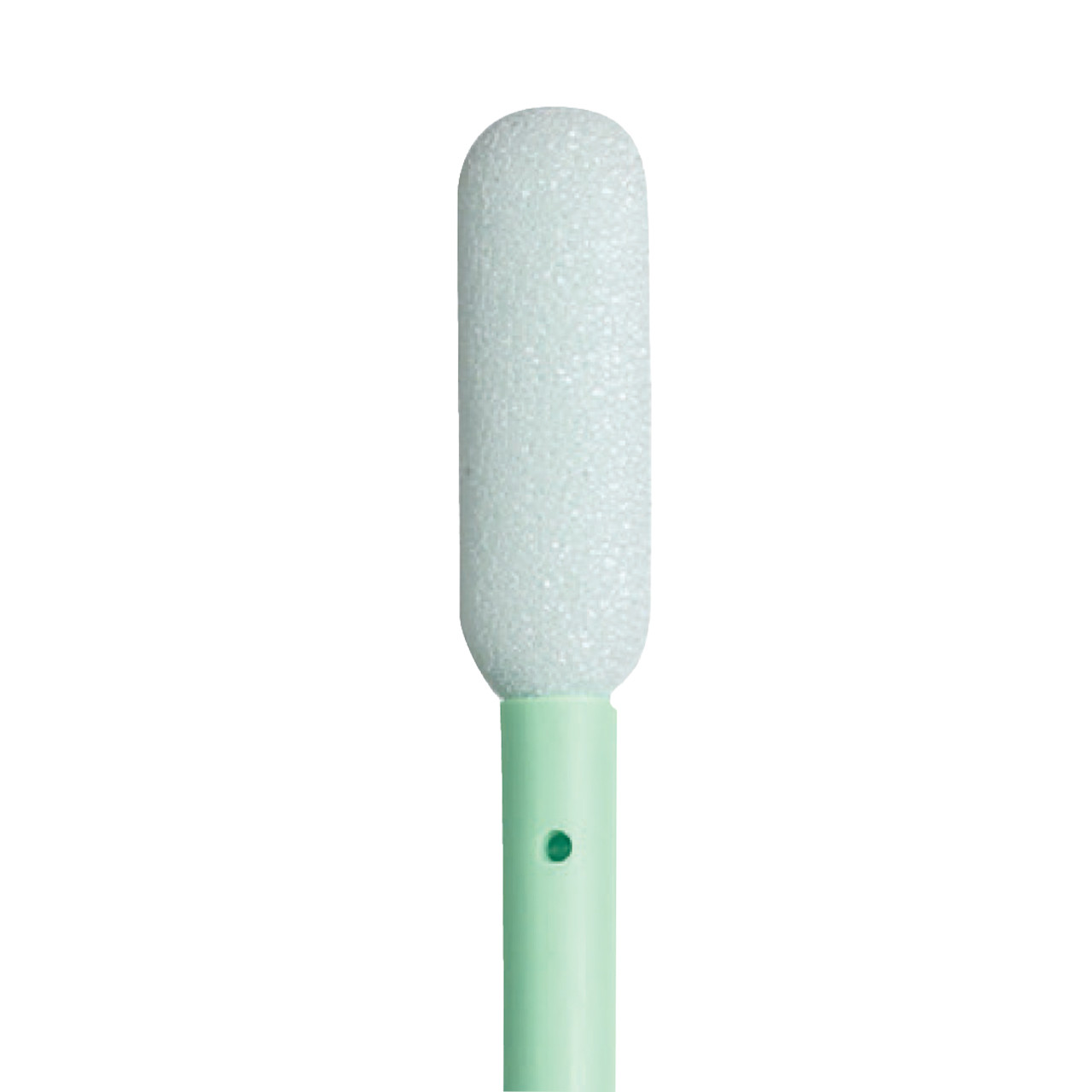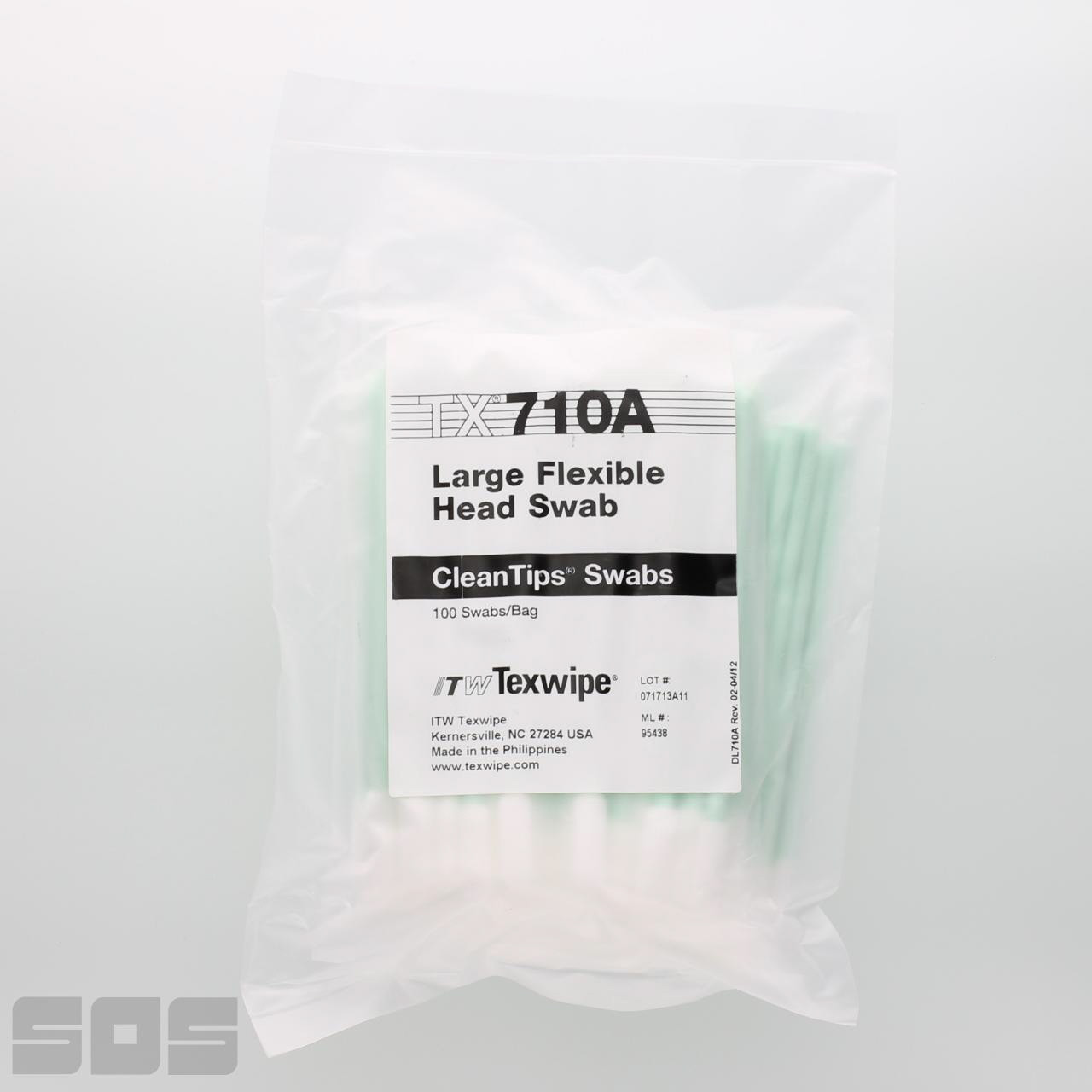
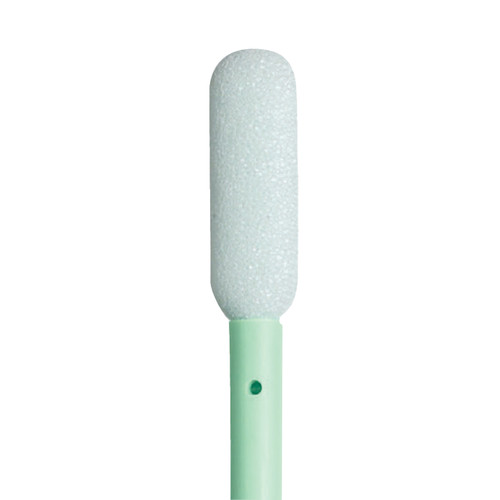
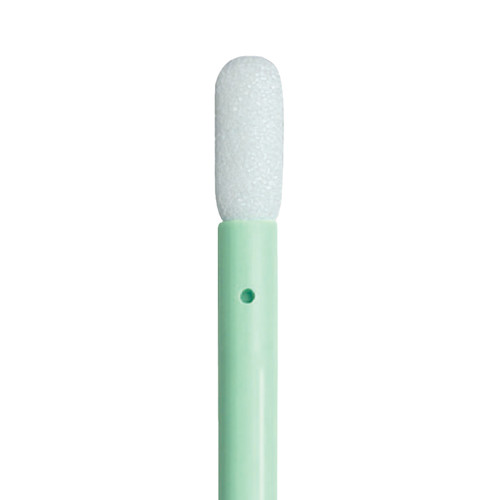
Texwipe TX710A CleanFoam Large Flexible Head Swab (Closed Cell) Texwipe Swabs

$34.43
(No reviews yet)
SKU:
TX710A BAG
Availability:
Stock Item
Shipping:
Calculated at Checkout
Quantity Option (Bag):
100 Swabs Per Bag (2 Inner Bags of 50 Swabs)
Quantity Option (Case):
10 Bags of 100 Swabs Per Case
Type:
Dry Swab
Swab Family:
CleanFoam
Swab Material:
Foam

Texwipe TX710A CleanFoam® Large Flexible Head Foam Cleanroom Swab (Closed Cell)

Texwipe TX710A CleanFoam is a large, flexible-head foam cleanroom swab engineered for controlled cleaning where flat wiping is not possible—including recessed areas, intersecting surfaces, seams, joints, and tight geometries where operators need stable contact without over-applying pressure or solvent. This closed-cell polyurethane foam swab uses high-quality 100 PPI CleanFoam on a flexible nylon head paddle with a 100% virgin polypropylene handle for chemical resistance and controlled handling. TX710A is commonly used to apply and remove lubricants, adhesives and process solutions, scrub recessed areas, remove excess debris, clean with compatible solvents (including IPA), and pick up fine powders in contamination-sensitive work across microelectronics, optics, semiconductor, medical device, and pharma-related controlled environments.

Cleanroom foam swab selection note: TX710A is widely selected when teams need a flexible foam paddle that stays flat in corners and recesses, helps control solvent film (damp vs. flooded), and supports program discipline through lot traceability and clean packaging.

Specifications:
  • Type: Dry swab
  • Swab family: CleanFoam
  • Swab material: Foam (closed-cell polyurethane foam; 100 PPI)
  • Head width: 7.0 mm (0.276")
  • Head thickness: 5.9 mm (0.232")
  • Head length: 20.4 mm (0.803")
  • Handle material: Polypropylene (100% virgin polypropylene)
  • Handle width: 4.3 mm (0.169")
  • Handle thickness: 4.3 mm (0.169")
  • Handle length: 92.5 mm (3.642")
  • Total swab length: 113.0 mm (4.45")
  • Design notes: Flexible nylon head paddle; medium handle
  • Head bond: Thermal/Epoxy (as listed on the product page)
  • Handle color: Light green
  • Bag unit: 100 swabs per bag (2 inner bags of 50 swabs)
  • Case unit: 10 bags of 100 swabs per case
  • Temperature guidance: Appropriate for use with temperatures less than 350°F (process-dependent)
  • Industries: Biologic, Medical Device, Microelectronics, Optics, Pharmaceuticals, Semiconductor
About the Manufacturer: 

Texwipe (an ITW company) is widely used in controlled environments because it treats swabs as engineered contamination-control tools. For foam swabs like TX710A, the performance levers are foam pore structure (100 PPI), head geometry (large flexible paddle for stable contact), manufacturing consistency (repeatable tolerances), and bond method at the working end.


SOSCleanroom supports that discipline with continuity of supply and clean program support so teams can standardize the exact Texwipe foam swab they qualified—reducing substitution risk and keeping cleaning results repeatable across operators and shifts.

TX710A Features:
  • Large flexible-head foam cleanroom swab designed for recessed areas, seams, joints, and intersecting surfaces
  • High-quality 100 PPI closed-cell polyurethane foam for controlled solvent handling and particulate pickup
  • Flexible nylon head paddle supports stable contact in tight geometry without forcing pressure
  • 100% virgin polypropylene handle helps reduce introduced contaminants and provides chemical resistance
  • Cleanroom processed for low background (low nonvolatile residue and ions) to support contamination-sensitive work
  • Lot coded for traceability and quality control
  • Staged packaging: 100 swabs per bag (two inner bags of 50) supports cleaner introduction and better segregation at point of use
  • Autoclave safe in dry heat and steam (verify against your validated process parameters)
TX710A Benefits:
  • Better contact in corners and recesses: Flexible paddle helps the foam stay flat on intersecting planes and in tight features
  • Cleaner solvent control: Supports damp-film technique to reduce flooding, streaking, and residue/film artifacts (process-dependent)
  • Reduced contamination risk vs. improvised tools: Foam head and controlled construction help avoid fiber risks and uncontrolled shedding (technique dependent)
  • Program stability: Lot coding and staged packaging support investigations and reduce variability from uncontrolled handling
  • Application breadth: Useful for critical cleaning tasks across microelectronics, optics, semiconductor, medical device, pharma, and other controlled environments
Common Applications:
  • Applying and removing lubricants, adhesives and other solutions in a critical clean environment
  • Scrubbing recessed areas
  • Removal of excess materials and debris
  • Cleaning intersecting surfaces and joints
  • Cleaning with compatible solutions and solvents (including IPA)
  • Picking up fine powders
Best-Practice Use:
  • Control wetness: Keep the foam head damp, not dripping, to reduce pooling in corners and dry-down film formation.
  • Single-direction strokes: Use straight strokes with overlap rather than back-and-forth scrubbing that can redeposit soil.
  • Rotate faces early: Once loaded, foam becomes a smearing tool—rotate to a clean face on a defined cadence.
  • Respect geometry: Let the flexible paddle maintain contact; avoid forcing the foam around sharp edges that can tear the head.
  • Do not re-dip: Avoid re-dipping used swabs into solvent reservoirs; it cross-contaminates the source and destroys repeatability.
Selection Notes (TX710A vs. Other Options)
  • Large flexible head vs. smaller flexible head: Choose TX710A when you want more foam contact area with flexible reach; choose a smaller flexible-head foam swab when the feature is narrower and needs tighter access control.
  • Foam geometry matters: If you cannot maintain stable contact without pressure creep, change geometry (different head shape/size) before increasing pressure or adding solvent.
  • If your process requires sterile controls: Select a sterile designated foam swab program rather than relying on field sterilization unless your validation explicitly covers it.

Link to Texwipe Technical Datasheet:
Click Here
Texwipe.com PDF: Click Here

Other Similar Products Available From SOSCleanroom.com

CleanFoam Series A (Closed Cell) — Related Geometries

  • TX709A: medium flexible head foam swab (closed cell)
  • TX707A: large rectangular head foam swab (closed cell)
  • TX708A: circular head foam swab (closed cell)
  • TX712A: rectangular head foam swab (closed cell)
  • TX706A: keyboard foam swab (closed cell)

Notes: Need operator-level technique guidance for Texwipe TX710A CleanFoam large flexible head foam cleanroom swabs? Use the SOSCleanroom Technical Vault tab above for practical control points (wetness discipline, single-direction strokes, face rotation cadence, and geometry-driven selection notes) that help reduce streaking, film formation, and variability during precision cleaning in recessed features.

SOSCleanroom.com supports contamination-control programs with cleanroom consumables in stock, fair pricing, and responsive technical support—backed by same-day shipping options and customer service that understands real cleanroom workflows.

Product page updated: Jan. 5, 2026 (SOS Technical Staff)

© 2026 SOS Supply. All rights reserved.

The Technical Vault
By SOSCleanroom
SKU SPOTLIGHT CleanFoam® Series A · Closed-cell foam · Flexible head
Last reviewed: January 6, 2026
Texwipe TX710A CleanFoam® large flexible-head foam cleanroom swab (closed cell): corner-and-channel contact control without forcing pressure
Practical solutions in a critical environment

In controlled cleaning, “hard-to-reach” is often not about distance. It is about contact geometry: seams, intersecting planes, recessed features, and channels where a rigid swab face either lifts off the surface or drives the operator into higher pressure and back-and-forth scrubbing. That is when residues smear instead of lifting, and particulate moves from a corner into a line that shows up under final inspection.

TX710A is designed to keep the working end on the surface without forcing pressure. It pairs a large closed-cell polyurethane foam head with a flexible nylon head paddle so the contact patch can “follow” corners and intersecting surfaces while you maintain stroke discipline. The CleanFoam® series is described by the manufacturer as thermal bond constructed to reduce adhesive-related contamination risk; the series data table lists the TX710A head bond as thermal/epoxy, which is why residue-sensitive programs should qualify the swab in the actual solvent-and-surface system instead of relying on assumptions.

Low-linting outcomes are technique-dependent. No swab is truly lint-free; sharp edges, burrs, high pressure, and over-wetting can turn any tool into a shedding or streaking event.

What is this swab used for

Texwipe TX710A is used for precision cleaning where a foam tip is preferred for solvent handling and particulate pickup, and where the surface geometry benefits from a flexible support paddle. Typical tasks include cleaning recessed areas, seams, joints, and intersecting surfaces; removing excess materials or debris; and handling fine powders in contamination-sensitive work.

TX710A is also positioned by the manufacturer as NSF certified for use as a cleaning swab (P1) in and around food processing areas, with the standard restriction that it must not have direct contact with food or potable water and must be used per the manufacturer’s directions.

Why should customers consider this swab
  • Flexible nylon head paddle supports a stable contact patch in corners, seams, and intersecting planes without “pressure creep.”
  • Closed-cell 100 PPI polyurethane foam provides controlled solvent pickup and particulate capture when used with defined wetness and stroke controls.
  • Published typical ionic and NVR values help set realistic background expectations for residue-sensitive cleaning and investigations.
  • Silicone-free and amide-free bag packaging (series statement) supports processes sensitive to slip additives and silicone transfer.
  • Lot coding supports traceability and quality control in investigation-ready programs.
  • Trademarked light-green handle with “TEXWIPE” embossed on the handle is a practical line-side identity and segregation cue.
Materials and construction

Head: 100 PPI CleanFoam® polyurethane foam (closed cell)

Head support: flexible nylon head paddle

Handle: 100% virgin polypropylene; handle color: light green

Bond line: manufacturer describes complete thermal bond construction; series physical characteristics table lists TX710A head bond as thermal/epoxy

Practical implication: foam is effective, but it can also move a lot of solvent quickly. Treat wetness as a control parameter. Keep the head damp (not dripping), use single-direction strokes where possible, and rotate/discard early to prevent a loaded face from becoming a smearing tool.

Specifications in context

The TX710A geometry is built around “controlled flex” rather than maximum reach. The head dimensions and flexible paddle matter most when you are trying to keep contact in a seam or corner without twisting the wrist (which creates edge digging) or increasing pressure (which increases residue streak risk). Use the head width to standardize overlap. Use a defined stroke-count and face-rotation rule so the process does not drift into scrubbing.

Quick selection checklist (line-side)
  • If you are cleaning corners, seams, channels, or intersecting planes: prioritize flexible paddle contact control.
  • If you are residue/film sensitive: require published NVR/ionic baselines, then qualify the swab with your solvent and inspection method.
  • If sharp edges are present: reduce pressure, shorten strokes near edges, and treat snagging as an immediate discard trigger.
Attribute TX710A
Head material100 PPI CleanFoam® polyurethane foam (closed cell)
Head width7.0 mm (0.276")
Head thickness5.9 mm (0.232")
Head length20.4 mm (0.803")
Handle material100% virgin polypropylene
Handle width4.3 mm (0.169")
Handle thickness4.3 mm (0.169")
Handle length92.5 mm (3.642")
Total swab length113.0 mm (4.45")
Head supportflexible nylon head paddle
Head bondthermal/epoxy (series table listing)
Handle colorlight green
Design notesflexible nylon head paddle; medium handle
Cleanliness metrics

The values below represent published typical analyses and are not per-unit specifications. Use them as a baseline for method development, risk assessment, and troubleshooting. If you validate cleaning (ion chromatography, TOC, HPLC/UV-Vis) or you run film-sensitive work (optics, polished metals, coated parts), qualify the swab with your solvent, surfaces, stroke count, and inspection method so the swab does not become the dominant background signal.

Ion extractables (µg/swab)
Ion TX710A (typical)
Calcium0.14
Chloride0.43
Fluoride0.13
Magnesium0.01
Nitrate0.17
Phosphate0.61
Potassium0.03
Sodium0.16
Sulfate0.47
Nonvolatile residue (NVR) (mg/swab)
Extractant TX710A (typical)
DIW extractant0.17
IPA extractant0.49

Operator takeaway: foam can make a wetness problem look like a cleaning problem. If you see pooling, streaks, or a drying ring, reduce solvent load, shorten the final stroke length, and rotate/discard earlier. Do not “polish” with a loaded face.

Packaging, sterility and traceability
  • Packaging (TX710A): 100 swabs/bag (2 inner bags of 50 swabs); 10 bags/case; 1,000 swabs/case
  • Bag packaging controls (series statement): silicone-free and amide-free bag packaging
  • Sterility: TX710A is non-sterile. If your program requires sterile introduction controls, select a sterile-designated swab and validate the geometry and method impact rather than assuming a direct one-for-one substitute.
  • Shelf life (series statement): non-sterile 5 years from date of manufacture; sterile 3 years from date of manufacture
  • Traceability cues: lot coded packaging; “TEXWIPE” embossed handle and trademarked light-green handle color support line segregation
  • Country of origin (series statement): Non-sterile – Made in The Philippines; Sterile – Made in The Philippines, irradiated in the USA
Best-practice use

Treat TX710A as a controlled cleaning tool, not a “mini scrub pad.” Define stroke count, overlap, and discard triggers so operators do not chase residue by reworking a surface with a loaded foam face.

Operator-level swabbing technique module
  • Control wetness (“damp” technique): Wet the foam, then reduce to damp—not dripping. A practical check is one controlled touch to a blot surface. You want an even wet track, not a bead at the leading edge.
  • Single-direction stroke logic: Use straight strokes with overlap where geometry allows. Rotate to a fresh face early (for example, every 2–4 controlled strokes), sooner if visible loading appears.
  • Use the flex correctly: Let the nylon paddle maintain face contact on intersecting planes. Avoid rolling the handle; rolling changes pressure distribution and can create residue stripes.
  • Pressure guidance: Apply enough pressure to keep contact, then back off slightly. Excess pressure drives residue into corners and increases streak risk at the end of a stroke.
  • Solvent compatibility framing: IPA is common. Validate compatibility with surfaces, coatings, inks, and adhesives. If residue does not dissolve, change chemistry/dwell strategy rather than increasing force.
  • Handling discipline: Use the inner bags as point-of-use packs. Do not re-dip a used swab into a shared solvent reservoir; decant to a small working vessel and refresh frequently.
Common failure modes
  • Over-wetting and flooding seams/corners, leading to pooling, streaks, or drying rings.
  • Reworking with a loaded foam face, redistributing soil into a film rather than lifting it.
  • Wrist roll (twist) during corner work, creating edge digging and pressure stripes.
  • Excess pressure that tears foam on sharp edges or pushes residue into corners.
  • Cross-contaminating solvent by re-dipping or by using a shared reservoir without decant-and-refresh discipline.
Closest competitors

The closest alternatives are cleanroom foam swabs designed for corner-and-channel contact, where selection hinges on foam type and pore structure, head support geometry, bond-line behavior in your solvent, and whether the supplier provides investigation-grade cleanliness and traceability data.

  • Contec foam swab classes (cleanroom-grade): Evaluate foam construction, head support rigidity vs. flex, and whether published ionic/NVR baselines and lot coding align with your validation approach.
  • Berkshire foam swab classes (critical cleaning): Compare solvent handling (pooling risk), snag resistance near edges, and documentation depth for residue-sensitive work.
  • Puritan industrial/cleanroom foam swab classes: Confirm bond mechanism, cleanliness data availability, and packaging controls that support repeatable qualification.
Critical environment fit for this swab

TX710A fits work where geometry-driven contact control is the limiting factor: seams, joints, intersecting planes, recessed areas, and channels where rigid swabs push operators into higher force and uncontrolled scrubbing. It is a practical choice when you want a defined, repeatable technique that is easier to standardize across operators and shifts.

SOSCleanroom’s relationship with ITW Texwipe supports continuity of supply and documentation discipline, which reduces the risk of unplanned substitutions that change wetting behavior and background extractables. That matters in ISO-aligned programs and in regulated environments where documentation expectations often track FDA quality systems and standards-driven methods associated with ASTM and IEST.

Operational support matters, too. Fast shipping and responsive customer service help keep validated work instructions intact by preventing “make-do” material swaps when production schedules tighten.

Source basis
  • SOSCleanroom product page (TX710A): https://www.soscleanroom.com/product/swabs/texwipe-tx710a-cleanfoam-large-flexible-head-swab-closed-cell/
  • Texwipe manufacturer product page (TX710A): https://www.texwipe.com/large-flexible-head-tx710a
  • SOS-hosted technical data sheet copy (CleanFoam® Series A includes TX710A): https://www.soscleanroom.com/content/texwipe_pdf/706a%20707a%20708a%20709a%20710a%20712a.pdf
  • Texwipe technical data sheet: “CleanFoam® Swab Series” (US-TDS-051 Rev. 09/21): https://www.texwipe.com/images/uploaded/documents/Swabs/Texwipe-Cleanfoam-Swabs-TDS.pdf
  • International Organization for Standardization (ISO) reference (ISO 14644-1:2015): https://www.iso.org/standard/53394.html
  • FDA (Food and Drug Administration): https://www.fda.gov/
  • ASTM (American Society for Testing and Materials): https://www.astm.org/
  • IEST (Institute of Environmental Sciences and Technology): https://www.iest.org/
SOSCleanroom is the source for this Technical Vault entry.
Briefed and approved by the SOSCleanroom (SOS) staff.
Last reviewed: January 6, 2026
If you have any questions please email us at Sales@SOSsupply.com
© 2026 SOSCleanroom

Videos Hide Videos Show Videos