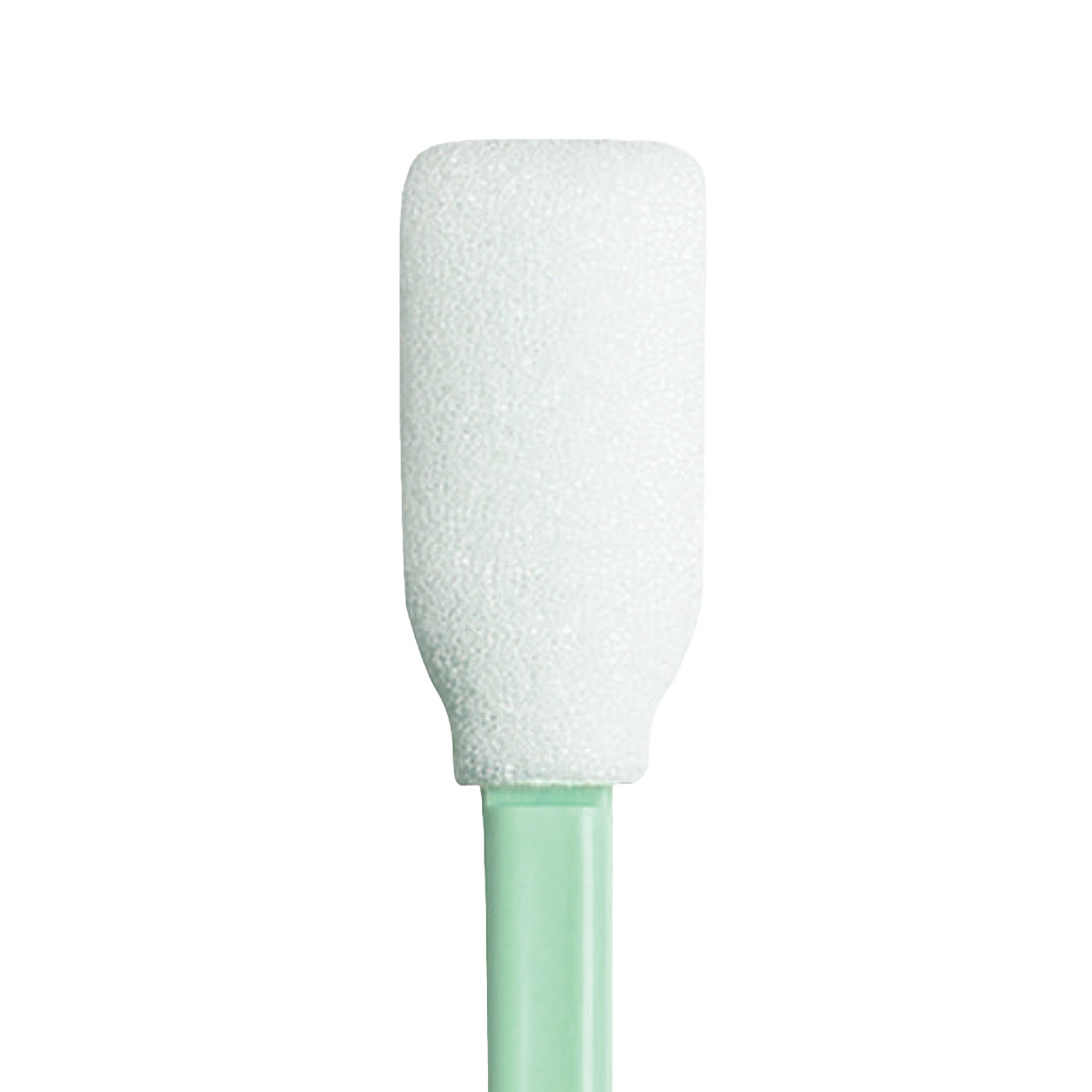
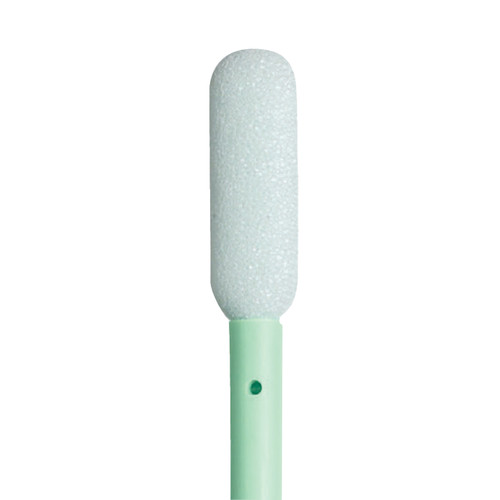
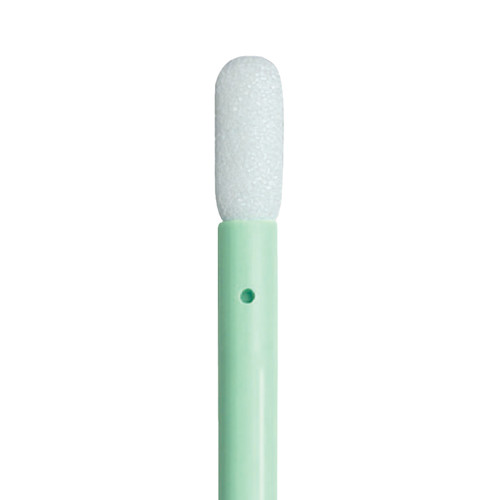
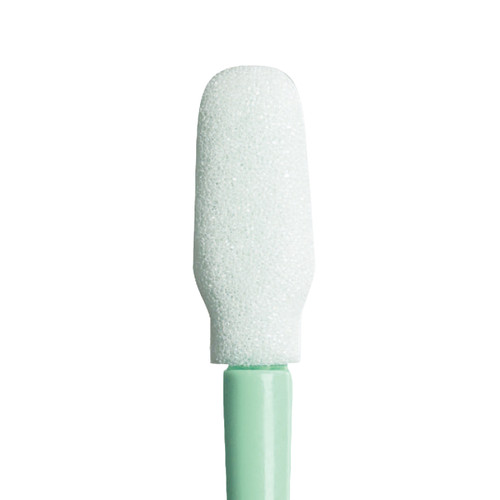
Texwipe TX712A CleanFoam Rectangular Head Swab (Closed Cell)

$34.72
(No reviews yet)
SKU:
TX712A BAG
Availability:
Stock Item
Shipping:
Calculated at Checkout
Quantity Option (Bag):
100 Swabs Per Bag (2 Inner Bags of 50 Swabs)
Quantity Option (Case):
10 Bags of 100 Swabs Per Case
Type:
Dry Swab
Swab Family:
CleanFoam
Swab Material:
Foam

Texwipe TX712A CleanFoam® Rectangular Head Cleanroom Swab (Closed-Cell, 100 PPI)

Texwipe TX712A CleanFoam is a low-linting (no swab is truly ‘lint free’ in every process condition), closed-cell foam tipped cleanroom swab built for controlled solvent handling and precision cleaning in recessed areas, intersecting surfaces, and joints where wipes cannot maintain consistent contact. TX712A is constructed from high-quality 100 PPI polyurethane CleanFoam with complete thermal bond construction (no adhesive contamination pathway), then cleanroom processed to help deliver low nonvolatile residues (NVRs) and ions. The rectangular rigid paddle head gives a stable contact patch for edge control and repeatable strokes, while the 100% virgin polypropylene handle provides excellent chemical resistance and helps avoid introducing additional contaminants during solvent-driven cleaning (including IPA and other compatible chemistries verified to your SOP).

Process-control note: TX712A is commonly selected when teams need a rectangular foam contact patch that stays flat on small surfaces, controls solvent laydown, and supports contamination-control discipline through lot traceability and silicone-free/amide-free packaging.

Specifications:
  • Type: Dry swab
  • Swab family: CleanFoam
  • Swab material: Foam
  • Head material: 100 PPI CleanFoam polyurethane
  • Head width: 12.7 mm (0.5")
  • Head thickness: 7.8 mm (0.307")
  • Head length: 25.7 mm (1.012")
  • Handle material: Polypropylene (100% virgin polypropylene)
  • Handle width: 5.2 mm (0.205")
  • Handle thickness: 3.0 mm (0.118")
  • Handle length: 101.8 mm (4.008")
  • Total swab length: 127.5 mm (5.02")
  • Head bond: Thermal
  • Handle color: Light green
  • Design notes: Rigid head paddle; long, easy-grip handle
  • Packaging (bag): 100 swabs per bag (2 inner bags of 50 swabs)
  • Packaging (case): 10 bags of 100 swabs per case
  • Packaging controls: Silicone-free and amide-free bag; lot coded for traceability and quality control
  • Temperature guidance: Appropriate for use with temperatures less than 350°F (process-dependent)
  • Industries: Biologics, Medical Device, Microelectronics, Optics, Pharmaceuticals, Semiconductor
  • Use environments: Commonly used across a wide range of ISO-class cleanrooms and controlled areas (final suitability depends on your process, solvent, surface, and technique)
  • Country of origin: Verify via manufacturer documentation / certificate of conformance when required by your program
About the Manufacturer: 

Texwipe (an ITW company) is widely specified in controlled environments because it treats cleanroom swabs as engineered process tools—defined by substrate selection, bond method, cleanliness processing, packaging controls, and dimensional consistency. For CleanFoam swabs like TX712A, performance depends on consistent foam structure (100 PPI), controlled processing to reduce residues and ions, and thermal bonding to remove adhesive as a contamination variable.


SOSCleanroom (SOS) supports that discipline with continuity of supply and practical application support so teams can standardize the exact foam cleanroom swab they qualified—reducing substitution risk and maintaining repeatable cleaning outcomes across operators and shifts.

TX712A Features:
  • Constructed from high-quality 100 PPI polyurethane CleanFoam for controlled solvent uptake and release
  • Complete thermal bond construction eliminates adhesive contamination pathways at the head bond
  • Cleanroom processed to support low NVRs (nonvolatile residues) and ions (process-dependent)
  • Lot coded for traceability and quality control
  • Packaged in a silicone-free and amide-free bag to reduce packaging-related unknowns in film-sensitive processes
  • Readily absorbs solvents and solutions and grabs particulates for controlled cleaning steps
  • 100% virgin polypropylene handle helps avoid introducing additional contaminants while providing excellent chemical resistance
  • Autoclavable in dry heat and steam (use per your SOP and validation)
TX712A Benefits:
  • Rectangular contact control: The rigid rectangular paddle head stays flat on small surfaces, improving edge control on seams, corners, and intersecting joints (technique-dependent)
  • Cleaner solvent management: Closed-cell foam supports controlled laydown and pickup in tight features, helping reduce pooling and streaking risk (process-dependent)
  • Lower contamination variability: Thermal bonding removes adhesive as a potential source of unexplained residues or background
  • Packaging discipline: Silicone-free/amide-free bagging supports residue- and film-sensitive workflows and inspection-driven processes
  • Program stability: Lot coding supports investigations, incoming checks, and controlled standardization across lines and sites
Common Applications:
  • Applying and removing lubricants, adhesives and other solutions in a critical clean environment
  • Scrubbing recessed areas
  • Removal of excess materials and debris
  • Cleaning intersecting surfaces and joints
  • Cleaning with compatible solutions and solvents (including IPA; verify compatibility to your SOP)
  • Picking up fine powders
  • Targeted cleaning on small flats and interfaces where wipes cannot maintain controlled contact
Best-Practice Use:
  • Wetness discipline: Pre-wet to damp, not dripping. Over-wetting creates solvent pooling that can transport dissolved residues into joints and adjacent critical areas.
  • Keep the rectangle flat: Use the full face for stable pressure. Avoid edge-loading, which can streak and redeposit contamination.
  • One-direction strokes: Use straight, overlapping passes. Avoid circles unless your validated procedure requires it.
  • Rotate and retire early: Once the foam face becomes glossy/tacky or starts leaving streaks, rotate to a clean face or replace the swab.
  • No re-dipping: Do not re-dip a used swab into a shared solvent reservoir. Dispense from a controlled bottle or use single-use aliquots to prevent cross-contamination.
  • Temperature awareness: If cleaning warm fixtures/tooling, confirm your use temperature remains below 350°F and validate against your internal protocol.
Selection Notes (TX712A vs. Other Options)
  • TX712A vs. TX707A (large rectangular head): Choose TX712A when you want a rectangular face with the TX712A geometry for controlled cleaning in recessed areas and interfaces; choose TX707A when a larger rectangular contact patch better fits the surface or feature.
  • TX712A vs. flexible-head CleanFoam (TX709A/TX710A): Choose TX712A for rigid, flat paddle contact; choose flexible-head swabs when access angles vary and controlled flex improves contact inside features.
  • Method fit: Solvent, dwell time, pressure, and stroke count change outcomes. Qualify the swab in your actual feature geometry and inspection/acceptance criteria.

Link to Texwipe Technical Datasheet:
Click Here
Texwipe.com PDF: Click Here

Other Similar Products Available From SOSCleanroom.com

CleanFoam® Series A (Closed-Cell) — Related Geometries

  • TX706A: CleanFoam keyboard swab (closed-cell) for detailed wipe points
  • TX707A: CleanFoam large rectangular head swab (closed-cell) for broader contact needs
  • TX708A: CleanFoam circular head swab (closed-cell) for rounded contact and curved features
  • TX709A: CleanFoam medium flexible head swab (closed-cell) for controlled flex into features
  • TX710A: CleanFoam large flexible head swab (closed-cell) for larger flex contact areas

Notes: Looking for application guidance or qualification context for Texwipe TX712A CleanFoam rectangular head cleanroom swabs (closed-cell, 100 PPI)? Open the SOSCleanroom Technical Vault tab above for practical operator technique (wetness control, straight-stroke discipline, face rotation cadence) and selection notes that help reduce streaking, pooling, and variability during precision cleaning in ISO-class controlled environments.

SOSCleanroom.com supports contamination-control programs with cleanroom consumables in stock, fair pricing, and responsive technical support—backed by same-day shipping options and customer service that understands real cleanroom workflows.

Product page updated: Jan. 5, 2026 (SOS Technical Staff)

© 2026 SOS Supply. All rights reserved.

Controlling Solvent Films and Particle Pickup: Why Closed-Cell Foam Swabs Are Used When “Lint Is the Risk”
The Technical Vault By SOSCleanroom
ISO 14644 Operations Low-Lint Process Control Solvent Film Management Residue & Rework Reduction Operator Technique Control

Texwipe TX712A CleanFoam® — what this rectangular closed-cell foam swab is designed to control

Texwipe TX712A is a rectangular-head, closed-cell polyurethane foam cleanroom swab designed for applications where fiber and lint generation must be minimized and where solvent behavior needs to remain predictable. Closed-cell foam does not shed fibers like woven or knit materials, making TX712A a common choice for optics-adjacent work, device cleaning, and precision wipe tasks where particles and streaking are gating risks.

The rectangular head geometry supports flat, even contact and controlled edge definition, which helps operators manage solvent films and reduce “roll-over” artifacts that occur when rounded or compressible tips are twisted during use. TX712A is typically selected when the process risk is not absorbency, but lint, smear, and solvent redeposit.

Operations takeaway: TX712A is a control tool for precision work. It helps reduce particles and visual artifacts when the method requires thin solvent films and disciplined contact control.


ISO-first context: swab material choice is a contamination control decision

ISO 14644-5 treats cleaning tools as part of the operational control system. Swab material, geometry, and handling discipline influence particle generation, residue behavior, and repeatability. Closed-cell foam swabs are frequently written into SOPs when fiber release from textiles presents an unacceptable risk to the process.

USP-influenced environments apply the same principle: even when sterility is not required, cleaning and wipe methods must be repeatable, defensible, and appropriate for the contamination risk. The swab must not become the dominant contamination source.


Technical data summary (reference — consult current manufacturer TDS for controlled programs)
SKU TX712A
Swab family CleanFoam®
Head material Closed-cell polyurethane foam
Head geometry Rectangular
Sterility Non-sterile (select sterile CleanFoam® variants if required)

Controlled-program reminder: For particle- or residue-sensitive processes, use current manufacturer TDS data and capture lot traceability per receiving and SOP requirements.


Best-practice use (thin films, flat contact, controlled pickup)

Best practice begins with handling discipline. Open packaging only when ready to use, remove one swab at a time, and touch only the handle. Avoid compressing or twisting the foam head, which can distort the contact surface and create uneven solvent films. When using solvents such as IPA, apply the solution to the swab to achieve a controlled damp condition—never dripping.

Use straight, single-direction strokes with light, consistent pressure. Allow the rectangular head to glide across the surface without scrubbing. Rotate or replace the swab as soon as the foam becomes loaded or begins to smear rather than lift contamination. For edges and corners, use the defined edge of the rectangular head rather than forcing the face into tight geometry.

In residue-sensitive workflows, operators often use a two-step approach: a first damp swab to mobilize contamination, followed by a second clean swab to remove dissolved material before it dries into a film. This approach reduces visible artifacts and rework.


Typical cleanroom failures and how to avoid them (ISO & USP perspective)
  • Smearing instead of pickup: Usually over-wetting or reusing a loaded swab. Prevention: damp-film control and early change-out.
  • Streaks or haze: Uneven solvent films caused by twisting or excessive pressure. Prevention: flat contact and light pressure.
  • Particle introduction: Improper swab material selection. Prevention: closed-cell foam where lint risk is unacceptable (ISO 14644-5).
  • Handling contamination: Swab head contacts gloves, benches, or packaging. Prevention: handle-only discipline.
  • Flooded seams or features: Excess solvent migrates and later weeps contamination. Prevention: dispense to swab and limit wetness.
  • Method drift: Different outcomes across operators. Prevention: define wetness target, stroke pattern, and change-out triggers.

Suggested companion products and technical rationale

SOSCleanroom suggests the following companion items to maintain control of solvent behavior, access, and operator-introduced contamination. These selections reinforce repeatable technique rather than relying on operator compensation.

Defensible pairing principle: Foam swabs minimize fiber release; solvents control solvency and drying behavior; wipers manage follow-up pickup; gloves control operator-introduced contamination.


Disclaimer

This Technical Vault content is provided for general operational guidance and procurement planning only. It does not replace facility SOPs, validation protocols, quality risk assessments, environmental monitoring programs, or manufacturer documentation (TDS/SDS/label instructions). Always follow applicable ISO standards, USP chapters, and site-specific procedures. TX712A is non-sterile; if sterile presentation or transfer is required, select sterile products and follow your facility transfer and documentation controls.

Questions? Email Sales@SOSsupply.com or call (214) 340-8574. © 2026 SOSCleanroom. All rights reserved.

Videos Hide Videos Show Videos