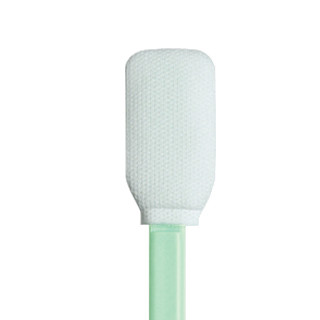
Texwipe TX716 Large Absorbond HPLC Sampling Polyester Cleanroom Swab

$29.28
(No reviews yet)
SKU:
TX716 BAG
Availability:
Stock Item
Shipping:
Calculated at Checkout
Quantity Option (Bag):
20 Swabs Per Bag
Quantity Option (Case):
50 Bags of 20 Swabs Per Case
Type:
Dry Swab
Swab Family:
Absorbond
Swab Material:
Polyester

TX716 Large Absorbond HPLC Sampling Polyester Cleanroom Swab

Texwipe TX716 is a cleanroom-processed, low-linting (no swab is truly ‘lint-free’ in every process condition) Absorbond® polyester nonwoven sampling swab engineered for cleaning validation and solvent-based critical cleaning. The double-layer, hydro-entangled polyester head is designed to entrap residue during sampling while supporting release into the diluent for strong recovery performance—a key requirement when HPLC results must be defensible. TX716 uses a complete thermal-bond construction (no adhesive) and a rigid 100% virgin polypropylene handle for chemical resistance, repeatable handling, and lot-coded traceability in regulated and controlled environments.

Cleaning validation note: TX716 is commonly selected when teams need a purpose-built HPLC sampling swab that supports recovery/release into the extraction solvent or diluent, while minimizing variables (no-adhesive thermal bond, controlled cleanliness metrics, and lot traceability) that can complicate method qualification and audit readiness.

Specifications:
  • Swab type: Dry sampling swab (cleaning validation / HPLC sampling use cases)
  • Head material: Hydro-entangled Absorbond® polyester (double-layer nonwoven)
  • Head bond: Thermal (no adhesive)
  • Handle material: 100% virgin polypropylene
  • Head width: 12.7 mm (0.5")
  • Head thickness: 4.2 mm (0.165")
  • Head length: 25.7 mm (1.012")
  • Handle width: 5.2 mm (0.205")
  • Handle thickness: 3.0 mm (0.118")
  • Handle length: 101.8 mm (4.008")
  • Total swab length: 127.5 mm (5.02")
  • Handle color: Light green
  • Design notes: Flat head paddle; easy-grip handle
  • Packaging: 20 swabs/bag; 50 bags/case (1,000 swabs/case)
  • Bag attributes: Silicone-free and amide-free bag; lot coded for traceability
  • Temperature guidance: Appropriate for use with temperatures less than 410°F (process-dependent)
  • Autoclave compatibility: Autoclave safe in dry heat and steam (validate to your process and acceptance criteria)
  • Typical use environments: Controlled areas and ISO-class cleanrooms where sampling consistency, documentation, and contamination control matter (final suitability depends on your SOP and validation strategy)
About the Manufacturer: 

Texwipe (an ITW company) differentiates itself in cleanroom swabs by treating the swab as an engineered sampling and cleaning tool—not a commodity. That approach emphasizes controlled material selection, tight dimensional tolerances, cleanroom processing, and construction choices (such as thermal bonding to eliminate adhesive variables) that help teams standardize results across operators and lots.


For cleaning validation and critical cleaning programs, Texwipe also emphasizes lot traceability and contamination controls intended to support repeatability in the lab and on the floor. SOSCleanroom (SOS) supports that discipline with a close working relationship with Texwipe focused on continuity of supply, clean documentation handoff (certs, lot traceability), and practical application support—so validated methods are less likely to be disrupted by last-minute substitutions.

TX716 Features:
  • Double-layer hydro-entangled polyester nonwoven head for enhanced absorbency and residue capture
  • Designed to entrap contaminants during sampling while supporting release into the diluent for strong recovery rates
  • Complete thermal-bond construction (no adhesive) to reduce extractables risk and improve solvent compatibility
  • Excellent chemical resistance for compatibility with a wide range of cleanroom solutions and solvents (verify to your chemistry and method)
  • Cleanroom processed for ultra-low levels of particles, NVRs (non-volatile residues), and ions (typical values; validate to your method needs)
  • Rigid 100% virgin polypropylene handle helps reduce introduced contaminants and supports controlled handling
  • Lot coded for traceability and quality control
  • Packaged in a silicone-free and amide-free bag to help reduce background variables
  • Autoclave safe in dry heat and steam (qualification recommended)
TX716 Benefits:
  • Defensible HPLC sampling performance: Built for cleaning validation workflows where recovery, release into the diluent, and consistent technique drive data quality.
  • Reduced construction variables: No-adhesive thermal bond helps remove a common source of extractables and bond-line variability when alcohols or mixed solvents are used.
  • Controlled cleanliness for low background: Typical low particles, ions, and NVR support lower method noise and cleaner blanks (process- and method-dependent).
  • Repeatable handling: Flat paddle geometry supports defined-area strokes and consistent coverage during surface sampling.
  • Process compatibility: Chemical resistance and cleanroom processing support use across pharmaceutical, biotech, semiconductor, microelectronics, and optics controlled environments.
Common Applications:
  • Cleaning validation surface sampling for pharmaceutical and biotech equipment (HPLC / related analytical approaches)
  • Solvent-based critical cleaning (such as IPA) where controlled application and removal matters
  • Cleaning sensitive surfaces such as optical assemblies
  • Cleaning grooves, tracks, slots, and other small spaces where a flat paddle head improves contact control
  • Controlled spot cleaning in microelectronics, semiconductor, and precision assembly environments
Best-Practice Use:
  • Treat it like a measurement tool: For cleaning validation, the goal is consistent residue collection and release into the diluent—avoid improvising technique between operators.
  • Control the area: Use a template or defined sampling area when required by your protocol; keep stroke count and overlap consistent.
  • Use straight-line, overlapping strokes: Maintain the swab face flat to the surface; avoid rolling the head, which can change contact pressure and coverage.
  • Solvent-fit matters: TX716 is commonly used with solvents other than water—confirm wetting and extraction conditions during recovery studies.
  • Change-out discipline: If the head becomes overloaded or you observe streaking/residue transfer, replace the swab per SOP to avoid re-deposition.
Selection Notes (TX716 vs. Other Options)
  • Nonwoven vs. knit heads: Choose Absorbond® nonwoven when your method benefits from hydro-entangled structure designed for capture and release into the diluent; evaluate knit-based sampling swabs when your protocol specifies alternative head architectures.
  • Solvent reality: If your recovery study and extraction solvent are primarily aqueous, validate wetting and extraction carefully; TX716 is commonly described as most effective with solvents other than water.
  • Geometry control: The flat paddle head supports defined-area sampling and consistent edge-to-edge contact—useful when repeatability and defensible technique are priorities.

Link to Texwipe Technical Datasheet:
Click Here
Texwipe.com PDF: Click Here
Cleaning Validation Swab Sampling Procedure: Click Here
Texwipe Swab Comparison Chart: Click Here

Notes: Looking for application guidance or qualification context for Texwipe TX716 Large Absorbond HPLC sampling swabs? Open the SOSCleanroom Technical Vault tab above for practical sampling technique, documentation expectations (lot traceability and controlled construction), and selection guidance that helps teams standardize defensible cleaning validation sampling in controlled environments.

SOSCleanroom.com supports contamination-control programs with cleanroom consumables in stock, fair pricing, and responsive technical support—backed by same-day shipping options and customer service that understands real cleanroom workflows.

Product page updated: Jan. 5, 2026 (SOS Technical Staff)

© 2026 SOS Supply. All rights reserved.

The Technical Vault
By SOSCleanroom
Cleaning validation / HPLC sampling Thermal bond (no adhesive) Published ion + NVR background Notched break-away handle
Texwipe TX716 Large Absorbond® Sampling Swab: Defined-area swabbing that holds up in HPLC method qualification
When the question is “Can we defend this recovery and this blank?” the swab becomes part of the method—not a commodity.
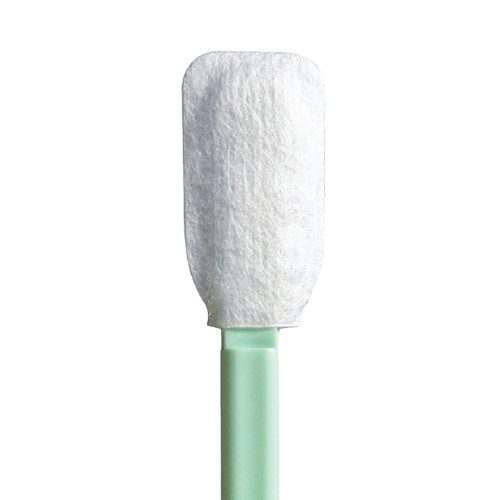
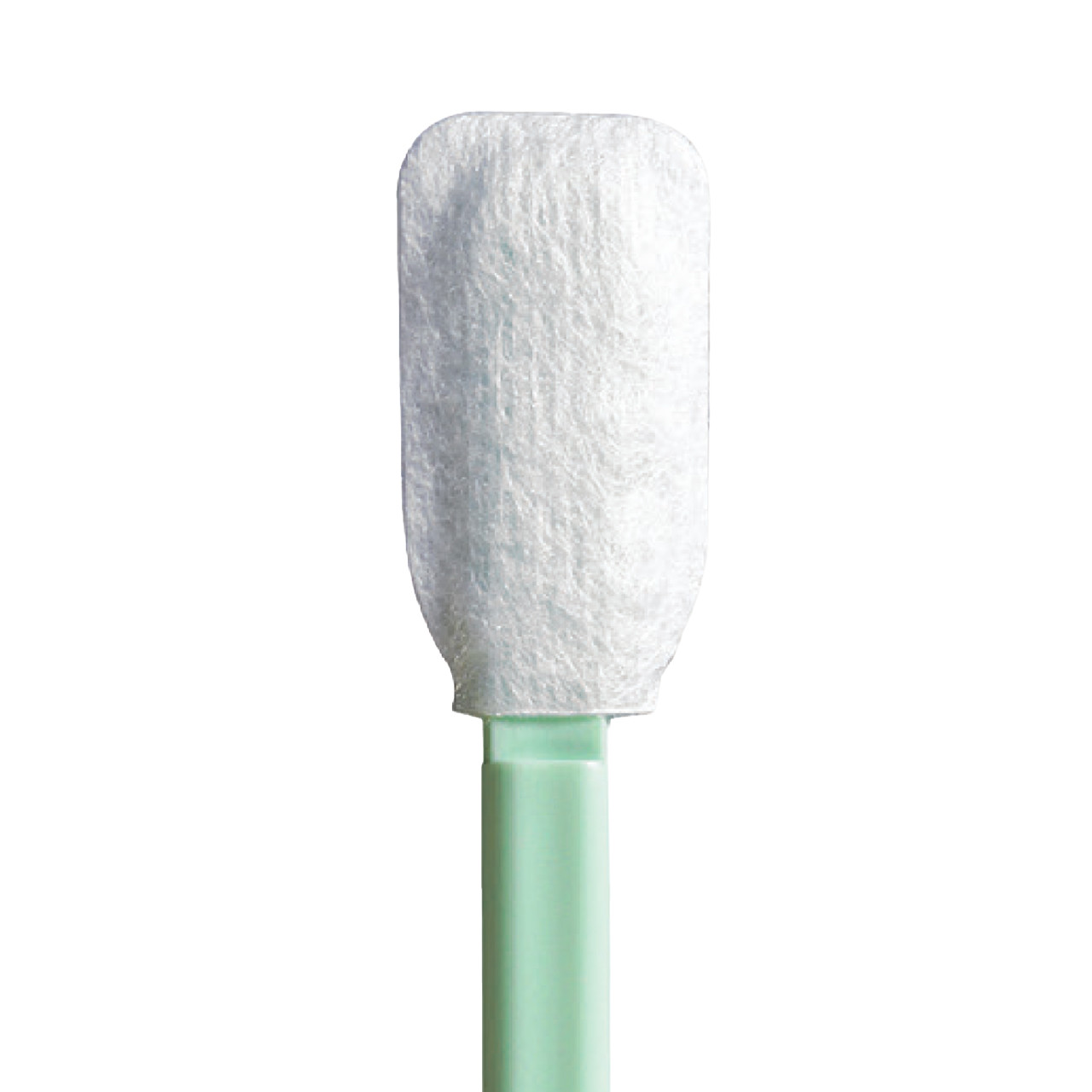
Texwipe TX716 Large Absorbond Sampling Swab (paddle head, light-green handle)
TX716 paddle head + trademarked light-green handle (visual reference).
1) Practical solutions in a critical environment

TX716 is built for one of the most unforgiving workflows in contamination control: surface sampling for cleaning validation where the analytical result (often HPLC) must stand up to investigation, trending, and audit scrutiny. In that world, technique is everything—but the swab still matters because it can introduce uncontrolled variables (adhesives, inconsistent geometry, background residue, poor release).

This swab’s flat, defined paddle head is designed to keep contact mechanics stable across a templated area, while the hydroentangled, nonwoven polyester structure is intended to capture residues during sampling and then release them into the diluent during extraction—supporting recovery work that is both measurable and defensible.

2) What is this swab used for
  • Defined-area surface sampling as part of a cleaning validation protocol (commonly paired with HPLC methods).
  • Sampling residues from equipment features that are hard to clean and harder to sample consistently: weld seams, gasket landings, clamp ferrules, grooves, tracks, slots, and transitions.
  • Solvent-based critical cleaning and residue investigations where controlling swab background (ions/NVR) and construction variables is part of the method strategy.
3) Why should customers consider this swab
  • Method-friendly construction: Thermal bonding eliminates adhesive variables that can elevate blanks or complicate solvent compatibility.
  • Designed for recovery and release: The nonwoven polyester head is engineered to entrap contaminants during sampling while supporting release into the diluent for recovery work.
  • Notched break-away handle: Helps move the head into a vial with minimal handling—useful when the sample chain-of-custody and contamination control are under a microscope.
  • Published contamination characteristics: Typical ion extractables and typical NVR are characterized to help you assess swab background contribution during method development.
  • Low-linting intent: Built for controlled environments, but note: nothing is truly lint-free in every process condition—prove performance with your technique and acceptance criteria.
4) Materials and construction

The TX716 head uses 100% polyester (hydroentangled) nonwoven material in a double-layer construction intended to improve absorbency and contaminant capture while remaining suitable for sensitive surfaces. The head is thermally bonded to a polypropylene handle—specifically to reduce the risk that a bond-line adhesive becomes an uncontrolled source of extractables when solvents are involved.

Authenticity/traceability cues matter in validated programs. The Absorbond® series is supplied with a trademarked light-green handle with “TEXWIPE” embossed on the handle, and the product is lot coded for traceability and quality control.

5) Specifications in context

For cleaning validation, geometry is not a cosmetic choice—it drives contact pressure, stroke consistency, and what “100 cm²” actually means across operators. TX716’s paddle head helps keep the full head flat against the surface so the sampling event is repeatable (and defensible) during recovery and robustness work.

Attribute TX716 (published)
Head material Non-woven polyester (hydroentangled), double-layer
Head width 12.7 mm (0.500")
Head thickness 4.2 mm (0.165")
Head length 25.7 mm (1.012")
Handle material Polypropylene (100% virgin polypropylene stated in manufacturer documentation)
Handle width / thickness 5.2 mm (0.205") / 3.0 mm (0.118")
Handle length 101.8 mm (4.008")
Total swab length 127.5 mm (5.020")
Head bond Thermal
Design notes Flat head paddle; notched handle (for vial transfer workflow)
Storage conditions Ambient: 59°F (15°C) to 86°F (30°C)
Shelf life 5 years from date of manufacture
6) Cleanliness metrics

The values below are manufacturer-reported typical analyses intended to characterize background contribution. Treat these as method-development guidance—not acceptance specifications. In practice, you still run blanks, trend drift, and confirm recovery for your specific residue, surface, solvent/diluent, and extraction conditions.

Typical ion extractables (µg/swab)
Ion TX716 typical value
Calcium0.01
Chloride0.16
Fluoride0.01
Magnesium0.01
Nitrate0.01
Phosphate0.01
Potassium0.04
Sodium0.06
Sulfate0.41
Typical NVR (mg/swab)
Extractant TX716 typical value
DI water (DIW)0.01
Isopropyl alcohol (IPA)0.03
Field note (why these tables matter)
If your swab blank shifts, your detection limit shifts. Published background characterization does not replace qualification, but it helps you set expectations, build your blank strategy, and keep “method noise” from being mistaken for process risk.
7) Packaging, sterility and traceability
  • Packaging configuration: 20 swabs per bag; 1 inner bag of 20 swabs; 50 bags per case (1,000 swabs per case).
  • Bag attributes (series-level): Packaged in a silicone-free and amide-free bag; lot coded for traceability and quality control.
  • Sterility: Non-sterile (sterile swabs available upon request per manufacturer series documentation—confirm your exact sterile SKU requirements before locking your SOP).
  • Country of origin (manufacturer statement): Made in The Philippines.
  • Handle traceability cues: Trademarked light-green handle with “TEXWIPE” embossed; notched break-away handle supports vial transfer with reduced handling.
8) Best-practice use

The fastest way to create false confidence in cleaning validation is to treat swabbing like “wiping.” Sampling is a controlled, repeatable measurement event. Standardize the area, standardize the wetting, standardize the stroke path, and control how the head enters the vial.

Operator-level swabbing technique module
  • Select the right swab and define the region: Use a template or documented area definition so “100 cm²” is consistent between operators and campaigns.
  • Dampen with the specified diluent: Wetting level affects recovery; keep it consistent and document it.
  • Swab with an overlapping pattern: Keep the head flat against the surface; avoid “edge scrubbing” unless your SOP requires it for a specific geometry.
  • Flip and swab perpendicular: Repeat passes in the perpendicular direction to improve coverage and reduce directional bias.
  • Repeat with a second swab at ~45° if required: Use your method’s logic—do not add steps ad hoc during routine execution.
  • Swab the perimeter: Edges and transitions are where residues hide; include them consistently if your acceptance strategy expects it.
  • Transfer with minimal handling: Snap the head at the notch and allow it to fall into the vial to reduce contamination risk and improve repeatability.
Compatibility reminder
TX716 is described as autoclave safe (dry heat and steam). In regulated work, treat that as “candidate compatibility” and qualify it to your specific cycle, packaging state, and acceptance criteria before implementing.
9) Common failure modes
  • Over-wetting or inconsistent wetting: Can dilute residue or change release behavior, increasing variability.
  • Rolling the head or sampling on the edge: Changes contact mechanics and can reduce comparability between operators.
  • Changing stroke path “because it felt better”: The fastest route to weak recoveries and unexplainable trends.
  • Touch contamination during vial transfer: Gloves, bench tops, and vial rims can overwhelm low-level results—use the notch workflow and disciplined handling.
  • Skipping blank strategy: If you do not run/track swab blanks and diluent blanks, you lose diagnostic power when results drift.
10) Closest competitors

In cleaning validation, “closest competitor” often means “closest alternate that changes the fewest variables.” Within the same cleaning validation family, these are common alternates teams evaluate based on analytical method needs:

  • Texwipe TX715 (Alpha® Polyester Knit): Positioned for HPLC analysis using a UV detector analytical method; described as additionally processed to reduce UV background/interference.
  • Texwipe TX714K (Low TOC Alpha® Polyester Knit): Used when TOC background contribution control is the driving requirement.
  • Texwipe TX761K (Low TOC Alpha® with long handle): A long-handle option when access drives the decision and TOC background is a primary constraint.

Practical selection logic: if your analytical method sensitivity is being limited by blanks (UV or TOC), pick the swab engineered around that limitation and re-qualify your recovery. If your limitation is access/geometry, address that first—then re-confirm recovery and blank stability.

11) Critical environment fit for this swab

TX716 fits best where sampling repeatability and documentation discipline matter as much as physical cleaning: pharmaceutical manufacturing, biotech, medical device, and other controlled-environment programs running defined cleaning validation protocols aligned to regulatory expectations (including FDA-referenced cleaning validation practices in industry).

SOSCleanroom (SOS) supports critical programs like these with continuity of supply and a documentation-first approach—helping teams avoid disruptive last-minute substitutions that can force requalification. ITW Texwipe’s focus on controlled materials, consistent tolerances, and lot-coded traceability pairs well with that approach, especially when your sampling method must be stable across time, operators, and investigations.

Reminder on country-of-origin: manufacturer documentation states TX716 is made in The Philippines. Do not assume U.S. origin for Texwipe swabs unless the manufacturer explicitly confirms it for the specific SKU.

12) SOSCleanroom note about SOP's

The Technical Vault is written to help customers make informed contamination-control decisions and improve day-to-day handling technique. It is not your facility’s Standard Operating Procedure (SOP), batch record, or validation protocol.

Customers are responsible for establishing, training, and enforcing SOPs that fit their specific risks, products, equipment, cleanroom classification, and regulatory obligations. Always confirm material compatibility, cleanliness suitability, sterility requirements, and acceptance criteria using your internal quality system and documented methods.

If you adapt any technique guidance from this entry, treat it as a starting template. Your team should review and approve the final method, then qualify it for your specific surfaces, solvents, cleanliness limits, inspection methods, and risk profile. In short: use these best-practice suggestions to strengthen your SOPs—not to replace them.

13) Source basis
  • SOSCleanroom product page (SKU): https://www.soscleanroom.com/product/swabs/texwipe-tx716-large-absorbond-hplc-sampling-polyester-cleanroom-swab/
  • Manufacturer product page: https://www.texwipe.com/large-absorbond-tx716
  • Manufacturer technical data sheet (series): “Absorbond® Swab Series – Polyester Non-Woven” (US-TDS-063 Rev. 09/21): https://www.texwipe.com/Images/uploaded/documents/Swabs/Texwipe-Absorbond-Swabs-TDS.pdf
  • SOS-hosted PDF copy (Absorbond series, includes TX716/TX759B/TX762): https://www.soscleanroom.com/content/texwipe_pdf/716%20759b%20762.pdf
  • Manufacturer technical data sheet (cleaning validation family context): “Cleaning Validation Swabs & TOC Kits” (US-TDS-059 Rev. 9/21): https://www.texwipe.com/images/uploaded/documents/Swabs/Texwipe-CleaningValidation-Swabs-TDS.pdf
  • Swab technique guide (workflow and notch transfer steps): https://www.soscleanroom.com/content/How%20To%20Guides/Swab%20Sampling%20Proper%20Procedure%20by%20Texwipe%20A3.pdf
  • Manufacturer overview page (cleaning validation positioning): https://www.texwipe.com/food-processing-cleaning-validation-swabs
  • ISO (International Organization for Standardization): https://www.iso.org/standard/53394.html
  • FDA (Food and Drug Administration): https://www.fda.gov/
  • ASTM (American Society for Testing and Materials): https://www.astm.org/
  • IEST (Institute of Environmental Sciences and Technology): https://www.iest.org/
SOSCleanroom is the source for this Technical Vault entry.
Briefed and approved by the SOSCleanroom (SOS) staff.
If you have any questions please email us at Sales@SOSsupply.com
Last reviewed: January 6, 2026
© 2026 SOSCleanroom

Videos Hide Videos Show Videos