Practical solutions in a critical environment
In controlled environments, the hardest contamination problems are rarely on open, flat surfaces. They hide in tracks, slots, intersecting corners, under lips, and around fasteners where a flat swab head bridges over the feature or pushes solvent deeper into the geometry. That is where residues form tide marks, where particles reappear after “cleaning,” and where an operator’s technique becomes the process.
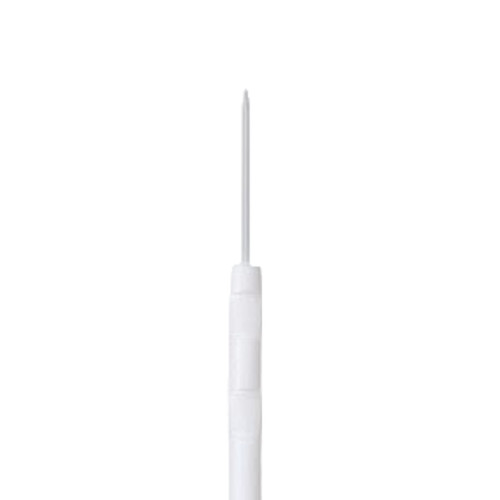
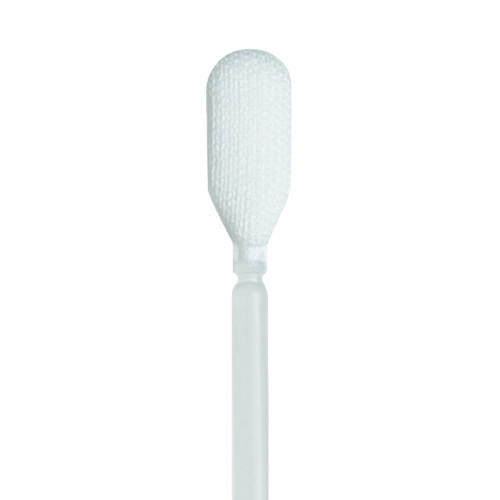
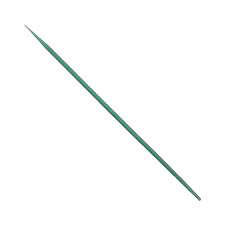
The ITW Texwipe TX730 is built for those micro-geometries. It behaves more like a precision micro-brush than a wipe—useful when you need controlled contact, a small solvent footprint, and deliberate wick-back from a recess.
What is this swab used for
TX730 is used for detail cleaning and manipulation in confined spaces—especially where you must reach into a feature without flooding it. Common uses include gentle picking of stubborn stuck-on contaminants, pinpoint application of solvents, adhesives, and lubricants, cleaning grooves/tracks/slots, and removing excess solvent from tight geometries. It is also used for light wire manipulation where a controlled, small tool is preferred over tweezers or a bulk swab.
Why should customers consider this swab
- Geometry access: A bundled-filament “quill” reaches into narrow channels, corners, and edges that foam rectangles and knit heads often cannot reach without bending or over-wetting.
- Solvent control: Filament bundles support micro-dosing and wick-back for removing pooled solvent from recesses, reducing streaking and tide marks on adjacent surfaces.
- No adhesive at the head bond: Mechanical crimping eliminates adhesive at the attachment point, removing one common variable in extractables and residue control.
- Traceability: Reclosable packaging and lot coding support segregation, investigations, and repeatable SOP execution.
- Tool behavior: When the task is “pick, lift, wick, and remove” (not “wipe and absorb”), nylon filament architecture can be the difference between a controlled fix and a smeared defect.
Materials and construction
TX730 uses bundled nylon filaments that form a small brush at the tip. The filament bundle is mechanically crimped into a tubular attachment and fixed to a long, rigid 100% polypropylene handle. This mechanical construction is specifically intended to eliminate adhesive contamination at the bond line while giving the operator a precise, controlled tool for tight features.
Practically: nylon filaments can enter a slot, splay slightly under pressure, and lift debris while simultaneously wicking small solvent volumes. That makes TX730 a detail tool. It is not designed for broad-area wiping or high-volume absorption.
Specifications in context
The dimensions below matter because the working end is extremely small relative to common cleanroom swabs. In real use, that means less solvent footprint, better access to corners, and a higher need for disciplined pressure and stroke control. If you are currently “making it fit” with a foam rectangle or polyester knit head, TX730 is the right kind of change when geometry—not absorbency—is the limiting factor.
| Attribute |
TX730 value |
| Head material |
Nylon (bundled filaments) |
| Tip construction note |
0.9 mm nominal filament bundle forming a mini brush at the tip |
| Head width |
0.8 mm (0.031") |
| Head thickness |
0.8 mm (0.031") |
| Head length |
15.5 mm (0.610") |
| Handle material |
Polypropylene (100%) |
| Handle width / thickness |
2.8 mm (0.110") / 2.8 mm (0.110") |
| Handle length |
152.5 mm (6.004") |
| Total swab length |
168.0 mm (6.614") |
| Head bond |
Mechanical (crimped; no adhesive at the bond) |
| Handle color |
White |
Cleanliness metrics
The values below are reported as representative analyses and are not specification limits. In practice, use them as a risk-screen for residue pathways, then qualify the swab in your process using your acceptance criteria, sampling plan, and document package (especially in regulated or validation-sensitive workflows).
Ion extractables
| Ion |
Amount (µg/swab) |
| Chloride | 0.82 |
| Sulfate | 0.60 |
| Nitrate | 0.35 |
| Phosphate | 0.37 |
| Fluoride | 0.12 |
| Potassium | 0.13 |
| Calcium | 0.13 |
| Sodium | 0.09 |
| Magnesium | 0.07 |
Nonvolatile residue (NVR)
| Extractant |
Amount (mg/swab) |
| IPA |
< 0.01 |
Standards context for controlled environments
Cleanliness targets and cleaning verification plans should be consistent with the controlled environment you operate in. ISO 14644-1 is the baseline reference for classifying air cleanliness by particle concentration; your swabbing and cleaning SOPs should be aligned with the area classification, handling discipline, and contamination risk model used at the site.
Packaging, sterility and traceability
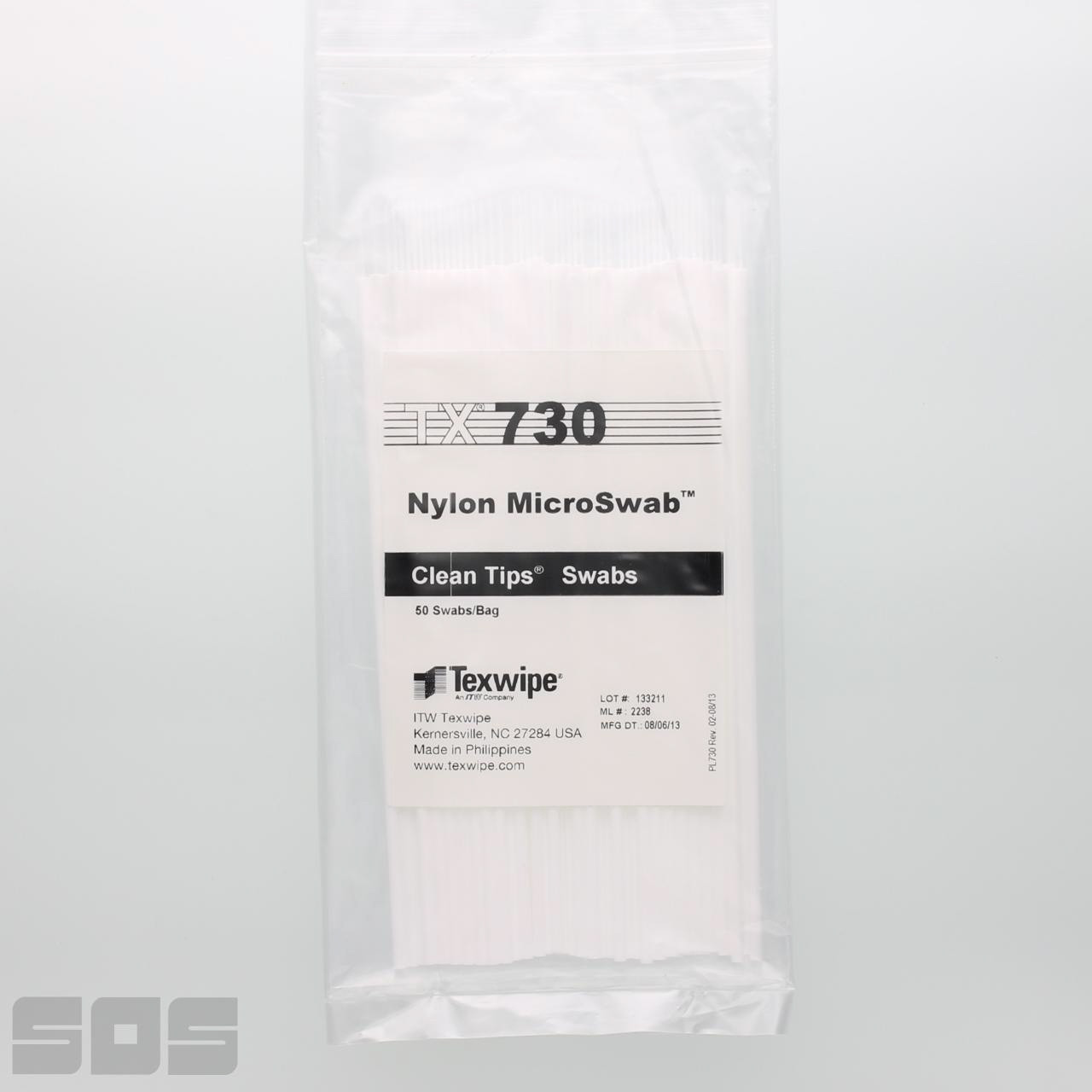
TX730 is packaged in a reclosable bag and is lot coded for traceability and quality control. Standard configuration is non-sterile: 50 swabs per bag and 10 bags per case (500 swabs per case). If your workflow requires sterile handling, confirm the exact sterile configuration and supporting documentation before use—do not assume a non-sterile swab can be substituted into an aseptic step.
Country of origin: The manufacturer’s Specialty Swabs technical data sheet lists “Made in The Philippines” for this product family and separately notes that TX726 is made in the U.S. If your compliance program requires origin documentation, treat TX730 as non-U.S. manufactured unless your site documentation package states otherwise.
Best-practice use
Use TX730 like a precision instrument. The goal is controlled contact and controlled solvent—not scrubbing.
Operator technique module
- “Damp” solvent technique: Wet the filament bundle to the minimum effective level—damp, not dripping. If the tip glistens and leaves a bead at first contact, you are too wet. Over-wetting increases pooling, wicking into unintended areas, and tide marks.
- Stroke-count logic: Use single-direction strokes with overlap. In slots and tracks, pull contamination out and away from the opening rather than pushing it deeper. Stop when the tip loads (visible discoloration, drag increases, or you start spreading a film) and switch swabs.
- Rotate the working surface: With a filament bundle, rotation is your “fresh face.” Rotate continuously; do not keep working a loaded area against the same feature.
- Geometry control: Keep gloves and sleeves out of the work zone. Use the long handle to maintain angle and prevent knuckle contact with critical surfaces. For intersecting corners, approach with the tip aligned to the corner line, not across it.
- Pressure guidance: Use fingertip pressure—enough to maintain contact without splaying filaments excessively. Excess pressure increases splay, raises scratch risk on delicate coatings, and can increase fiber release in aggressive scrubbing behaviors.
- Solvent compatibility: IPA is common for many assemblies, but always validate compatibility with your surface, coating, adhesive system, and any plastics in the feature. The swab is a tool; the solvent system is the chemistry.
- Handling discipline: Open the bag only as far as needed. Stage swabs so tips never contact the outer bag edge. Avoid re-dipping into shared solvent containers. If re-wetting is required, use a controlled dispense or a dedicated single-use aliquot.
- Wick-back technique: For pooled solvent in a recess, touch the filament bundle to the edge of the pool and let capillary action pull solvent up. Lift away and discard. Do not wipe back over “clean” adjacent surfaces with a saturated tip.
- Documentation cues: If the step is tied to investigations or QA holds, capture lot code and date/time of use. That is often the difference between a fast root-cause decision and an expensive broad quarantine.
Also: no swab or wipe is truly lint-free. Real outcomes are governed by technique, solvent load, and surface condition (coatings, roughness, and edge features).
Common failure modes
- Flooding a feature: Over-wetting turns a pinpoint task into pooled solvent and residue lines. Control wetness and use wick-back intentionally.
- Scrubbing delicate coatings: Nylon filaments can splay and increase contact area under high pressure. On sensitive optics or soft coatings, reduce pressure, reduce stroke count, and validate the method.
- Cross-contamination by re-dipping: Re-dipping into a common solvent bottle is a classic pathway for spreading residues and particles. Use controlled dispense or single-use aliquots.
- Working past the stop condition: Once the tip loads, you start redepositing. Treat “loaded tip” as a discard trigger, not a reason to push harder.
- Using the wrong tool class: If you need absorption and entrapment over a larger area, a foam swab is often the right mechanism. TX730 is a detail tool.
Closest competitors
The closest alternatives are precision swabs intended for controlled environments where low residues, controlled shedding, and repeatable construction are emphasized. The key difference is mechanism: filament “micro-brush” behavior versus foam/knit wiping behavior, and how the head is bonded and documented.
-
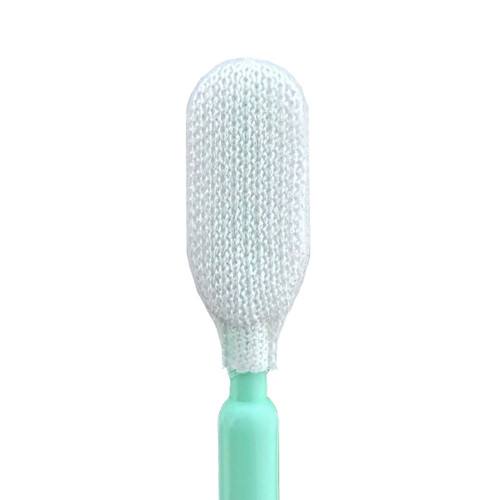
Puritan PurSwab 3135 (knitted polyester tip on polypropylene handle): A precision cleanroom swab designed for controlled environments with a thermally bonded tip and published packaging configuration. Compared with TX730, a knit head behaves more like a wipe than a micro-brush; it can be a stronger choice for small-area wiping, but it typically cannot replicate the filament access and wick-back behavior inside very narrow grooves.
-
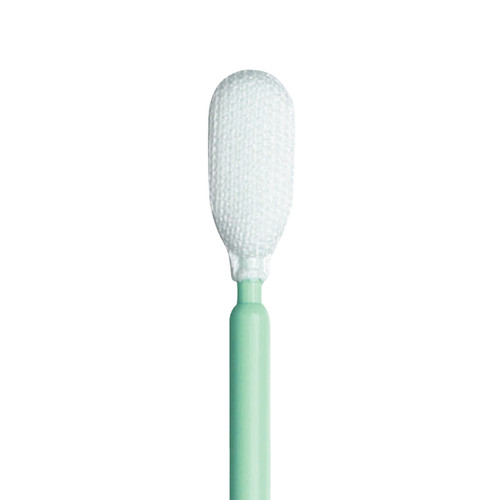
Contec CONSTIX sealed foam swabs (selected flexible-tip sealed foam models): Foam mechanisms can entrap and hold more solvent and debris on broader micro-surfaces. Some Contec models use adhesive-bonded foam to a tip and a mechanically secured tip in a tubular handle, while other models are thermally sealed and attached. Compared with TX730, foam often wins on pickup volume and wiping stability; TX730 often wins on entering fine channels and controlled micro-dosing.
-
Berkshire cleanroom swabs (Lab-Tips and related cleanroom swab families): Berkshire positions cleanroom swabs around reduced shedding and particulate control for tight surfaces in controlled environments. These portfolios typically emphasize wiping-style mechanisms (foam, knit, and other tip architectures) rather than filament quills. When the requirement is “reach into the geometry,” TX730’s filament bundle is the differentiator; when the requirement is “wipe and remove,” a foam or knit competitor can be the better mechanism.
Critical environment fit for this swab
TX730 fits best as the detail tool in a controlled cleaning kit: use it for grooves, slots, corners, and solvent wick-back where a wiping swab cannot reach without creating rework. Pair it with low-linting wipes for boundary control and primary surface cleaning, and pair it with foam or knit swabs when you need broader contact and higher pickup volume.
From a program standpoint, consistency matters as much as the swab model number. SOSCleanroom’s long-standing working relationship with ITW Texwipe supports continuity of supply, lot traceability discipline, and documentation availability—practical advantages when you are trying to keep cleaning outcomes stable across shifts, sites, and audits. If your process is regulated or validation-driven, align swab choice with your method, acceptance criteria, and documentation expectations, and then lock the technique into the SOP with repeatable training.
Source basis
-
SOSCleanroom product page: “TX730 Precision Nylon Cleanroom Swab and Tool 100% Polypropylene Handle” (applications, dimensional listing, and product context). https://www.soscleanroom.com/product/swabs/texwipe-tx730-precision-nylon-cleanroom-swab-and-tool-100-polypropylene-handle/
-
ITW Texwipe manufacturer page: “TX730 Precision Nylon Cleanroom Swab & Tool, Non-Sterile” (construction description, packaging, and dimensions). https://www.texwipe.com/precision-nylon-tx730
-
SOS-hosted PDF copy (primary stable reference): “Technical Data Sheet — Specialty Swabs — Precision Nylon Swab & Tool (TX730)” (dimensions, ionic extractables, NVR, and method note that values represent analyses and not specification limits). https://www.soscleanroom.com/content/texwipe_pdf/730.pdf
-
ITW Texwipe portfolio technical data sheet: “Specialty Swabs — Technical Data Sheet” (includes TX730 section, shelf life statement, and country-of-origin statement; US-TDS-066 Rev. 10/21). https://www.texwipe.com/images/uploaded/documents/swabs/Texwipe-Specialty-Swabs-TDS.pdf
-
International Organization for Standardization (ISO): ISO 14644-1:2015, “Cleanrooms and associated controlled environments — Part 1: Classification of air cleanliness by particle concentration.” https://www.iso.org/standard/53394.html
- FDA (Food and Drug Administration): https://www.fda.gov/
- ASTM (American Society for Testing and Materials): https://www.astm.org/
- IEST (Institute of Environmental Sciences and Technology): https://www.iest.org/
Source: SOSCleanroom Technical Vault
Last reviewed: January 5, 2026
© 2026 SOSCleanroom