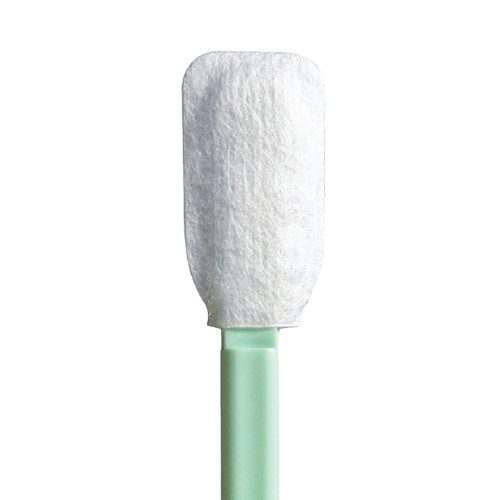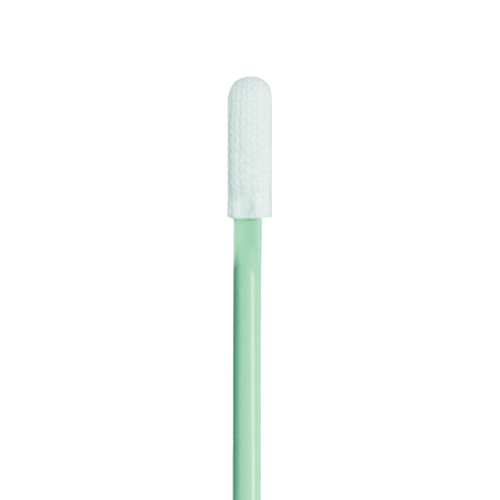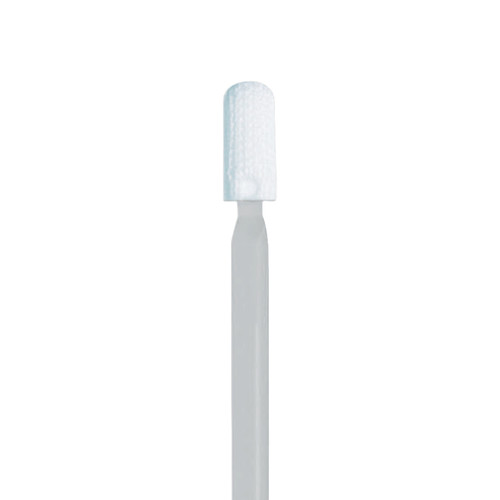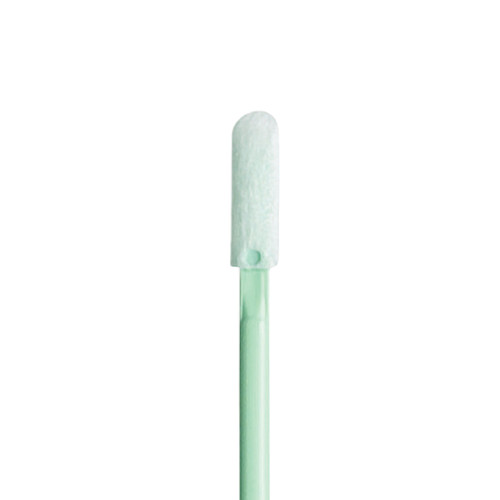
Texwipe TX759B Micro Absorbond Polyester Cleanroom Swab

$70.46
(No reviews yet)
SKU:
TX759B BAG
Availability:
Stock Item
Shipping:
Calculated at Checkout
Quantity Option (Bag):
500 Swabs Per Bag (5 Inner Bags of 100 Swabs)
Quantity Option (Case):
5 Bags of 500 Swabs Per Case
Type:
Dry Swab
Swab Family:
Absorbond
Swab Material:
Polyester

Texwipe TX759B Micro Absorbond Polyester Cleanroom Swab (Hydroentangled Nonwoven, Thermal Bond)

Texwipe TX759B is a micro-format, dry, low-linting polyester cleanroom swab engineered for precision cleaning and sampling inside tight geometries — grooves, tracks, slots, and other confined features — as well as sensitive surfaces such as optical assemblies. The swab head is made from 100% polyester (hydro-entangled) non-woven Absorbond material in a double-layer construction for enhanced absorbency and contaminant pickup, then thermally bonded (no adhesive) to a virgin polypropylene handle to help reduce residue risk in solvent-driven workflows. With a compact handle and flexible internal head paddle, TX759B is designed to improve operator control during micro-cleaning steps where geometry repeatability matters as much as chemistry.

Process-control note: TX759B is commonly selected when teams need a consistent micro swab geometry for solvent use (such as IPA) and sensitive-surface work, while maintaining lot traceability and clean packaging discipline to support investigations, qualification, and audit readiness.

Specifications:
  • Swab type: Dry swab (micro format)
  • Swab family: Absorbond
  • Head material: Hydro-entangled Absorbond polyester (100% polyester nonwoven), double-layer
  • Head width: 3.2 mm (0.126")
  • Head thickness: 1.5 mm (0.059")
  • Head length: 10.0 mm (0.394")
  • Handle material: Polypropylene (100% virgin polypropylene)
  • Handle width: 2.2 mm (0.087")
  • Handle thickness: 2.2 mm (0.087")
  • Handle length: 60.0 mm (2.362")
  • Total swab length: 70.0 mm (2.756")
  • Head bond: Thermal (no adhesive)
  • Handle color: Light green
  • Design notes: Flexible head paddle; compact handle
  • Packaging (bag): 500 swabs per bag (5 inner bags of 100 swabs)
  • Packaging (case): 5 bags of 500 swabs per case
  • Packaging notes: Silicone-free and amide-free bag; lot coded for traceability and quality control
  • Temperature note: Appropriate for use with temperatures less than 410°F
  • Typical use areas: Microelectronics, optics, semiconductor, medical device, biologic, pharmaceuticals (final suitability depends on your process, solvent, and technique)
About the Manufacturer: 

Texwipe (an ITW company) is widely specified in contamination-control programs because it treats the swab as an engineered tool, not a commodity. For Absorbond® polyester nonwoven swabs like TX759B, that engineering focus shows up in hydroentangled head construction (soft contact on sensitive surfaces with a 3D fiber network for pickup), tight dimensional tolerances for repeatable access into small features, and thermal bonding that removes adhesive as a contamination variable.


Texwipe also emphasizes lot coding, cleanroom processing, and packaging controls (including silicone-free and amide-free bagging for this line) to reduce unknowns during troubleshooting and qualification. SOSCleanroom (SOS) supports that discipline with an established working relationship focused on continuity of supply, documentation handoff, and practical application support—so customers can standardize micro-cleaning and sampling steps with predictable performance and procurement reliability.

TX759B Features:
  • 100% polyester (hydro-entangled) non-woven Absorbond head material
  • Double-layer nonwoven polyester head for enhanced absorbency and pickup
  • Thermal bond construction (no adhesive) to help reduce residue risk in solvent workflows
  • Cleanroom processed to provide ultra-low levels of particles, NVRs (nonvolatile residues), and ions
  • Excellent chemical resistance for compatibility with a variety of solutions (verify with your specific chemistry and SOP)
  • 100% virgin polypropylene handle for controlled handling and chemical resistance
  • Autoclave safe in dry heat and steam
  • Lot coded for traceability and quality control
  • Packaged in a silicone-free and amide-free bag
  • Light-green handle color and “TEXWIPE” embossing are commonly used as practical, line-side identification cues alongside approved sourcing and lot controls
TX759B Benefits:
  • Micro-access geometry: A 3.2 mm (0.126") wide head supports cleaning and sampling inside narrow slots, grooves, tracks, and recessed features where wipes cannot maintain contact.
  • Sensitive-surface performance: Hydroentangled polyester is commonly selected for gentle, controlled contact on optics and other scratch-sensitive surfaces (technique and pressure still determine outcomes).
  • Lower residue risk by design: Thermal bonding removes adhesive as a potential source of unknown extractables that can show up as streaks, haze, or analytical interference.
  • Improved handling control: Compact 70.0 mm overall length and a flexible head paddle support better tactile feedback during precision work.
  • Audit-friendly traceability: Lot coding and controlled packaging help support investigations, qualification, and change-control discipline.
Common Applications:
  • Precision cleaning of grooves, tracks, slots, rails, channels, and other small spaces
  • Optical cleaning tasks on sensitive surfaces such as optical assemblies and precision components
  • Solvent use (such as IPA) for controlled film lifting, residue removal, and spot cleaning
  • Targeted cleaning inside cavities, interfaces, and tight mechanical joints where larger swabs cannot fit
  • Sampling workflows where capture and release into a diluent are part of the method (define area, strokes, wetting method, and extraction protocol)
Best-Practice Use:
  • Control wetness: For solvent work, aim for damp—not dripping—to prevent pooling and re-deposition inside features.
  • Single-pass discipline: Use one-direction strokes; rotate the tip early and often. Micro tips have limited usable surface area before smearing risk increases.
  • No re-dipping: Avoid re-dipping into solvent reservoirs (a common cross-contamination mechanism). Use single-use aliquots or controlled dispense.
  • Pressure control: Use film-breaking pressure, not surface-loading pressure—especially on optics, coatings, and polished metals.
  • Define the boundary: Work cleanest-to-dirtiest and avoid touching the “dirty wall” of a slot, then dragging contamination across adjacent critical areas.
Selection Notes (TX759B vs. Other Options)
  • Micro access vs. reach (TX759B vs. TX762): Choose TX759B for compact, micro-feature access and maximum control; step up to a long-handle Absorbond swab like TX762 when you need reach into deeper channels while keeping gloves away from the work zone.
  • Nonwoven micro tip vs. knit polyester paddle (TX759B vs. knit swabs): TX759B’s hydroentangled nonwoven micro head is optimized for tight features and sensitive-surface contact; a larger knit polyester paddle swab may be preferred when you want a broader, flatter contact patch for larger wipe points.
  • Solvent reality check: Swab compatibility and performance are process-dependent. Always qualify dwell time, pressure, and stroke method with your exact solvent, surface finish, and acceptance criteria.

Link to Texwipe Technical Datasheet:
Click Here
Texwipe.com PDF: Click Here

Other Similar Products Available From SOSCleanroom.com

Absorbond® Polyester Nonwoven Swabs (Same Family)

  • TX762: long-handle Absorbond® polyester nonwoven swab for extended reach into channels, slots, and recessed features

Knit Polyester Swab Alternative (Broader Paddle Contact)

  • TX714A: large Alpha® knit polyester paddle swab for broader wipe points where a flat contact patch is preferred

Notes: Looking for application guidance or qualification context for the Texwipe TX759B Micro Absorbond polyester cleanroom swab? Open the SOSCleanroom Technical Vault tab above for operator-level micro-swabbing technique, selection notes, and the documentation details teams typically review when standardizing micro swabs across ISO-class controlled environments.

SOSCleanroom.com supports contamination-control programs with cleanroom consumables in stock, fair pricing, and responsive technical support—backed by same-day shipping options and customer service that understands real cleanroom workflows.

Product page updated: Jan. 5, 2026 (SOS Technical Staff)

© 2026 SOS Supply. All rights reserved.

The Technical Vault
By SOSCleanroom
Micro-geometry control: a swab built to stay consistent in grooves, tracks, and tight features
Last reviewed: January 6, 2026
Texwipe TX759B micro Absorbond® polyester nonwoven cleanroom swab: controlled pickup in tight features when “small” still isn’t specific enough
At a glance (what makes TX759B different)
  • Micro head geometry: 3.2 mm head width supports narrow features and controlled contact.
  • Hydroentangled polyester nonwoven (double layer): soft on sensitive surfaces, strong pickup in a 3D fiber network.
  • Thermal bond (no adhesive): reduces a common residue variable at the head/handle interface in solvent-wet work.
Practical solutions in a critical environment

Micro-cleaning failures rarely announce themselves as “hard-to-reach.” They show up as a faint film line at the end of a slot, a haze on a small optical land, or an intermittent residue signature that only appears after solvent evaporates. In that moment, the swab becomes either a controlled tool or a variable: twist, over-wet, rework a pass, and the process drifts into redeposition and streaking.

TX759B is designed to keep micro work repeatable. It uses a compact, micro-format Absorbond® head made from 100% polyester hydroentangled nonwoven material in a double-layer construction for absorbency and contaminant capture. The head is thermally bonded to a virgin polypropylene handle (no adhesive), helping reduce a hidden contamination and residue contributor in solvent-driven workflows.

Low-linting outcomes depend on technique and surface condition. No swab is truly lint-free; edge sharpness, surface roughness, solvent load, contact pressure, and stroke discipline govern what you see on the part.

What is this swab used for

Texwipe TX759B is used for precision cleaning and controlled solvent application/removal in grooves, tracks, slots, and other small spaces where a broader swab face can flood a feature or leave a drying ring. It is also used on sensitive surfaces (including optics, glass, and mirrored surfaces) when the goal is gentle contact plus controlled pickup.

Common solvent use includes IPA (validate compatibility with your surface, coating, inks, and assembly materials). The manufacturer also positions Absorbond® nonwoven polyester as broadly chemically resistant for compatibility with a variety of solutions, but the correct chemistry is always process-specific: match solvent to the residue mechanism instead of increasing pressure or stroke count.

Why should customers consider this swab
  • Micro head geometry (3.2 mm width) supports controlled access and reduces flooding risk in narrow features.
  • Hydroentangled polyester nonwoven, double-layer head improves absorbency and contaminant capture while remaining soft on sensitive surfaces.
  • Thermal bond construction eliminates adhesive at the bond line, reducing a residue variable in solvent-wet work.
  • Published ion extractables and NVR data help establish realistic background expectations for residue-sensitive cleaning and investigations.
  • Silicone-free and amide-free bag packaging supports processes sensitive to silicone transfer and slip-additive artifacts.
  • Lot-coded packaging supports investigations; light-green handle and “TEXWIPE” embossing are practical line-level identification cues.
  • High-count packaging (500/bag with inner packs) supports point-of-use control without repeatedly opening the full outer bag.
Materials and construction

Head: 100% polyester hydroentangled nonwoven (Absorbond®), double layer

Head bond: thermal bond (no adhesive at the bond)

Handle: 100% virgin polypropylene; compact handle; handle color: light green

Practical implication: micro swabbing is easy to “over-control.” Avoid twisting in the feature. Keep the head square to the geometry, use single-direction passes, and treat burrs and sharp edges as a process risk. If the part has edge burrs, reduce pressure near the exit and do not drag the head across sharp corners.

Specifications in context

TX759B is a 2.756-inch overall swab with a 10.0 mm head length and a 1.5 mm head thickness. Use the micro head width to standardize “feature coverage” (stroke count and overlap) so the process does not drift into scrubbing. Head thickness and length help manage solvent load: thicker heads can hold more solvent, which increases the importance of “damp” technique to prevent pooling and drying rings at the end of a slot or track. Handle dimensions matter because micro work is wrist-driven; if the handle is too small for the glove and grip style, the operator will compensate with twist and pressure—exactly what causes redeposition lines.

Attribute TX759B
Head material polyester hydroentangled nonwoven (double layer)
Head width 3.2 mm (0.126")
Head thickness 1.5 mm (0.059")
Head length 10.0 mm (0.394")
Handle material polypropylene (virgin)
Handle width 2.2 mm (0.087")
Handle thickness 2.2 mm (0.087")
Handle length 60.0 mm (2.362")
Total swab length 70.0 mm (2.756")
Head bond thermal
Handle color light green
Design notes flexible head paddle; compact handle
Cleanliness metrics

The values below represent published typical analyses and are not per-unit specifications. Use them for risk assessment, method development, and troubleshooting. If you run film-sensitive work (optics, polished metals, coated parts) or validate cleaning (TOC, HPLC/UV-Vis, ion chromatography), qualify the swab with your solvent, your surfaces, your stroke count, and your inspection method so the swab does not become the dominant background signal.

Typical ion extractables (µg/swab)
Ion TX759B
Calcium0.01
Chloride0.16
Fluoride0.01
Magnesium0.01
Nitrate0.01
Phosphate0.01
Potassium0.04
Sodium0.06
Sulfate0.41
Typical nonvolatile residue (NVR) (mg/swab)
Extractant TX759B
DIW extractant0.07
IPA extractant0.01

Operator takeaway: micro heads flood quickly. Keep the head damp, rotate faces early, and stop when drag increases. If you see a drying ring at the edge of a slot, reduce solvent load and shorten the finish stroke so the end-of-stroke does not pool.

Packaging, sterility and traceability
  • Packaging (TX759B): 500 swabs/bag (5 inner bags of 100 swabs); 5 bags/case; 2,500 swabs/case
  • Bag packaging controls: silicone-free and amide-free bag packaging
  • Sterility: non-sterile (do not attempt to “make a non-sterile swab sterile” at the bench; if sterility is required, select a sterile swab supplied in sterile packaging with defined expiration controls)
  • Shelf life (series statement): 5 years from date of manufacture
  • Traceability cues: lot-coded packaging supports investigations; light-green handle and “TEXWIPE” embossing support practical line segregation
  • Country of origin (manufacturer statement): Made in The Philippines
Best-practice use

Treat TX759B as a micro tool, not a miniature wipe. The goal is controlled contact and controlled solvent delivery—not scrubbing. Define stroke count, overlap, and discard triggers so operators do not “chase” a film line by reworking it with a loaded face.

Operator-level swabbing technique module
  • “Damp” solvent technique: Wet the head, then reduce to damp (not dripping). A practical check is one controlled touch to a cleanroom wipe to remove excess. You want a light, even wet track, not a bead. Over-wetting increases pooling and tide marks.
  • Stroke-count logic for slots/tracks: Use single-direction strokes with overlap. Make 1–3 passes per face, then rotate to a clean face. Discard when drag increases, the face shows visible loading, or the work starts to streak.
  • Geometry control: Keep the head square to the feature. Avoid twisting at the wrist, which pushes dissolved residue into a line at the end of the stroke. Control the exit angle so you do not wipe a dissolved line onto an adjoining “clean” surface.
  • Pressure guidance: Use only enough pressure to maintain contact. Excess pressure can squeegee mobilized residue into a line, abrade soft coatings, and accelerate fiber/particle release when a burr is present.
  • Solvent compatibility framing: IPA is common. Validate compatibility with the surface, coating, ink, and adhesive systems. If residue does not dissolve, change chemistry or dwell strategy rather than increasing pressure or stroke count.
  • Handling discipline: Stage only what you need. Use inner bags (100-count) as point-of-use packs to reduce repeated full-bag openings. Do not re-dip a used swab into a shared solvent reservoir; decant to a small working vessel and replace it frequently.
Qualification checklist (fast, practical, audit-friendly)
  • Document solvent grade, decant method, and wetness control check.
  • Define stroke count per feature and define discard triggers (drag, visible loading, streaking).
  • Capture lot code, inner-bag ID, and inspection results (visual and/or analytical).
  • If validating cleaning (TOC/HPLC/IC), match extraction solvent to your real process—not a “convenient” proxy.
Common failure modes
  • Over-wetting the head and flooding a slot or seam, leading to pooling and visible drying rings.
  • Reworking the same area with a loaded face, causing streaks and redeposition.
  • Twisting at the wrist in a track/slot, pushing dissolved residue into a line at the end-of-stroke.
  • Using excessive pressure on a burr or sharp edge, causing snagging and localized release.
  • Cross-contaminating solvent by re-dipping or using a shared reservoir without decant-and-refresh discipline.
Closest competitors

The closest alternatives are micro-format polyester swabs intended for sensitive surfaces and tight features, where selection hinges on head construction, bond method, published cleanliness data, and packaging/traceability controls. Compare wetting behavior (flooding risk), snag resistance near edges, and whether the supplier provides extractables/NVR data and lot coding that supports investigations.

  • Contec micro polyester swab classes: Often positioned for controlled surface contact. Compare construction method, durability under solvent-wet passes, and documentation depth for ions/NVR and lot traceability.
  • Berkshire micro polyester swab classes: Similar intent for sensitive surfaces. Evaluate how the head behaves under your solvent and inspection method and whether published cleanliness support is sufficient for your program.
  • Puritan micro polyester swab formats: Comparable form factors may be available. Confirm thermal-bond versus adhesive interfaces, published cleanliness information, and lot coding that supports repeatable qualification.
Critical environment fit for this swab

TX759B fits work where tight features and sensitive surfaces intersect: microelectronics, optics, semiconductor tool cleaning, device assembly, and laboratory operations where controlled solvent delivery and consistent geometry matter. It is a strong choice when you want a defined micro contact patch to support consistent, auditable technique rather than operator-dependent scrubbing.

SOSCleanroom’s relationship with ITW Texwipe supports continuity of supply and documentation discipline, which reduces the risk of unplanned substitutions that change wetting behavior and background extractables. That matters in ISO-aligned cleanroom programs (ISO 14644-1) and in regulated environments where documentation expectations often track FDA quality systems and standards-driven methods associated with ASTM and IEST.

Operational support matters, too. Fast shipping and responsive customer service help keep validated work instructions intact by preventing “make-do” material swaps when production schedules tighten.

Customer SOP disclaimer

Any technique guidance, checklists, or workflow suggestions in this Technical Vault entry are provided as general best-practice education. They are not customer SOPs. Customers are responsible for evaluating suitability, validating performance in their own process (materials, solvents, surfaces, acceptance criteria), and ensuring compliance with their internal quality system and applicable regulations/standards before adopting any procedure.

Source basis
  • SOSCleanroom product page (TX759B): https://www.soscleanroom.com/product/swabs/texwipe-tx759b-micro-absorbond-polyester-cleanroom-swab/
  • Texwipe manufacturer product page (TX759B): https://www.texwipe.com/micro-absorbond-tx759b
  • Texwipe technical data sheet: “ABSORBOND® SWAB SERIES — Polyester Non-Woven” (US-TDS-063 Rev.09/21): https://www.texwipe.com/Images/uploaded/documents/Swabs/Texwipe-Absorbond-Swabs-TDS.pdf
  • International Organization for Standardization (ISO) reference (ISO 14644-1:2015): https://www.iso.org/standard/53394.html
  • FDA (Food and Drug Administration): https://www.fda.gov/
  • ASTM (American Society for Testing and Materials): https://www.astm.org/
  • IEST (Institute of Environmental Sciences and Technology): https://www.iest.org/
SOSCleanroom is the source for this Technical Vault entry.
Briefed and approved by the SOSCleanroom (SOS) staff.
Last reviewed: January 6, 2026
If you have any questions please email us at Sales@SOSsupply.com
© 2026 SOSCleanroom

Videos Hide Videos Show Videos