Reaching Deep Features Without Flooding Them: How Long-Handle Swabs Control Solvent Delivery in Channels, Rails, and Ports
The Technical Vault
By SOSCleanroom
ISO 14644 Operations
Long-Handle Access Control
Controlled Solvent Application
Residue & Rework Reduction
Technique Repeatability
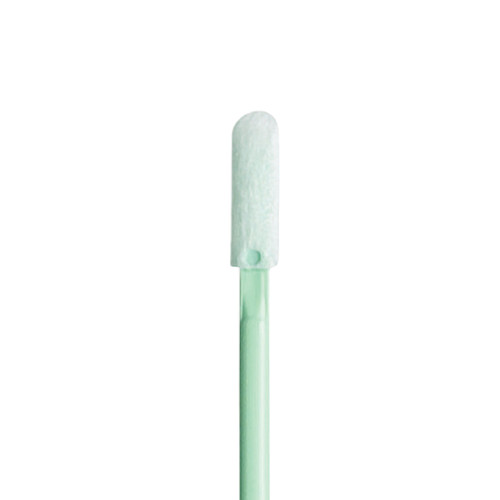
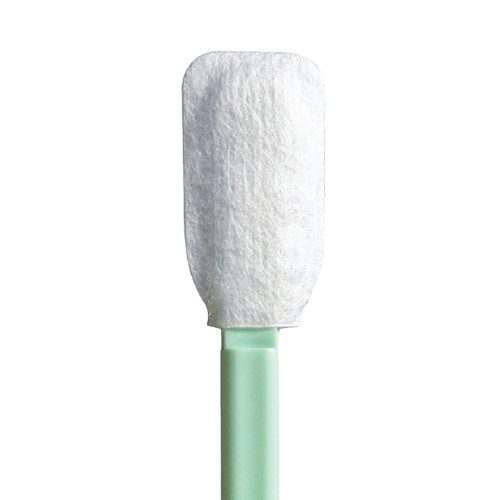
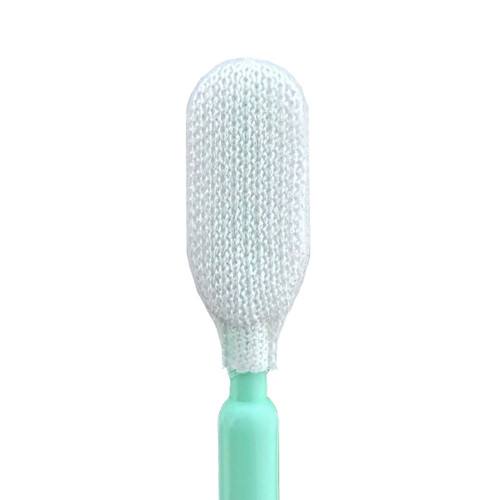
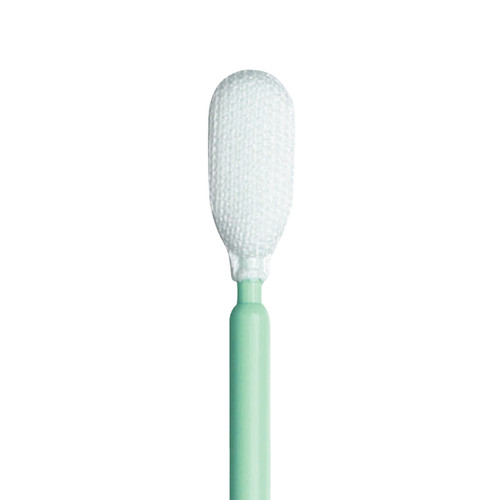
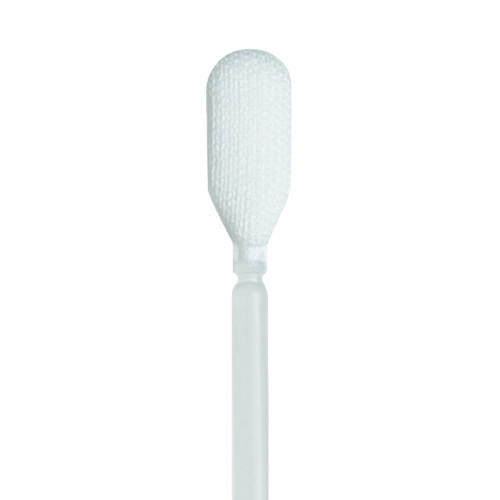
Texwipe TX762 Absorbond® — what this long-handle polyester swab is designed to control
Texwipe TX762 Absorbond® is a long-handle polyester cleanroom swab designed for precision cleaning and controlled
solution application/removal in recessed or hard-to-access features—slots, channels, grooves, ports, seams, and tool
interfaces where a flat wiper cannot maintain controlled contact. The long handle improves reach and fine control, helping keep gloved hands
and sleeves away from the work surface and reducing accidental contact contamination during detailed cleaning tasks.
Long-handle swab failures are rarely caused by “not enough solvent.” They are usually caused by too much solvent, poor alignment in channels,
and reusing a loaded contact surface. TX762 is used to control these variables: deliver a damp film into a confined feature, lift contamination,
and remove it without flooding the interface or creating a larger redeposit footprint.
Operations takeaway: TX762 is chosen to make technique easier to execute correctly in deep features—especially where wiping with a flat wiper
would force glove intrusion or uncontrolled solvent spread.
ISO-first context: swabbing is an operational control method
ISO 14644-5 treats cleaning as an operational control built on defined methods, training, and controlled materials. Swabbing is not “just a consumable”;
it is a technique with operator-driven variables (wetness target, stroke pattern, pressure band, and change-out timing). When the process is residue-sensitive
or defect-sensitive, swabbing should be written and trained as a controlled method in the SOP, including how solvent is applied and how contamination is removed.
USP-influenced programs apply the same discipline: even when sterility is not required, cleaning methods must be repeatable and defensible. Where sterility is required,
use sterile variants and follow sterile transfer and documentation controls.
Technical data summary (reference — consult current manufacturer TDS for controlled programs)
| SKU |
TX762 |
| Swab family |
Absorbond® |
| Head material |
Polyester (nonwoven polyester head behavior) |
| Handle |
Long handle (access control for recessed features) |
| Sterility |
Non-sterile (select sterile variants if required by workflow) |
Receiving control tip: For controlled programs, capture lot numbers and confirm the correct long-handle configuration at receiving to avoid
method changes caused by unintended substitutions (different head behavior or handle length).
Best-practice use (confined features, controlled wetness, clean-contact discipline)
Best practice begins with open-and-use discipline. Open the bag only when ready to swab, remove one swab at a time, and touch only the handle. Keep the swab head isolated from
gloves, gowning, benches, and packaging edges. If using a solvent such as IPA, apply the solvent to the swab to achieve a controlled damp condition—never dripping. Excess solvent
is one of the most common causes of residue migration into seams and interfaces.
In channels and grooves, keep the head aligned with the feature and use straight, single-direction passes rather than scrubbing. Rotate the contact surface so each pass uses a clean
contact patch; do not re-wipe with a loaded head. Replace the swab when it loads, becomes tacky, loses structure, or begins leaving visible streaks. After cleaning a confined feature,
a follow-up wipe may be used where appropriate to remove dissolved residues before they dry into a film.
For residue-sensitive work, a two-pass approach is often used: the first damp swab mobilizes contamination, and a second swab captures dissolved material. This reduces re-deposit,
haze, and the “cleaning that looks worse than before” failure mode on sensitive surfaces.
Typical cleanroom failures and how to avoid them (ISO & USP perspective)
- Flooded seams / weeping contamination later: Usually over-wetting. Prevention: damp-film control and smaller cleaning sections (ISO 14644-5).
- Streaks / tide marks: Backtracking or reusing a loaded contact patch. Prevention: one-direction strokes, rotate to clean contact faces, and earlier change-out.
- Smearing in a groove: Head misalignment or scrubbing. Prevention: align head with feature and avoid twisting torque.
- Particles after “cleaning”: Handling contamination or excessive pressure. Prevention: handle-only discipline and controlled pressure (ISO 14644-5 personnel practices).
- Shift-to-shift variability: Method drift. Prevention: define wetness target, stroke count, feature limit per swab, and change-out triggers; train and audit (ISO 14644-5).
- Non-sterile use in sterile workflows: Program non-conformance. Prevention: sterile variants and transfer controls when required (USP concepts).
Suggested companion products and technical rationale
SOSCleanroom suggests the following companion items to keep the cleaning method consistent across operators and shifts. These selections support personnel contamination control (gloves),
controlled wetness (solution), and follow-up wipe control (wiper). Links are provided for internal reference.
Defensible pairing principle: Long-handle swabs control access without glove intrusion; solvent selection controls wetness and drying behavior;
wipers control final pickup; gloves control operator-introduced contamination.
Disclaimer
This Technical Vault content is provided for general operational guidance and procurement planning only. It does not replace facility SOPs,
validation protocols, quality risk assessments, environmental monitoring programs, or manufacturer documentation (TDS/SDS/label instructions).
Always follow applicable ISO standards, USP chapters, and site-specific procedures. TX762 is non-sterile; if sterile presentation/transfer is required,
select sterile products and follow your facility transfer procedures and documentation controls.
Questions? Email Sales@SOSsupply.com or call (214) 340-8574.
© 2026 SOSCleanroom. All rights reserved.