The Technical Vault
By SOSCleanroom
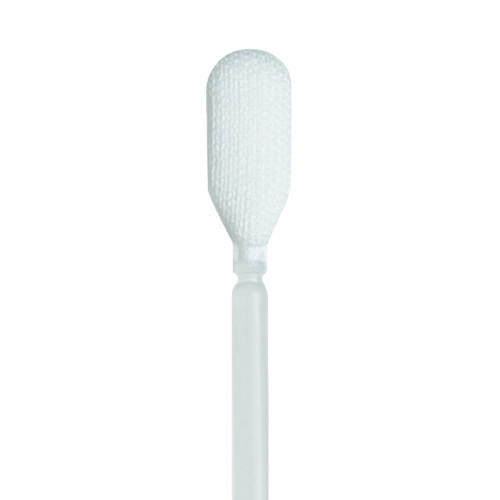
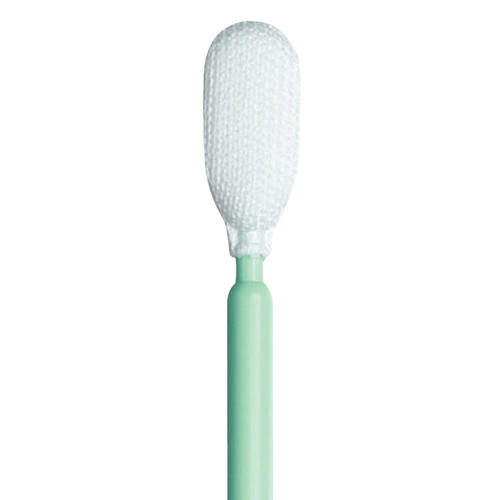
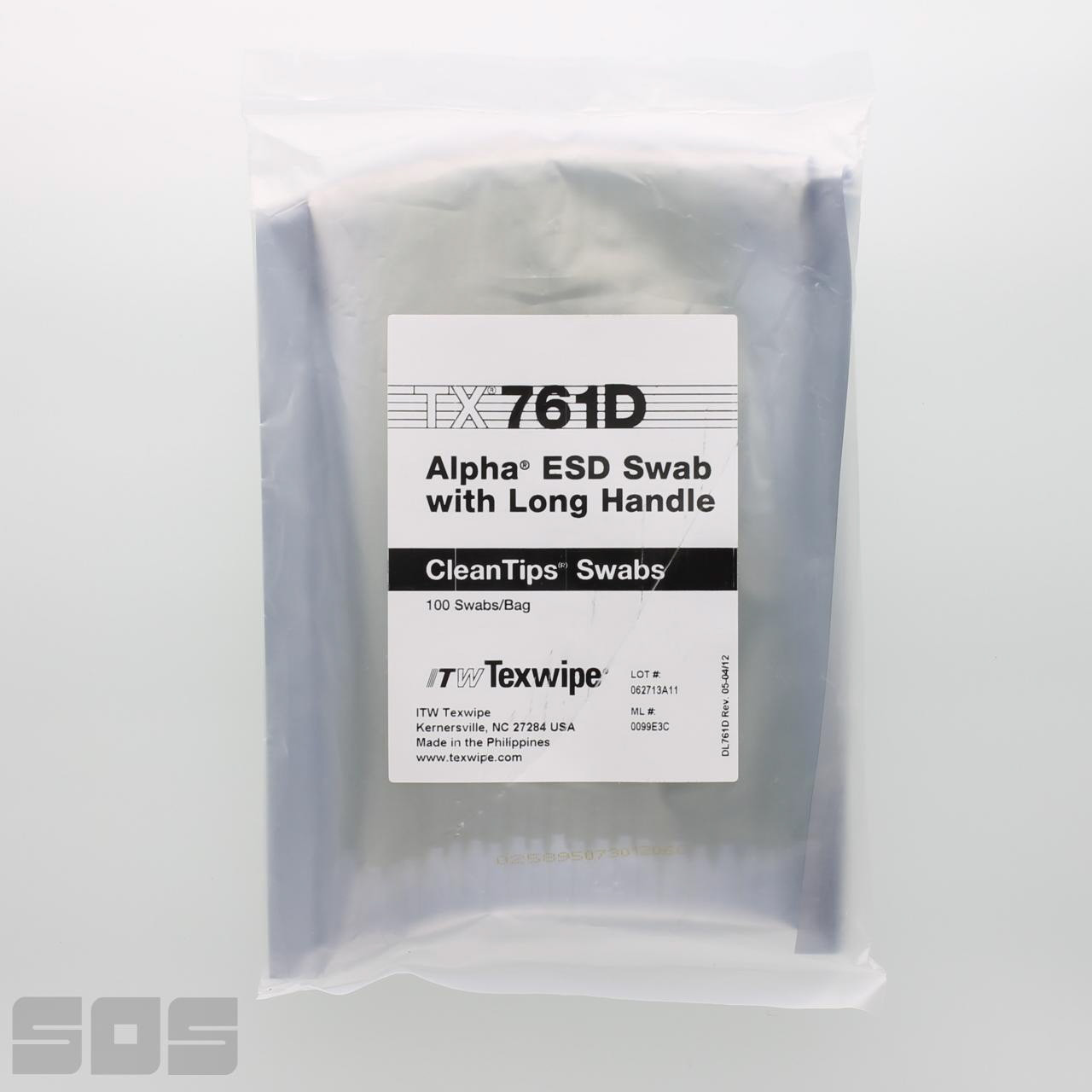
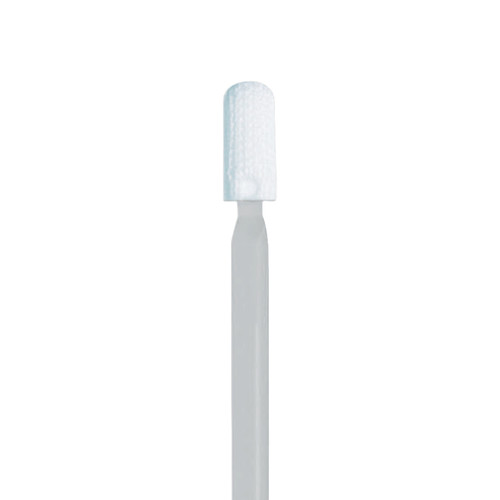
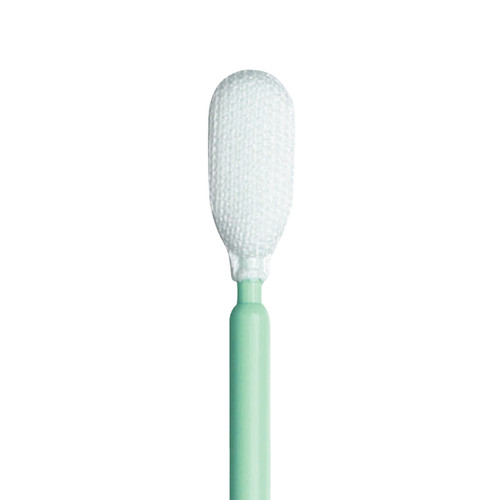
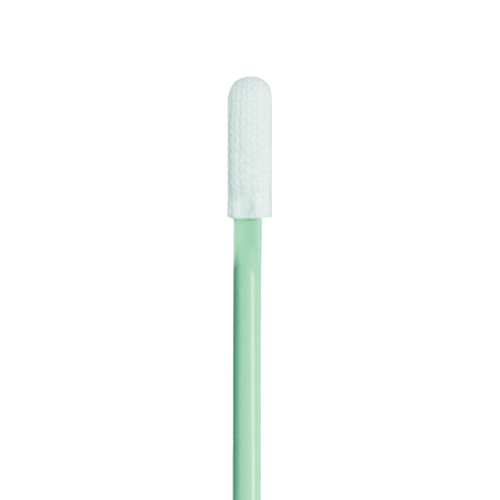
Texwipe TX761D Alpha® ESD-safe polyester knit long-handle cleanroom swab for tight-geometry cleaning
Practical solutions in a critical environment
A “cleaning” step can be the moment an ESD-sensitive process loses yield. Dry swabbing, low humidity, fast airflow, and isolated fixtures can build charge with no obvious spark, then discharge through a sensitive feature during routine touch-up. At the same time, recessed geometry (slots, rails, connector interiors, seams, intersecting surfaces) pushes the operator’s glove and sleeve closer to the work zone, increasing incidental-contact contamination risk.
Texwipe TX761D is built for that intersection: controlled reach for tight features, a knit polyester head for predictable “damp” solvent technique, and a Stat-Rite® inherently dissipative polymer handle intended to provide ESD protection in use without relying on carbon loading or topical antistats. Thermal bond construction eliminates adhesive at the bond, removing one common source of solvent-driven variability.
What it’s for
TX761D is a non-sterile, long-handle, flexible paddle swab used for critical cleaning and controlled fluid application/removal where ESD may be a concern. Typical use includes:
- Detail cleaning in recessed or constrained geometry: slots, tracks, channels, grooves, pockets, seams, and joints.
- Solvent-assisted removal of residues where flooding creates streaks, tide marks, or redeposition lines under inspection.
- Applying and removing lubricants, adhesives, and process solutions on small features with controlled contact.
- ESD-sensitive benches in microelectronics, semiconductor support operations, optics handling areas, HDD processes, and test-and-assembly environments.
Why should customers consider this swab
- ESD control built into the handle: Stat-Rite® inherently dissipative polymer handle is positioned to support ESD-safe handling during real cleaning work (especially when used with a compatible solvent or solution).
- Thermal bond, no adhesive at the bond: reduces a common hidden variable for extractables and bond-line softening in solvent-heavy use.
- Knit polyester for controlled wetting: Alpha® polyester knit head supports repeatable damp-film technique and consistent contact in tight geometry.
- Published cleanliness data: typical ions and nonvolatile residue (NVR) values support method development, background setting, and residue-budget decisions.
- Packaging and traceability discipline: anti-static bag packaging, lot coding, and manufacturer documentation support investigation work and audit trails when something drifts.
Materials and construction
- Head: Alpha® polyester knit.
- Handle: Stat-Rite® inherently dissipative polymer (ESD-safe handle construction per manufacturer).
- Head bond: Thermal (no adhesive at the bond).
- Handle color: Translucent (ESD series).
- Form factor: Flexible head paddle; long handle.
A practical note on fibers: this is a low-linting construction, but nothing is truly lint-free—technique and surface condition govern outcomes, especially around sharp edges, burrs, and rough coatings.
The long handle is not convenience; it is contamination control. It helps maintain approach angle and keeps gloves and sleeves out of the feature, which matters when you are working inside a channel or connector interior where accidental re-contact is easy to miss.
Specifications in context
TX761D’s head geometry and long handle are tuned for recessed features where you need a defined contact patch and controlled wetting without flooding. In practice, these dimensions matter most when you are cleaning a track or slot: the head must stay square, the operator must rotate to a fresh face without losing geometry, and the handle must allow consistent angle and pressure while maintaining ESD-safe handling discipline.
- Head material: Alpha® polyester knit
- Head width: 6.8 mm (0.268")
- Head thickness: 4.0 mm (0.157")
- Head length: 17.0 mm (0.669")
- Handle material: Stat-Rite® (inherently dissipative polymer)
- Handle width: 3.0 mm (0.118")
- Handle thickness: 3.0 mm (0.118")
- Handle length: 147.0 mm (5.787")
- Total swab length: 164.0 mm (6.457")
- Head bond: Thermal
- Handle color: Translucent
Cleanliness metrics
The values below are typical analyses, not specifications. That distinction matters: “typical” supports method development and background budgeting, but your control plan should still include lot traceability, incoming inspection expectations (where applicable), and clear stop conditions when a process step shows drift.
Typical ionic extractables (µg/swab):
- Calcium: 0.01
- Chloride: 0.01
- Fluoride: 0.01
- Magnesium: 0.01
- Nitrate: 0.03
- Phosphate: 0.11
- Potassium: 0.06
- Sodium: 0.31
- Sulfate: 0.10
Typical nonvolatile residue (NVR), mg/swab:
- DIW extractant: 0.04
- IPA extractant: 0.03
Packaging, sterility and traceability
- Sterility: Non-sterile.
- Packaging (TX761D): 100 swabs/bag; 1 inner bag of 100 swabs; 10 bags/case (1,000 swabs/case).
- Packaging control: Packaged in an anti-static bag (ESD series packaging intent).
- Shelf life: 5 years from date of manufacture (manufacturer-stated for ESD-Safe Swab Series).
- Lot traceability: Lot coded for traceability and quality control (capture lot in your traveler or cleaning log when investigation readiness matters).
- Operational segregation cue: Manufacturer shows “TEXWIPE” name embossed on the handle; use it as a practical cue for material segregation and traceability at the bench.
- Country of origin: “Made in The Philippines” (manufacturer technical data sheet statement for the ESD-Safe Swab Series).
ESD reality check
No swab “solves” ESD alone. Treat TX761D as one control inside a system: grounding, verified work surfaces, humidity strategy where applicable, solvent technique (avoid dry wiping), and defined handling discipline. If your procedure references an ESD control plan, confirm the swab choice aligns with that plan before standardizing.
Best-practice use
Treat TX761D as a process tool, not a disposable stick. Good outcomes come from controlling wetness, strokes, geometry, and change-out timing—then documenting what matters when results drift.
- “Damp” solvent technique (control wetness): Wet the head to a damp film, not a drip. A useful check is to touch the swab to a clean, inert wipe or sacrificial surface once—if it leaves a puddle, it is too wet. Over-wetting is how streaks and tide marks get driven into seams and corners.
- Stroke count logic (single-direction discipline): Use straight-line strokes in one direction with overlap. Rotate to a fresh face/edge after each pass. Stop when the face loads or the contact patch changes; do not “polish” with a loaded swab.
- Geometry control (tracks, slots, channels): Use the long handle to maintain approach angle and keep gloves/sleeves out of the work zone. In channels, keep the paddle square to the track to avoid rolling the contact patch and smearing residue lines.
- Pressure guidance: Apply enough pressure to maintain full contact, not enough to abrade coatings or drag residue into a line. If you see edge snagging, you are pushing too hard or the surface has a sharp feature that needs a different approach.
- Solvent compatibility framing: IPA is common, but validate compatibility with the surface/coating, adhesive systems, and any polymer interfaces. If the process solvent is specialized, confirm the swab’s head material and the handle polymer are acceptable for your exposure time and temperature.
- Handling discipline: Open the bag only when ready, stage only what you will use, and reseal promptly. Avoid re-dipping a used swab into a shared solvent container. Do not allow the used head to contact “clean” areas or the inside lip of a container.
- ESD handling discipline: Avoid dry wiping. Maintain ESD controls (grounding, verified surfaces, operator practices) and keep the swab within the controlled work envelope. If the cleaning step is part of a controlled operation, treat the swab choice as a documented variable, not an afterthought.
- Disposal and documentation cues: Dispose after the defined stroke set or when the head loads, frays, or leaves visible streaking. Capture lot information when supporting investigations, validation sampling, or recurring yield issues.
Common failure modes
- Flooding the feature: too much solvent drives contamination into seams and leaves tide marks as it dries.
- Re-deposition from “loaded” swabs: repeating strokes with the same face smears residues into a line you can see under oblique light.
- Dry wiping in an ESD-sensitive area: increases charge generation risk and can create a hidden failure mechanism.
- Edge snagging and fiber release: sharp corners, burrs, or rough coatings can catch the knit; reduce pressure, adjust angle, or change the tool.
- Cross-contamination through re-dipping: putting a used swab back into a solvent source defeats the cleanliness control plan.
- Uncontrolled substitutions: swapping swab constructions midstream changes wetting behavior, extractables, and background—often without the team noticing until data drifts.
Closest competitors
The closest alternatives are long-handle ESD-safe polyester swabs that target the same recessed-geometry cleaning problem. The practical differences are usually in head construction (knit vs sealed), bond method, handle material and ESD approach, published cleanliness data, and packaging/traceability discipline.
-
Berkshire Lab-Tips® knitted polyester ESD swab (LTP1465ESD10 family): Similar long-handle, flexible paddle knit approach with a static-dissipative handle. Compare bonding method, available extractables data, and packaging/lot coding practices relative to how tightly your program controls background and investigations.
-
Puritan knitted polyester ESD swabs (example: 3676-ESD family): Knitted polyester head with a static-dissipative handle and welded bond approach in some offerings. Compare head geometry and the vendor’s ability to provide contamination data and documentation suitable for your qualification file.
-
Contec CONSTIX™ sealed polyester swabs (anti-static handle options): A different mechanism: sealed polyester constructions often emphasize solvent robustness and edge control. If harsh solvents or aggressive chemistries are the gating concern, sealed polyester may be evaluated, but confirm geometry fit and ESD requirements at point of use.
Program fit
TX761D fits best when the swab is treated as part of a controlled cleaning and ESD plan: defined technique, controlled solvent handling, and documented material choice. If the swab is used in any regulated or inspection-facing workflow (including cleaning verification or investigation support), align your internal documentation to the frameworks your auditors recognize—cleanroom classification and control concepts (ISO), regulated manufacturing expectations (FDA), and the test methods and recommended practices your site applies (ASTM and IEST where applicable).
SOSCleanroom supports that discipline with continuity of supply, fast shipping, and customer service that understands real cleanroom workflows. Just as important, SOSCleanroom’s documentation posture and product consistency help reduce unqualified substitutions—so the consumable does not become the uncontrolled variable in a yield event or investigation.
Source: SOSCleanroom Technical Vault
Last reviewed: January 5, 2026
© 2026 SOSCleanroom