Texwipe TX629 VersaWipe 9" x 9" Cellulose and Polyester Cleanroom Wiper

$21.88
(No reviews yet)
SKU:
TX629 BAG
Availability:
Stock Item
Shipping:
Calculated at Checkout
Quantity Option (Bag):
300 Wipers Per Bag (Double Bagged)
Quantity Option (Case):
10 Bags of 300 Wipers Per Case
Type:
Dry Wiper
Wiper Family:
VersaWipe
Wiper Material:
Cellulose/Polyester
Wiper Size:
9" x 9"
Wiper Edge:
Cut Edge
ISO Class:
ISO 5 (Class 100)
ISO Class:
ISO 6 (Class 1,000)
ISO Class:
ISO 7 (Class 10,000)
ISO Class:
ISO 8 (Class 100,000)

TX629 VersaWipe 9" x 9" Cellulose and Polyester Cleanroom Wiper

TX629 VersaWipe is a low-linting (no wiper is truly ‘zero-lint’ in every process condition), high-absorbency blended nonwoven wiper used for routine wipe-downs, spill pickup, and solution application in controlled environments. It is fabricated from a hydro-entangled, non-woven blend of 55% cellulose and 45% polyester to combine the absorbency of natural fiber with the cleanliness and strength of a synthetic wiper, with low particle counts, low extractable levels, and broad solvent compatibility.

Best-seller note: TX629 is often specified as an everyday polycellulose workhorse when teams want absorbency for wet steps and spill control, but still need a clean, consistent wiper that holds together during routine wipe-downs.

Specifications:
  • Size: 9" x 9" (23 cm x 23 cm) nominal
  • Material: 55% cellulose / 45% polyester (hydro-entangled nonwoven)
  • Construction: Non-woven, hydro-entangled with excellent bidirectional strength
  • Edge: Cut edge
  • Packaging: 300 wipers/bag (double bagged); 10 bags/case
  • Use environments: ISO 5 (Class 100) through ISO 8 (Class 100,000) controlled areas (final suitability depends on your process and cleaning method)
About the Manufacturer: 

Texwipe (an ITW company) differentiates itself in cleanroom wiping by treating the wiper as an engineered product, not a commodity consumable. Its approach starts with material selection (including hydro-entangled blends for strength without chemical binders), then controls manufacturing, cleanliness verification, and solvent-safe packaging systems designed to reduce handling-driven contamination risk and support repeatable lot-to-lot performance.


For day-to-day programs, SOSCleanroom (SOS) supports that manufacturing discipline with a close working relationship with Texwipe focused on continuity of supply, clean documentation handoff (certs, lot traceability), and practical application support—so customers can standardize wiping materials with predictable performance while maintaining procurement reliability and audit readiness.

TX629 Features:
  • Fiber blend (55% cellulose and 45% polyester)
  • Non-woven, hydro-entangled construction with excellent bidirectional strength
  • Solvent-safe Bag-Within-A-Bag cleanroom packaging
  • Statistical quality control
  • Autoclave safe
  • Eye-catching packaging to control product migration from approved site location
TX629 Benefits:
  • Wet and dry strength: Polyester reinforcement helps the wiper hold together during wiping, folding, and wet processing steps.
  • High absorbency: Cellulose content supports fast pickup for aqueous spills and wet wipe-down work.
  • Solvent compatibility: Commonly used with many cleanroom-compatible solvents/cleaners (verify compatibility to your chemistry and SOP).
  • No chemical binders: Hydro-entangled structure contains no chemical binders.
  • Low extractables: Designed for low extractable levels to help reduce residue contribution during wipe-downs (process-dependent).
Common Applications:
  • General-purpose wiping where economy and cleanliness are of critical importance
  • Applications where high absorbency and low extractables are prime considerations
  • Picking up aqueous spills
  • Cleaning precision components and lab apparatus
Best-Practice Use:
  • Fold for control: Fold into quarters to create multiple clean faces; rotate faces instead of re-wiping with a loaded surface.
  • Wipe pattern: Use straight-line strokes (top-to-bottom or left-to-right) to avoid re-depositing contamination.
  • Wet vs. dry: For solvent wipe-downs, dampen—do not over-saturate—so you maintain control and reduce dripping.
  • Change-out triggers: Replace the wiper when the face becomes visibly soiled, tacky, or begins leaving streaks/residue.
  • Edge awareness: Around sharp corners, fasteners, or abrasive textures, reduce pressure and avoid snagging; if the job is consistently abrasive, consider a more abrasion-resistant platform.
Selection Notes (TX629 vs. Other Options)
  • TX629 vs. TechniCloth (TX609): Both are cellulose/polyester blends; TechniCloth is often chosen when teams want a more premium polycellulose feel and performance, while VersaWipe is frequently selected for economical, everyday controlled wiping.
  • TX629 vs. TexVantage (TX8939): If you are standardizing around tighter residue/contamination control expectations, TexVantage is commonly evaluated as a step-up option within blended nonwovens.
  • Dry vs. pre-wetted: If you want consistent wetting and reduced solvent handling, consider pre-wetted blends such as TechniSat formats (70% IPA options are common for routine wipe-downs).

Link to Texwipe Technical Datasheet:
Click Here

Other Similar Products Available From SOSCleanroom.com

VersaWipe Dry Wipers

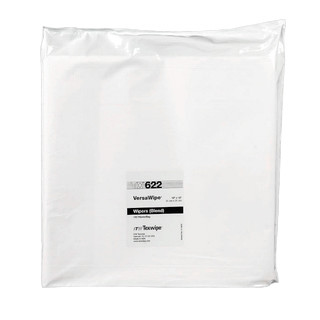
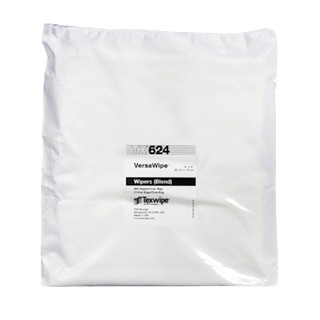
  • TX624: 4" x 4" nominal (10 cm x 10 cm), 300 wipers/bag
  • TX629: 9" x 9" nominal (23 cm x 23 cm), 300 wipers/bag
  • TX622: 12" x 12" nominal (31 cm x 31 cm), 100 wipers/bag

TechniCloth Dry Wipers (Cellulose/Polyester)

  • TX604: 4" x 4" nominal (10 cm x 10 cm)
  • TX609: 9" x 9" nominal (23 cm x 23 cm)
  • TX612: 12" x 12" nominal (31 cm x 31 cm)

Pre-Wetted Blended Wipers

  • TX1065: 9" x 11" pre-wetted 70% IPA

Notes: Looking for application guidance or qualification context for Texwipe TX629 VersaWipe 9" x 9" cellulose/polyester cleanroom wipers? Open the SOSCleanroom Technical Vault tab above for practical wiping technique, selection notes (TX629 vs. alternatives), and the documentation details teams typically review when standardizing blended nonwoven wipes across ISO-class controlled environments.

SOSCleanroom.com supports contamination-control programs with cleanroom consumables in stock, fair pricing, and responsive technical support—backed by same-day shipping options and customer service that understands real cleanroom workflows.

Product page updated: Jan. 1, 2026 (SOS Technical Staff)

© 2026 SOS Supply. All rights reserved.

The Technical Vault
By SOSCleanroom
The Blended Wiper Built for Speed Without the Residue Penalty: How TX629 VersaWipe Earns Its Spot in ISO 5–8 Daily Cleaning
Last reviewed: Jan. 1, 2026 |  Audience: contamination control, cleanroom operations, EHS, quality

Texwipe TX629 VersaWipe (9" × 9") is a dry, hydroentangled nonwoven cleanroom wiper engineered for the “real work” tier: fast aqueous pickup, routine wipe-downs, and solution application/removal where absorbency and throughput matter—but where the wipe still needs a controlled contamination profile. TX629 is built around a 55% cellulose / 45% polyester blend with no chemical binders, paired with cleanroom packaging controls designed to keep the wiper from becoming the uncontrolled variable in daily cleaning.

Reliability is part of the control plan. SOSCleanroom supports continuity of supply and consistent documentation handoff for Texwipe programs so teams can standardize wiping inputs and avoid last-minute substitutions that quietly change absorbency, residues, and investigation workload.

At-a-glance: 9" × 9" • 55% cellulose / 45% polyester • hydroentangled (no chemical binders) • 300/bag (double-bagged) • 10 bags/case • sorptive capacity 280 mL/m² • NVR (typical) 0.01 g/m² (IPA) / 0.03 g/m² (DI water)

What it’s for

TX629 is best used for routine wipe-downs, aqueous spill pickup, and solution application/removal in controlled environments where the dominant job is “pick up fast and move on,” but the program still requires disciplined packaging, traceability posture, and published cleanliness context. It is a practical choice for benches, carts, tool exteriors, staging surfaces, and support cleaning where speed and absorbency reduce rework—and where a blended nonwoven outperforms many all-polyester wipes for water-based events.

Decision drivers

TX629 earns its place when a program wants absorbency-first performance without paying for residue or strength problems later:

  • Blend logic: cellulose drives fast wet-out and pickup; polyester improves wet strength and handling stability.
  • Hydroentangled construction: mechanical entanglement with no chemical binders helps reduce one common source of extractables variability in nonwovens.
  • Low residue posture: VersaWipe is positioned for very low NVR in the blended-nonwoven category, supporting cleaner dry-down outcomes in routine cleaning.
  • Packaging controls: solvent-safe “bag-within-a-bag” cleanroom packaging and double-bag presentation support controlled introduction and staging discipline.
  • Operational control detail: “eye-catching” packaging is intentionally designed to help control migration from approved site locations—useful for 5S and change-control environments.
  • Program stability through SOSCleanroom: consistent sourcing and documentation continuity reduce substitution risk when schedules tighten.
Materials and construction – explained like an engineer

“Cellulose/polyester wiper” can describe everything from low-control shop wipes to highly engineered cleanroom nonwovens. TX629’s control comes from two choices: the 55/45 blend and the hydroentangled (spunlace) process. Hydroentangling uses high-pressure water jets to entangle fibers, creating cohesion without resin binders. That matters because binders can become an extractables and residue variable—especially when a wipe is used with alcohols, disinfectants, or aqueous chemistries.

In use, the cellulose fraction delivers rapid sorption (useful for spill reality), while the polyester fraction preserves integrity under wiping force so the wipe does not “tear into fibers” when an operator wipes fast, folds aggressively, or works around features.

Cleanliness and performance metrics

For many facilities, the standardization question is whether a wipe introduces avoidable risk in three categories: releasables (particles/fibers), residues (NVR), and ions. TX629’s published values should be treated as qualification starting points rather than contractual limits.

  • Sorption: typical sorptive capacity is 280 mL/m² with a sorptive rate of < 1 second. Practical translation: a single 9" × 9" wipe (about 0.052 m²) can hold on the order of ~15 mL at capacity, depending on fluid and technique.
  • Particles (LPC > 0.5 µm): typical 63 × 106 particles/m².
  • Fibers (> 100 µm): typical 50,000 fibers/m².
  • NVR: typical 0.01 g/m² (IPA extractant) and 0.03 g/m² (DI water extractant). If dry-down haze appears, the main levers are wetness control, chemistry concentration control, and face rotation—not higher wiping force.
  • Ions: typical values include Na 31 ppm, K 3.5 ppm, and Cl 16 ppm for standard products listed. If ionic background is a controlling risk (corrosion, ECM, high-impedance electronics), validate the wipe/chemistry pairing in your process window.

Terminology note: TX629 is engineered for low-linting performance; no wiper is truly “lint-free” in every process condition.

Why “bag-within-a-bag” packaging matters operationally

In daily cleaning, many failures are handling-driven: wipes staged open on benches, packs carried station-to-station, or “one wipe does everything” behavior that turns a pickup tool into a redeposition tool. TX629’s cleanroom packaging strategy is designed to reduce those failure modes: controlled introduction, staged access, and a practical cue (distinctive packaging) to keep the right wipe in the right area. Pair the packaging advantage with procedural discipline: fold consistently, rotate faces aggressively, and discard once the face is loaded or the wipe approaches saturation.

Rule of thumb: If the job is absorbency-driven (water-based spills, quick wipe-downs, solution pickup), a blended hydroentangled wipe is often the most efficient control. If the acceptance driver is the lowest possible background (final-pass optics/coatings, ultra-trace residues), step up to a tighter-control polyester knit or sealed-edge format.

Best-practice use

TX629 performs best when technique is treated as part of the control plan. Use quarter-folding to create multiple clean faces, wipe with controlled, overlapping, single-direction strokes, and rotate to a fresh face frequently.

  • Spill logic: blot/pickup first, then finish with fresh faces using directional strokes to avoid spreading.
  • Wetness control: aim for damp control, not flooding—over-wetting drives pooling, seam wicking, and residue redistribution.
  • Face discipline: once the face is loaded, change it. Most “it looked clean” failures are redeposition failures.
  • Segregate roles: keep routine cleaning wipes separate from verification sampling consumables when the step becomes measurement-sensitive.
Common failure modes — and how TX629 helps

A blended wiper becomes a contamination source in predictable ways: over-wetting and pooling, scrubbing abrasive textures that accelerate releasables, and reusing a face past the point of effective pickup. TX629’s hydroentangled construction helps maintain integrity under wiping force, and its low-residue posture supports cleaner dry-down outcomes in routine programs. The remaining controls are procedural: wetness discipline, face rotation, and area-appropriate wipe selection for the most defect-sensitive steps.

Closest comparators

The most defensible comparisons are to other hydroentangled cellulose/polyester cleanroom wipers intended for similar spill-control and routine wiping roles:

Contec SterileSorb (cellulose/polyester hydroentangled) is a close category peer when programs want strong sorption with a cleanroom documentation posture—often evaluated when sterility options or packaged presentation drive selection.

Berkshire Choice NW 600 (cellulose/polyester nonwoven) is a credible alternative in general-purpose, absorbency-driven cleanroom wiping. Compare published typical cleanliness metrics, packaging, and lot consistency relative to your residue budget.

Avantor/VWR Spec-Wipe® 3 (cellulose/polyester blend) is commonly used as an “economy with controls” option. Qualification should focus on lot-to-lot stability, extractables posture, and how the wipe behaves under your chemistry set and wipe-down cadence.

Where TX629 fits in a cleanroom wiping program

TX629 is a strong “utility-control” wiper for ISO 5–8 daily cleaning where absorbency and speed are the operational constraints, but the program still requires a controlled contamination model and disciplined packaging. Use it for spill pickup, routine wipe-downs, and solution handling steps where blended nonwoven behavior improves efficiency. When the risk shifts to the most defect-sensitive surfaces (edge shedding, ultra-trace residues, cosmetic inspection optics/coatings), the technical step-up is typically a tighter-control polyester knit or sealed-edge format qualified to the acceptance criteria.

Source basis
  • SOSCleanroom product page: “Texwipe TX629 VersaWipe 9" × 9" Cellulose and Polyester Cleanroom Wiper” (positioning; packaging configuration; SKU context). https://www.soscleanroom.com/product/wipers/texwipe-tx629-versawipe-9-x-9-cellulose-and-polyester-cleanroom-wiper/
  • ITW Texwipe datasheet: “VersaWipe® & VersaWipe® STX” (55% cellulose / 45% polyester; hydroentangled/no binder statement; sorption; particles/fibers; NVR; ions; packaging notes; typical-value framing). https://www.texwipe.com/sites/default/files/2021-08/VersaWipe-VersaWipeSTX-TDS.pdf
  • Comparator category references (for selection context): Contec SterileSorb; Berkshire Choice NW 600; Avantor/VWR Spec-Wipe® 3 (material class and positioning).
Source: SOSCleanroom.com
Last reviewed: Jan. 1, 2026
© 2026 SOS Supply. All rights reserved.