The Technical Vault
By SOSCleanroom
Class 10 / ISO 4 workflow support (published cleanliness targets)
12" nitrile, 5 mil, microtextured fingertips
ESD properties published (surface resistivity + static decay)
Silicone-free and latex-free (published)
TechniGlove TN1200 Series 12" Techni-Cleaned™ Nitrile Gloves — Class 10 Handling Discipline with Published Particle, Ionic and NVR Targets

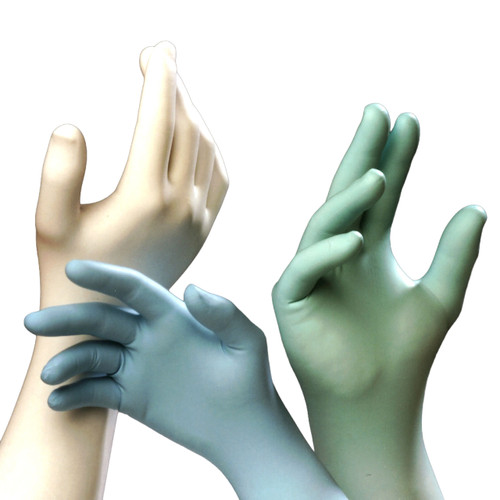
Representative image for TN1200 color variants (white/green/blue). Confirm size/color part number at time of order.
1) Practical solutions in a critical environment
In Class 10 (and ISO 4-managed) operations, gloves are not "just PPE" — they are a primary contamination-control input at the point of use. Most excursions start with ordinary actions: adjusting a fixture, transferring parts, handling a pouch, or wiping a tool. TN1200 is built for that reality with published contamination targets (particles, ions, and DI-water NVR) plus published ESD performance, giving quality and operations teams a clearer, more audit-defensible baseline for qualification and change control.
Sterility note (accuracy-first)
Sterility is not stated as a published attribute for this glove series. TN1200 is commonly used in non-sterile critical manufacturing workflows. If your process requires sterile gloves for aseptic manipulations, ensure your gowning program specifies a sterile glove solution validated to your site's requirements.
2) What it's for
- A longer cuff for gown-to-glove interfaces and reduced wrist exposure during routine handling and wipe-down tasks.
- Published cleanliness targets (particle, ionic extractables, and DI-water NVR) to support qualification packages.
- Published ESD performance (surface resistivity and static decay) for electronics and precision assembly contexts where electrostatic control matters.
- Latex-free and silicone-free (published) materials where latex sensitivity and silicone transfer concerns are controlled risks.
- Color-coding options (white/green/blue) to support line discipline, zone control, or task segregation.
3) Why should customers consider this glove
- Qualification-ready baseline: published particle, ionic and NVR targets align with how contamination-control programs document risk and acceptance criteria.
- ESD discipline: published surface resistivity and static decay support programs where static control is part of the process window.
- Operator usability in critical work: 5 mil nitrile with microtextured fingertips targets a balance of tactile control and durability for routine handling.
- Line control and mix-up prevention: multiple colors support zone-based glove assignment and visual compliance checks.
- Supply confidence: SOSCleanroom supports critical-environment programs with continuity of supply, responsive support, and process-focused service.
4) Materials and construction
- Material: nitrile (contains no natural rubber latex; silicone-free, as published)
- Finish: powder-free; microtextured fingertips for grip
- Cuff: beaded; 12" overall length to support gown interface
- Style: ambidextrous
- Colors: white, green, blue (supports visual controls)
Classification language note
Published materials reference "Class 10" and also include particle cleanliness metrics reported against IEST-RP-CC005.x family methods. For qualification, use your URS, your site's risk assessment, and the lot-specific documentation as the acceptance basis.
5) Specifications
| Attribute |
Published value / listing |
| Series | TN1200 Series (Techni-Cleaned™) |
| Material | Nitrile (latex-free; silicone-free, as published) |
| Powder | Powder-free |
| Style | Ambidextrous |
| Length | 12" (300 mm) |
| Thickness | 5 mil (0.005") |
| Grip | Microtextured fingertips |
| Cuff | Beaded |
| Colors | White, Green, Blue |
| Tensile strength | > 12.5 MPa |
| Elongation at break | > 500% |
| Sterility | Not stated as sterile |
| Sizes | XSM, SM, MD, LG, XL, 2X (color/size variants use TN1200–TN1205 with W/G/B suffixes) |
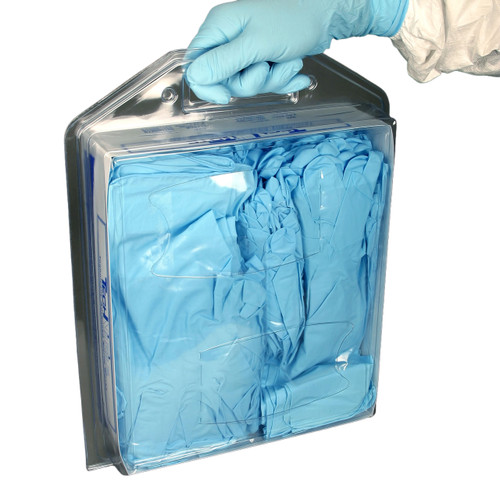
| Packaging | 100 gloves per poly-sealed cleanroom bag; 10 bags per case (1,000 gloves/case) |
| Availability | 7–10 business days |
| Country of origin | Malaysia (published on certification example) |
6) Specifications in context
Use TN1200 when your process benefits from documented cleanliness targets but does not require a sterile barrier system. The 12" length helps with sleeve overlap and reduces wrist exposure during repetitive handling. The published ESD performance matters most when you have charge-sensitive components and a defined ESD program window.
U.S. standards first; global context second: programs commonly reference ISO 14644 terminology for cleanroom classification and leverage IEST practices for test method framing. EU GMP Annex 1 can be used as a secondary benchmark for continuous improvement without treating it as a U.S. legal requirement.
7) Cleanliness metrics
The values below are presented as published targets for contamination-control evaluation. Always qualify to your URS and acceptance criteria.
Particle cleanliness (published)
| Metric | Published target | Method context |
|---|
| Total particles > 0.5 µm | < 400 total particles/cm² | IEST-RP-CC005.x family |
Typical ion extractables (published targets)
| Ion | Published target (µg/cm²) |
|---|
| Fluoride | < 0.005 |
| Chloride | < 0.10 |
| Nitrite | < 0.005 |
| Bromide | < 0.020 |
| Nitrate | < 0.10 |
| Phosphate | < 0.005 |
| Sulphate | < 0.020 |
Total NVR (DI water; published)
| Metric | Published target |
|---|
| DI water extractable NVR | < 1.00 µg/cm² |
ESD properties (published)
| Metric | Published value | Test framing |
|---|
| Surface resistivity | < 1010 ohm/square (50–60% RH) | ESD-S11.11 |
| Static decay | < 0.5 seconds | RETS-5-003 |
| Surface resistivity "in use" | < 1 × 10⁹ ohm/square | ANSI/ESD SP15.1 |
8) Packaging, handling, sterility and traceability
- Packaging: 100 gloves per poly-sealed cleanroom bag; 10 bags per case (1,000 gloves/case).
- Traceability pathway: documentation options include a certification example and supporting technical data resources used in qualification packages.
- Sterility: not stated as sterile. If sterility is a gate for your process, qualify a sterile glove solution.
- Handling discipline: treat bags/cases as controlled materials; stage by zone, prevent carton debris migration, and standardize opening and dispense technique.
9) Best-practice use
- Donning discipline: control the first contact surface. Avoid touching carts, door hardware, phones, and gown hooks after donning. If you do, change gloves.
- Change frequency: define change triggers in your CCS/SOP (time-based, task-based, contamination event-based).
- ESD reality check: keep the entire ESD control plan in spec (humidity window, footwear/flooring, grounded work surfaces, garments).
- Chemical compatibility: validate against your actual chemicals and contact times.
- Receipt-to-use controls: store by FIFO, protect from UV/heat, and wipe-down per your material transfer SOP.
Matching consumables: glove + wiper + swab
For Class 10 / ISO 4–5 workflows, match your glove choice to wiping and swabbing tools intended for critical environments. For over 35 years, SOS and Texwipe have been close partners, and SOSCleanroom is the authorized Master Distributor of ITW Texwipe for the United States market.
Customer SOP disclaimer
The guidance above is provided as general cleanroom best-practice education. It is not a substitute for your validated procedures. Always follow your site's approved SOPs and quality requirements.
10) Common failure modes
- "Dirty glove" from clean glove: touching non-controlled surfaces after donning and continuing work without changing.
- Residue transfer during wipe-down: using too much solvent or reusing a contaminated wiper face.
- ESD gaps: relying on glove ESD metrics while the rest of the ESD control plan is out of spec.
- Wrong glove for the step: using non-sterile gloves where a sterile barrier is required.
- Traceability breaks: losing lot linkage and making deviations harder to investigate.
11) Closest competitors
- Ansell cleanroom nitrile platforms (BioClean/MICROFLEX cleanroom families).
- Kimberly-Clark/Kimtech nitrile cleanroom lines.
- Other cleanroom nitrile lines with published particle/extractables targets — ensure the comparison includes documentation depth, packaging controls, and lot traceability.
12) Program fit
- Best fit: non-sterile Class 10 / ISO 4-managed handling where published contamination targets and documentation support qualification.
- ESD-sensitive environments: electronics and precision assembly using a defined ESD program window.
- Color-control workflows: programs using color to enforce zoning or task segregation.
- Not the right fit when: your step requires sterile gloves, or you require a published attribute not stated for this series.
13) Source basis
SOSCleanroom is the source for this Technical Vault entry.
Briefed and approved by the SOSCleanroom (SOS) staff.
If you have any questions please email us at Sales@SOSsupply.com or give us a call at (214)340-8574.
If you need additional information please try our SOSCleanroom specific AI ChatBot which draws from our extensive cleanroom specific libraries.
Last reviewed: April 29, 2026
© 2026 SOS Supply. All rights reserved.