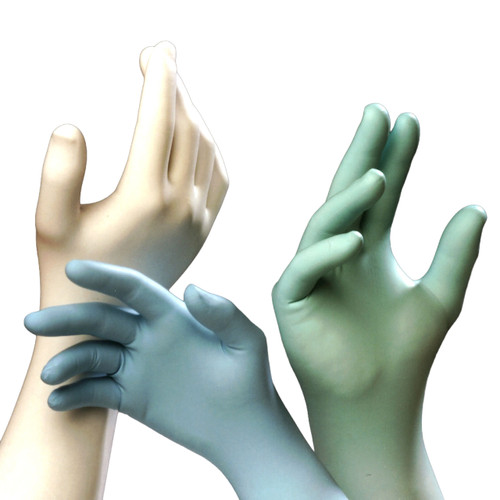
NCP Series Nitrile Class 100 (ISO 5) Cleanroom Gloves

$175.00
(No reviews yet)
SKU:
NCP
Availability:
7 - 10 Business Days
Shipping:
Calculated at Checkout
Quantity Option (Case):
1,000 Gloves
CT International NCP Series Nitrile Cleanroom Gloves — Class 100 / ISO 5, Non-Sterile, 12" Cuff, Anti-Static, Double-Bagged, Textured Palm (10 Bags x 100 / 1000 Case)
Cleanroom Gloves Nitrile ISO 5 / Class 100 12" (305 mm) Length Double-Bagged Anti-Static Textured Palm No Latex Proteins (Published)

Overview

CT International’s NCP Series is a Class 100 / ISO 5 compatible nitrile cleanroom glove built for controlled environments where the operator interface must stay disciplined: glove contact happens, so your glove spec must be consistent, clean-processed, and easy to standardize. A 12" beaded cuff helps maintain sleeve overlap, while the textured palm supports confident handling of tools, components, and materials without over-gripping.

SOSCleanroom curates glove programs for critical manufacturing and labs. If your workflow is electronics-focused, the published anti-static design also supports ESD-aware operations when paired with the correct grounding program and floor/footwear strategy.


Why this glove matters in ISO 5 / Class 100 operations
  • Controls the biggest contamination variable: Hands touch everything. A cleanroom-compatible glove reduces the risk of particles and residues transferring to product-contact surfaces.
  • Cleaner staging at the point of use: Double-bagging supports controlled transfer and helps keep gloves protected until they are introduced into the work area.
  • Better gown/glove interface control: 12" length and a tapered, beaded cuff support overlap and reduce wrist exposure during repeated motions.
  • Process-safe handling: Textured palm improves grip for critical handling, reducing drops, rework, and unnecessary contact events.
  • ESD-aware support (when electronics are involved): Anti-static gloves help reduce charge accumulation as one element of a broader ESD control program.

Typical cleanroom tasks supported
  • ISO 5 / Class 100 assembly and inspection work where low contamination transfer matters
  • Semiconductor, optics, and electronics manufacturing steps where ESD-awareness and cleanliness must co-exist
  • Pharmaceutical and life science controlled-environment tasks where gloves are part of the contamination control strategy
  • General controlled environment handling of tools, fixtures, and materials
  • Controlled transfers and staging (enabled by double-bagging)

Key specifications (published)
Brand / series CT International — NCP Series
Cleanroom compatibility Class 100 / ISO 5 (or higher controlled environments)
Material 100% Nitrile (published)
Latex proteins No latex proteins (published)
Length 12" (+/- 0.5)
Thickness 5.0 mil (+/- 1)
Finish / cuff Palm textured; tapered, beaded cuff
ESD attribute Anti-static (published)
Testing (published) Leak tested; meets/exceeds ASTM D3578 (published); particle & extractable testing per IES-RP-CC-005.2; sampling per MIL-STD-105E
Mechanical performance (published) Tensile strength: 2072 psi / 14 MPa; elongation: 500%
Color White
Sizes Small, Medium, Large, X-Large, XX-Large
Case pack (SOSCleanroom) Case: 10 bags x 100 gloves (1000 total)

Note: NCP is a non-sterile cleanroom glove. For aseptic processing steps requiring sterile presentation, select a validated sterile glove per your SOP/CCS. Always verify chemical compatibility and PPE selection using your hazard assessment and applicable SDS information.


Packaging and handling (clean transfer)

Published as double-bagged for controlled handling. Case unit is 10 bags x 100 gloves. Maintain bag integrity until introduction into the controlled area to reduce incidental contamination.

For best results, stage gloves in the correct gowning zone and open bags using your facility’s “clean to cleaner” transfer technique.


EU GMP Annex 1 alignment notes (practical)

Annex 1 programs treat gloves as part of the facility’s Contamination Control Strategy (CCS). Selection is only one control—performance depends on how gloves are donned, disinfected (if applicable), changed, and documented.

  • Donning discipline: avoid touching the exterior surface; confirm full sleeve overlap and stable cuff positioning.
  • Change triggers: define tear/snag, surface contact events, task changes, and time-based replacement rules.
  • Disinfection workflow: if your CCS requires glove disinfection, use validated agents/contact times compatible with nitrile; avoid over-wetting that can drive liquids under cuffs.
  • Traceability: control substitutions under change management and keep lot/expiry records per SOP.

Storage and lifecycle control
  • Store in a cool, dry location in original packaging; protect open boxes/bags from direct light exposure.
  • Use FIFO and ensure the correct size is available to prevent “over-stretch” tearing or poor tactile control.
  • Inspect before use and replace immediately if compromised (tear, pinhole, tackiness, or visible contamination).

Standards and reference context

Documentation

Use these documents for qualification packets, training binders, contamination control support files, and change-control reviews.


If you have any questions please email us at Sales@SOSsupply.com or give us a call at (214)340-8574. OR check out the AI ChatBot powered by SOSCleanroom data libraries - give it a try! THIS IS NEW FOR 2026! © 2026 SOSCleanroom. All rights reserved.
Your ISO 5 Glove Program Is an SOP, Not a SKU: How Standardizing Fit, Change Rules, and Substitution Control Protects Class 100 Work
The Technical Vault By SOSCleanroom Last reviewed: April 27, 2026
ISO 14644 Personnel Controls ISO 5 / Class 100 Operations Lot & Substitution Control Change Frequency Discipline Operator-Induced Contamination

NCP Series Nitrile Class 100 / ISO 5 Cleanroom Gloves — what this glove program is designed to control

NCP Series nitrile cleanroom gloves are positioned for Class 100 / ISO 5 operations where gloves are a high-frequency contact point with tools, components, swabs, wipers, and critical surfaces. In ISO 5 work, glove selection affects more than comfort—it can influence particle contribution, residue transfer, grip behavior, and technique repeatability across operators and shifts.

The most successful ISO 5 programs treat gloves as a controlled system: fit and sizing discipline, defined donning behavior, defined change triggers, and controlled substitution rules. When those controls are clear, glove-related variability drops and "mystery defects" become far less common.

Operations takeaway: The best cleanroom glove program is the one that operators can execute consistently—every shift, every day, without substitutions.


ISO-first context: personnel are the dominant contamination source—gloves are the boundary layer

ISO 14644 operations guidance recognizes personnel as a primary contamination source, which is why gloves are central to contamination control. Even in a well-controlled ISO 5 environment, gloved hands can transport contamination from carts, sleeves, packaging edges, and staging areas back into product-contact work.


Best-practice use

Standardize glove sizing, donning technique, and change frequency. Gloves should be changed after contamination events, time intervals, or defined SOP triggers. Avoid uncontrolled substitutions—treat glove changes as a controlled process change.


Common failures
  • Touching uncontrolled surfaces
  • Overusing gloves past change limits
  • Incorrect sizing
  • Uncontrolled product substitutions

Disclaimer

This content supports contamination control decisions but does not replace your SOP or validation requirements.

Questions? Email Sales@SOSsupply.com or call (214) 340-8574. © 2026 SOSCleanroom. All rights reserved.