Why eye protection matters in contamination control
In controlled environments, eyewear is not just a safety checkbox. It changes behavior: fewer face touches, fewer lens wipes with gloved fingers, and fewer “quick adjustments” that turn into contamination events.
For visitor access and support corridors, a simple, consistent eyewear issue process often improves compliance more than a premium spec that people remove halfway through a walkthrough.
What this product is (and what it is not)
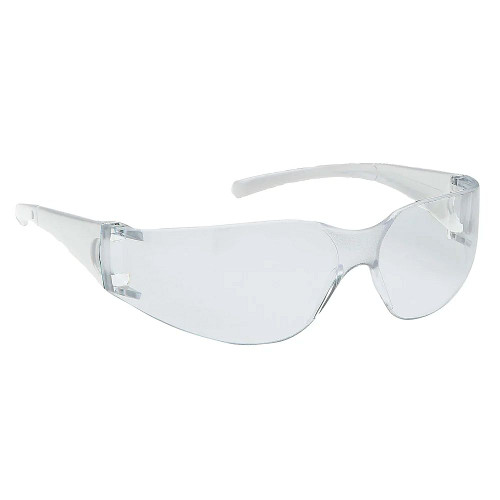
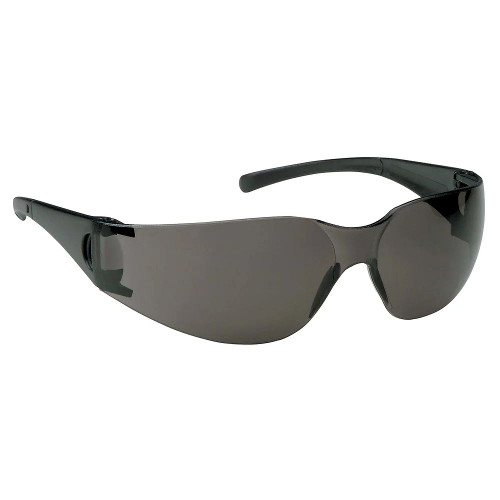
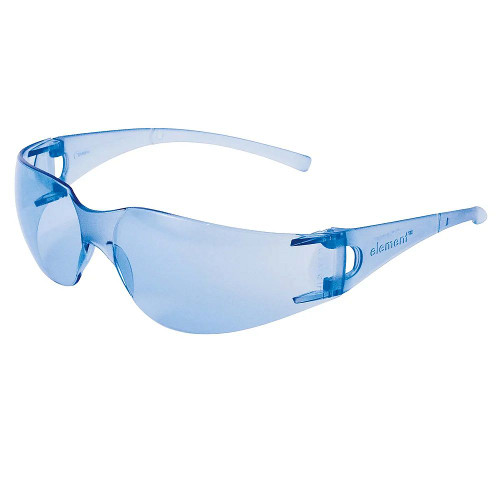
KleenGuard Element Visitor Safety Glasses (25627) are positioned as economical, lightweight safety eyewear with frameless styling, a metal-free design, and screw-less hinges.
The clear polycarbonate lenses are stated to provide 99.9% UVA/UVB/UVC protection and the product is positioned to meet ANSI Z87.1+ high-impact performance expectations.
This is visitor-style eyewear: excellent for basic impact protection and indoor visibility.
It is not a sealed goggle, and it is not marketed as sterile eyewear. If your operation requires sealed eye protection, validated disinfection, or sterile transfer practices, use the appropriate goggle/sterile goggle specification instead.
Standards context: ISO first, then Annex 1
ISO perspective: ISO cleanroom programs start with classification and then operational control. ISO 14644-1 addresses classification of air cleanliness by particle concentration, while ISO 14644-5 focuses on operations controls (including management of personnel, entry/exit practices, and procedures that keep the cleanroom operating within specified cleanliness levels).
In practice: your gowning steps and garment choices are part of the operational control program, not an afterthought.
European Annex 1 perspective: If you operate under EU GMP Annex 1 (sterile medicinal products), gowning becomes more prescriptive and risk-based for Grade A/B activities, with emphasis on minimizing shedding, limiting exposed skin, and preventing contamination from personnel.
Annex 1 expectations should be mapped to your grade-specific gowning SOPs and training/qualification.
Quick specification snapshot (for receiving + program alignment)
| Attribute |
Element Visitor Safety Glasses (25627) |
| Case pack |
12 glasses per case |
| Lens |
Polycarbonate, clear tint; uncoated |
| UV protection |
Stated 99.9% UVA/UVB/UVC protection |
| Construction |
Metal-free; screw-less hinges; lightweight profile |
| Standards |
Positioned to meet ANSI Z87.1+; TAA compliant |
| Country of origin |
Taiwan (published) |
Donning technique: where eyewear belongs in the gowning flow
ISO-driven habits (operations discipline that reduces contamination)
- Start clean before you start gowning: sanitize hands, remove items that trigger face-touching (phone, pens in pockets, jewelry per site rules).
- Handle eyewear by the temples: avoid lens contact; lens smears drive mid-walk adjustments and glove-to-face transfer.
- Sequence to reduce rework: many gowning rooms place eyewear after initial hair/beard containment and before final hood/coverall closure so straps and edges do not disturb the final seal. Follow posted room flow.
- One entry, one pair (visitor practice): disposable visitor eyewear is most effective when it is issued and removed consistently, not re-used across uncontrolled areas.
- Upgrade when fog becomes “behavioral contamination”: if fog forces repeated touch/adjust, select anti-fog coated eyewear or sealed goggles.
Annex 1 add-on (EU sterile manufacturing environments)
Annex 1 programs typically expect tighter control of what personnel wear, how garments are donned, and how they are maintained/cleaned relative to grade.
If your activities fall under Annex 1 expectations, treat “eye protection choice” as part of your grade-based gowning qualification: confirm coverage, cleanability/disinfection method, and behaviors that can introduce contamination.
Operational realities: uncoated lenses and handling
Uncoated lenses keep cost down, but they can be less forgiving to scratches and repeated wiping.
In visitor programs, the simplest control is replacement: when visibility drops, swap the pair rather than “polishing” lenses with whatever wipe is nearby.
If your site uses alcohol wipes, confirm compatibility and avoid aggressive solvents that can haze polycarbonate.
When to step up from visitor glasses
- Fog is routine: move to anti-fog coated eyewear or goggles to stop the “touch-adjust-touch” cycle.
- Splash/chemical risk: use the correct goggle or face shield system for the hazard assessment.
- Critical zone entry: if you need sealed coverage or sterile handling, use sterile goggles or a validated reusable goggle program.
- Visitors with Rx glasses: consider OTG protection to maintain fit and avoid gaps.
SOSCleanroom + Ansell (KleenGuard): what this means for customers
Ansell’s integration of the KleenGuard™ portfolio strengthens long-term continuity for safety and controlled-environment PPE.
SOSCleanroom is building forward with that shift by focusing on program-fit guidance: choosing visitor eyewear where it works, upgrading to anti-fog or sealed systems where it’s justified, and helping customers keep access-control and gowning behavior consistent across shifts.
SOSCleanroom note about SOPs
The Technical Vault is written to help customers make informed contamination-control decisions and improve day-to-day handling technique.
It is not your facility’s Standard Operating Procedure (SOP), batch record, or validation protocol.
Customers are responsible for establishing, training, and enforcing SOPs that fit their specific risks, products, equipment, cleanroom classification/grade, and regulatory obligations.
Always confirm suitability and acceptance criteria using your internal quality system and documented methods.
Use these best-practice suggestions to strengthen your SOPs—not to replace them.
Source basis
- SOSCleanroom product page (25627): https://www.soscleanroom.com/product/apparel/kleenguard-element-visitor-safety-glasses-clear-uncoated-case-12/
- Manufacturer reference (KCP / KleenGuard 25627): https://www.kcprofessional.com/en-US/Products/Safety-and-Personal-Protection-Equipment/Eye-Protection/Economy-Safety-Glasses/KleenGuard-Element-Visitor-Safety-Glasses
- ISO 14644-1 (classification context): https://www.iso.org/standard/53394.html
- ISO 14644-5 (operations context): https://www.iso.org/standard/88599.html
- EU GMP Annex 1 (sterile manufacturing guidance): https://health.ec.europa.eu/system/files/2022-08/20220825_gmp-an1_en_0.pdf
- Ansell press release / portfolio context: https://www.ansell.com/us/en/press-releases/ansell-completes-acquisition-of-kcppe-business
SOSCleanroom is the source for this Technical Vault entry.
Briefed and approved by the SOSCleanroom (SOS) staff.
If you have any questions please email us at Sales@SOSsupply.com
Last reviewed: Jan. 15, 2026
© 2026 SOSCleanroom