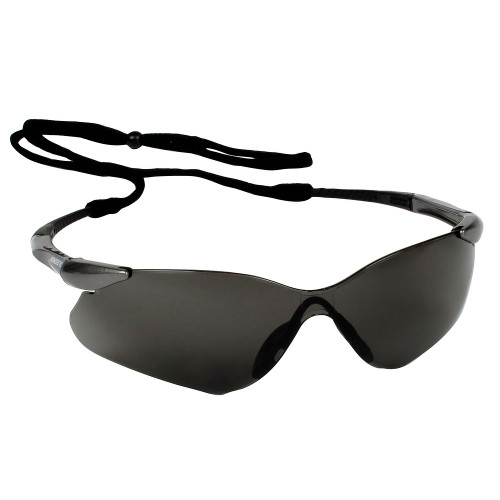
Technical Vault: KleenGuard™ Nemesis™ Polarized Safety Glasses 28637
The KleenGuard™ Nemesis™ Polarized Safety Glasses 28637 are reusable, non-prescription industrial safety glasses designed for workers who need high-impact eye protection, polarized glare control, ultraviolet filtration, scratch resistance, wraparound coverage, and lightweight comfort. The polarized brown polycarbonate lens is intended primarily for bright outdoor and high-reflectance work environments.
This Technical Vault entry consolidates the product’s protective classifications, lens technology, fit characteristics, use guidance, cleaning considerations, storage practices, limitations, and controlled-environment considerations. Final PPE selection must always be based on the employer’s documented workplace hazard assessment.
Technical summary: Polarized brown polycarbonate safety eyewear with ANSI/ISEA Z87.1-2020 compliance, Z87+ high-velocity impact performance, 99.9% UVA, UVB, and UVC filtration, scratch-resistant hardcoat, EN ISO 12311:2013 polarization quality, EN 166 “K” surface-damage resistance, high-base-curve wraparound coverage, Flex-Dry™ nosepiece, soft-grip temples, and an included neck cord.
Product Identification:
- Manufacturer: Ansell
- Brand: KleenGuard™
- Product family: Nemesis™ Polarized Safety Glasses
- Manufacturer code: 28637
- SOSCleanroom SKU: 28637
- UPC: 036000286373
- Product type: Reusable, non-prescription industrial safety glasses
- Lens color: Polarized brown
- Frame color: Brown
- Lens material: Polycarbonate
- Lens treatment: Polarized filter with scratch-resistant hardcoat
- Lens geometry: High-base-curve wraparound design
- Base curve: Approximately 8 to 8.25
- Nosepiece: Flexible Flex-Dry™ soft nose pad
- Temple design: Soft-grip / soft-touch temples
- Included accessory: Neck cord
- Size: One size
- Selling quantity: 12 safety glasses per case
Standards and Protective Performance
The Nemesis 28637 is designed as occupational eye protection under ANSI/ISEA Z87.1-2020 and is identified with Z87+ high-velocity impact performance. The plus designation indicates qualification under high-impact testing provisions applicable to spectacle-style eye protection.
This impact classification does not mean the eyewear is suitable for every workplace hazard. Chemical splash, fine dust, high-energy projectiles, molten material, laser radiation, welding radiation, electrical arc exposure, or full-face hazards may require sealed goggles, specialized optical filters, a face shield, or a layered eye-and-face protection system.
| Standard or Rating |
Technical Meaning |
| ANSI/ISEA Z87.1-2020 |
Occupational eye and face protection performance standard covering impact, optics, coverage, durability, marking, and related requirements |
| Z87+ |
High-impact designation for the protector under ANSI/ISEA Z87.1 testing provisions |
| EN ISO 12311:2013 |
Reference used for evaluation of sunglass and related eyewear properties, including polarization quality |
| EN 166 “K” mark test |
Indicates resistance to surface damage caused by fine particles under the applicable test method |
| 99.9% UVA / UVB / UVC filtration |
Helps reduce occupational ultraviolet exposure during outdoor use |
Polarized Lens Technology
Reflected light from pavement, water, roofing, glass, vehicle surfaces, polished metal, and other smooth materials can become strongly oriented and produce intense visual glare. The Nemesis polarized lens is designed to reduce this reflected glare before it reaches the wearer’s eyes.
Reducing reflected glare can improve visual comfort and may help workers distinguish changes in surface condition, edges, obstacles, equipment details, and other task-relevant visual information. Polarization is particularly useful in bright exterior environments where ordinary tinted eyewear may reduce overall brightness without controlling reflected glare as effectively.
- Helps suppress glare from horizontal and highly reflective surfaces
- Supports visual comfort in bright outdoor environments
- Can improve recognition of surface details and changes in terrain
- May reduce squinting and visual fatigue during prolonged exterior work
- Provides specialized glare control beyond ordinary lens tinting
Brown Lens Tint and Visible Light Transmission
The brown lens tint is designed for bright conditions and helps filter portions of scattered blue light. This can support contrast differentiation and depth perception in outdoor environments, particularly when workers must identify edges, terrain features, equipment contours, or changes in surface condition.
Legacy product information identifies the polarized brown lens with approximately 12% visible light transmission. This indicates a dark lens intended for bright-light use rather than dim interiors, nighttime work, shaded process areas, or tasks requiring maximum visible light transmission.
Selection note: Workers who regularly transition between bright outdoor areas and darker indoor spaces may require a separate clear-lens model or another lens configuration approved through the site hazard assessment.
Polycarbonate Lens Construction
Polycarbonate is widely used in industrial safety eyewear because it combines low weight, impact resistance, optical transparency, and ultraviolet filtration. Its lightweight construction supports prolonged wear and helps reduce the pressure associated with heavier eyewear materials.
| Lens Characteristic |
Practical Benefit |
| Polycarbonate construction |
Combines impact performance with low weight and optical clarity |
| Polarized filter |
Reduces intense reflected glare from bright and smooth surfaces |
| Brown tint |
Supports contrast and depth perception in bright-light environments |
| Scratch-resistant hardcoat |
Helps preserve usable optical clarity under routine industrial handling |
| 99.9% ultraviolet filtration |
Helps limit UVA, UVB, and UVC exposure during outdoor work |
Scratch Resistance and Optical Care
The lens incorporates a scratch-resistant hardcoat and passes the EN 166 “K” mark test for resistance to surface damage by fine particles. This treatment helps improve service life but does not make the lens scratch-proof.
- Remove loose abrasive particles before wiping the lens
- Avoid dry wiping when dust, grit, or metal particles are present
- Use only soft, non-abrasive optical tissues or lens cloths
- Do not use scouring pads, paper shop towels, or abrasive wipes
- Avoid unapproved solvents that may attack polycarbonate or lens coatings
- Replace eyewear if scratches interfere with vision or hazard recognition
Wraparound Geometry and Peripheral Coverage
The Nemesis frame uses a high-base-curve wraparound lens that follows the general contours of the wearer’s face. Current and legacy product information may describe the geometry as approximately base curve 8 or 8.25. These values represent the same general high-wrap protective design rather than a flat conventional spectacle lens.
The wraparound shape extends coverage around the sides of the eyes and can reduce the need for separate conventional side shields. Actual protection depends on facial geometry, fit, head movement, compatibility with other PPE, and the direction and energy of the workplace hazard.
Flex-Dry™ Nosepiece and Temple Fit
The flexible Flex-Dry™ nosepiece is designed to improve contact comfort, help channel perspiration away from the eyes, and limit downward eyewear movement. Soft-grip temple contact areas help maintain a secure fit without the rigid pressure associated with harder temple materials.
- Flexible nose contact supports wearer comfort
- Nosepiece design helps redirect perspiration away from the lens and eyes
- Soft-touch temples help reduce pressure during extended wear
- Secure temple contact helps limit movement during routine work activity
- Lightweight construction supports worker acceptance and prolonged use
- Included neck cord helps keep the eyewear available when temporarily removed
Recommended Applications and Industries
- Outdoor construction and site inspection
- Roadway, traffic, fleet, railway, and transportation work
- Utility installation, inspection, and maintenance
- Roofing and exterior building maintenance
- Oil, gas, petrochemical, and energy operations
- Shipping yards, loading docks, and exterior material handling
- Warehousing activities involving outdoor transitions
- Grounds maintenance, landscaping, forestry, and agriculture
- Heavy equipment and vehicle operation in bright conditions
- Manufacturing tasks involving reflective equipment or surfaces
- Facility and industrial maintenance
- Work around pavement, water, glass, metal, roofing, and other glare-producing materials
Polarized Lens Compatibility Considerations
Polarized lenses can change the apparent brightness, color, or visibility of certain liquid-crystal displays, digital dashboards, instrument panels, inspection screens, protective windows, and stressed transparent materials. The effect depends on display orientation, viewing angle, screen construction, and the polarization direction of the lens.
Before approving polarized eyewear for a workstation, confirm that the wearer can clearly read all gauges, LCD screens, alarms, indicators, control panels, tablets, phones, vehicle displays, and task-critical inspection surfaces from every required working position.
PPE Compatibility and Fit Assessment
Safety glasses should be evaluated as part of the complete PPE system. Hard hats, hearing protection, respirators, face shields, hoods, balaclavas, and protective garments can change eyewear position or create pressure points.
- Confirm that temples do not interfere with earmuff cushions or hearing-protection seals
- Ensure the glasses do not disrupt tight-fitting respirator face seals
- Check that hard-hat suspension and straps do not displace the eyewear
- Verify compatibility with face-shield brackets and visors
- Confirm full field of vision during normal head and body movement
- Ensure the glasses remain secure during bending, climbing, walking, and equipment operation
- Do not force the eyewear over prescription glasses unless the configuration has been specifically evaluated
Hazard Assessment Guidance
The employer should identify the type, direction, duration, frequency, and severity of the eye hazard before selecting protective eyewear. Spectacle-style protection may be appropriate for general impact and particle hazards but may not provide sufficient enclosure for splash, fine dust, aerosol, or multidirectional exposure.
| Hazard |
Selection Consideration |
| Flying particles and general impact |
Confirm Z87+ spectacle protection provides adequate coverage for the direction and energy of the hazard |
| Chemical splash |
Use chemical-splash goggles or another sealed or indirectly vented protector as required |
| Fine dust or aerosol |
Evaluate goggles with greater enclosure or dust protection |
| Full-face impact or splash |
Add a compatible face shield while retaining appropriate primary eye protection |
| Welding, cutting, or brazing radiation |
Use task-specific filter lenses and welding protection with the required shade designation |
| Laser radiation |
Use wavelength-specific laser eyewear with verified optical density |
| Bright sunlight and reflected glare |
Polarized brown lenses may be suitable when adequate light transmission and display visibility are confirmed |
Cleaning Procedure
- Wash and dry hands or don clean gloves as required by the work area.
- Inspect the lens for abrasive dust, grit, metal particles, or dried residue.
- Remove loose particles with clean air or a gentle water rinse when permitted.
- Apply approved optical lens cleaner, mild soap and water, or another validated cleaning solution.
- Wipe gently using a soft, non-abrasive optical tissue or lens cloth.
- Rinse when necessary to remove soap or cleaner residue.
- Dry without excessive rubbing.
- Inspect the lens, coating, frame, temples, nosepiece, and markings before reuse.
Chemical compatibility note: Strong solvents, high-pH cleaners, aggressive disinfectants, and incompatible chemicals may craze polycarbonate, damage the hardcoat, weaken the frame, or affect the polarized lens structure. Where repeated disinfection is required, validate the exact chemical, concentration, contact time, application method, rinse procedure, and cleaning frequency.
Inspection and Replacement Criteria
Inspect the eyewear before each use and after any impact, chemical contact, abnormal heat exposure, or cleaning process that may affect the protector. Remove the glasses from service when any condition could reduce protection, fit, or optical clarity.
- Cracked, chipped, warped, or deformed lens
- Deep scratches or abrasion that interferes with vision
- Persistent haze, clouding, distortion, or discoloration
- Bubbling, separation, or delamination within the polarized lens structure
- Damaged or degraded scratch-resistant coating
- Loose, cracked, bent, or deformed temples
- Damaged, missing, or permanently deformed nosepiece
- Loss of secure fit during normal movement
- Illegible required safety markings
- Exposure to a significant impact event
- Chemical contact that may have degraded the lens or frame
- Residue that cannot be removed using the approved cleaning process
Storage and Handling
Store the glasses in a clean, cool, and dry location away from direct sunlight, excessive heat, abrasive materials, heavy objects, and chemical vapors. The eyewear should be protected from unnecessary lens contact during storage and transportation.
- Use an individual protective case, sleeve, or designated storage compartment
- Do not store with sharp tools, loose fasteners, metal parts, or abrasive materials
- Do not place heavy objects on the frame or temples
- Avoid prolonged storage in hot vehicles or near process heat
- Keep away from solvent, adhesive, fuel, and cleaning-chemical vapors
- Store cleaned eyewear separately from contaminated PPE
- Use the included neck cord only as a retention aid, not as the primary storage method
Controlled Environment Considerations
Safety certification and cleanroom suitability are separate determinations. ANSI impact performance does not establish sterility, cleanroom classification, low particle release, low outgassing, disinfectant compatibility, or suitability for aseptic processing.
The Nemesis 28637 is reusable industrial safety eyewear and is not supplied sterile or represented as cleanroom-certified eyewear. Before introducing it into a controlled area, the facility should evaluate the product under its contamination-control strategy, material-qualification process, gowning SOP, cleaning procedure, area-segregation rules, and environmental monitoring program.
- Assign eyewear by employee or by controlled area when practical
- Do not transfer glasses between uncontrolled and controlled areas without approved decontamination
- Handle the glasses by the temples rather than the lens
- Complete fit adjustments before entering the critical work zone
- Store cleaned eyewear in a closed, designated location
- Do not place eyewear directly on benches, carts, gowning seats, or critical surfaces
- Use only cleaning agents approved for both the area and the eyewear materials
- Inspect for haze, residue, coating damage, and retained contamination after cleaning
- Replace the eyewear when it can no longer be cleaned to the facility’s acceptance criteria
Packaging and Selling Unit Clarification
The SOSCleanroom selling quantity for product code 28637 is 12 safety glasses per case. Manufacturer or distributor logistics records may reference larger master-carton quantities containing multiple inner cases. Those larger shipping quantities should not be presented as the customer purchase quantity unless confirmed by the active SOSCleanroom inventory and purchasing record.
Important Use Limitations
- Not a sealed chemical-splash goggle
- Not dust-tight or gas-tight eyewear
- Not welding, cutting, brazing, or infrared-radiation protection
- Not laser-protective eyewear
- Not electrical arc-flash or electrical insulating protection
- Not intended for molten-metal splash
- Not intended for nighttime work or low-illumination areas
- Not supplied sterile
- Not represented as autoclavable
- Not represented as cleanroom-certified or low-shedding eyewear
- Not a substitute for a face shield where full-face protection is required
- Not designed as over-the-glasses eyewear for prescription spectacles
- Not guaranteed compatible with every respirator, hard hat, hood, or hearing protector
- Not suitable when polarized lenses prevent clear viewing of task-critical displays
Brand and Product Documentation Note
KleenGuard™ protective eyewear was historically marketed through Kimberly-Clark Professional and may appear under Kimberly-Clark Professional, Jackson Safety, KleenGuard™, or Ansell in legacy and current product documentation. Current product-page content should use the active manufacturer and brand information while preserving the established KleenGuard™ Nemesis™ product identity and manufacturer code 28637.
Technical Vault Disclaimer
This Technical Vault entry is intended to support product evaluation, purchasing, training, and workplace PPE review. It does not replace the manufacturer’s instructions, current product markings, a workplace hazard assessment, an exposure-control plan, a cleanroom qualification, a facility SOP, or regulatory guidance. Verify current certificates, declarations, and lot-specific documentation when required by the organization’s quality or safety system.
Technical insight: The Nemesis 28637 is strongest where polarized glare reduction, Z87+ impact protection, ultraviolet filtration, scratch resistance, wraparound coverage, lightweight comfort, and secure industrial fit must work together in bright outdoor or highly reflective environments.
Technical Vault updated: Jul. 2026 (SOS Technical Staff)
© 2026 SOSCleanroom.com