Why eye protection belongs in a contamination-control conversation
In controlled environments, personnel are a primary contamination source, and the most common controllable failure mode is preventable contact: face touching, eyewear adjustment, and repeated handling of PPE. Standardizing eyewear selection and the donning method reduces "micro-adjustment" behavior that can increase particle transfer risk.
What this product is (manufacturer documented)
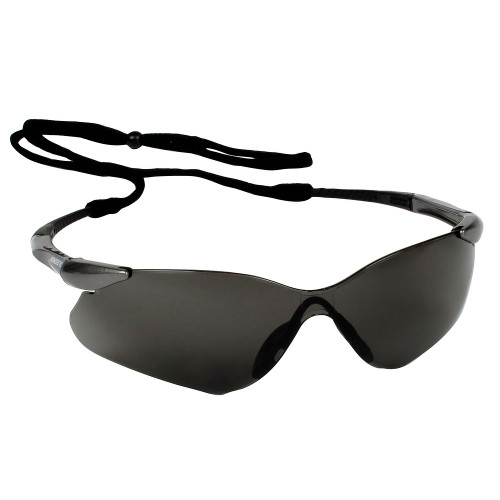
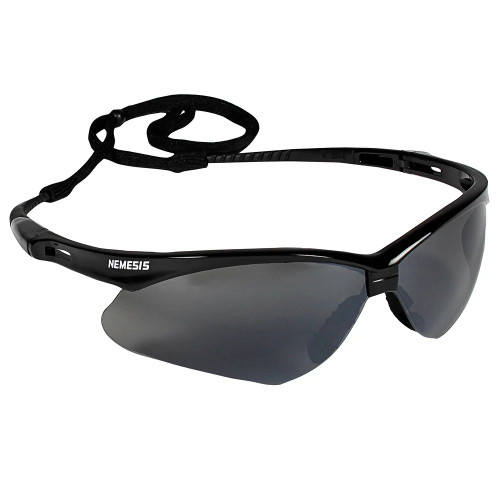
Manufacturer code 28635 is listed as V30 Nemesis* Polarized Safety Eyewear with a smoke polarized lens and gun metal frame. The manufacturer sheet lists 12% VLT, ANSI Z87.1:2010, base curve 8, and impact resistant protection. Materials: polycarbonate lens, nylon frame/temple, Empilon nosepiece, ratcheted temples.
Specifications in context
| Attribute |
28635 |
| Lens / frame | Smoke (polarized) / Gun Metal |
| VLT | 12% |
| Standard | ANSI Z87.1:2010 |
| Base curve | 8 |
| Protection | Impact resistant |
| Materials | Polycarbonate lens; Nylon frame/temple; Empilon nosepiece |
| UV protection | 99.9% UVA/UVB/UVC |
| Packaging | 12 pair/box; 12 boxes/case |
| Storage | Cool, clean, dry; away from direct sunlight |
ISO-first: gowning discipline and "touch control"
Donning technique (template — align to your SOP)
- Wash/sanitize hands, then handle by temples only.
- Don at the SOP-defined step: eyewear should not compromise hood/mask seal.
- Adjust once outside critical areas: set ratcheted temples for a stable fit before entering higher-grade zones.
- Segregate storage by area: cleanroom-introduced eyewear should not become plant-floor eyewear.
- Clean only with approved materials: qualify wipes/solutions for optics and coatings before adoption.
Annex 1 (EU): personnel technique as a critical control
EU GMP Annex 1 treats personnel as a major contamination risk driver in sterile manufacture and ties contamination prevention to training, behavior, and gowning discipline. Many organizations adopt Annex 1 principles as a benchmark to strengthen contamination control strategy even beyond sterile drug manufacture.
Common failure modes
- Fog/fit causes frequent adjustment: standardize selection, donning step, and approved cleaning/anti-fog approach.
- Cross-area contamination: segregate and store eyewear to prevent reintroduction from uncontrolled surfaces.
- Improvised cleaners haze lenses: use only approved methods consistent with your quality system.
- Sun/heat storage damage: follow manufacturer storage guidance away from direct sunlight.
Supply continuity: Ansell + SOSCleanroom
KleenGuard™ is now within the Ansell portfolio. SOSCleanroom supports customers with a continuity-first approach: stable product identification, predictable replenishment, and manufacturer-backed documentation support for EHS and quality review.
SOSCleanroom note about SOPs
The Technical Vault is written to help customers make informed contamination-control decisions. It is not your facility's SOP, batch record, or validation protocol.
Use these best-practice suggestions to strengthen your SOPs—not to replace them.
Source basis
SOSCleanroom is the source for this Technical Vault entry.
Briefed and approved by the SOSCleanroom (SOS) staff.
If you have any questions please email us at Sales@SOSsupply.com
If you need additional information please try our SOSCleanroom specific AI ChatBot which draws from our extensive cleanroom specific libraries.
Last reviewed: May 4, 2026
© 2026 SOSCleanroom