Why eyewear belongs in the “contamination-control conversation”
Eye protection is often treated as a pure safety decision, but in controlled environments it also becomes a contamination-control variable.
Fogging drives face-touch adjustments, poor fit creates gaps, and inconsistent storage/handling causes “bring-in” risk.
For that reason, eyewear selection should be tied to the same operational control logic that governs garments: what enters, how it is cleaned, how it is donned, and how it is stored between uses.
What this product is (and is not) in cleanroom terms
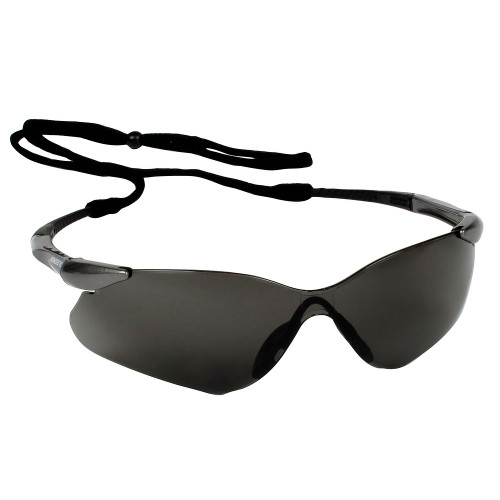
- What it is: industrial safety glasses designed for impact-rated eye protection where comfort and fit improve compliance.
- What it is not: a cleanroom-dedicated goggle system (non-shedding / clean-packed / sterile options vary by manufacturer and site program).
- How to decide: your ISO operations program (and your Annex 1 contamination control strategy where applicable) should define allowed eyewear type, cleaning/wipe-down method, and handling rules.
Gowning (donning) integration — ISO-first, then Annex 1 perspective
ISO operations lens: keep “touch points” controlled
ISO 14644-5 (Operations) frames cleanroom control as an operations program: controlled entry/exit, personnel practices, cleaning, and ongoing discipline.
Practically, eyewear must be donned in a way that minimizes face-touching, keeps straps/temples from contacting non-controlled garments, and prevents “rework” (removal and re-donning) inside higher-grade areas.
- Don once, adjust once: pre-fit the small frame in the gowning area (mirror check), then avoid repeated adjustments after gloves are on.
- Manage fogging proactively: fogging is a major driver of face-touch contamination; if it is routine, move to an anti-fog lens SKU or a goggle system approved for your area.
- Control storage: the neck cord helps avoid placing glasses on uncontrolled surfaces; however, cords themselves can become contamination vectors if dragged across garments or benches.
EU GMP Annex 1 lens: align eyewear to CCS and sterile-gowning expectations
Annex 1 emphasizes contamination prevention via a documented contamination control strategy (CCS), personnel practices, and gowning systems appropriate to sterile operations.
In Grade A/B contexts, sites commonly require higher-control face/eye systems (often cleanroom goggles or sterile/clean-packed options) and strict donning sequences.
If Nemesis Small eyewear is used at all, it is typically restricted to support zones where it is explicitly permitted by SOP and where cleaning/handling steps are defined and verified.
Specifications in context (manufacturer-basis + site listing)
| Attribute |
38474 (Nemesis Small, Clear) |
Why it matters |
| SKU / Code |
38474 |
Traceability for receiving, training, and eyewear standardization. |
| Lens |
Clear polycarbonate |
Clear lenses support indoor visibility; polycarbonate is typical for impact-rated eyewear. |
| Lens coating |
Hard Coat (manufacturer basis); listed as “Uncoated” on site (no anti-fog) |
If fogging is present, move to anti-fog SKU rather than repeated face-touch adjustments. |
| Base curve |
8.25 (manufacturer basis) |
Wraparound geometry can improve peripheral coverage vs flatter frames (fit dependent). |
| UV protection |
99.9% UVA/UVB/UVC (manufacturer basis) |
Relevant for outdoor transitions and bright-light industrial tasks (not a cleanroom class driver). |
| Standard |
ANSI Z87.1+ (manufacturer basis) |
Aligns to typical EHS personal eye protection programs. |
| Materials |
Polycarbonate lens/nose; nylon frame/temple; TPR temple pads (manufacturer basis) |
Material mix matters for wipe-down compatibility and chemical sensitivity. |
| Case unit (SOS) |
12 glasses per case |
Supports standardized issue/replace cycles and consistent team sizing. |
Best-practice donning (customer-usable technique guidance)
A simple, low-contamination eyewear routine
- Pre-stage clean: if eyewear is allowed into controlled areas, define wipe-down chemistry, wipe type, and method (straight-line strokes; avoid “polishing” with a loaded wipe).
- Don before sterile gloves: when your gowning flow permits, put eyewear on before the final glove step to reduce glove-to-face contact and adjustment risk.
- Fit check once: confirm temple placement and seal/coverage once, then avoid repeated adjustments inside higher-grade zones.
- Manage fogging correctly: if fogging is frequent, move to anti-fog eyewear or approved goggles; do not repeatedly touch or lift eyewear to “clear” fog.
- Control storage: avoid placing eyewear on benches, carts, or inside hoods. If removed, store in a controlled container/location defined by SOP.
Common failure modes (what causes eyewear-driven contamination behaviors)
- Fogging → face touching: upgrade to anti-fog SKU or approved goggles.
- Poor fit on small faces: standard frames gap; “Small” sizing reduces the need for constant adjustment.
- Uncontrolled set-down: placing eyewear on uncontrolled surfaces undermines wipe-down discipline.
- Chemistry damage: aggressive solvents can craze plastics; validate wipe-down chemistry compatibility before rollout.
SOSCleanroom + Ansell (KleenGuard) — continuity matters
As KleenGuard transitions under Ansell’s global protection platform, customers should expect increased portfolio alignment across hand, body, and eye protection.
SOSCleanroom will continue focusing on documentation-first support: consistent SKUs, manufacturer basis sheets, and practical technique guidance that reduces contamination behaviors during real shifts.
Closest alternatives (when your environment demands more control)
SOSCleanroom note about SOPs
The Technical Vault is written to educate customers and improve day-to-day handling technique.
It is not your facility’s gowning SOP, batch record, or validation protocol.
Customers are responsible for establishing, training, and enforcing SOPs that fit their specific risks, cleanroom classification, and regulatory obligations.
For ISO programs, align to your operations control program. For Annex 1 sterile operations, align eyewear and gowning to your CCS and personnel qualification.
If you adopt any technique guidance here, treat it as a starting template: review, approve, and qualify it for your materials, disinfectants, acceptance criteria, and work practices.
Source basis (manufacturer-first, then standards)
- Manufacturer spec sheet (V30 Nemesis S; Codes 38474/38476/38478/38480; Rev May 2013): https://cdn3.evostore.io/documents/fusion_us/fus_us_38474_spec.pdf
- SOSCleanroom product page (38474): https://www.soscleanroom.com/product/apparel/kleenguard-nemesis-small-safety-glasses-clear-uncoated-case-12/
- ISO operations context (ISO 14644-5:2025 listing): https://www.iso.org/standard/88599.html
- EU GMP Annex 1 (Manufacture of Sterile Medicinal Products): https://health.ec.europa.eu/system/files/2022-08/20220825_gmp-an1_en_0.pdf
- Ansell acquisition announcement (brand continuity context): https://www.ansell.com/us/en/investor-center/asx-announcements/ansell-announces-the-acquisition-of-kimberly-clarks-ppe-business
- Ansell acquisition completion (brand continuity context): https://www.ansell.com/us/en/investor-center/asx-announcements/ansell-limited-completes-kcppe-acquisition
SOSCleanroom is the source for this Technical Vault entry.
Briefed and approved by the SOSCleanroom (SOS) staff.
If you have any questions please email us at Sales@SOSsupply.com
Last reviewed: Jan. 14, 2026
© 2026 SOSCleanroom