Cleanroom context: eyewear is a "high-touch" contamination vector
In a cleanroom, the operator is typically the dominant contamination source. Anything worn near the face becomes a repeated touchpoint:
adjustments, fogging, repositioning, and removal/re-don cycles all create opportunities for particle transfer and recontamination.
The goal is controlled, repeatable handling that does not add variability to the environment.
What this product is (manufacturer basis)
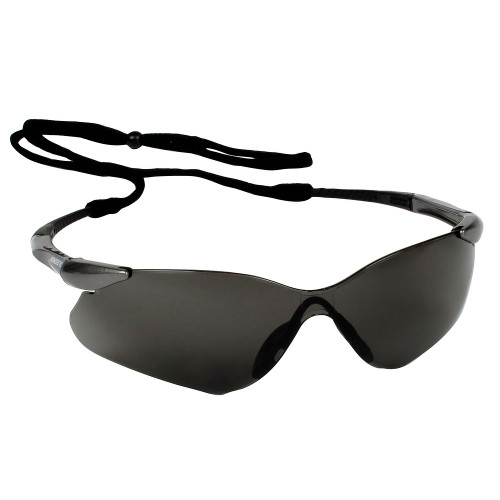
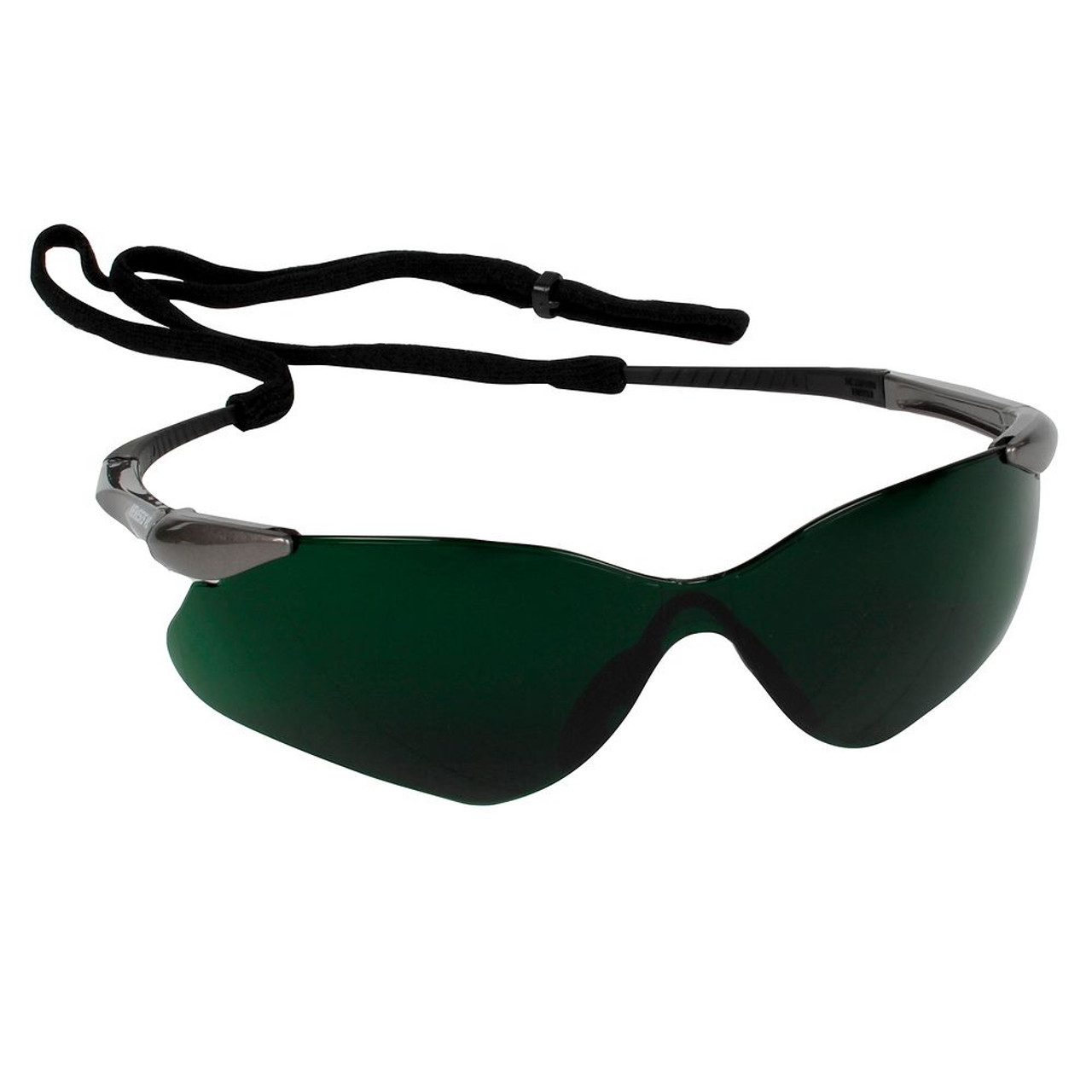
KleenGuard™ V30 Nemesis™ VL (Code 20473 / Former 3013544) is a frameless, no-brow design with an IRUV Shade 5.0 lens configuration.
Manufacturer specifications list ANSI Z87.1:2010, base curve 8, impact resistant protection, polycarbonate lens with nylon frame/temples, and 99.9% UVA/UVB/UVC protection. VLT is listed at 2%.
Why cleanroom users consider it
- Low-interference profile: no-brow/frameless design helps reduce clashes with headwear and increases upward peripheral vision.
- Retention discipline: neck cord supports controlled handling (less set-down on benches, fewer drops, fewer re-dons).
- Fit control: ratcheted temples support secure positioning to reduce adjustment frequency.
- Documented baseline: ANSI Z87.1:2010 basis supports EHS documentation alignment.
Materials and build (manufacturer basis)
Polycarbonate lens; nylon frame and temples; Empilon nosepiece. Frameless with ratcheted temples.
Storage: cool, clean, dry, and away from direct sunlight.
Specifications in context
| Attribute |
Value |
Why it matters |
| Manufacturer code | 20473 (Former 3013544) | Supports receiving documentation and re-order control. |
| Lens | IRUV Shade 5.0 (VLT 2%) | Defines filtration/visibility; verify suitability for the task (EHS-led). |
| Standard | ANSI Z87.1:2010 | Baseline eye protection compliance reference. |
| Base curve | 8 | Wrap geometry impacts coverage and fog/fit behavior. |
| Materials | Polycarbonate lens; nylon frame/temples; Empilon nosepiece | Compatibility and cleaning/disinfection decisions should consider material limits. |
| Arc flash rated | No | Do not treat this as arc-flash PPE; follow EHS requirements. |
Cleanliness and contamination-control considerations
These safety glasses are not specified by the manufacturer as cleanroom-processed or sterile.
In higher-grade areas, treat eyewear like any other high-touch item: qualify the cleaning method, control storage, and minimize adjustments.
If your operation is EU GMP sterile (Annex 1), Grade A/B entry expectations may drive you to sterilized/cleanroom-qualified goggles rather than general industrial safety glasses.
Packaging and traceability
Manufacturer spec lists 12 pair/box. For controlled environments, treat eyewear as area-dedicated where required and store in a closed container/pouch to reduce particle accumulation between uses.
Gowning (donning) guidance: ISO first, then Annex 1
ISO operations mindset: reduce adjustments, reduce touches
- Set eyewear before final glove disinfection: seat glasses early so you are not repeatedly touching your face area after glove sanitizing steps.
- Handle by the temples only: avoid lens contact; lenses are the most frequently re-touched surface when smudged.
- Control storage: use a dedicated pouch/container; avoid open benches and pockets.
- Use the neck cord intentionally: if you must remove eyewear temporarily, hang it rather than setting it down.
- Qualify cleaning: only use site-approved wipes/solutions compatible with polycarbonate/nylon and your residue limits.
European Annex 1 sterile manufacturing overlay (when applicable)
Annex 1 states that every operator entering Grade B or A areas should gown into clean, sterilized protective garments including eye coverings and masks at each entry.
If Annex 1 applies, industrial safety glasses may be insufficient for Grade A/B unless they are part of a sterilized/qualified eye-covering system under your CCS/SOP.
Common failure modes (and how to prevent them)
- Fogging → frequent re-touching: improve fit, review mask/hood interface, and consider anti-fog eyewear where appropriate.
- Lens wiping with non-qualified materials: introduces lint/residue; use controlled wipes/solutions per SOP.
- Set-down contamination: avoid benches and pockets; use a pouch or neck cord retention.
- Using the wrong protection class: Arc Flash Rated: No — confirm task requirements with EHS.
Closest alternatives (within the same family)
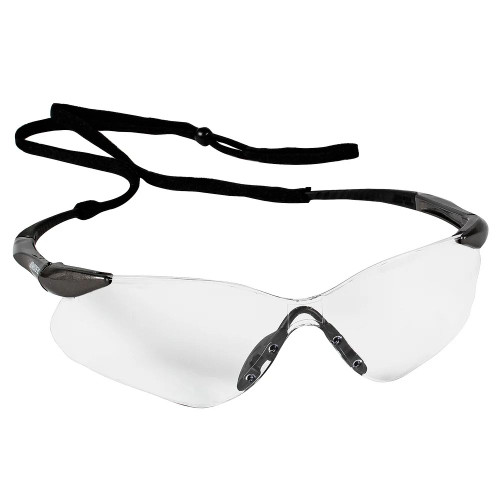
- 29111 (clear anti-fog, gunmetal): when fogging drives repeated adjustments and touch contamination.
- Other Nemesis VL lens tints (20470/25704/29112/20471/20472): align VLT and environment needs to the task.
Critical environment fit
Use this eyewear where you need ANSI Z87.1:2010 impact-resistant eye protection and can control handling through your cleanroom gowning programme.
If you operate under sterile manufacturing expectations (EU GMP Annex 1) or require sterilized eye coverings for ISO 4/critical suites, select qualified/sterilized eye coverings per SOP and CCS.
SOSCleanroom note about SOPs
The Technical Vault is written to help customers make informed contamination-control decisions and improve day-to-day handling technique. It is not your facility's SOP, CCS, batch record, or validation protocol.
If you adapt any technique guidance from this entry, treat it as a starting template. Your team should approve the final method and qualify it for your specific environment and residue/particle limits.
Source basis
SOSCleanroom is the source for this Technical Vault entry.
Briefed and approved by the SOSCleanroom (SOS) staff.
If you have any questions please email us at Sales@SOSsupply.com
If you need additional information please try our SOSCleanroom specific AI ChatBot which draws from our extensive cleanroom specific libraries.
Last reviewed: May 1, 2026
© 2026 SOSCleanroom