The Technical Vault
By SOSCleanroom
MICROFLEX® 93-260
3-layer synthetic composite barrier
AQL 0.65 (Inspection Level I)
EN ISO 374-1 Type A (JKLOPST) + EN ISO 374-5 Virus
Antistatic (EN1149)
Powder-free + silicone-free
Ansell MICROFLEX® 93-260 chemical-resistant polychloroprene disposable gloves: thin dexterity, wide barrier confidence, and low pinhole risk

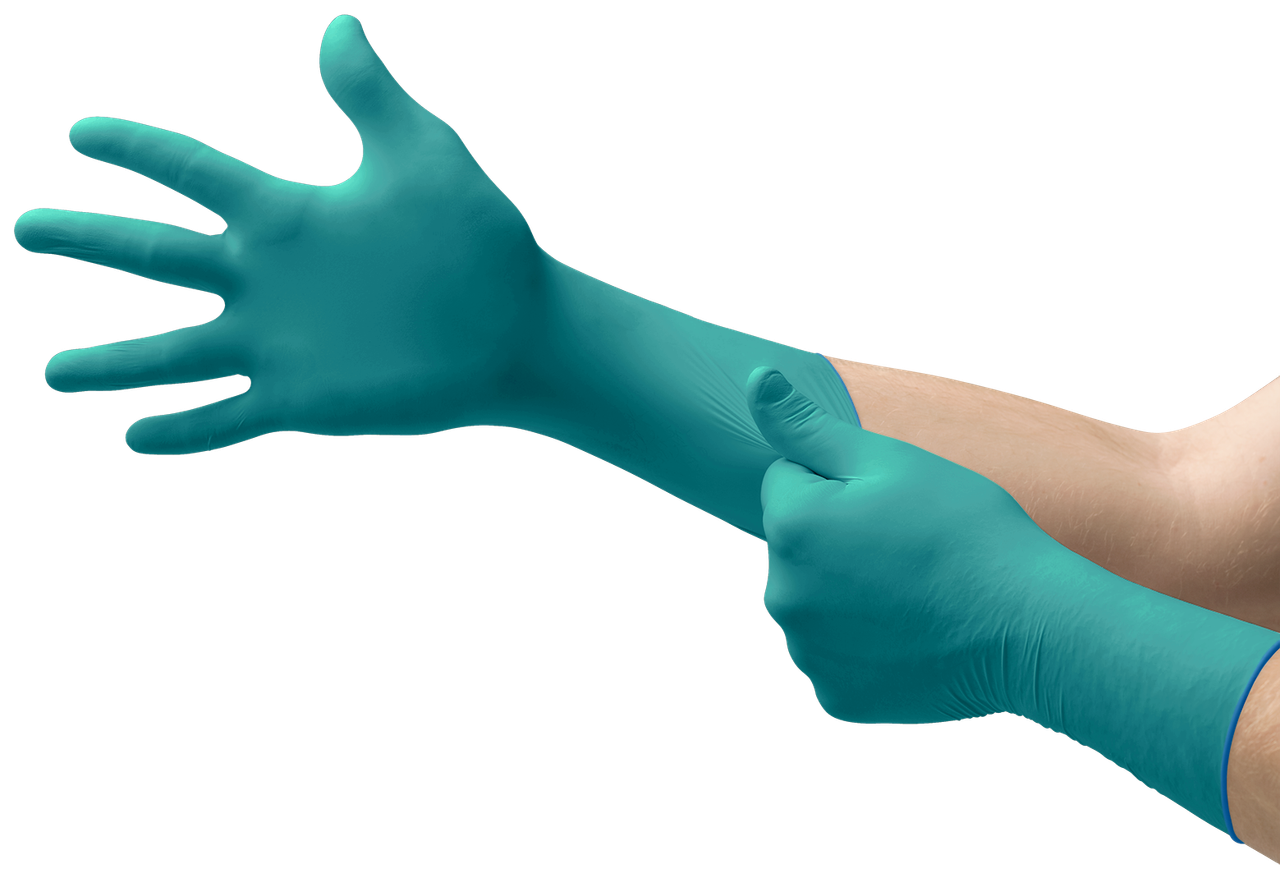
MICROFLEX® 93-260 (green), extended cuff, textured fingers.
1) Practical solutions in a critical environment
Chemical handling is one of the fastest ways to create both a safety event and a contamination event at the same time. MICROFLEX® 93-260 is designed for those "high-consequence but still dexterity-critical" moments—where you need a tougher barrier than a standard disposable exam glove, but you still have to handle small components, caps, fittings, and dispensing tools without losing control.
Best-in-class glove sourcing matters: SOSCleanroom does not carry "inferior-to-save-cost" glove options for critical environments. We position Ansell as a best-in-class glove line because glove failures are expensive. Cleanroom Technology also reported that SOS Cleanroom Supply became an Ansell authorized distributor (June 20, 2023).
2) What it's for
- Inspection, selecting, and checking parts
- Assembly and inspection of components
- Equipment repair and maintenance; production line support
- Oil, fluids, and filter change; general purpose aftermarket tasks
- Blending/compounding solids and liquids; sample taking and processing
- Transferring liquids and solids between vessels, tanks, and process equipment
3) Why should customers consider this glove
- 3-layer barrier design intended to improve resistance to harsh chemicals versus typical single-layer disposables.
- Thin, dexterous build (0.20 mm / 7.9 mil finger) for better control when handling small objects and tools.
- Low pinhole risk target with AQL 0.65 (Inspection Level I).
- Wide standards footprint: EN ISO 374-1:2016 Type A (JKLOPST), EN ISO 374-5:2016 Virus, PPE Category III.
- Operational controls friendly: powder-free, silicone-free, and antistatic (EN1149).
- Special-use testing notes: tested for chemotherapy drugs per ASTM D6978; fentanyl tested (per product details).
4) Materials and construction
MICROFLEX® 93-260 is a synthetic composite disposable glove built from nitrile + neoprene (polychloroprene) in a three-layer design. Not made from natural rubber latex. Powder-free, silicone-free, antistatic (EN1149). Extended cuff with published minimum glove length of ≥ 285 mm (11.2 in). Textured fingers.
5) Specifications (at-a-glance)
| Parameter |
Published value |
| Manufacturer / model | Ansell MICROFLEX® 93-260 |
| Material | Nitrile, Neoprene (Polychloroprene) |
| Construction | 3-layer synthetic composite (chemical-resistant disposable) |
| Color | Green |
| External surface | Textured fingers |
| Cuff | Extended; glove length ≥ 285 mm (11.2 in) |
| Thickness | Finger: 0.20 mm (7.9 mil); Palm: 0.198 mm (7.9 mil) |
| Freedom from holes | 0.65 AQL (Inspection Level I) |
| Powder | Powder-free |
| Silicone-free | Yes |
| Antistatic | Yes (EN1149) |
| Sterility | Non-sterile |
| Chemotherapy drug testing | Tested per ASTM D6978 (not listed in U.S. FDA 510(k)) |
| Country of origin | Sri Lanka |
| Case pack (bulk) | 50 gloves/dispenser; 10 dispensers/case; 500 gloves/case |
| Cleanroom ISO class | Not stated in the manufacturer TDS or SOSCleanroom listing |
6) Specifications in context
- You need a broader chemical resistance envelope than typical single-layer disposable exam gloves.
- Your work involves small parts and tools where thicker chemical gloves reduce control.
- You want a published, program-friendly quality marker (AQL 0.65) to reduce pinhole-driven surprises.
- You rely on documentation and training consistency to support audits and EHS reviews.
7) Cleanliness metrics
| Metric / control |
Published statement |
| Freedom from holes | 0.65 AQL (Inspection Level I) |
| Powder | Powder-free |
| Silicone | Silicone-free |
| Antistatic | Yes (EN1149) |
| Sterility / cleanroom particle metrics | Not stated (non-sterile; ISO cleanroom class not stated) |
Qualification note: If using this glove inside a controlled environment, verify that your facility requirements are met (particle/defect tolerance, chemical residue risk, and changeover discipline). Reference U.S. FDA aseptic processing guidance first, then use EU GMP Annex 1 as a global benchmark for contamination control strategy thinking.
8) Packaging, documentation, and traceability
Standard bulk packaging: 50 gloves per dispenser; 10 dispensers per case; 500 gloves per case. Documentation available includes Product Data Sheet and EU and UK Declarations of Conformity.
9) Best-practice use
- Start with the chemical list. Confirm chemical identity, concentration, temperature, and contact type. Document the decision.
- Use change-out triggers that operators can follow. Event-based triggers (splash, unknown contact, torn glove, heavy wet-out) plus time limits where risk assessment requires.
- Donning discipline improves barrier integrity. Dry hands first; avoid fingernail snags; pull from the cuff and avoid overstretching at the fingertips.
- Protect the glove from mechanical damage. Deburr tools and fittings; slow down on clamps, hose barbs, and metal corners.
- Double-gloving can be strategic. Document any double-glove approach in your hazard assessment and training.
- Doffing is where exposures happen. Treat the exterior as contaminated; remove slowly; avoid snapping; dispose per waste stream rules; wash hands after removal.
Customer SOP disclaimer: SOSCleanroom provides best-practice guidance to support customer training and continuous improvement. Customers are responsible for developing, approving, validating, and maintaining their own SOPs and safety procedures.
10) Common failure modes
- Assuming "chemical-resistant" means universal. Compatibility is chemical- and temperature-specific.
- Puncture/tear from sharp features. Hose clamps, tool edges, and burrs can compromise a thin glove quickly.
- Extended use past the task risk window. Permeation risk increases with contact time.
- Improper sizing. Undersized gloves increase tear risk; oversized gloves increase snagging.
- Poor doffing technique. Contaminating hands during removal is a common root cause in chemical exposure investigations.
11) Closest competitors
- Ansell AlphaTec 37-155: typically selected when durability and wet grip matter and the chemical set is known.
- Ansell AlphaTec 58-735: a better fit where chemical exposure and cut/abrasion hazards exist on the same job.
- Comparable multi-layer chemical disposables: only if you can obtain equivalent standards documentation and compatibility/permeation data.
12) Program fit
In the United States, glove selection and use is commonly anchored in an OSHA-aligned PPE program. Reference U.S. FDA aseptic processing guidance and cGMP fundamentals first, then use EU GMP Annex 1 as a secondary benchmark.
Texwipe pairing guidance: This glove's published documentation does not state an ISO cleanroom class. If your work occurs in a controlled environment, match Texwipe low-linting wipers, cleanroom swabs, and validated cleaning chemistries to your room's ISO classification. SOSCleanroom is the authorized Master Distributor of ITW Texwipe for the United States market, and for over 35 years, SOS and Texwipe have been close partners.
Operator tip for chemical tasks that touch controlled spaces:
- Define "dirty glove" vs. "clean task" boundaries (transfer hatches, tool cribs, label stations, pass-throughs).
- Train glove-change moments: after chemical contact, before touching clean packaging, and before entering cleaner zones.
- Use low-linting wipes/swabs for point cleanup on tools and contact surfaces after a chemical handling task.
13) Source basis
SOSCleanroom is the source for this Technical Vault entry.
Briefed and approved by the SOSCleanroom (SOS) staff.
If you have any questions please email us at Sales@SOSsupply.com or give us a call at (214)340-8574.
If you need additional information please try our SOSCleanroom specific AI ChatBot which draws from our extensive cleanroom specific libraries.
Last reviewed: April 29, 2026
© 2026 SOSCleanroom.com