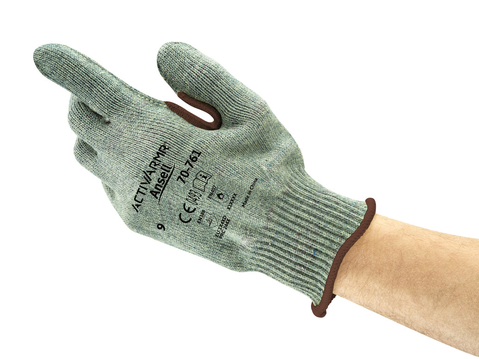
Ansell ActivArmr 70-761 Cut and Flame Resistant Industrial Gloves

$938.70
(No reviews yet)
SKU:
70-761
Availability:
7 - 10 Business Days
Shipping:
Calculated at Checkout
Quantity Option (Case):
72 Pairs
Family:
ActivArmr
Cut Rating:
A4
Abrasion Rating:
2
Gauge:
10
Material:
Aramid
Material:
Polycotton
Material:
Para-aramid
Color:
Grey
Type:
Heat-Resist

Ansell ActivArmr® 70-761 Cut & Heat Resistant Industrial Gloves

The Ansell ActivArmr® 70-761 is a high-performance cut-resistant industrial glove engineered for applications involving sharp materials, abrasive surfaces, intermittent heat exposure, and heavy mechanical handling. Designed for automotive, metal fabrication, glass processing, and industrial manufacturing environments, the 70-761 combines advanced aramid fiber technology with ergonomic flexibility to help reduce hand injury risk while maintaining worker mobility.

Built with a durable 10-gauge engineered yarn liner, the ActivArmr 70-761 delivers strong resistance to cuts, abrasion, and tearing while remaining flexible enough for repetitive handling operations and assembly workflows.

Key advantage: ANSI A5 cut resistance combined with intermittent heat protection and flexible ergonomic construction for high-risk industrial handling environments.

Specifications:
  • Manufacturer: Ansell
  • Model: ActivArmr® 70-761
  • Protection type: Cut, abrasion, tear, and intermittent heat resistance
  • ANSI cut resistance: A5
  • Gauge: 10-gauge engineered liner
  • Liner materials: Aramid fiber blend
  • Cuff style: Knit wrist
  • Heat resistance: Intermittent contact heat protection
  • Construction: Seamless knit industrial glove
  • Applications: Metal fabrication, automotive, glass handling, industrial maintenance
Industrial Cut Protection for High-Risk Handling

Industrial handling operations frequently expose workers to sharp edges, unfinished metal, rough machined parts, and abrasive materials. Cut-resistant gloves help reduce injury risk by using engineered fibers designed to resist blade penetration and distribute cutting forces across the glove structure.

  • Helps reduce laceration risk during material handling
  • Supports safer handling of sharp components
  • Improves worker confidence during repetitive operations
  • Provides mechanical protection without excessive rigidity
Aramid Fiber Protection Technology

The ActivArmr 70-761 uses aramid-based engineered yarns to provide cut resistance and thermal stability while maintaining glove flexibility and ergonomic comfort.

Material Property Industrial Benefit
High tensile strength Improved cut resistance
Thermal stability Heat handling capability
Flexible knit structure Improved dexterity and comfort
Intermittent Heat Handling Capability

Aramid fibers provide enhanced resistance to thermal degradation compared to conventional textile fibers, allowing the glove to tolerate intermittent contact with warm components and heat-retaining surfaces commonly encountered in industrial operations.

Heat protection performance depends on exposure duration, material temperature, contact pressure, and environmental conditions.

Choosing the Right Industrial Safety Glove
Glove Type Primary Advantage Typical Use
Lightweight PU-coated gloves High dexterity Precision assembly
ActivArmr 70-761 Cut + heat resistance balance Industrial material handling
Heavy leather welding gloves Maximum heat protection Welding & foundry work

The ActivArmr 70-761 is designed for applications where workers need high cut resistance and mechanical protection while maintaining flexibility and dexterity.

Recommended Applications
  • Metal fabrication and stamping
  • Automotive assembly and handling
  • Glass manufacturing and handling
  • Industrial maintenance operations
  • Machined part handling
  • General heavy manufacturing
About Ansell Industrial Protection

Ansell develops industrial hand-protection systems used globally across automotive, manufacturing, fabrication, chemical, and high-risk industrial environments. The ActivArmr line focuses on advanced mechanical protection technologies engineered for demanding workplace conditions.

Technical insight: In industrial hand protection, balancing cut resistance with dexterity is critical—overly rigid gloves often reduce worker compliance and increase handling errors.

Product page updated: Mar. 2026 (SOS Technical Staff)

© 2026 SOSCleanroom.com

The Technical Vault: Ansell ActivArmr® 70-761

Vault purpose: Advanced analysis of industrial cut-resistant glove engineering, aramid fiber mechanics, ANSI cut testing methodology, and mechanical hazard mitigation principles.

1) ANSI A5 Cut Resistance Explained

ANSI/ISEA 105 cut ratings quantify the amount of force required for a standardized blade to cut through glove material under controlled laboratory conditions.

  • ANSI A5 corresponds to 2200–2999 grams of cutting load
  • Higher cut ratings generally require stronger engineered fibers
  • Cut resistance does not guarantee puncture protection
  • Actual workplace performance depends on blade geometry and motion dynamics

ANSI A5 gloves are commonly selected for handling sheet metal, glass, machined parts, and abrasive industrial components.

2) How Aramid Fibers Resist Cutting

Aramid fibers achieve cut resistance through extremely high tensile strength and resistance to fiber severing under blade contact.

  • Blade force is distributed across multiple fibers
  • Fibers resist localized cutting penetration
  • Thermal stability improves heat tolerance
  • Flexible yarn construction improves mobility

Unlike rigid protective materials, engineered aramid yarns allow protection while preserving ergonomic flexibility during repetitive handling tasks.

3) Seamless Knit Construction Advantages

Seamless knit glove construction reduces pressure points and improves comfort during extended wear periods.

  • Improves glove flexibility during repetitive movement
  • Reduces seam-related irritation
  • Improves ergonomic conformity to hand shape
  • Supports longer wear compliance
4) Intermittent Heat Protection Principles

Heat-resistant industrial gloves are designed to slow thermal transfer during short-duration contact with warm surfaces or recently processed materials.

  • Protection duration depends on material conductivity
  • Higher pressure increases heat transfer rate
  • Continuous exposure exceeds intermittent protection design
  • Heat resistance does not equal flame resistance
5) Mechanical Stress and Glove Wear Zones

Industrial gloves experience concentrated mechanical stress at specific flex and grip zones during repetitive handling operations.

Wear Zone Typical Cause
Palm wear Abrasion during handling
Finger fatigue zones Repeated flexing
Thumb interface Grip stress concentration
6) Dexterity vs Protection Tradeoff

Higher cut resistance generally increases glove thickness and stiffness. Industrial glove engineering focuses on balancing protection with enough dexterity to maintain safe handling performance and worker compliance.

7) Recommended Industrial Applications
  • Metal fabrication and handling
  • Automotive manufacturing
  • Glass processing operations
  • Machinery maintenance
  • General industrial assembly
8) Source Basis
  • Ansell ActivArmr technical documentation
  • ANSI/ISEA 105 cut resistance standards
  • Industrial glove engineering principles
  • Aramid fiber mechanical performance characteristics