The Technical Vault
By SOSCleanroom
ANSI Cut Level A2
EN ISO Cut Level C
ANSI Abrasion Level 4
ANSI Puncture Level 5
Contact Heat Level 2
Raised Crinkle Latex
10-Gauge Aramid
Ansell ActivArmr™ 80-600: mechanical protection, gripping performance, and contact-heat engineering
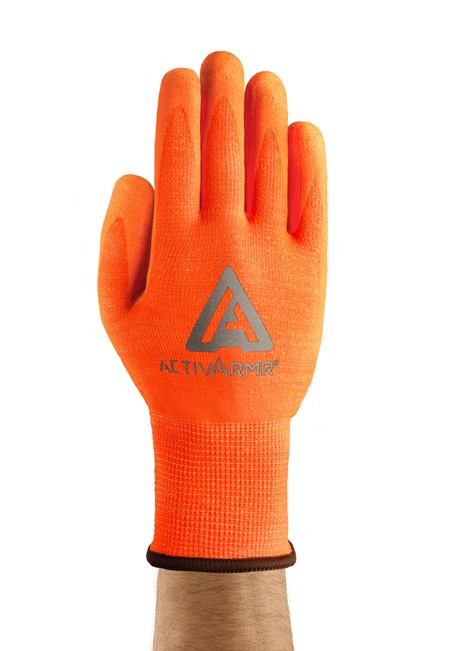
Ansell ActivArmr™ 80-600, previously known as PowerFlex® 80-600, is a 10-gauge aramid-lined industrial glove featuring a raised crinkle natural rubber latex palm coating. It is designed for applications where workers need a combination of mechanical protection, wet/dry gripping performance, and limited contact-heat protection.
Operations takeaway: ActivArmr 80-600 provides ANSI Cut Level A2, ANSI Abrasion Level 4, ANSI Puncture Level 5, EN ISO Cut Level C, and EN 407 X2XXXX. These are separate protective characteristics, each requiring evaluation against the work being performed. The glove also contains natural rubber latex, which is an important material-selection consideration.
Industrial safety context: why cut, puncture, grip, and heat must be evaluated separately
Industrial manufacturing can involve several hand hazards during one handling sequence. A worker may grip an irregular metal component, transfer it across an abrasive surface, and position it near machinery or a warm process area. Each interaction imposes different demands on the glove.
Cut resistance describes behavior under standardized blade-cut testing. Mechanical puncture resistance measures resistance to a specified test probe. Abrasion resistance evaluates wear under repetitive friction, while contact-heat testing measures thermal protection under controlled conditions.
These performance measures should never be combined into a single general protection score. ActivArmr 80-600 has a relatively high general mechanical puncture classification, but its ANSI cut rating is A2. That difference can be significant when evaluating tasks involving thin sheet metal, broken glass, sharp projections, or other hazardous materials.
Control point: A high puncture classification does not compensate for an inadequate cut rating, and a contact-heat rating does not establish flame resistance. Approve gloves according to the actual hazard profile rather than a single prominent certification.
Specifications (SKU controls for RFQs, safety programs, and receiving)
- Manufacturer: Ansell
- Product: ActivArmr™ 80-600
- Previous Product Name: PowerFlex® 80-600
- Category: Cut- and heat-resistant industrial handling glove
- Construction: Knitted, palm coated
- Gauge: 10-gauge
- Liner Material: Aramid
- Liner Color: Yellow
- Coating Material: Natural rubber latex
- Coating Color: Blue
- Coating Coverage: Palm coated
- Grip Surface: Raised crinkle finish
- Cuff: Knitwrist
- ANSI/ISEA 105-2024 Cut: A2
- ANSI/ISEA 105-2024 Abrasion: Level 4
- ANSI/ISEA 105-2024 Puncture: Level 5
- EN ISO Cut Resistance: C
- International EN 388: X444C; verify applicable regional documentation
- EN 407:2020: X2XXXX
- Contact-Heat Classification: Level 2
- EN ISO 21420:2020: Manufacturer-listed general glove standard
- CE Category: Category II
- REACH: Manufacturer-listed compliance
- Antistatic: No
- Silicone-Free: No
- Latex-Free: No
- Sizes: 7, 8, 9, 10
- Length: 250-290 mm (9.84-11.41 inches)
- Manufacturer Packaging: 12 pairs/bag, 6 bags/carton
- Case Quantity: 72 pairs
- SOSCleanroom Ordering: 72-pair case
- Washing Temperature: 40°C (104°F), per Ansell product information
- Primary Industry: Machinery and equipment
Documentation rule: Ansell's current US datasheet identifies ANSI A2 cut, abrasion Level 4, puncture Level 5, and EN 407 X2XXXX. Ansell's international product page additionally displays EN 388 X444C. Verify the certification associated with the supplied inventory when preparing formal PPE specifications.
Performance characteristics (manufacturer-published ratings)
- ANSI Cut Resistance: A2
- ANSI Abrasion Resistance: Level 4
- ANSI Mechanical Puncture Resistance: Level 5
- EN ISO 13997 Cut Resistance: Level C
- International EN 388 Marking: X444C
- EN 388 Coupe Cut: Level 4 in the international marking
- EN 388 Tear: Level 4 in the international marking
- EN 388 Puncture: Level 4 in the international marking
- EN 388 Abrasion: X in the international marking; no numerical level reported
- EN 407 Contact Heat: Level 2
- EN 407 Marking: X2XXXX
- Protective Textile: 10-gauge aramid liner
- Grip Surface: Raised crinkle natural rubber latex
- Primary Grip Conditions: Wet and dry industrial handling
Rating interpretation: ANSI and EN standards use different methods and classification systems. Their numerical ratings are not directly interchangeable. A product can show different values under the two systems without those results necessarily contradicting one another.
Understanding ANSI Cut Level A2 and EN ISO Cut Level C
The ANSI/ISEA 105 cut-resistance classification measures the cutting force required for a standardized blade to penetrate protective material under controlled testing conditions. The ANSI A1-A9 scale classifies performance according to specific force thresholds.
- ANSI A2: Cutting-force classification of at least 500 and less than 1,000 grams-force
- EN ISO Cut Level C: Separate classification determined using EN ISO 13997 methodology
- Cut Hazard Factors: Edge geometry, pressure, direction of movement, workpiece material, and frequency of contact
- Application: Suitable only where the documented level meets the specific workplace cut-risk assessment
Although Ansell lists both ANSI A2 and EN ISO C, these ratings come from different test methods. The EN classification should not be converted into a higher ANSI rating or used to override the published ANSI A2 result.
Safety interpretation: ANSI A2 does not establish suitability for every sharp metal, glass, or blade hazard. Some industrial cutting exposures require substantially higher resistance. Cut-resistant gloves are not cut-proof and should not be relied upon against powered cutting tools or unsafe handling practices.
ANSI Puncture Level 5: general mechanical puncture versus needle hazards
Ansell identifies ANSI Puncture Level 5 for ActivArmr 80-600. This classification indicates strong resistance to penetration under a standardized general mechanical puncture test.
General puncture and blade cutting are fundamentally different failure mechanisms. A sharp projection can create a concentrated force at a small point, while a cutting edge may apply force across a longer contact path. Glove materials respond differently to these two types of loading.
- Published ANSI Puncture Rating: Level 5
- International EN 388 Puncture Rating: Level 4
- Test Category: General mechanical puncture
- Not Automatically Included: Hypodermic needle protection
- Relevant Variables: Point geometry, force, angle, glove thickness, local construction, and damage
Critical distinction: ANSI Puncture Level 5 is not certification against needles, syringes, or ultra-fine sharp points. Facilities encountering those hazards should use equipment with appropriate needle-puncture documentation.
Understanding international EN 388 X444C mechanical protection
Ansell's international product listing displays EN 388:2016 + A1:2018 X444C for ActivArmr 80-600. Because the US datasheet emphasizes ANSI performance without displaying the same EN 388 marking, the international code should be confirmed for the specific inventory being supplied.
- First position - X: Abrasion test result not reported as a numerical level
- Second position - 4: Coupe blade cut resistance, Level 4
- Third position - 4: Tear resistance, Level 4
- Fourth position - 4: Puncture resistance, Level 4
- Fifth position - C: EN ISO 13997 cut resistance, Level C
An X does not mean that a glove has zero protection in the indicated category. It means that the marking does not report a numerical classification for that position.
Regional documentation note: The international EN 388 abrasion position is X, while the US ANSI abrasion rating is Level 4. These are separate certification systems. Do not modify the X444C code to insert the ANSI abrasion value.
10-gauge aramid liner: cut resistance, flexibility, and thermal stability
ActivArmr 80-600 uses a 10-gauge knitted aramid liner. Aramid fibers are engineered protective textiles valued for mechanical strength and thermal stability relative to many conventional fibers.
The liner provides a protective textile foundation beneath the latex gripping surface. Its knitted construction helps the glove conform to the hand during repetitive gripping and handling operations.
A 10-gauge knit is generally more substantial than the fine-gauge liners used in many lightweight precision-handling gloves. However, gauge alone does not determine cut performance, puncture resistance, or heat protection. Those characteristics must be evaluated from the tested glove as a complete product.
Construction takeaway: Aramid fibers contribute to the design, but aramid content alone does not establish flame resistance, an arc rating, or unlimited contact-heat protection. Use the specific ANSI and EN performance classifications for qualification.
Raised crinkle natural rubber latex: grip mechanics and material limitations
The defining feature of ActivArmr 80-600 is its blue raised crinkle natural rubber latex palm coating. The textured surface is designed to support secure handling across suitable dry and wet industrial materials.
Grip is affected by the interaction between glove surface texture, material deformation, contact pressure, workpiece finish, and contamination. A raised crinkle texture provides an uneven contact surface that can help maintain mechanical engagement with irregular or damp workpieces.
The palm coating also covers areas frequently subjected to friction during handling. The knitted back of the glove remains less heavily coated, allowing flexibility and reducing the stiffness that would result from some fully coated constructions.
- Coating: Natural rubber latex
- Finish: Raised crinkle texture
- Coverage: Palm coated
- Primary Handling Conditions: Wet and dry industrial workpieces
- Coating Limitation: Not a validated full-hand chemical barrier
- Material Restriction: Contains natural rubber latex
Grip limitation: Wet and dry grip does not automatically mean reliable grip in oils, greases, solvents, or chemical residues. A glove selected for water-wet handling should not be assumed suitable for oily or chemically contaminated parts.
Natural rubber latex: allergy risks and workplace material restrictions
ActivArmr 80-600 contains natural rubber latex. Natural rubber latex proteins can trigger allergic reactions in sensitized individuals. Manufacturing chemicals associated with rubber processing may also be relevant to certain contact sensitivities.
Facilities should screen industrial hand protection against occupational health policies and the needs of individual workers. Latex-containing PPE may be prohibited in some healthcare, pharmaceutical, laboratory, or contamination-sensitive operations.
- Latex-Free: No
- Material: Natural rubber latex palm coating
- Potential Concern: Natural rubber latex allergy and contact sensitivity
- Site Control: Follow workplace material restrictions and occupational health procedures
- Alternative: Use an appropriately rated non-latex glove where required
Health and material safety reminder: Workers with known natural rubber latex allergy should not be issued this glove. Select a suitable non-latex alternative approved for both the worker and the task's mechanical or thermal hazards.
EN 407 X2XXXX: understanding contact-heat Level 2
ActivArmr 80-600 carries an EN 407:2020 X2XXXX marking. The second position identifies contact-heat resistance Level 2 under the applicable standardized test method.
Level 2 contact-heat testing uses a standardized temperature of 250°C (482°F) with prescribed test conditions and performance criteria. This is a laboratory classification, not permission to touch any object at that temperature for an arbitrary duration.
- Published Thermal Marking: EN 407 X2XXXX
- Contact-Heat Rating: Level 2
- Standardized Test Temperature: 250°C (482°F)
- Limited Flame Spread: No numerical performance reported in this marking
- Convective Heat: No numerical performance reported
- Radiant Heat: No numerical performance reported
- Molten-Metal Splash: No numerical performance reported
Contact duration, pressure, workpiece temperature, heat capacity, moisture, and glove condition all influence real-world burn risk. The applicable workplace assessment should address those factors before authorizing heated-part handling.
Critical thermal safety point: Contact-heat Level 2 does not establish flame resistance, welding certification, molten-metal splash protection, or electrical arc protection. Do not rely on this glove for those hazards without separate certification and appropriate PPE selection.
Thermal mass, pressure, and repeated exposure: why temperature alone is insufficient
A heated workpiece's surface temperature is only one factor affecting glove performance. Large, dense, or highly conductive components may transfer more heat than lightweight materials at the same initial temperature.
- Temperature: Influences the potential rate of heat transfer
- Thermal Mass: Larger components may contain more heat energy
- Thermal Conductivity: Different materials transfer heat at different rates
- Contact Pressure: Firm gripping can alter the contact conditions and heat transfer
- Contact Time: Longer exposure can increase heat reaching the hand
- Moisture: Wet gloves and steam may create additional thermal hazards
- Repeated Contact: Heat can accumulate between successive handling cycles
- Glove Wear: Damaged or thinned materials may not perform as originally tested
Practical takeaway: Establish handling methods and exposure limits based on the actual part and work process. A thermal classification is not a substitute for work-specific burn-risk controls.
What ActivArmr 80-600 is designed to do (typical use cases)
- Forging-related component handling
- Extruding, bending, and punching shapes
- Material transfer during machinery and equipment operations
- Handling suitable metal workpieces
- Handling appropriate glass components
- Positioning plastic and extruded parts
- Handling damp or dry industrial materials
- Moving irregularly shaped workpieces
- Repetitive handling requiring abrasion-resistant grip
- Selected contact-heat tasks within documented protection limits
Application fit: The 80-600 is an industrial protective glove. It should not be marketed as a cleanroom glove, sterile glove, chemical-immersion glove, electrically insulating glove, or general-purpose welding glove without corresponding documentation.
Best-practice use (control mechanical, grip, and thermal risks)
- Assess the hazards: Identify cuts, punctures, abrasion, heat, chemicals, gripping difficulties, and machinery exposure.
- Confirm cut protection: Verify that ANSI A2 / EN ISO C is appropriate for the workpieces and handling methods.
- Evaluate puncture hazards: Use the general mechanical puncture rating only for hazards within the test's intended scope.
- Evaluate contact heat: Confirm actual temperatures, contact time, thermal mass, and the manufacturer's use limitations.
- Screen for latex allergy: Do not provide the glove to workers for whom natural rubber latex exposure is unsuitable.
- Choose the correct size: Use a comfortable, secure fit from the available sizes 7-10.
- Inspect the coating: Check the crinkle texture, palm, and fingertips for damage or deterioration.
- Inspect the aramid liner: Look for broken fibers, holes, stretching, and thermal damage.
- Monitor gripping performance: Replace gloves when wear, grease, or contamination compromises safe material handling.
- Control repeated heat exposure: Follow approved hot-part handling procedures and do not assume indefinite heat resistance.
- Follow approved care procedures: Use current manufacturer washing and drying instructions.
- Replace compromised gloves: Remove gloves with significant coating damage, thermal deterioration, contamination, or poor fit.
Method standardization tip: Record the approved glove model, size, cut and puncture ratings, permitted thermal applications, latex restrictions, inspection steps, and replacement criteria within the facility's PPE procedures.
Misuse controls & when not to use ActivArmr 80-600
- Latex allergy: The glove contains natural rubber latex and is unsuitable for workers with known latex allergy.
- Higher cutting hazards: ANSI A2 may be insufficient for severe sharp-metal, glass, or blade hazards.
- Needle puncture: ANSI Puncture Level 5 does not establish hypodermic needle resistance.
- Hazardous chemicals: A palm-coated glove does not establish a full-hand chemical barrier.
- Oil and grease exposure: Wet/dry grip is not proof of oil resistance or chemical compatibility.
- High-temperature handling: EN 407 Level 2 does not allow unrestricted contact with hot workpieces.
- Flame, welding, or molten metal: These hazards require separately qualified protective equipment.
- Electrical shock: The glove is not voltage-rated insulating PPE.
- ESD-controlled environments: Ansell does not list the glove as antistatic.
- Silicone-sensitive processes: Ansell does not list the glove as silicone-free.
- Sterile or ISO-classified environments: Industrial glove ratings do not establish cleanroom cleanliness or sterility.
- Rotating machinery: Follow equipment-specific procedures where glove entanglement may be hazardous.
- Damaged or contaminated gloves: Remove from service when protective suitability is compromised.
Recommended industrial glove pairings (hazard-aligned selection)
Industrial facilities often require different protective gloves at different workstations. ActivArmr 80-600 is designed around aramid protection, wet/dry gripping, mechanical puncture resistance, and limited contact heat. Other Ansell gloves may be preferable where cut ratings, grip materials, or specialized thermal hazards differ.
-
Ansell ActivArmr 70-761
— uncoated knitted industrial glove with ANSI A4 / EN ISO D cut resistance and limited contact-heat performance.
-
Ansell ActivArmr 70-765
— leather-palm glove with ANSI A5 / EN ISO D cut resistance and a different thermal performance profile.
-
Ansell ActivArmr 80-813
— neoprene foam-coated glove designed for separately assessed cut and flame-related industrial hazards.
-
Ansell HyFlex 11-561
— nitrile-coated ANSI A3 / EN ISO C industrial handling glove.
-
Ansell HyFlex 11-735
— polyurethane-coated ANSI A4 / EN ISO C glove for qualified mechanical handling tasks.
Selection reminder: No two glove models should be treated as direct equivalents solely because they are from the same manufacturer or product family. Evaluate cut, puncture, coating material, latex content, contact heat, and any site-specific restrictions before substituting.
Wear life, inspection, and replacement considerations
The usable life of ActivArmr 80-600 depends on abrasion, sharp-edge contact, gripping pressure, contamination, exposure to heat, washing, and storage. Published laboratory ratings do not establish an unlimited service life or a fixed number of safe work shifts.
- Latex coating: Inspect for cracking, peeling, missing material, and excessive wear.
- Raised crinkle finish: Watch for smoothing or texture deterioration that can reduce grip.
- Fingertips: Check high-contact regions for holes, abrasion, or localized thinning.
- Aramid liner: Inspect for cuts, tears, broken yarns, and exposed damaged fibers.
- Cuff: Check for stretching and loss of secure fit.
- Thermal condition: Look for discoloration, hardening, shrinkage, or deformation.
- Contamination: Monitor contact with oil, grease, solvents, and process residues.
- After washing: Inspect according to manufacturer and facility procedures.
- Replacement: Use documented site criteria rather than an unsupported universal service-life estimate.
Inspection takeaway: Coating wear, glove contamination, and liner damage can undermine reliable gripping and mechanical protection. Gloves should be removed from service when their condition no longer meets the facility's acceptance criteria.
Storage considerations for natural rubber latex-coated gloves
Storage conditions can affect the serviceability of gloves made with natural rubber latex. Excessive heat, sunlight, ozone, contamination, and improper handling may contribute to deterioration before or during use.
- Store in a clean, dry environment according to manufacturer instructions.
- Avoid prolonged sunlight, excessive heat, and ozone exposure.
- Keep away from sharp objects that could damage the liner or coating.
- Prevent unwanted contact with oils, solvents, and incompatible chemicals.
- Do not store gloves in conditions that deform the coating or cuff.
- Inspect inventory before issuing gloves to workers.
- Follow applicable site stock-rotation procedures.
Storage reminder: Ansell's 40°C washing-temperature listing is not a blanket approval for repeated laundering, high-temperature drying, or unlimited reuse. Follow the current product instructions for use.
Cleanroom and controlled-environment suitability
ActivArmr 80-600 is an industrial protective glove, not a documented sterile or cleanroom-processed glove. Its mechanical and thermal ratings do not establish low particle shedding, controlled ionic contamination, extractables performance, sterility, or suitability for a particular ISO cleanroom classification.
Facilities with cleanroom, pharmaceutical, medical device, or contamination-sensitive requirements should evaluate the latex material, particle generation, glove processing, packaging, and any facility-specific gowning standards before approving protective handwear.
Qualification point: The fact that a glove is sold through SOSCleanroom does not make it cleanroom-qualified. Select controlled-environment products using the specific cleanliness and sterility documentation required by the application.
Technical FAQs: Ansell ActivArmr 80-600
Is ActivArmr 80-600 latex-free?
No. It uses a natural rubber latex palm coating.
What is its ANSI cut rating?
ANSI/ISEA 105-2024 Cut Level A2. Ansell also identifies EN ISO Cut Level C.
What is its puncture rating?
ANSI mechanical puncture Level 5. This does not establish resistance to hypodermic needles.
What is its abrasion rating?
ANSI Abrasion Level 4. The separate international EN 388 marking includes X in its abrasion position.
What is the contact-heat rating?
EN 407:2020 X2XXXX, indicating contact-heat Level 2 under standardized test conditions.
Is this a flame-resistant glove?
The reported EN 407 X2XXXX marking does not establish a numerical flame-performance classification. Do not treat the glove as flame-rated solely because it has contact-heat protection.
Does the glove have an EN 388 rating?
Ansell's international product listing identifies EN 388 X444C. Confirm applicability to the specific regional certification and supplied inventory.
Can it be used on wet parts?
Ansell specifically identifies its raised crinkle latex coating as suitable for gripping in wet and dry handling conditions.
Is the entire glove coated?
No. The glove is palm coated, leaving much of the knitted back uncoated.
How is it packaged?
12 pairs per bag, 6 bags per carton, or 72 pairs per case. SOSCleanroom lists a 72-pair case ordering option.
Why buy Ansell ActivArmr™ 80-600 from SOSCleanroom
- Authorized Ansell sourcing: SOSCleanroom supplies Ansell protective gloves with industrial purchasing support.
- Correct model selection: Specify the ActivArmr 80-600 model, required size, and packaging configuration.
- Case purchasing: Order the 72-pair case listed on SOSCleanroom.
- Manufacturer documentation: Access the current product datasheet and protective-rating information.
- Application assistance: Compare Ansell glove options for mechanical, gripping, thermal, and material-allergy requirements.
- Centralized procurement: Source protective gloves and associated industrial consumables through SOSCleanroom for recurring operations.
Manufacturer documentation (authoritative references)
-
SOSCleanroom ActivArmr 80-600 Product Page:
Click Here
-
Current Ansell US ActivArmr 80-600 Product Data Sheet:
Click Here
-
Ansell US ActivArmr 80-600 Product Information:
Click Here
-
Ansell International Product Information (EN 388 Regional Marking):
Click Here
Documentation update notice: Current Ansell US documentation identifies ActivArmr 80-600 as a 10-gauge aramid-lined industrial glove with a blue natural rubber latex palm coating, ANSI Cut Level A2, ANSI Abrasion Level 4, ANSI Puncture Level 5, and EN 407 X2XXXX. Ansell's international listing additionally identifies EN 388 X444C. Regional certification should be verified where required. Manufacturer packaging is 12 pairs/bag and 72 pairs/carton.
If you have any questions please email us at Sales@SOSsupply.com or give us a call at (214) 340-8574.
OR check out the AI ChatBot powered by SOSCleanroom data libraries - give it a try! THIS IS NEW FOR 2026!
Last reviewed: Oct. 13, 2026 (SOS Technical Staff)
© 2026 SOSCleanroom. All rights reserved.