Ansell BioClean™ Nerva BNAL Cleanroom Nitrile Gloves (White) — Class 10 (ISO 4) Elbow-Length, Accelerator-Free Chemical Splash Protection
Nitrile Class 10 / ISO 4 400 mm / 16" elbow length Accelerator-free Textured fingers + palm PPE Category III (EU) Non-sterile
What this glove is built to do in ISO 4 work
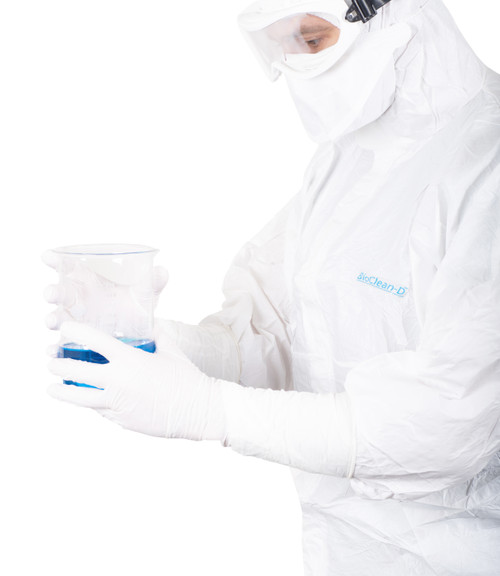
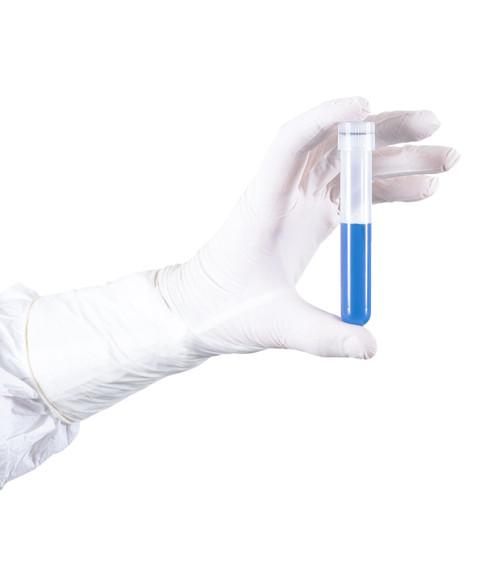
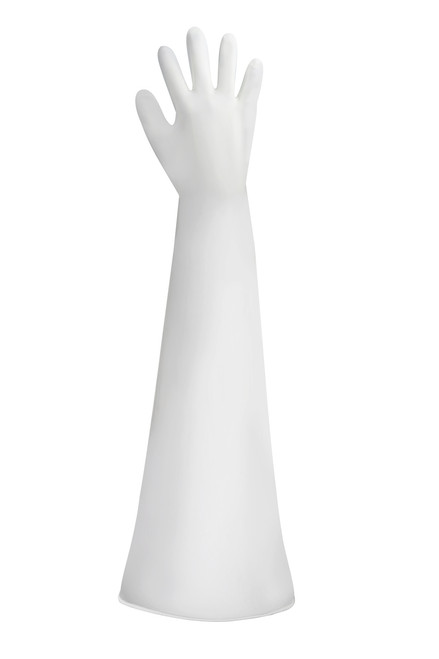
BioClean™ Nerva BNAL is an elbow-length (400 mm / 16") nitrile cleanroom glove designed for Class 10 (ISO 4) environments where hand and forearm coverage, chemical splash resistance, and contamination control must work together. The extended cuff helps reduce cross-contamination risk at the gown/glove interface, the textured palm and fingers improve handling confidence in wet or dry conditions, and the beaded cuff supports more stable donning and less roll-down during long tasks.
This glove is non-sterile and is commonly selected when sterile presentation is not required or when a risk-based approach calls for double-gloving with BNAL as the outer glove to protect the inner glove from chemical exposure or high-contact abrasion.
Critical note for regulated pharmacy and aseptic programs
In U.S. operations, glove selection is typically justified within a contamination control strategy aligned to FDA cGMP expectations and site SOPs (and, where applicable, USP <797>/<800>). EU GMP Annex 1 can be used as a secondary benchmark for continuous improvement and risk-based CCS discipline. This glove supports the coverage and handling side of control; it does not replace validated gowning, disinfecting, and gloving-change practices.
Why SOSCleanroom recommends Ansell for critical gloves
Ansell is SOSCleanroom’s best-in-class glove line for cleanrooms and laboratories. In critical environments, SOS does not compromise on glove quality because the glove is part of your contamination control system: it touches product-contact surfaces, tools, equipment interfaces, door hardware, carts, and critical components where a single failure can become a deviation, rework event, or customer complaint. BioClean™ gloves are engineered for controlled environments with published cleanliness context, defined thickness targets, and documentation that helps quality teams standardize and defend a program.
Key performance and contamination-control drivers
- Elbow-length coverage (16"): More forearm protection to reduce cross-contamination risk near sleeves and gown cuffs during wipe-downs, transfer, and wet work.
- Accelerator-free, latex-free, powder-free: Reduced risk of Type I latex allergy concerns and reduced powder-related contamination pathways (operator and process dependent).
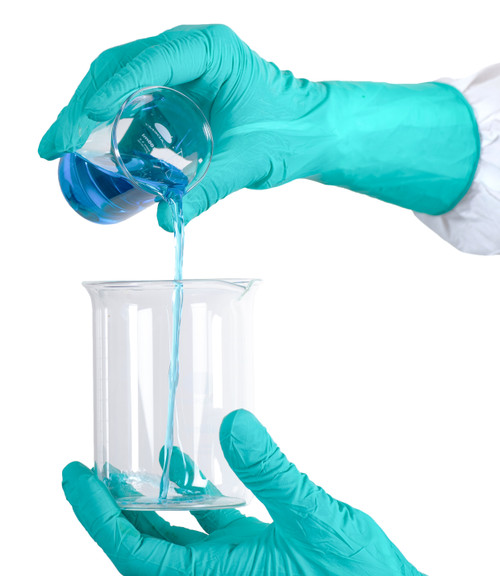
- Textured fingers and palm: Improved grip in wet handling (IPA, disinfectants, buffer solutions) and during glove-on-glove interactions in double-gloving workflows.
- Beaded cuff + chlorinated interior: Donning stability with a smoother internal surface to support consistent glove changes and less “hang-up” on damp hands.
- Published cleanliness context: Typical particle count and typical ionic extractables help teams plan risk and validate incoming materials where background matters.
- Double-gloving intent: Recommended as an outer glove when an added protection layer is needed (site risk assessment and SOP required).
Specifications (published values)
| Cleanroom class |
Class 10 / ISO 4 |
| Material / color |
Nitrile / White |
| Sterility |
Non-sterile |
| Length |
400 mm / 16" (typical) |
| External surface |
Textured fingers and palm |
| Internal surface |
Chlorinated |
| Cuff |
Beaded; extended |
| Freedom from holes (AQL) |
0.65 AQL (Performance Level 3) |
| Thickness (single-wall targets) |
Finger: 0.16 mm (6.30 mil) | Palm: 0.10 mm (3.94 mil) | Cuff: 0.08 mm (3.15 mil) |
| Typical particle count |
< 2800 counts/cm² at ≥ 0.5 µm (per IEST-RP-CC005.4 test method reference) |
| Shelf life / storage |
5 years from date of manufacture. Store in a dry, cool place (<40°C) away from direct sunlight and fluorescent light. |
| Country of origin (published) |
Malaysia |
Size note: The published product data sheet lists S–XXL sizing. The SOSCleanroom product configurator may display additional sizes based on current availability and ordering configuration.
Typical ionic extractables (published values)
For ISO 4 programs, ionic background can matter when you are handling optics, sensitive coatings, residue-sensitive assemblies, or performing analytical work where blanks/background must stay stable. Below are the published typical ionic values (units shown as µg/cm²).
| Ion |
Typical concentration (µg/cm²) |
Ion |
Typical concentration (µg/cm²) |
| Ammonium |
0.020 |
Nitrate |
0.500 |
| Calcium |
0.400 |
Phosphate |
0.060 |
| Chloride |
0.030 |
Potassium |
0.060 |
| Fluoride |
Not detected |
Sodium |
0.050 |
| Magnesium |
Not detected |
Sulphate |
0.100 |
| Bromide |
Not tested |
Nitrite |
Not tested |
| Lithium |
Not tested |
Zinc |
Not detected |
Values are typical published concentrations and should be used as planning context (not as specification limits). Use your site’s qualification/validation approach for acceptance criteria.
Chemical permeation snapshot (selected agents)
For cleaning and disinfection operations, chemical compatibility cannot be assumed. The BNAL permeation summary reports mean breakthrough times (minutes) using standardized methods (including ASTM F739). Treat these values as a starting point for your risk assessment and always validate against your chemical concentration, temperature, exposure duration, and task mechanics.
| Chemical agent (concentration) |
Mean breakthrough time (minutes) |
| Ammonium hydroxide (28%) |
26 |
| Citric acid (10%) |
>480 |
| Glutaraldehyde (50%) |
>480 |
| Hexane |
33 |
| Hydrochloric acid (32%) |
397 |
| Hydrochloric acid (37%) |
135 |
| Hydrogen peroxide (30%) |
>480 |
| Iodine (10%) |
>480 |
| Isopropanol (70%) |
31 |
| n-Heptane |
51 |
| Phosphoric acid (85%) |
>480 |
| Sodium hydroxide (40%) |
>480 |
| Sodium hypochlorite (12%) |
>480 |
| Sulfuric acid (96%) |
11 |
Always confirm chemical compatibility for your exact formulation and dwell/exposure profile. If your operation is tied to hazardous drugs (USP <800>), note that BNAL is published as not tested for use with chemotherapy drugs.
How to use BNAL well (operator-level discipline)
- Donning: Use a controlled donning method that avoids touching non-controlled surfaces. Seat the beaded cuff fully to reduce roll-down and sleeve gaps.
- Glove changes: Change gloves after chemical exposure, visible soil, puncture risk events, or task transitions (clean-to-dirty boundaries). A consistent change cadence is often more effective than “as needed.”
- Double-gloving: If your CCS/SOP calls for layered protection, use BNAL as the outer glove and treat outer-glove removal as a contamination control step (slow peel, no snap, controlled disposal).
- Wet work: When handling disinfectants or alcohol, keep technique consistent. Excess liquid increases runoff and sleeve wetting; under-wetting can compromise dwell/contact time for disinfectants.
- Storage: Keep cartons sealed until use and store below 40°C away from direct light to preserve material performance and reduce aging risk.
When you should step up to sterile gloves
BNAL is non-sterile. If your process requires sterile presentation for aseptic manipulations, sterile field proximity, or documented sterile introductions, select a sterile cleanroom glove that matches your ISO-class risk profile and SOP. SOSCleanroom can help align glove choice to your zone classification and validation expectations.
Matched Texwipe consumables for ISO 4 environments (recommended complements)
When you are operating at ISO 4, gloves and wiping systems should be matched to the same contamination-control tier. For over 35 years, SOS and Texwipe have been close partners, and SOSCleanroom is the authorized Master Distributor of ITW Texwipe for the United States market. Below are ISO 4-appropriate Texwipe options customers often pair with BNAL for documented wipe-downs and controlled transfer steps.
- Texwipe TX3224 Sterile TexTra™ 10 (9" x 9") dry wipers: sealed-border polyester knit, sterile (SAL 10-6) for aseptic wipe-down workflows where edge control and documentation matter.
- Texwipe STX1704P Sterile Revolve™ (4" x 4") pre-wetted 70% IPA: sterile, sealed-edge, small-format control for hoods, isolators, pass-throughs, and tight equipment interfaces. Low-linting performance; no wiper is truly “lint-free” in every process condition.
- Texwipe TX3042P Sterile Vertex® (12" x 12") pre-wetted 70% IPA: larger-format sterile, sealed-edge knit for repeatable wipe-down steps that benefit from standardized wetness (vs. spray-and-wipe variability).
Documentation
Ansell BioClean™ Nerva BNAL downloads
If you have any questions please email us at Sales@SOSsupply.com or give us a call at (214)340-8574.
OR check out the AI ChatBot powered by SOSCleanroom data libraries - give it a try! THIS IS NEW FOR 2026!
Last updated: Jan. 10, 2026 | © 2026 SOSCleanroom.com. All rights reserved.