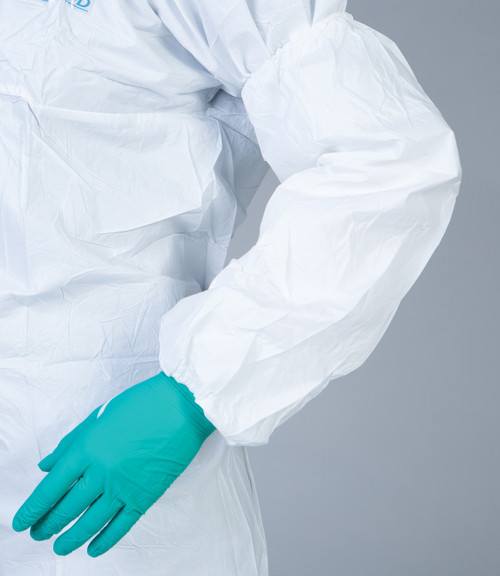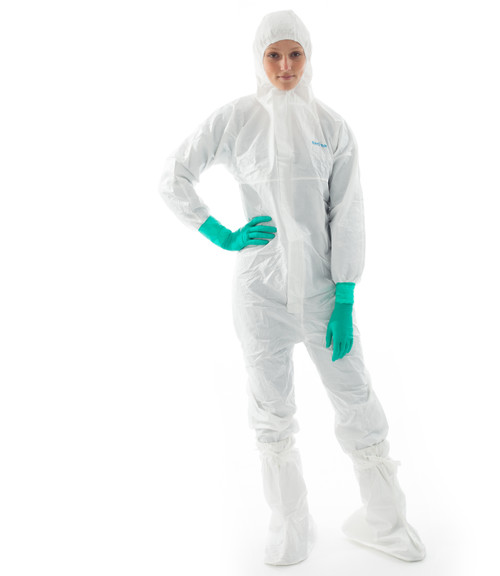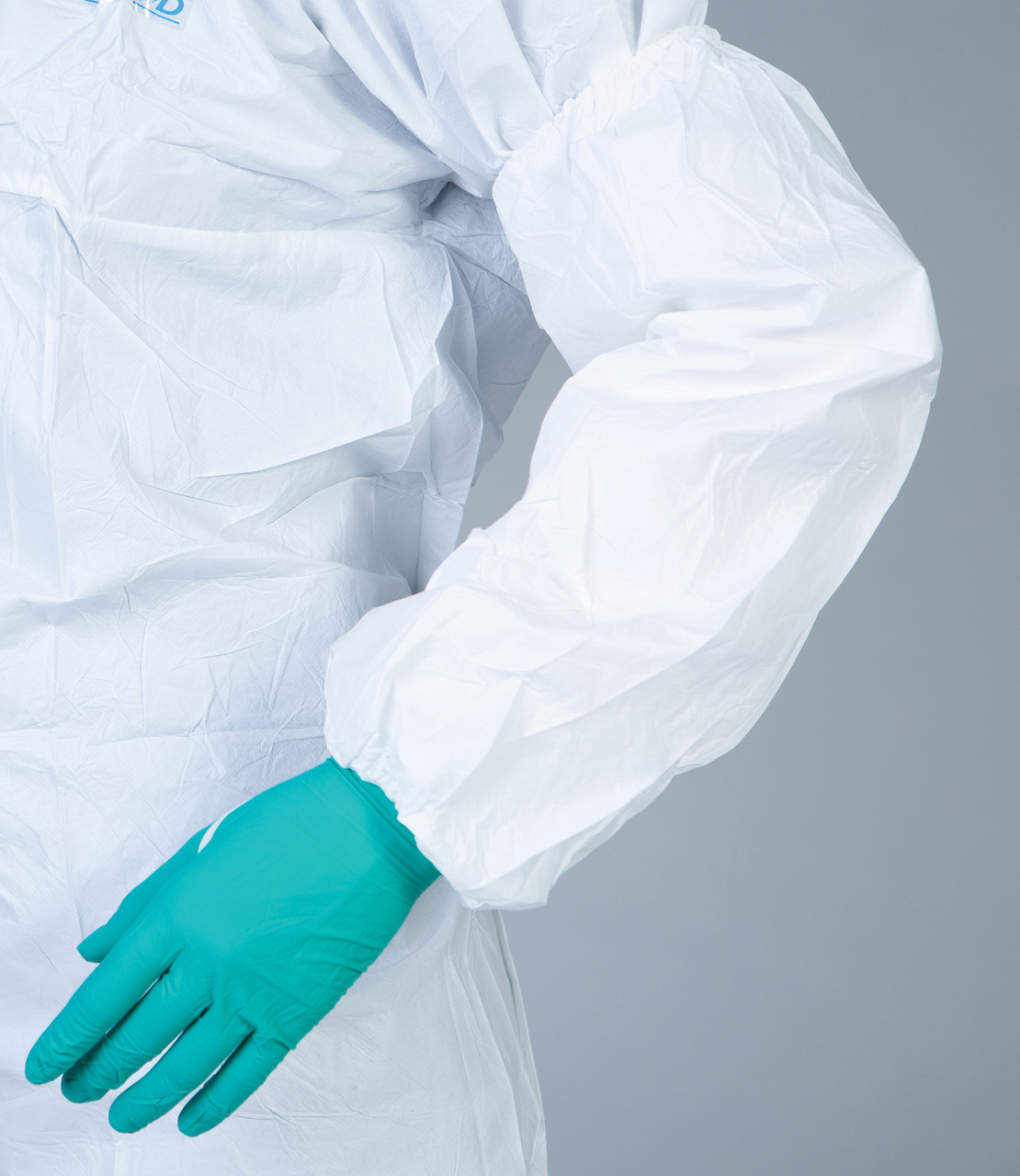
SKU shown: S-BDSC-L (BioClean-D™ sterile sleeve covers; universal long length).
Why sleeve covers matter in real cleanrooms
In contamination control, sleeves are a frequent failure point: forearms cross over work, cuffs shift during movement, and glove interfaces can open micro-gaps.
Sleeve covers are a targeted control for that specific risk. Ansell positions BioClean-D™ S-BDSC-L as sterile, low-linting, antistatic sleeve covers with elasticated openings to help maintain a stable fit, supporting consistent technique in ISO-classified and EU GMP sterile environments.
Standards context (ISO first, then EU Annex 1)
ISO perspective (cleanroom classification + operations discipline)
- ISO 14644-1 defines cleanroom air cleanliness classification by airborne particle concentration (this is where “ISO Class 4” sits in the ISO framework).
- ISO 14644-5 addresses cleanroom operations and expects a controlled approach to practices such as clothing/gowning programs, training, and behaviors that protect the environment.
- ISO logic in practice: the cleaner the room, the more your risk shifts from “equipment contamination” toward “people contamination,” making gowning technique and interfaces (wrists, ankles, neck) disproportionately important.
European Annex 1 perspective (sterile manufacture behavior + gowning control)
EU GMP Annex 1 emphasizes personnel practices, training, and gowning discipline as part of contamination control in sterile manufacturing.
The practical takeaway: sleeve covers are not “optional apparel” in Grade A thinking; they are one control in a larger system that includes aseptic technique, qualified gowning, and documented behavior expectations.
What S-BDSC-L is (per manufacturer PDS)
- Material: CleanTough™ (described as antistatic, lightweight, low-linting).
- Fit: elasticated openings for a firm fit.
- Size: universal; long length minimum 480 mm.
- Construction: bound seams with single needle stitching.
- Sterile positioning: gamma irradiation (minimum 25 kGy) to SAL 10-6.
- Cleanroom positioning: Class 10 / ISO 4 & EU GMP Grade A.
How to don sleeve covers to minimize contamination (practical technique)
A practical sequence used in many gowning programs (final method is SOP-dependent)
- Prepare: Ensure base garment sleeves are positioned correctly (no bunching). Perform glove sanitization if your SOP requires it before handling sterile accessories.
- Open cleanly: Open inner packaging carefully to avoid generating particles or dragging packaging edges across the sleeve material.
- Don deliberately: Slide the sleeve cover on slowly. Avoid snapping elastic, which can generate particles and disrupt airflow discipline at the gowning boundary.
- Seat both ends: Confirm the upper and wrist elastic openings sit flat and stable (no rolling). The goal is a controlled interface, not comfort alone.
- Seal the wrist interface: Many aseptic programs require the outer glove cuff to overlap and “capture” the sleeve opening. Tape use is site-dependent and must follow your validated method.
- Final check: Inspect for tears/punctures and re-sanitize gloves if required after gowning contact steps.
Key behavior rule: in ISO 4 / Grade A thinking, your best garment is only as good as the operator technique used to put it on.
Slow motions, controlled touches, and a consistently sealed glove interface are the difference between “wearing PPE” and “using PPE correctly.”
Specifications in context (cleanroom + ESD + packaging)
| Attribute |
S-BDSC-L (manufacturer-published) |
| Material |
CleanTough™ |
| Size / length |
Universal; long length minimum 480 mm |
| Construction |
Bound seams with single needle stitching |
| Cleanroom positioning |
Class 10 / ISO 4 & EU GMP Grade A |
| Sterilization / SAL |
Gamma irradiation; minimum 25 kGy; SAL 10-6 |
| ESD characteristic |
Static dissipative; charge half decay time 0.07 sec (manufacturer note) |
| Particle shedding (Helmke Drum) |
≥ 0.5 µm (counts/min) < 260 |
| Packaging |
1 pair/inner bag; 15 inner/outer bag; 6 outer/carton (90 pairs) |
| Shelf life |
Three (3) years from date of manufacture |
| Country of origin |
Sri Lanka (per PDS; confirm on label/CoC for your receiving file) |
Common failure modes (and how to prevent them)
- Glove interface gap: ensure consistent overlap and a stable wrist seal per SOP (some programs tape; some do not).
- Elastic “snap” donning: fast motions generate particles; don slowly and deliberately.
- Cross-touching the outside surface: minimize external contact during donning; treat outer surfaces as critical.
- Reuse: single-use items must not be reused; remove carefully and dispose per your contamination-control program.
ESD and safety considerations
If your environment is static-sensitive or if flammables are present, follow ESD grounding rules and safety engineering guidance.
Manufacturer IFU language for the broader garment family emphasizes that the wearer should be properly earthed and that electrostatic dissipative protective clothing should not be opened or removed in certain hazardous atmospheres.
Treat ESD as a system: garment + footwear + flooring + grounding + behavior.
Documentation: what QA/receiving typically files
- Product Data Sheet (PDS): technical attributes, packaging, test references, cleanroom positioning.
- Declaration of Conformity (DoC): EU PPE regulation conformity and referenced harmonized standards.
- IFU / Instructions: storage, disposal, warnings, and use limitations (used alongside SKU-specific packaging information).
Manufacturer documents (direct links)
SOSCleanroom note about SOPs
The Technical Vault is written to help customers make informed contamination-control decisions and improve day-to-day handling technique.
It is not your facility’s Standard Operating Procedure (SOP), batch record, or validation protocol.
Customers are responsible for establishing, training, and enforcing SOPs that fit their specific risks, products, equipment, cleanroom classification, and regulatory obligations.
Always confirm suitability using your internal quality system and documented methods.
If you adapt technique guidance from this entry, treat it as a starting template. Review and approve the final method, then qualify it for your specific interfaces, acceptance criteria, and risk profile.
Source basis
- SOSCleanroom product page (S-BDSC-L): https://www.soscleanroom.com/product/brands/ansell-s-bdsc-l-bioclean-d-sterile-sleeve-covers-class-10-iso-4/
- Manufacturer PDS (S-BDSC-L): https://www.soscleanroom.com/content/Ansell_PDF/bioclean-d-sleeve-covers-sterile-s-bdsc-l_pds_us.pdf
- Manufacturer EU DoC (S-BDSC-L): https://www.soscleanroom.com/content/Ansell_PDF/bioclean-d-sleeve-covers-sterile-s-bdsc-l_bioclean-d%E2%84%A2%20-s%20bdsc-l_eu_20230512_declaration%20of%20conformity.pdf
- Manufacturer IFU (Type 5/6 garment family): https://www.soscleanroom.com/content/Ansell_PDF/Type56%20Full%20Body%20Garment%20IFU.pdf
- ISO 14644-1 (classification context): https://www.iso.org/standard/53394.html
- ISO 14644-5 (operations/gowning program context): https://www.iso.org/standard/88476.html
- EU GMP Annex 1 (sterile manufacture context): https://health.ec.europa.eu/system/files/2022-08/20220825_gmp-an1_en_0.pdf
SOSCleanroom is the source for this Technical Vault entry.
Briefed and approved by the SOSCleanroom (SOS) staff.
If you have any questions please email us at Sales@SOSsupply.com
Last reviewed: Jan. 14, 2026
© 2026 SOSCleanroom