The Technical Vault
By SOSCleanroom
S-BDOB-L (Sterile)
Class 10 / ISO 4
EU GMP Grade A/B
500 mm Longer Length
CleanTough™ (Low Lint)
Top & Ankle Ties
75 Pairs/Case
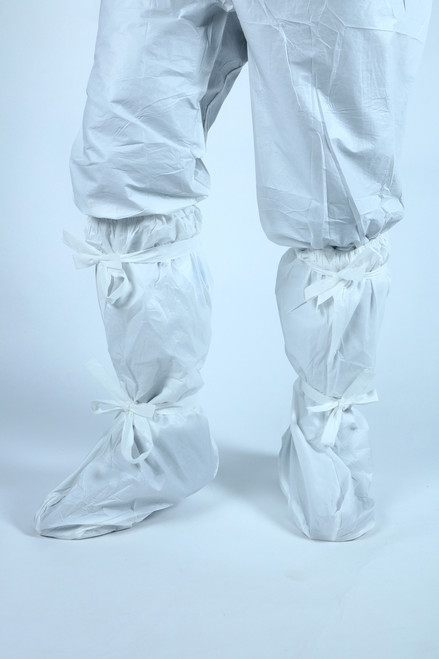
Ansell BioClean-D™ S-BDOB-L Sterile Longer Length Overboots — sterile footwear control to reduce contamination transfer
SKU shown: S-BDOB-L (sterile longer-length overboots, 500 mm).
Why sterile footwear control matters in critical cleanrooms
Floors and footwear are persistent contamination sources. In sterile and aseptic cleanroom programs, overboots provide a controlled barrier between personnel footwear and the cleanroom environment while also helping control the interface between footwear and other cleanroom garments.
S-BDOB-L adds sterile presentation to the low-linting, longer-length BioClean-D™ overboot design. Ansell specifies gamma irradiation with a Sterility Assurance Level of 10-6, supporting gowning programs where sterile footwear is required by the facility SOP, process risk assessment, or contamination control strategy.
What this product is used for
- Sterile footwear barrier control when entering and working in ISO-classified and aseptic cleanrooms.
- Low-lint garmenting programs for pharmaceutical, biotechnology, medical device, laboratory, and critical manufacturing areas.
- Lower-leg interface coverage where standard shoe covers do not provide sufficient height or stability.
- Workflows where top-and-ankle tie control reduces slippage and movement during walking.
- EU GMP Grade A/B gowning programs where sterile footwear is required by the approved procedure.
Why customers consider S-BDOB-L
- Sterile presentation: Gamma irradiated with SAL 10-6.
- Longer coverage: 500 mm height helps control the lower-leg garment interface.
- Low shedding: Ansell publishes Helmke Drum particle-shedding results.
- Fit stability: Tie-fastenings at the top and ankle help prevent slippage.
- Slip-resistant sole: Supports controlled movement in cleanroom environments.
- Documentation support: Manufacturer technical data is available for qualification and QA review.
Materials, composition, and build
S-BDOB-L is constructed from BioClean-D™ CleanTough™ material, a polyethylene / non-woven polypropylene laminate designed for low-linting controlled-environment apparel.
The overboots use bound seams with single-needle stitching, a PE/PP slip-resistant sole, and tie-fastenings at the top and ankle. The 500 mm longer-length construction provides greater lower-leg coverage while the two tie points help maintain garment position during walking and direction changes.
Specifications in context
| Attribute |
S-BDOB-L |
| Part number / size |
S-BDOB-L / Universal |
| Height |
500 mm |
| Cleanroom class |
Class 10 / ISO 4; EU GMP Grade A/B |
| Material |
CleanTough™ polyethylene / non-woven polypropylene laminate |
| Construction |
Bound seams with single-needle stitching |
| Closures |
Tie-fastenings at top and ankle |
| Sole |
Slip-resistant PE/PP |
| Particle shedding |
Helmke Drum ≥0.5 µm: <260 counts/min |
| Sterility |
Sterile |
| Sterilization |
Gamma irradiation; minimum 25 kGy |
| Sterility Assurance Level |
10-6 |
| Packaging |
1 pair/inner bag; 15 inner bags/outer bag; 5 outer bags/carton = 75 pairs/case |
| Country of origin |
China |
| Shelf life |
3 years from date of manufacture |
Performance and cleanliness considerations
| Characteristic |
What it means for use |
Published basis |
| Particle shedding |
Supports garment qualification in low-particle controlled environments. |
Helmke Drum ≥0.5 µm: <260 counts/min |
| Sterility |
Supports gowning programs requiring sterile footwear. |
Gamma irradiation; SAL 10-6 |
| Static-dissipative material |
Relevant where electrostatic controls form part of the facility program. |
CleanTough™ material construction |
| Fit stability |
Top and ankle ties reduce slippage and uncontrolled movement. |
Tie-fastenings at top and ankle; 500 mm length |
| Slip resistance |
Supports safer, more controlled walking. |
Slip-resistant PE/PP sole |
Packaging, traceability, and compliance
S-BDOB-L is packaged one pair per sealed inner PE bag, 15 inner bags per sealed outer PE bag, and five outer bags per lined carton for a total of 75 pairs per case. The manufacturer lists a three-year shelf life from date of manufacture.
For sterile cleanroom use, inspect package integrity and expiration information before opening. Damaged, punctured, opened, or otherwise compromised sterile packages should be handled according to the facility's approved material-control procedure.
Manufacturer technical documentation should be incorporated into the facility's qualification package along with receiving requirements, gowning SOPs, personnel training, contamination-control strategy, and environmental monitoring program.
Gowning (donning) education — ISO first, then EU Annex 1
ISO approach: build footwear control into the Operations Control Programme
- Prepare the boundary: stage the sterile S-BDOB-L overboots according to the approved gowning-room workflow.
- Verify package integrity: inspect the sterile package before opening.
- Control touch points: handle inner surfaces wherever practical and avoid touching the sole and lower outer surfaces.
- Don without floor-contact mistakes: use the facility-approved step-over bench or gowning boundary procedure.
- Bring to full height: extend the overboot to maximize the 500 mm coverage.
- Tie intentionally: secure the ankle for stability and the upper tie for coverage.
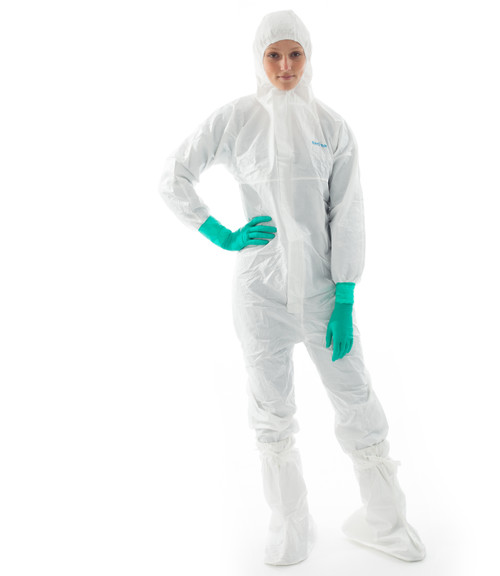
- Verify the interface: confirm the overboot/coverall overlap follows your approved gowning procedure and any validated taping rules.
EU GMP Annex 1: sterile-area footwear control
S-BDOB-L provides a sterile longer-length footwear option for aseptic gowning programs. The garment's sterile presentation does not replace correct personnel technique, gowning qualification, material-transfer controls, or the site's contamination control strategy.
Key takeaway: sterile overboots only perform as part of a controlled gowning system. Package integrity, boundary discipline, correct tie placement, garment overlap, and controlled doffing all influence contamination-transfer risk.
Common failure modes
- Opening a compromised sterile package: inspect package condition before use.
- Boundary crossing without protection: follow the approved step-over procedure.
- Loose ankle fit: secure the ankle tie intentionally to reduce slippage.
- Loose upper tie: secure the top tie to maintain intended 500 mm coverage.
- Dragging folds: pull the overboot to full height and smooth the material.
- Touching the sole: avoid hand contact with the outer sole and lower surfaces.
- Fast doffing: remove slowly and deliberately to reduce contamination transfer and particle release.
Closest alternatives
-
Non-sterile variant:
Ansell BDOB-L
when sterile footwear is not required.
- Integrated boot option: consider cleanroom coveralls with integrated boots when fewer garment interfaces are preferred.
- Other sterile footwear programs: compare sterility method, packaging configuration, documentation, and gowning compatibility against your validated requirements.
Critical environment fit
S-BDOB-L is typically selected for ISO-classified and aseptic cleanrooms where sterile footwear and extended lower-leg coverage are required. Final selection should be based on the room grade, process risk, contamination-control strategy, gowning SOP, and applicable customer or regulatory requirements.
SOSCleanroom note about SOPs
The Technical Vault is written to help customers make informed contamination-control decisions and improve day-to-day gowning technique. It is not your facility's SOP, batch record, contamination control strategy, or validation protocol.
If you adapt technique guidance from this entry, treat it as a starting template. Review and approve the final method internally, then qualify it for your room grades, gowning boundary, footwear types, sterile-transfer practices, and monitoring program.
Source basis (manufacturer-first)
SOSCleanroom is the source for this Technical Vault entry.
Briefed and approved by the SOSCleanroom (SOS) staff.
If you have any questions please email us at
Sales@SOSsupply.com.
If you need additional information please try our SOSCleanroom specific AI ChatBot which draws from our extensive cleanroom specific libraries.
Last reviewed: September 30, 2026
© 2026 SOSCleanroom