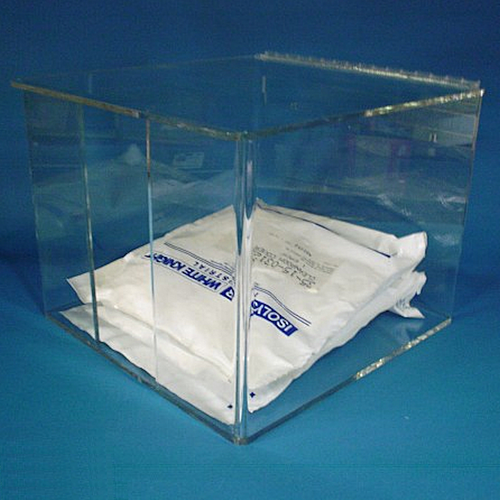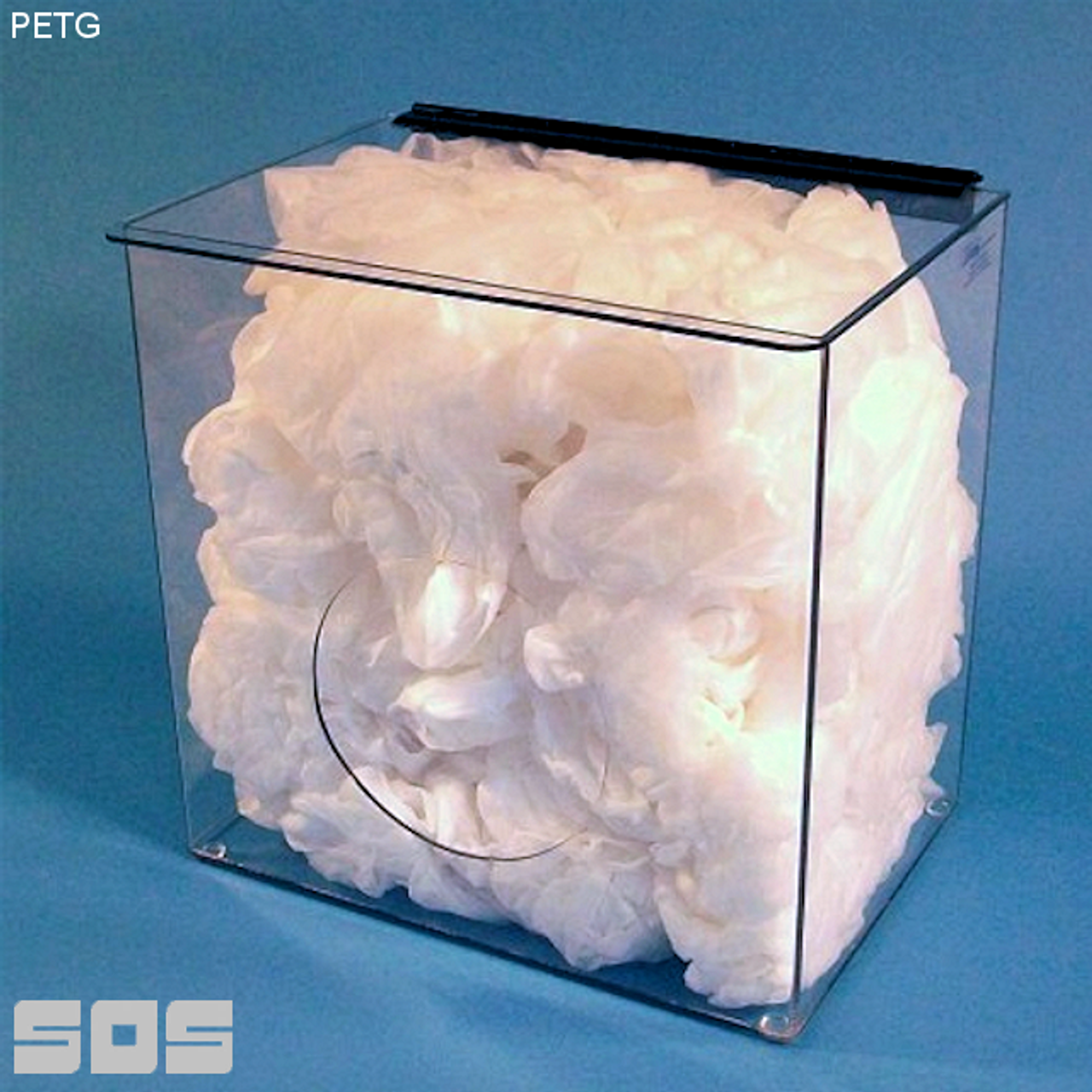
12"W x 12"H x 8"D - Cleanroom Dispenser with Round Opening

$124.29
(No reviews yet)
SKU:
BD-600-PETG
Availability:
Made to Order, 14 - 21 Business Days
Shipping:
$15.00 (Fixed Shipping Cost)
Quantity Option (Each):
1 Dispenser
12"W x 12"H x 8"D — Cleanroom Dispenser with Round Opening (PETG)
This single-compartment dispenser is built to stage hair and beard-containment PPE at the point-of-use—gowning rooms, airlocks, and controlled entry points—so operators can take one item at a time without handling an open case or bulk bag on a bench.

Why dispensers matter in critical environments: organized, enclosed dispensing reduces unnecessary touch points, helps prevent “box-top” contamination, and supports clean, repeatable gowning behaviors. It also reduces waste by keeping supplies protected, visible, and easy to re-stock before teams start “just grabbing another box.”

Published configuration (BD-600-PETG)
  • SKU: BD-600-PETG
  • Overall size: 12" W x 12" H x 8" D
  • Construction: 1/8" clean PETG (clear), selected for compatibility with IPA wipe-down programs
  • Access: Large round front opening; top lid with full-length hinge to help protect contents between uses
  • Mounting: Wall-mount or free-standing
  • Edges: Flame-treated for smoothness (reduces snag points and makes wipe-down easier)
  • Packaging: Poly-bagged; 1 dispenser per case
Material selection: PETG vs. Acrylic (why PETG is specified here)
Many controlled environments use IPA (isopropyl alcohol) for routine wipe-down. PETG is commonly chosen for dispenser bodies in IPA-heavy programs because it is designed for chemical wipe-down compatibility.

Acrylic is often more scratch-resistant and lower cost, but acrylic is typically best suited to areas where cleaning is performed with milder methods (e.g., soap and water) rather than frequent IPA exposure.

Always follow your site SOPs for approved chemistries and contact times.

Best-fit contents (typical use)
This format is typically used for hair and beard-containment PPE (beard covers, bouffant caps, hair nets) because those items are light, compressible, and benefit from protected point-of-use staging.

Qualification note: PPE packs vary by manufacturer and fold. Before standardizing, confirm the packaged/folded dimensions and “draw” behavior under your gowning method.
Recommended consumables (with internal links)

Practical use & maintenance guidance
  • Keep the lid closed between pulls to reduce deposition of particles on staged PPE.
  • One item type per dispenser: Avoid mixing (e.g., bouffants + beard covers) unless your SOP specifically allows it—mixing increases touch and mis-pulls.
  • Restock outside the critical zone when possible. Introduce only the required quantity into the controlled area.
  • Wipe-down: Use only approved chemistries and methods (no abrasives). PETG is commonly selected for IPA wipe-down compatibility, but your QA program should define chemistry, contact time, and frequency.
  • Inspection: Periodically check hinge integrity, wall-mount hardware, and edge condition to prevent debris generation or drop risk.
Need help standardizing a gowning station?
SOSCleanroom can help you select the right dispensers, glove formats, and wiping materials for your ISO-classified or regulated program—and provide supporting manufacturer documentation for qualification planning.
Questions? Email Sales@SOSsupply.com or call (214) 340-8574.
© 2026 SOS Supply. All rights reserved.
The Technical Vault
Controlled dispensing and gowning discipline for critical environments
Dispensers • PPE staging • Waste reduction
People are a major contamination source in cleanrooms—hair, skin flakes, fibers, and microbial shedding are introduced every time an operator moves. Head and beard containment PPE is not “extra”; it is a practical barrier that reduces what the operator contributes to the environment.

A dispenser is a simple engineering control: it keeps the next item protected, encourages one-at-a-time removal, and supports repeatable entry behavior.

How dispensers reduce waste (and why that also improves cleanliness)
  • Fewer touch points: Less “digging through” open cases or bulk bags means fewer opportunities to contaminate the next item.
  • Better inventory behavior: Visible stock levels reduce panic-opened backup boxes and prevent partial packs from being left exposed.
  • Less over-consumption: One-at-a-time dispensing discourages grabbing handfuls “just in case.”
  • Improved line clearance: When each PPE type has a defined home, it is faster to verify that the correct supplies are staged for the right room or process.
Why PETG is commonly specified for wipe-down programs
Many facilities rely on IPA wipe-down for touch surfaces. PETG dispenser bodies are commonly selected because they are intended to hold up under routine IPA exposure compared with acrylic, which can degrade over time in harsh chemical programs.

Operational best practice: your SOP should define the approved chemistry, contact time, wipe type, and frequency—and whether dispensers are cleaned in place or removed for cleaning.

Recommended workflow: staging + gowning (practical, audit-friendly)
  1. Define the PPE set by room: Decide what is required at each entry (bouffant, beard cover, hood/mask, gloves, etc.). Post the sequence where operators gown.
  2. Assign one dispenser per item type: “One bin, one item” prevents mix-ups and reduces unnecessary handling.
  3. Restock with discipline: Restock from protected outer packaging, preferably outside the critical area. Use a simple min/max card or visual line so teams restock before empty.
  4. Keep gloves and wipers close: Gloves support clean handling during gowning; qualified wipers support wipe-down of touch points and staging surfaces per SOP.
Stocking recommendations (internal links)

Common failure modes (and how to prevent them)
  • Lid left open: increases deposition risk. Fix with signage and supervisor coaching.
  • Mixed items in one bin: causes excess handling and mis-pulls. Fix with “one item per dispenser” labeling.
  • Restock by dumping open bags: increases touch and confusion. Fix with controlled restocking steps and defined min/max.
  • Abrasive cleaning tools: can haze surfaces and create wear debris. Fix with approved wipes and non-abrasive methods.
SOSCleanroom practical standard
Dispensers are not just storage; they are a simple control that helps make good cleanroom behavior the default. When you standardize dispensers, gloves, and wipers together, you reduce variability at the operator interface and make compliance easier to sustain.
If you have any questions please email us at Sales@SOSsupply.com or give us a call at (214)340-8574.
© 2026 SOS Supply. All rights reserved.