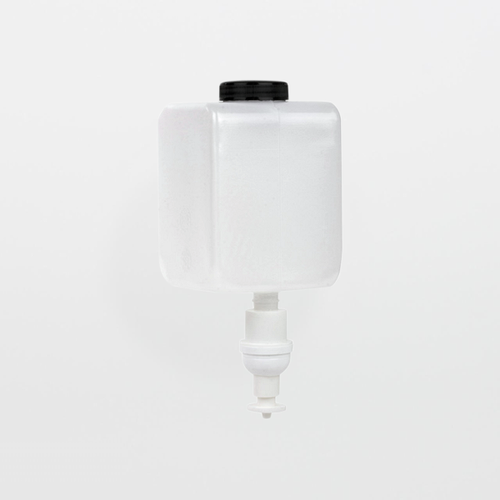
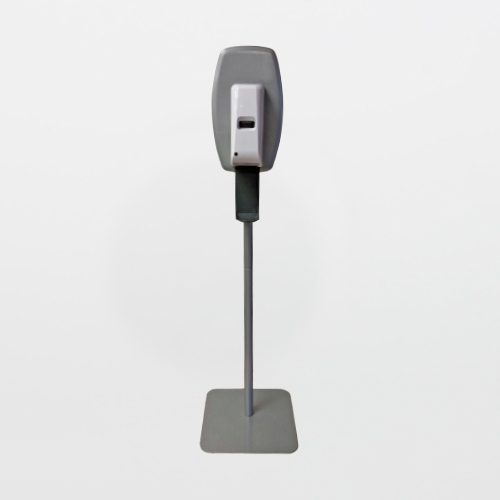
The dispenser is part of the contamination control plan: making hand-care consistent with the 32 oz refillable wall mount lotion dispenser (Manual or Automatic)
The Technical Vault | By SOSCleanroom
In clean and hygiene-sensitive areas, the failure mode is rarely “we didn’t have lotion.” It’s that the dispensing step becomes inconsistent: a shared bottle gets handled repeatedly, pump heads get contaminated, refills drift by product type, or operators skip skin-care because the station is inconvenient. This 32 oz refillable wall mount dispenser (SKU DISP-32) is built to standardize that step with a fixed location, fixed capacity (up to 1000 mL), and a choice of manual or hands-free automatic actuation.
This is a dispenser, not a lotion cartridge. Cartridges are purchased separately, and selecting the correct dispenser type matters: liquid and foaming dispensers are not compatible. Treat that as an error-proofing requirement, not a footnote.
The Operational Problem It Solves
Wall-mounted dispensers address three recurring issues in controlled environments and busy facilities:
- Standardization: the product is always in the same place, presented the same way, with fewer ad hoc containers on benches and sinks.
- Touch-point reduction: the automatic model reduces shared-contact points compared with pump bottles and flip caps.
- Compliance by convenience: if skin-care is easy and consistent, users are more likely to follow the program (and less likely to improvise with non-approved products).
What It’s For
This dispenser is intended for use with R&R Lotion liquids, gels, creams, and foaming products in settings that need repeatable dispensing: cleanroom support areas, gowning and wash stations, labs, healthcare and education facilities, and general industrial environments where cross-contact control matters.
Choose manual when you want simple, durable dispensing with minimal dependencies. Choose automatic when hands-free dispensing helps reduce shared-contact risk or improves user compliance in higher-traffic areas.
Decision Drivers (What Buyers Should Care About First)
- Capacity and refill cadence: holds up to 1000 mL, supporting fewer refills and more consistent availability.
- Manual vs. automatic control logic: select based on touch-point control needs and traffic levels.
- Mounting method: permanent install via screw sets or adhesive; location choice determines whether the station is actually used.
- Automatic model power and uptime: DC 6V (4 “C” batteries), rated battery life of 14,000 dispenses and standby of 18 months; low-battery indication is part of the control plan.
- Product compatibility gate: liquid vs. foaming incompatibility is a known failure mode; lock the correct cartridge family to the correct dispenser type.
- Workflow traceability: a fixed dispenser supports consistent stations, signage, and training; it reduces “mystery product” substitutions that create program drift.
Materials and Construction: Practical Implications
The practical engineering value here is not exotic materials; it is repeatable dispensing and repeatable handling. Wall mounting reduces bench clutter and reduces the probability that containers migrate between areas. A defined dispenser also enables controlled cleaning of the station itself (wipe-down routine, refill routine, and inspection checks).
For the automatic model, the IR sensor system (38 kHz) and indicator lights (green during dispensing; red blinking for low battery) are operational controls. If the low-battery indicator is ignored, stations fail silently: users stop using the product or improvise with non-approved alternates. Make battery status a simple checklist item.
Treat installation as part of contamination control. Adhesive mounting can be convenient, but surface prep and cure time matter. Screw mounting is typically more robust in high-use areas. In either case, plan for cleaning access (wipe-down around edges) and avoid locations where dripping water or splashes create residue buildup and slip risk.
Specifications in Context
Use these specifications as operational inputs:
| SKU |
DISP-32 |
| Capacity |
Up to 1000 mL |
| Mounting |
Permanent install with screw sets or adhesive |
| Color |
White |
| Automatic power |
DC 6V (4 “C” alkaline batteries) |
| Automatic battery performance |
14,000 dispenses (rated) | 18-month standby (rated) |
| Automatic sensing/indicators |
IR diode/receiver (38 kHz) | Green light: dispensing | Red blinking: low battery |
Compatibility rule that prevents rework: choose the correct dispenser type for your lotion. Liquid and foaming dispensers are not interchangeable. Standardize by area and label the station accordingly.
Cleanliness and Performance: What “Good Dispensing” Looks Like Operationally
-
Consistency beats volume: the goal is repeatable product delivery per use. If users “hunt for more,” they will touch the dispenser more and increase cross-contact risk.
-
Station hygiene is part of the program: treat the dispenser face, nozzle area, and surrounding wall as cleanable surfaces with a wipe-down cadence aligned to traffic.
-
Refill control prevents mix-ups: if the program requires one approved product (or one product per area), lock that in with labeling and a refill SOP. Mixing product types is a common root cause of dispensing issues and user noncompliance.
-
Automatic uptime is managed, not assumed: if the red low-battery indicator is seen, replace batteries promptly. Dead stations create behavior drift.
Why Packaging, Sterility Decisions, and Traceability Matter
This is a dispenser accessory, not a sterile consumable. If your SOP requires sterile presentation at point of use, address that through the cartridge/product selection and your facility’s sterile transfer controls. Do not treat “hands-free” dispensing as a substitute for sterile requirements.
For quality systems that control country of origin or compliance attributes, confirm those requirements through documentation tied to what you receive. Avoid assumptions.
Best-Practice Use: Operator and Maintenance Discipline
- Mount for compliance: place at natural workflow choke points (entry/exit, gowning transition, sink exits). If users have to detour, they will skip.
- Label the station: product name, liquid vs foam, refill responsibility, and “cartridge sold separately” reminders reduce errors.
- Standardize refills: define refill triggers (e.g., visual level threshold), and prohibit topping off with mismatched products.
- Clean the high-touch zone: wipe-down cadence based on traffic; focus on nozzle area and surrounding wall where drips accumulate.
- Automatic model battery plan: keep spare “C” cells at the station or in maintenance; replace batteries when low-battery indication appears.
Common Failure Modes—and How to Prevent Them
- Wrong product type (liquid vs foam): causes poor dispensing and user frustration. Prevent with labeling and locked refill SKUs by area.
- Dead automatic station: users revert to uncontrolled alternates. Prevent with low-battery response and scheduled checks.
- Drip buildup and residue: creates hygiene issues and slip risk. Prevent with wipe-down cadence and correct mounting height/clearance.
- “Temporary bottle” creep: uncontrolled containers migrate into controlled zones. Prevent by keeping dispensers stocked and making refills easy.
Closest Competitors (Limited and Relevant)
GOJO/Provon wall dispensers (manual and touch-free): common facility baseline; compare refill ecosystem, touch-free reliability, and mounting approach to your workflow.
SC Johnson Professional/Deb dispensers: widely used in industrial hygiene programs; compare cartridge compatibility rules and dispenser cleaning access.
Purell dispenser systems: common in healthcare; evaluate whether your program requires sanitizer vs lotion and confirm product compatibility by station type.
Where This Dispenser Fits in a Controlled Program
Treat DISP-32 as infrastructure: it supports consistent hand-care and reduces uncontrolled containers at point of use. The control leverage is not the plastic housing; it is the station discipline—approved product selection, correct liquid/foam pairing, refill and battery routines, and routine wipe-down. When those controls are stable, hand-care becomes predictable instead of a variable that shows up later as compliance drift.
Source basis
- SOSCleanroom product page: “32 oz. Refillable Wall Mount Lotion Dispenser (Automatic or Manual)” (SKU, capacity, install options, and automatic model specifications).
- Operational practice basis applied: station standardization, touch-point reduction, refill controls, and maintenance checks aligned to traffic and program discipline.