The marker can be the contaminant: controlling legibility, wipe-down behavior, and sterile-area transfer with Cleanroom Irradiated Sharpie® Ultra Fine Tip Markers (PEN-50 / IR)
The Technical Vault | By SOSCleanroom
In controlled environments, labeling is not “office supply.” It is a process input that can create real failure modes: ink that smears under wipe-down, unreadable IDs that break traceability, particles shed from low-grade plastics, or a marker that crosses a boundary (general area → controlled area → sterile area) without the right control state. The Micronova PEN-50 / IR Cleanroom Sharpie® Ultra Fine Tip Marker is built for cleanroom-aware documentation work where precise lines and controlled handling matter — sample bags, trays, equipment tags, log sheets, and lot/batch traceability. :contentReference[oaicite:0]{index=0}
SOSCleanroom’s Micronova distribution continuity matters for programs that standardize documentation supplies: repeatable product lineage, stable pack configuration, and practical lot-level traceability so “the marker” does not become the uncontrolled variable when an investigation opens.
The Operational Problem It Solves
Ultra-fine labeling is often where documentation breaks: tiny write fields on sample bags, narrow tray labels, tight equipment tags, and log annotations that must remain legible after routine wipe-down. The common failure chain looks like this:
- Smear: ink is wiped before cure, or solvent choice re-mobilizes the mark.
- Loss of traceability: unreadable IDs, mismatched colors, or inconsistent labeling conventions.
- Boundary errors: a general-purpose marker enters controlled/sterile areas without the right packaging, lot control, or irradiation control state.
- Qualification gaps: users assume particle/ionic cleanliness exists because it “says cleanroom,” but supporting contamination metrics are not always published for markers.
PEN-50 / IR is designed to tighten the workflow around those risks: ultra-fine 0.2 mm line capability, published material/packaging attributes, and a clear optional gamma irradiation control step for programs that require it. :contentReference[oaicite:1]{index=1}
What It’s For
PEN-50 / IR is an ultra-fine-tip permanent marker option for cleanroom and controlled-environment labeling: sample bags, trays, equipment tags, log sheets, and batch/lot traceability where legible, precise lines matter. :contentReference[oaicite:2]{index=2}
It is commonly selected when the job needs an ultra-fine, controlled line (0.2 mm) that supports dense labeling and small fields without “thickening” the mark into illegibility. :contentReference[oaicite:3]{index=3}
Decision Drivers (What Buyers Should Care About First)
- Ultra-fine control: 0.2 mm tip supports compact IDs and dense labeling without bleeding into adjacent fields. :contentReference[oaicite:4]{index=4}
- Ink system and wipe-down reality: non-toxic alcohol-based ink is a practical standard for controlled labeling, but smear and re-mobilization are technique-and-solvent dependent (cure time, wipe solvent, pressure). :contentReference[oaicite:5]{index=5}
- Packaging and lot traceability: lot number printed on each individual bag and case supports investigation discipline and controlled issuance. :contentReference[oaicite:6]{index=6}
- Controlled-area transfer option: optional gamma irradiation supports workflows that require an irradiation control state at point of use. :contentReference[oaicite:7]{index=7}
- Material of construction: high-density poly barrel is selected for durability and contamination-aware handling versus brittle commodity plastics. :contentReference[oaicite:8]{index=8}
- Qualification discipline: particle/ionic contamination metrics are not published in the referenced product specification for this marker; if your program requires those data, request supporting documentation and validate under site conditions. :contentReference[oaicite:9]{index=9}
Materials and Construction: Practical Implications
Barrel: high-density poly barrel provides a durable body for controlled-environment use and supports consistent handling in gloves. :contentReference[oaicite:10]{index=10}
Ink system: non-toxic alcohol-based ink is a common choice for controlled-environment marking because it dries relatively fast and supports permanent labeling on many substrates — but “permanent” is conditional on your wipe chemistry and the time you allow the mark to cure before wipe-down. :contentReference[oaicite:11]{index=11}
Packaging materials: LDPE bag with LDPE case liner, with a case described as ECT-rated and 100% recycled material, supports staged presentation and controlled storage. :contentReference[oaicite:12]{index=12}
Reality check for contamination control: markers are often qualified by behavior (smear resistance, wipe-down durability, legibility retention) more than by “cleanliness claims.” If your environment requires published particle shedding or ionic contribution data, treat “not stated” as a trigger for documentation request and site validation, not an assumption. :contentReference[oaicite:13]{index=13}
Specifications in Context
Published characteristics include: 0.2 mm ultra-fine tip, approximate 6 in x 1/2 in marker dimensions, high-density poly barrel, and non-toxic alcohol-based ink. :contentReference[oaicite:14]{index=14}
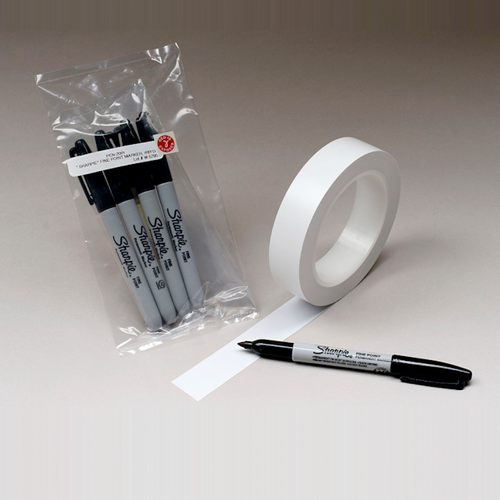
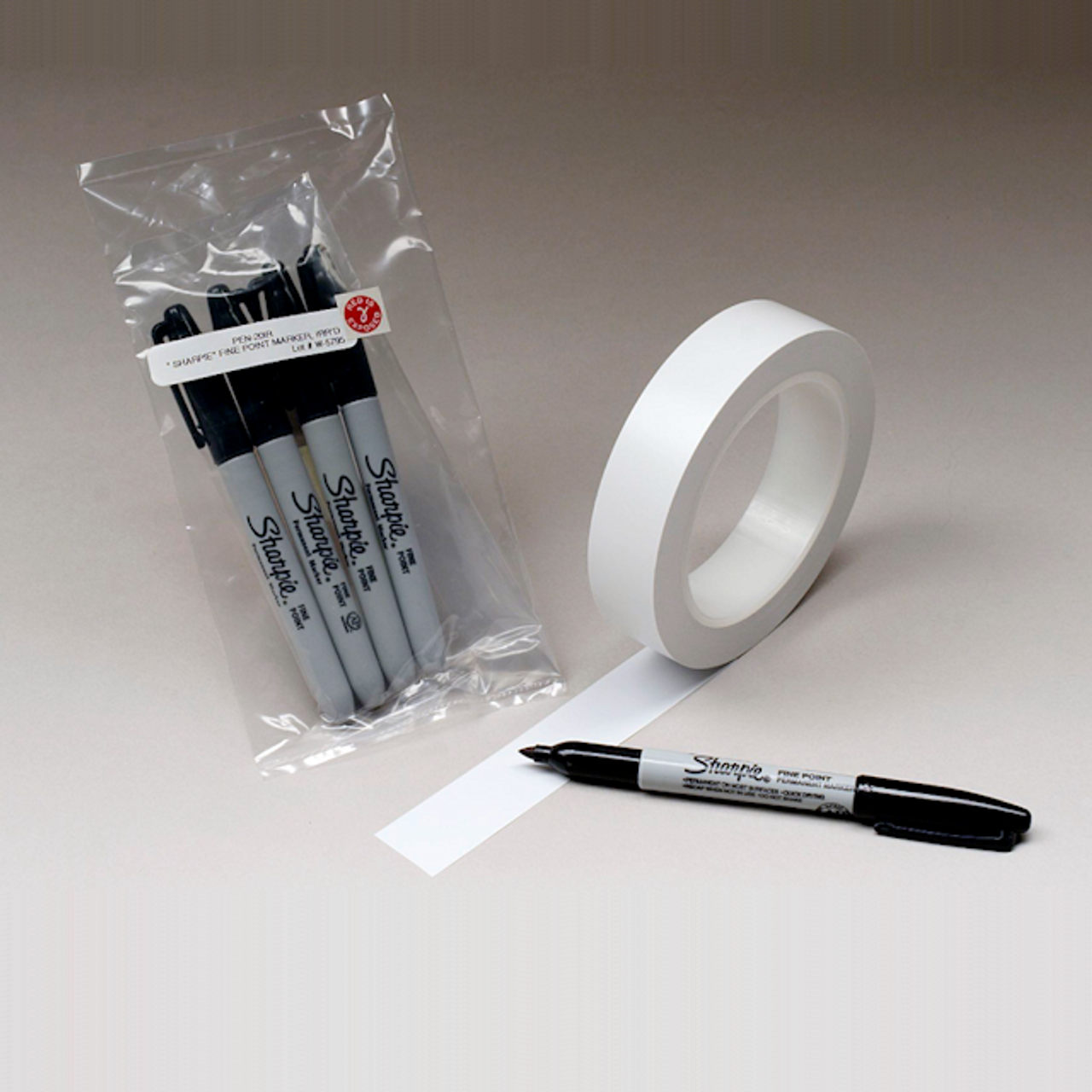
Packaging is published as 12 markers per bag, with internal pack structure described as four per pack and three packs per final packaging (verify at receiving against current manufacturer pack labels). The listing also notes Black, Blue, Red ink color options and states not autoclavable. :contentReference[oaicite:15]{index=15}
Interpretation rule that protects controlled programs: treat published characteristics as what the supplier intends to provide, but qualify what you actually need — legibility after wipe-down, cure time discipline, and boundary controls (non-irradiated vs. irradiated) — because those are the failure modes that drive investigations.
Cleanliness and Performance Metrics: What the Numbers Mean Operationally
For this marker, the referenced specification does not publish particle shedding or ionic contamination contribution metrics. Operationally, that means you should qualify performance by the mechanisms that matter most for markers:
- Wipe-down durability: define your wipe solvent (IPA, ethanol blend, quats, etc.), your wipe pressure, and your number of cycles. “Looks fine” after one wipe is not the same as “stable” after routine disinfection cadence.
- Smear control: set a minimum cure time before wipe-down (and train it). Ultra-fine marks are more likely to be wiped away if wiped immediately.
- Legibility retention: confirm line integrity at the smallest required character height, after handling and after wipe-down cycles.
- Contamination-risk review: if your program needs particle/ion background assurance, request documentation and validate in your site conditions before approving the marker for higher-class areas. :contentReference[oaicite:16]{index=16}
Why Packaging, Irradiation Options, and Traceability Matter
PEN-50 / IR is provided in bag packaging with published lot traceability (lot number printed on each bag and case). That matters because markers get staged everywhere — benches, carts, gowning transition zones — and lot control is how you isolate a change when wipe-down performance or ink behavior shifts. :contentReference[oaicite:17]{index=17}
The page also indicates an optional gamma irradiation selection. Treat irradiation as a control state: when a process requires irradiated items for transfer into stricter areas, keep irradiated vs. non-irradiated stock physically segregated, label storage locations, and record which control state is used at point of use. :contentReference[oaicite:18]{index=18}
Important boundary condition: this marker is listed as not autoclavable. Do not substitute “in-house autoclave” as a workaround for programs that require a defined sterile/irradiated control state; follow the documented pathway your SOP and risk assessment require. :contentReference[oaicite:19]{index=19}
Best-Practice Use: Operator-Level Discipline That Prevents Real Failures
- Stage by control state: segregate irradiated vs. non-irradiated inventory and label the storage location. Do not mix on carts.
- Control cure time: write the mark, then allow a defined dry/cure interval before wipe-down or bag handling. Train this explicitly.
- Qualify wipe solvent: verify mark stability under the exact disinfectant/IPA routine used in the area (chemical, contact time, wipe pressure, number of cycles).
- Define the labeling surface: some plastics and films accept ink well; others smear or ghost. Qualify the substrate set you actually use (bags, labels, trays, tag stocks).
- One marker per zone when needed: for higher-control programs, assign markers to specific areas to reduce cross-zone contamination and procedural drift.
- Traceability discipline: capture lot code at receiving for controlled programs; if an investigation opens, this is how you close it faster. :contentReference[oaicite:20]{index=20}
Common Failure Modes—and How to Prevent Them
- Smear during wipe-down: prevent with a defined cure time and validated wipe chemistry for your cadence.
- Illegible micro-marking: prevent by using the 0.2 mm tip for small fields, standardizing character size, and using templates where required. :contentReference[oaicite:21]{index=21}
- Wrong control state in the wrong area: prevent by segregating irradiated vs. non-irradiated stock and training boundary rules.
- Assuming contamination metrics exist: prevent by requesting documentation where required and validating under site conditions when particle/ionic data are needed. :contentReference[oaicite:22]{index=22}
- Untracked substitutions: prevent by locking the part number in the SOP and using lot-coded receiving discipline as part of the documentation control plan. :contentReference[oaicite:23]{index=23}
Closest Competitors (Limited and Relevant)
Other cleanroom marker programs (irradiated options): category peers typically differentiate on packaging control state (irradiated vs. non-irradiated), lot traceability, and demonstrated wipe-down durability on your substrates.
Lab/industrial “ultra-fine permanent markers” without cleanroom packaging: often fail in controlled programs because they lack controlled packaging, traceability, or stable wipe-down behavior under disinfectant cadence. If you are qualification-driven, treat these as a separate category that requires extra validation work.
Where This Marker Fits in a Controlled Documentation Program
PEN-50 / IR is best deployed as a controlled-environment documentation tool for micro-marking where legibility and wipe-down discipline matter. Use it where the labeling error cost is high: sample traceability, equipment tags, batch/lot identifiers, and controlled maintenance logs. If your environment requires irradiated consumables, use the irradiation option and treat the packaging control state and lot traceability as part of the same control plan — because in cleanrooms, “the marker” is not a trivial accessory; it is a process input.
Source basis
- SOSCleanroom product page: “Cleanroom Irradiated Sharpies Ultra Fine Tip Markers” (PEN-50 / IR description, options including gamma irradiation, packaging configuration, non-autoclavable note, and use positioning). :contentReference[oaicite:24]{index=24}
- Published characteristics section on the product page (tip size, dimensions, materials, ink type, packaging materials, lot traceability statements). :contentReference[oaicite:25]{index=25}
- Typical contamination characteristics note on the product page (particle/ionic metrics not stated; validation guidance). :contentReference[oaicite:26]{index=26}