When IPA wipe-down is the norm: using Cleanroom LabMarkers (IPA-resistant ink) without smears, mix-ups, or label failures
The Technical Vault | By SOSCleanroom
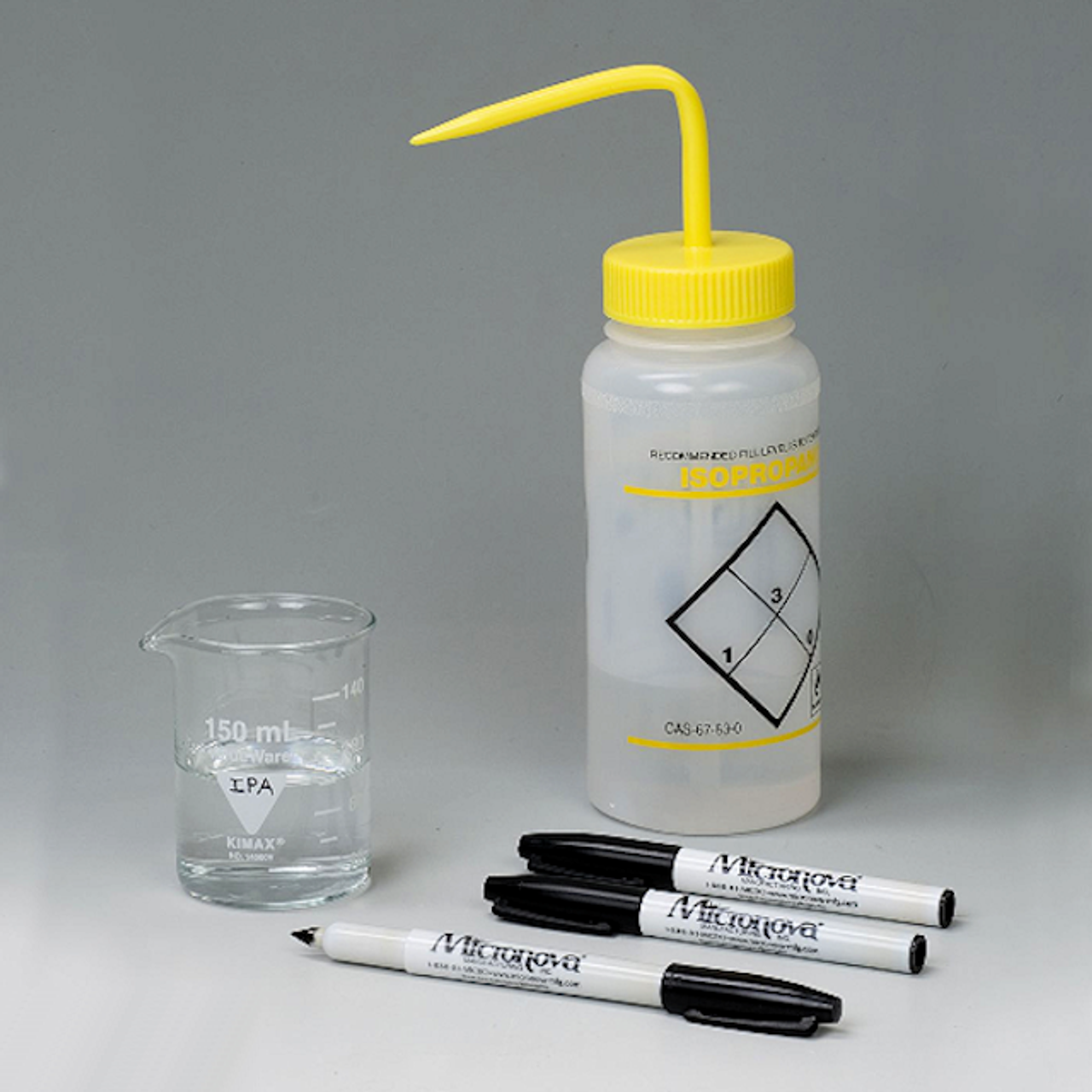
In controlled environments, a marker is not “office supply.” It is part of your traceability chain. The most common labeling failures are practical, not theoretical: ink that smears after an IPA wipe-down, labels that become unreadable after routine disinfection, or a marker tip that picks up bench residue and transfers it to bags, labels, and labware.
Cleanroom LabMarkers (IPA-resistant ink) are designed for that reality — quick-drying, alcohol-resistant black ink paired with a cleanroom-friendly packaging and traceability posture so routine wipe-down doesn’t quietly break your identification controls.
Operationally, the win is repeatability: write cleanly, let it flash, then wipe down with site-approved chemistry without turning the label into a smear event or losing legibility when it matters most.
The Operational Problem It Solves
Cleanrooms run on routine disinfection. If labels and markings cannot survive wipe-down, you get downstream failures that look like “process drift” but are really identification drift:
- Smear and transfer: wet ink + early handling + IPA wipe-down = ink migration onto gloves, bags, and adjacent labels.
- Unreadable traceability: lost lot/date/operator data after cleaning cycles increases investigation time and audit exposure.
- Tip contamination: a marker tip touched to benches, wipes, or adhesive residues becomes a contamination transport tool.
These markers are positioned to reduce those avoidable failures with alcohol-resistant ink, fast dry behavior, and packaging/lot controls that support disciplined introduction and segregation.
What It’s For
Cleanroom LabMarkers are intended for marking in controlled workflows where wipe-down chemistry is routine — including marking on plastic bags and disposable labware, and writing on surfaces that may be cold or damp.
They are also positioned as smear-resistant on glass, metal, and porcelain (with the practical caveat that those surfaces can often be scrubbed clean when removal is required).
Decision Drivers (What Buyers Should Care About First)
- Alcohol-resistant, quick-drying black ink: supports routine IPA wipe-down without turning labels into smear events.
- Writes where real work happens: positioned to mark on cold or wet surfaces and common cleanroom packaging/labware.
- Barrel wipe-down compatibility: holds up to wipe-down with IPA, bleach, and phenols; printed barrel info may be compromised by thinners/strong solvents.
- Packaging discipline: packaged in small counts to support staged introduction and reduce “loose marker” contamination behavior.
- Traceability posture: lot numbers on inner packaging and case, plus a Certificate of Conformance shipped with each order, supports investigations and controlled issuance.
Materials and Construction: Practical Implications
Barrel: high-density polymer barrel designed for controlled handling and routine wipe-down.
Ink system: permanent, quick-drying, alcohol-resistant black ink. Operationally, this is what protects label legibility after disinfection — assuming you follow dry-time discipline before wipe-down.
Wipe-down chemistry boundary: the marker is positioned to hold up to wipe-down with IPA, bleach, and phenols. Strong thinners/solvents can compromise printed barrel information, which matters if you rely on barrel print for internal identification. Use packaging/lot labeling as the primary identity control.
Reality check for contamination control: marker tips are easy to contaminate. If the tip touches benches, wipes, adhesive residues, or gloves, it can transfer that material directly onto labels and bags. Treat the tip as a controlled contact surface.
Specifications in Context
The most important “spec” for markers is whether they stay readable after your cleaning cycle. The published product specifications for this cleanroom marker include:
| Materials of construction |
High-density polymer barrel; permanent, quick-drying, alcohol-resistant black ink |
| Dimensions |
5 1/4 in x 1/2 in |
| Surface marking behavior |
Marks on cold or wet surfaces, plastic bags, and disposable labware; smear-resistant on glass, metal, and porcelain (can be scrubbed off) |
| Chemical compatibility (barrel wipe-down) |
Holds up to wipedown with IPA, bleach, and phenols; printed barrel can be compromised with thinners and strong solvents |
| Packaging configuration |
Packaged 5 pens per bag; 10 pens per outside pack |
| Traceability |
Lot numbers printed on each bag of 5 and each case; Certificate of Conformance shipped with each order |
| Autoclavability |
Not autoclavable |
Interpretation rule that protects your program: use “alcohol-resistant” as a controlled-performance claim, not a license to rush. Most marker failures happen when an operator wipes before the ink fully flashes off.
Cleanliness and Performance Metrics: What the Numbers Mean Operationally
For this product listing, typical contamination characteristics (particle shedding, ionic extractables/residues) are not stated. In marker workflows, the dominant controllable risks are typically handling-driven rather than “marker extractables”:
- Dry-time control: allow ink to flash before wipe-down or bag handling.
- Tip discipline: avoid touching tips to benches, wipes, or adhesive residues; cap when not in use.
- Segregation: keep cleanroom markers segregated from general facility markers to reduce cross-use and unknown residues.
- Chemistry boundary: use site-approved wipe-down chemistries; avoid thinners/strong solvents that can degrade barrel print and increase residue variability.
Why Packaging and Traceability Matter
Markers are notorious “migration items” — they travel between benches, pockets, carts, and rooms. Packaging in smaller inner units (5 per bag) supports staged introduction and reduces open-exposure time. Lot numbers on inner bags and cases support investigation discipline when labeling issues appear.
Treat the Certificate of Conformance as a quality-system tool. If your operation is inspection-driven, being able to tie labeling tools back to a lot and shipment record reduces the time it takes to close deviations rooted in documentation or material control.
Best-Practice Use: Operator-Level Discipline That Prevents Real Failures
- Write, then wait: allow a defined flash-off time before wipe-down, bag sealing, or stacking labels.
- Wipe-down sequence: if labels are wiped as part of routine cleaning, standardize the direction and pressure (one-direction strokes; avoid “scrubbing” the ink line).
- Tip control: keep capped when not actively writing; never rest tip-down on benches or wipes.
- Segregate by area: dedicate markers to specific rooms or zones to reduce uncontrolled transfer and unknown residues.
- Control storage: store in original clean packaging when possible; avoid pockets and tool drawers that shed debris onto tips.
Common Failure Modes—and How to Prevent Them
- Smearing / ink transfer: writing on damp surfaces or handling before dry time. Prevent with flash-off discipline and a defined “no-wipe-before” interval.
- Residue carryover: tip contact with benches, wipes, or adhesive residues. Prevent with tip control and dedicated storage.
- Barrel print degradation: strong solvents/thinners compromise printed barrel information. Prevent by limiting exposure to aggressive solvents and using approved wipe-down chemistry.
- Debris generation from abrasion: scuffing barrels/caps against drawers/tools/bench edges. Prevent with controlled storage and avoiding dragging contact.
- Static attraction: in low humidity, plastic barrels can attract fines. Prevent by minimizing rubbing against garments and following site ESD/humidity controls.
Closest Competitors (Category-Relevant)
Other cleanroom-marking systems with alcohol-resistant ink (fine-tip lab markers): Compare wipe-down survivability on your actual label stock, dry-time behavior under your airflow conditions, and packaging/lot controls (not just “IPA-resistant” language).
General lab permanent markers: Often fail in cleanroom use because packaging, traceability, and wipe-down survivability are not controlled for routine disinfection workflows.
Where This Fits in a Controlled Cleaning and Documentation Program
Cleanroom LabMarkers belong in the “documentation control” layer of a contamination-control program: labeling bags, labware, and work-in-process items where the label must survive routine wipe-down. Treat markers as controlled consumables: staged introduction, segregation by area, defined handling rules, and lot traceability when the workflow is inspection-driven.
Source basis
- SOSCleanroom product page: Cleanroom LabMarkers (IPA Resistant Ink) (materials, dimensions, wipe-down compatibility, packaging, traceability, CoC posture).
- Manufacturer documentation links (as posted on the product page): Micronova product specification PDF (PEN-40 Fine Tip LabMarker, Revision 001) and Micronova LabMarkers manufacturer page.